


Cip Cleaning
In modern industrial processing, maintaining hygiene and operational efficiency without dismantling complex machinery is a critical requirement. Clean-in-Place (CIP) technology has revolutionized how industries such as food and beverage, pharmaceuticals, and chemical processing manage their hygiene protocols. For filtration systems, cip cleaning is not merely a convenience; it is a fundamental process that ensures product purity, protects downstream equipment, and extends the service life of high-performance filter media.
When dealing with stainless steel filtration components, understanding the intersection of mechanical design and chemical cleaning cycles is essential for any engineering or purchasing team. This guide explores the technical nuances of CIP processes, focusing on how they interact with industrial metal filters and the criteria necessary for optimizing these systems.
The Fundamental Mechanics of CIP Cleaning in Filtration
CIP cleaning refers to the automated method of cleaning the interior surfaces of pipes, vessels, and filters by circulating chemical solutions, water, and heat through the system. Unlike manual cleaning, which requires the physical disassembly of filter housings and the removal of cartridges, CIP relies on fluid dynamics and chemical action to remove contaminants.
In a filtration context, the process typically involves several stages:
1. Pre-rinse: Using water to remove the bulk of the loose debris and residual product.
2. Chemical Wash: Circulating a cleaning agent (often caustic or acidic) to break down organic or inorganic deposits.
3. Intermediate Rinse: Removing the chemical agents.
4. Final Sanitization: Using high-temperature water or chemical sanitizers to eliminate microbial load.
5. Final Rinse: Ensuring the system is free of all cleaning residues.
For industrial filters, the efficiency of this process depends heavily on the flow rate. Engineers must ensure that the cleaning fluid achieves a turbulent flow (typically defined by a Reynolds number greater than 4,000) to create the mechanical shear stress necessary to dislodge particles trapped within the mesh or sintered structure of the filter element.
Material Selection and Chemical Compatibility
The success of a cip cleaning regimen is largely dictated by the materials used in the filtration system. While plastic or disposable filters may degrade under the harsh conditions of CIP, stainless steel—specifically 304 and 316L grades—is the industry standard for reusable filtration components.
Corrosion Resistance
316L stainless steel is preferred in pharmaceutical and food applications due to its superior resistance to pitting and crevice corrosion, especially when exposed to chlorides or acidic cleaning agents. During the CIP cycle, the filter is often subjected to high concentrations of sodium hydroxide (caustic) to dissolve proteins and fats, or nitric acid to remove mineral scales. The passive layer of the stainless steel must remain intact to prevent metal leaching into the product stream.
Thermal Stability
CIP processes often operate at temperatures between 70°C and 90°C. Metal filters manufactured by specialists like Kaifil are designed to withstand these thermal cycles without losing structural integrity. Unlike polymer-based media, which may soften or deform, stainless steel maintains its pore geometry, ensuring consistent filtration accuracy even after hundreds of cleaning cycles.
Engineering Design for Effective CIP
Not all filter designs are equally suited for CIP. An improperly designed filter can harbor "dead zones" where the cleaning fluid cannot reach, leading to bacterial growth or cross-contamination between batches. When selecting a filter for a CIP-enabled system, engineers should prioritize the following design features:
Surface Finish and Electropolishing
The internal surface roughness (Ra) of the filter housing and the filter element itself significantly impacts cleanability. A smoother surface reduces the ability of microorganisms and particles to adhere. Electropolishing is often used to achieve a mirror-like finish, which enhances the effectiveness of the cip cleaning cycle by reducing the surface area available for contaminant attachment.
Sintered vs. Woven Wire Mesh
Sintered metal filters provide a rigid structure where the individual wires or powder particles are fused together. This prevents the media from shifting during high-pressure backpulsing or high-velocity CIP flows. In contrast, simple woven meshes may experience "pore migration" if the mechanical force of the CIP fluid is too high. For deep-bed filtration requirements, multi-layered sintered mesh provides the necessary strength to withstand the reverse-flow pressures often used during the cleaning phase.
Elimination of Dead Spaces
Filter housings must be designed with sloped surfaces and no sharp corners. O-ring grooves and seals should be of the "hygienic" type, ensuring that the cleaning fluid can penetrate all crevices. If a filter element has a complex support structure, it must be engineered to allow free drainage, preventing the pooling of cleaning chemicals or rinse water.
The TACT Principle in CIP Optimization
To achieve a repeatable and effective cip cleaning result, engineers must balance four critical parameters, often referred to as the TACT principle:
1. Time: The duration for which the cleaning solution is in contact with the filter. If the time is too short, the chemical reactions required to break down complex biofilms or burnt-on residues will not complete.
2. Action: The mechanical force of the fluid. In filtration, this is often supplemented by "backwashing," where the flow is reversed to push contaminants out of the filter pores.
3. Chemicals: The concentration and type of cleaning agents. Caustics (bases) are used for organic matter, while acids are used for inorganic scales. The concentration must be high enough to clean but low enough to avoid damaging the equipment seals.
4. Temperature: Heat increases the kinetic energy of the cleaning molecules, accelerating the breakdown of contaminants. However, excessive heat can cause certain proteins to "bake" onto the filter surface if the pre-rinse was insufficient.
By fine-tuning these four variables, facilities can reduce the total volume of water and chemicals used, leading to significant cost savings and a reduced environmental footprint.
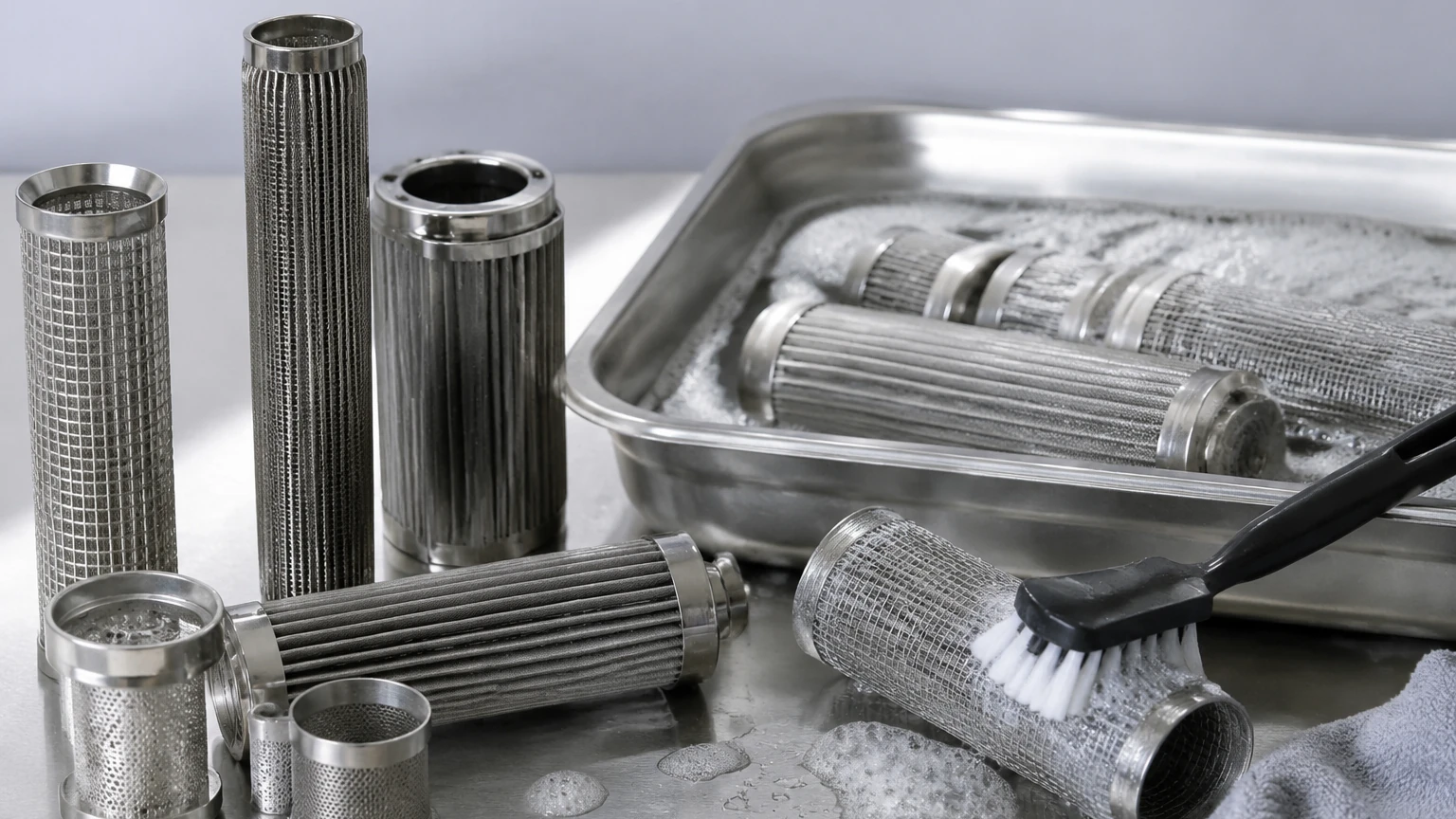
Monitoring and Validating CIP Performance
In a B2B industrial environment, "clean" is not a subjective term; it must be validated through data. There are several technical methods used to monitor the effectiveness of a cip cleaning cycle on a filtration system:
* Differential Pressure (dP) Monitoring: This is the most common method. By measuring the pressure drop across the filter before and after the CIP cycle, engineers can determine if the filter has been restored to its "clean" baseline. A rising baseline over multiple cycles indicates that the CIP process is failing to remove all contaminants, a condition known as "permanent fouling."
* Conductivity Sensors: These sensors are placed in the return line of the CIP system to measure the concentration of cleaning chemicals. They ensure that the chemicals have reached the filter and, more importantly, that they have been completely rinsed out before the next production run begins.
* Total Organic Carbon (TOC) Analysis: Common in the pharmaceutical industry, this involves testing the final rinse water for any remaining organic residues.
* Visual Inspection and Borescoping: For critical applications, engineers may use a borescope to inspect the internal surfaces of the filter housing and the exterior of the cartridges to ensure no visible residue remains.
Common Challenges and Troubleshooting
Even with a well-designed system, issues can arise during cip cleaning. One common problem is the formation of biofilms—complex communities of microorganisms that secrete a protective matrix. Biofilms are notoriously resistant to standard CIP cycles and may require specialized enzymatic cleaners or higher temperatures to eradicate.
Another challenge is mechanical fatigue. While stainless steel is durable, the repeated expansion and contraction caused by thermal cycling, combined with the pressure pulses of backwashing, can eventually lead to stress cracks. Regular inspection of the filter media for signs of fatigue is essential to prevent catastrophic failure during production.
Furthermore, the use of hard water in the CIP process can lead to the buildup of calcium and magnesium scales on the filter mesh. If not addressed with a regular acid wash, these scales will permanently reduce the effective filtration area, increasing energy costs as the pumps work harder to maintain flow through a restricted filter.
Conclusion: Selecting the Right Partner for Filtration Solutions
Implementing an effective CIP strategy requires more than just the right chemicals; it requires filtration components engineered for the rigors of industrial cleaning. Stainless steel filters offer the durability, chemical resistance, and thermal stability necessary to thrive in a CIP environment, providing a much lower total cost of ownership compared to disposable alternatives.
For engineers and purchasing managers, selecting a manufacturer that understands these technical requirements is paramount. From material certification to precision welding and surface finishing, every detail of the filter's construction influences its performance during the cleaning cycle. For manufacturers seeking robust filtration components that withstand rigorous cip cleaning protocols, visiting the Main Page provides a comprehensive overview of available stainless steel solutions.
By focusing on high-quality materials and hygienic design principles, industrial facilities can ensure their filtration systems remain a reliable part of their production line, delivering consistent results batch after batch. Whether you are upgrading an existing system or designing a new process, prioritizing CIP compatibility in your filtration selection is a critical step toward operational excellence.
