


Foam Type Air Filter
In the landscape of industrial filtration, the foam type air filter remains a cornerstone for applications requiring a balance between high dust-holding capacity and low initial pressure drop. Unlike surface filtration media, which trap particles on a single plane, foam filters utilize depth filtration principles to capture contaminants throughout the thickness of the material. For engineers and procurement specialists, understanding the technical nuances of foam media—ranging from pore density to chemical resistance—is essential for optimizing system performance and extending the service life of downstream components.
Industrial filtration systems often operate under demanding conditions where air quality directly impacts equipment longevity and process purity. Whether used as a standalone primary filter or as a pre-filtration stage for precision stainless steel cartridges, the foam type air filter must be selected based on rigorous engineering criteria rather than generic specifications.
Understanding the Mechanism of Foam Filtration
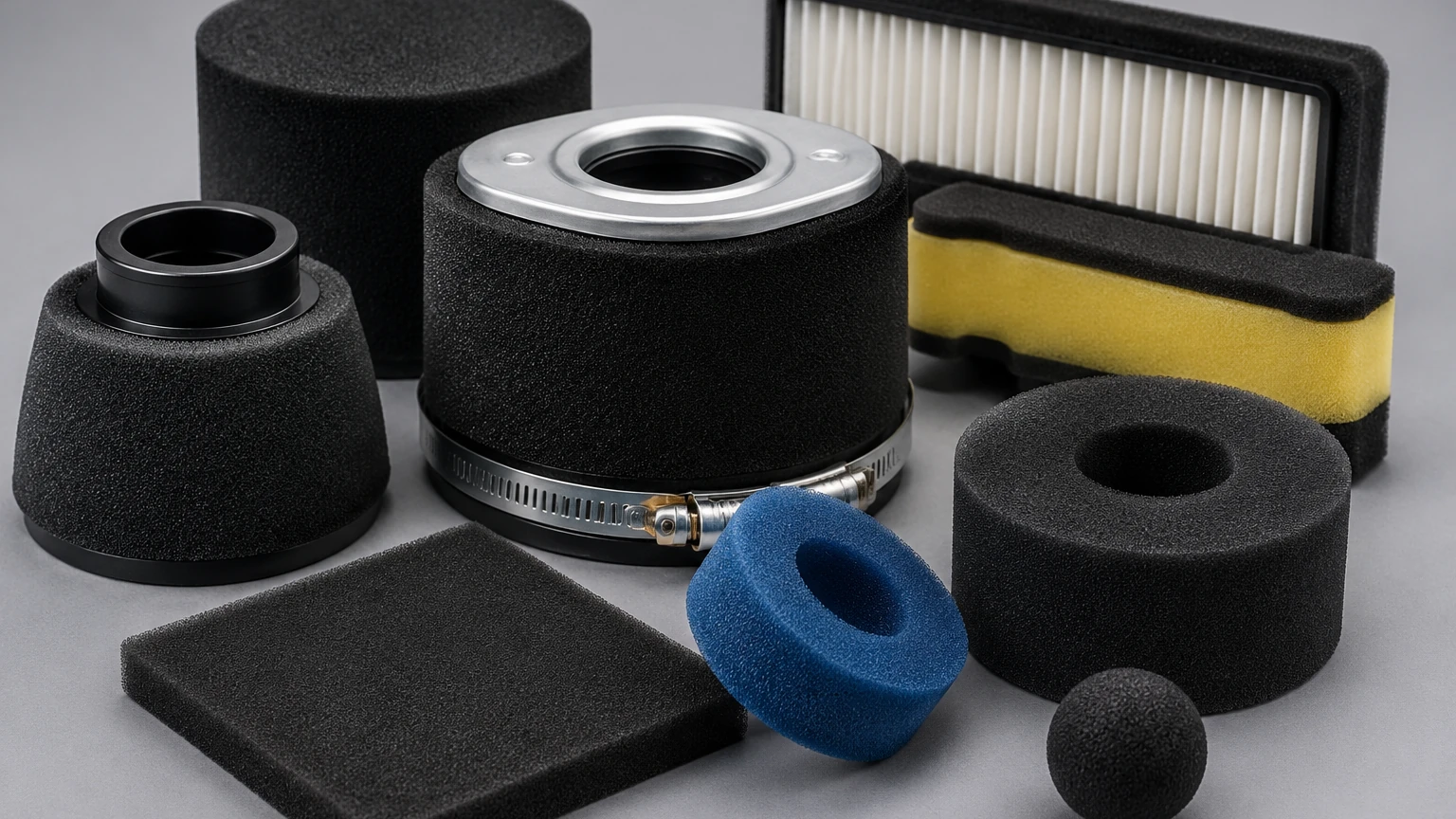
The efficacy of a foam type air filter is primarily derived from its cellular structure. Most industrial-grade foam filters are made from reticulated foam, a material where the "windows" or membranes between the cells have been removed, leaving only a skeletal structure (struts). This open-cell architecture creates a complex, tortuous path for the airflow.
Depth Filtration Principles
As air passes through the reticulated structure, several physical mechanisms come into play:
1. Inertial Impaction: Larger particles, possessing greater mass, cannot follow the rapid changes in airflow direction as the air moves around the foam struts. These particles collide with and adhere to the foam material.
2. Interception: Smaller particles that follow the streamlines of the air may still come into contact with a foam strut if the streamline passes within one particle radius of the strut surface.
3. Diffusion: For sub-micron particles, Brownian motion causes them to deviate from the streamlines, increasing the probability of contact with the filter media.
Because the filtration occurs within the depth of the foam, these filters can accumulate a significant volume of particulate matter before the pressure drop increases to a critical level. This makes them particularly effective in environments with high concentrations of coarse dust.
Key Technical Specifications: PPI and Pore Geometry
The most critical specification for a foam type air filter is its pore density, measured in Pores Per Inch (PPI). Industrial foams typically range from 10 PPI (very coarse) to 100 PPI (very fine).
* Low PPI (10–30): These are characterized by large open cells and thick struts. They offer minimal resistance to airflow and are ideal for high-velocity systems or as pre-filters to remove large debris before air reaches more sensitive secondary filters.
* Medium PPI (45–60): This range provides a balance of efficiency and flow, often used in general industrial machinery and HVAC applications.
* High PPI (80–100): These foams offer high filtration efficiency for smaller particles but result in a higher initial pressure drop. They are frequently used in specialized electronics cooling or medical device applications where fine particulate control is paramount.
Engineers must calculate the face velocity of the air and the allowable pressure differential across the filter. Selecting a PPI that is too high for the application can lead to rapid clogging and increased energy consumption by the blower or intake system, while a PPI that is too low may allow harmful contaminants to bypass the filtration stage.
Material Selection and Environmental Durability
While the physical structure of the foam determines its filtration characteristics, the chemical composition of the polymer determines its durability. The two most common materials used in industrial foam filters are Polyurethane (PU) and Polyether.
Polyurethane (Polyester-based)
Polyester-based polyurethane foams are known for their high mechanical strength and excellent resistance to hydrocarbons, oils, and many common industrial solvents. They are the standard choice for engine air intakes and hydraulic breathers. However, they are susceptible to hydrolysis (degradation in high-humidity environments).
Polyether-based Foam
Polyether foams offer superior resistance to moisture and microbial growth. In applications involving water treatment, outdoor exposure, or high humidity, polyether is the preferred material to prevent the foam from becoming brittle or crumbling over time.
Integration with Metal Components
In high-performance industrial settings, foam media is often combined with stainless steel wire mesh or perforated metal skeletons. This hybrid approach provides the structural integrity needed to withstand high-pressure pulses or mechanical vibrations that would otherwise collapse a standalone foam element. For organizations looking for robust filtration architectures, exploring the Main Page of specialized manufacturers like Kaifil provides insight into how precision metal components enhance the performance of various filter media.
Performance Metrics: Efficiency vs. Pressure Drop
When evaluating a foam type air filter, the relationship between filtration efficiency and pressure drop (Delta P) is the primary performance metric. A well-designed filter should maximize the capture of target-sized particles while maintaining a low resistance to flow to minimize energy costs.
* Dust Holding Capacity (DHC): This refers to the total mass of a standardized test dust the filter can retain before reaching a terminal pressure drop. Foam filters generally excel in DHC compared to paper or flat-sheet synthetic media.
* Face Velocity: The speed at which air approaches the filter face. As velocity increases, the efficiency of inertial impaction increases, but the overall pressure drop also rises exponentially.
* Media Migration: A critical concern in B2B procurement is ensuring the filter media does not shed fibers or particles into the clean air stream. High-quality reticulated foams are processed to ensure all loose "shards" from the reticulation process are removed, preventing downstream contamination.
Maintenance, Cleaning, and Replacement Cycles
One of the primary advantages of the foam type air filter in an industrial context is its potential for reuse. Unlike many pleated paper filters, certain reticulated foams can be cleaned and returned to service, which significantly lowers the total cost of ownership (TCO).
Cleaning Procedures
Industrial foam filters can often be cleaned using compressed air (back-blowing) or by washing with compatible detergents and water. However, it is vital to confirm that the cleaning process does not damage the pore structure. Repeated cleaning of polyester-based foams can eventually lead to structural fatigue, where the struts become thin and prone to breakage.
Replacement Indicators
Maintenance teams should monitor the pressure drop across the filter using a manometer. A common industry standard is to replace or clean the filter when the pressure drop reaches double its initial (clean) value. If the foam shows signs of discoloration, loss of elasticity, or "dusting" (releasing particles when handled), it has reached the end of its functional life and must be replaced to protect downstream equipment.
Customization and OEM Integration
Standard off-the-shelf foam filters rarely meet the specific requirements of complex industrial machinery. Customization is often necessary to ensure a perfect seal and optimal flow dynamics. Engineering teams should consider the following when designing a custom filtration solution:
* Gasketing and Sealing: Air bypass is the most common cause of filtration failure. Custom foam filters can be manufactured with integrated gaskets or heat-sealed edges to ensure all air passes through the media.
* Layering (Gradient Density): By laminating different PPI foams together (e.g., a 30 PPI layer followed by a 60 PPI layer), engineers can create a gradient density filter that captures large particles on the outer surface and finer particles in the inner core, further increasing the dust-holding capacity.
* Frame Materials: For harsh environments, the foam media should be housed in a stainless steel or aluminum frame. This is particularly important in the chemical processing and food and beverage industries, where frequent washdowns and exposure to corrosive agents are common.
Kaifil specializes in these types of high-durability solutions, providing custom-engineered metal supports and housings that complement various filtration media. By integrating precision wire mesh with specialized air filtration components, manufacturers can achieve a level of reliability that standard plastic-housed filters cannot match.
Conclusion: Making an Informed Selection
Selecting the right foam type air filter requires a deep dive into the specific operational environment. It is not merely about choosing a size; it is about matching the PPI, material chemistry, and structural support to the intended airflow and contaminant profile.
Before finalizing a procurement decision, technical teams should confirm the chemical compatibility of the foam with any airborne solvents, the expected temperature range of the intake air, and the required filtration efficiency (MERV rating or micron rating). By focusing on these factual engineering boundaries, businesses can ensure their filtration systems provide maximum protection for their capital equipment while maintaining operational efficiency. For those seeking to integrate these components into larger, more complex industrial filtration systems, consulting with experts in stainless steel and precision metal filtration is a recommended next step to ensure total system compatibility and long-term durability.
