


Cip Procedure
In modern industrial processing, the ability to maintain stringent hygiene standards while maximizing equipment uptime is a critical operational requirement. For industries such as food and beverage, pharmaceuticals, and chemical processing, the cip procedure (Clean-In-Place) has become the gold standard for maintaining system cleanliness. Unlike traditional cleaning methods that require the manual disassembly of complex machinery, a well-engineered CIP system allows for the internal surfaces of pipes, vessels, and filtration components to be cleaned without removing them from their operational positions.
For engineers and plant managers, understanding the intricacies of the cip procedure is essential for ensuring product safety, preventing cross-contamination, and extending the service life of high-performance filtration hardware. This guide examines the technical requirements, engineering considerations, and best practices for implementing and optimizing CIP cycles within industrial filtration systems.
Understanding the Fundamentals of the CIP Procedure
The primary objective of a cip procedure is to remove soil—which may include mineral scales, organic residues, or microbial biofilms—from the internal surfaces of a production system. In the context of filtration, this is particularly challenging because filter media, such as stainless steel wire mesh or sintered metal cartridges, are designed to trap particles. If the cleaning process is not precise, these trapped particles can become permanent blockages, leading to increased pressure drops and reduced flow rates.
A standard CIP system typically consists of several tanks for water and chemical storage, heat exchangers to maintain specific temperatures, and high-pressure pumps to ensure sufficient flow velocity. The effectiveness of the cleaning cycle is governed by four interdependent variables, often referred to as the Sinner’s Circle: Time, Temperature, Chemical Concentration (Titration), and Turbulence (Mechanical Action).
1. Time: The duration that the cleaning solution remains in contact with the surfaces. Longer contact times can often compensate for lower temperatures or chemical concentrations.
2. Temperature: Heat increases the kinetic energy of the cleaning molecules, making it easier to break down fats, proteins, and sugars. However, excessive heat can sometimes "bake" certain soils onto the surface.
3. Chemical Concentration: The use of caustic (alkaline) or acidic detergents to chemically dissolve residues. The concentration must be carefully balanced to ensure effective cleaning without damaging the stainless steel substrates.
4. Turbulence: In filtration systems, mechanical action is achieved through high-velocity flow. For a cip procedure to be effective, the flow must be turbulent rather than laminar to ensure that the cleaning agents reach every pore of the filter media.
The Role of Stainless Steel in CIP-Compatible Systems
When designing a system for a cip procedure, material selection is the most critical engineering decision. Stainless steel, particularly grades 316L and 304, is the preferred material for industrial filtration due to its corrosion resistance and ability to withstand the harsh chemicals and high temperatures used during cleaning.
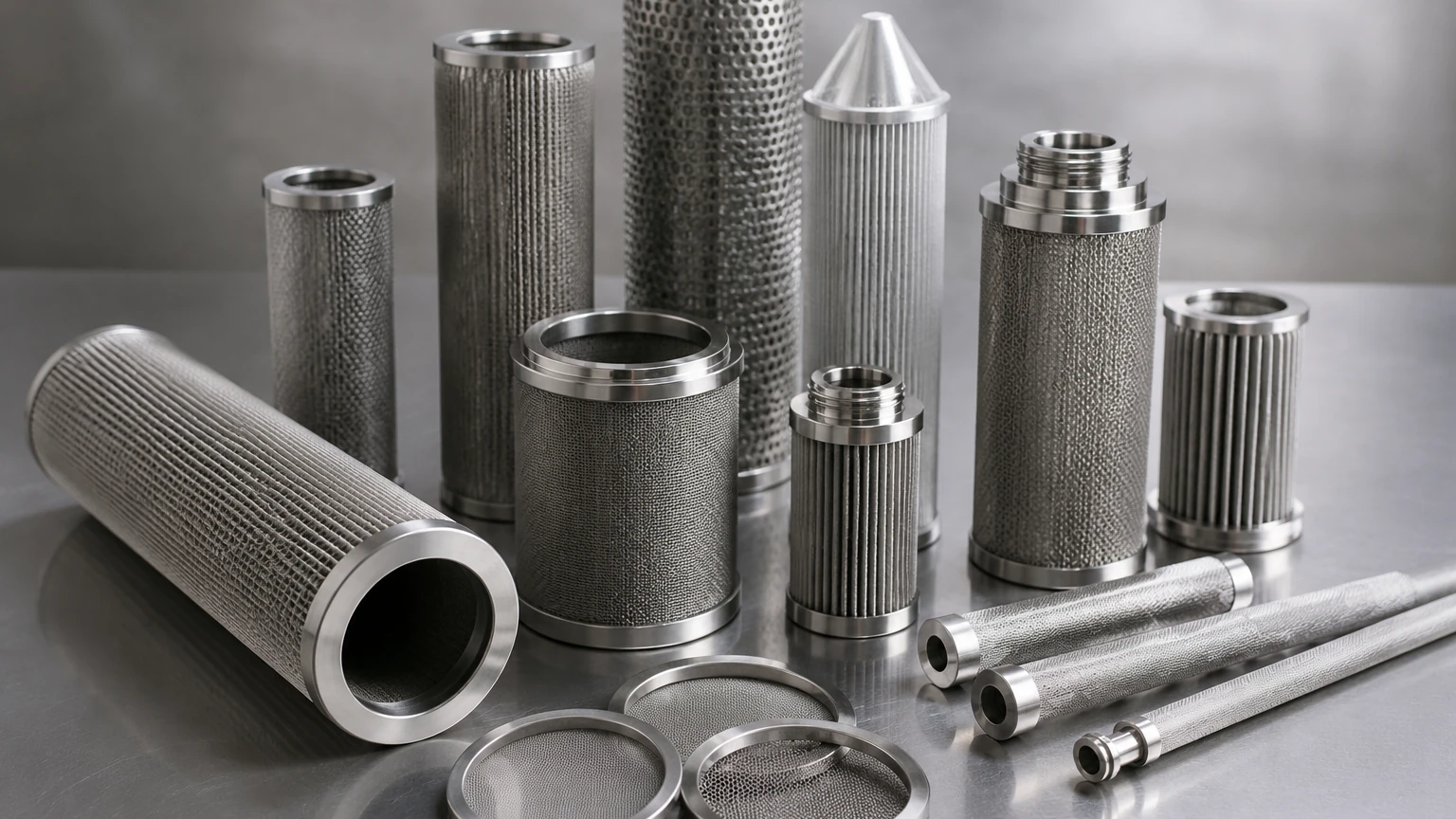
Kaifil specializes in manufacturing precision metal filter components that are specifically engineered to withstand the rigors of repeated CIP cycles. Unlike polymer filters, which may degrade or lose structural integrity when exposed to caustic agents or thermal cycling, stainless steel wire mesh and sintered cartridges maintain their pore geometry and mechanical strength. For technical specifications and custom engineering support, professionals can visit the Main Page to explore filtration solutions tailored for demanding environments.
Key Stages of a Comprehensive CIP Cycle
A robust cip procedure is rarely a single-step process. Instead, it involves a sequence of stages designed to progressively remove different types of contaminants while minimizing water and chemical waste.
1. Pre-Rinse
The cycle begins with a fresh water rinse to remove the bulk of the loose soil and residual product. This stage prevents the subsequent cleaning chemicals from becoming prematurely neutralized by heavy soil loads. In many systems, this water is recovered from the final rinse of the previous cycle to improve sustainability.
2. Caustic Wash (Alkaline Cleaning)
This is typically the primary cleaning stage. Sodium hydroxide (caustic soda) or formulated alkaline detergents are circulated through the system. This stage is highly effective at dissolving organic matter, such as proteins and fats. For filtration elements, the caustic wash must penetrate the depth of the mesh to dislodge particles trapped within the weave.
3. Intermediate Rinse
Following the caustic wash, the system is rinsed with water to remove the dissolved soils and residual alkaline detergent. This prevents the neutralization of the acid wash that follows.
4. Acid Wash
Nitric or phosphoric acid solutions are used to remove mineral scales, milk stone (in dairy applications), and inorganic precipitates. This stage is also vital for the "passivation" of stainless steel surfaces, helping to restore the protective chromium oxide layer that prevents corrosion.
5. Final Rinse and Sanitization
The system is flushed with high-quality water (often deionized or reverse osmosis water) to remove all traces of chemicals. Finally, a sanitizing agent or hot water/steam (Sterilization-In-Place or SIP) may be used to ensure the system is microbiologically clean before the next production run.
Engineering Considerations for Filter Media Selection
Not all filters are created equal when it comes to the cip procedure. Engineers must evaluate the mechanical design of the filter element to ensure it can survive the hydraulic stresses of the cleaning cycle.
* Differential Pressure Limits: During CIP, the flow rates are often higher than during standard production to achieve the necessary turbulence. The filter element must be able to withstand the resulting differential pressure without deforming.
* Weld Integrity: High-quality TIG or plasma welding is essential. Inadequate welds can create "dead legs" or crevices where bacteria can hide, rendering the cip procedure ineffective.
* Surface Finish: The roughness of the metal surface (measured as Ra) significantly impacts cleanability. Electropolished stainless steel surfaces are often preferred in pharmaceutical and food applications because they offer less surface area for soil adhesion.
* Backpulsing Capability: In some advanced systems, the cip procedure is supplemented by backpulsing, where the flow is momentarily reversed to push contaminants out of the filter pores. The filter media must be structurally reinforced to handle these reverse pressure shocks.
Monitoring and Validating the CIP Procedure
To ensure that the cip procedure has been successful, industrial systems utilize various sensors and analytical tools. Validation is not just a regulatory requirement in many industries; it is a vital part of process control.
* Conductivity Sensors: These are used to detect the interface between water and cleaning chemicals. By measuring conductivity, the system can determine when the detergent has reached the required concentration and when it has been fully rinsed away.
* Flow Meters: Ensuring that the flow velocity meets the minimum requirement for turbulence (typically a Reynolds number greater than 4,000) is essential for mechanical cleaning action.
* Temperature Probes: Monitoring the temperature at the return line ensures that the entire system, including the furthest filter housing, has reached the target cleaning temperature.
* Differential Pressure (Delta P) Monitoring: By comparing the pressure drop across a filter before and after the cip procedure, operators can verify the effectiveness of the cleaning. If the Delta P remains high after cleaning, it indicates that the filter media is permanently fouled and may require ultrasonic cleaning or replacement.
Common Risks and Mitigation Strategies
Despite its efficiency, an improperly managed cip procedure can lead to several risks:
* Chemical Incompatibility: Using the wrong concentration of acid or caustic can lead to pitting corrosion in stainless steel. It is vital to consult with the filter manufacturer to ensure the media is compatible with the intended cleaning chemistry.
* Thermal Shock: Rapidly switching from a hot caustic wash to a cold water rinse can cause thermal stress in metal components. Gradual temperature transitions are recommended to preserve the structural integrity of precision filters.
* Shadowing: This occurs when the geometry of the filter housing or the arrangement of multiple cartridges prevents the cleaning solution from reaching certain areas. Proper engineering of the filter vessel is required to eliminate these "shadow zones."
Total Cost of Ownership and Efficiency
While the initial investment in a CIP-compatible filtration system may be higher than disposable alternatives, the total cost of ownership (TCO) is significantly lower over the long term. Stainless steel filters that can be reliably cleaned using a standard cip procedure reduce the costs associated with replacement filters, labor for manual cleaning, and production downtime.
Furthermore, optimizing the CIP cycle—reducing water consumption and shortening cycle times—directly impacts the bottom line. By selecting high-performance filtration components that are designed for easy cleaning, manufacturers can achieve a more sustainable and profitable operation.
Conclusion
The cip procedure is a cornerstone of modern industrial hygiene and process efficiency. For engineers tasked with maintaining complex filtration systems, the success of this procedure depends on a deep understanding of the relationship between cleaning dynamics and hardware design. By choosing robust, high-quality stainless steel filtration solutions and adhering to validated cleaning protocols, industrial facilities can ensure consistent product quality and optimal equipment performance.
For those seeking customized filtration components designed to meet the specific demands of their CIP processes, Kaifil provides the engineering expertise and manufacturing precision required for success. Explore our full range of industrial filtration solutions on our Main Page to find the right fit for your application.
