Cip Process
In industrial manufacturing, particularly within the food and beverage, pharmaceutical, and chemical processing sectors, maintaining system hygiene without compromising operational uptime is a critical engineering challenge. The Clean-In-Place (CIP) process has emerged as the standard method for cleaning the internal surfaces of pipes, vessels, and filtration systems without requiring the disassembly of the equipment. For engineers managing complex filtration assemblies, understanding the nuances of the cip process is essential for ensuring product safety, extending the service life of stainless steel filter components, and optimizing total cost of ownership.
Fundamentals of the CIP Process
The cip process is an automated method that utilizes a combination of chemistry, heat, and mechanical force to remove soils, residues, and microbial contaminants from a closed system. Unlike manual cleaning, which is labor-intensive and prone to human error, CIP provides a repeatable, verifiable, and efficient cleaning cycle. In the context of industrial filtration, the CIP system must be designed to penetrate the layers of the filter media—whether it is a pleated stainless steel cartridge or a multi-layer wire mesh—to ensure that all trapped particles are dislodged and flushed out.
A standard CIP cycle typically consists of several distinct stages, each serving a specific purpose in the decontamination sequence:
1. Pre-Rinse: The system is flushed with water (often recovered from a previous final rinse) to remove the bulk of the residual product and loose debris. This stage prevents the cleaning chemicals from becoming prematurely exhausted by heavy soil loads.
2. Caustic Wash: A high-pH alkaline solution, typically sodium hydroxide (NaOH), is circulated through the system. This chemical action breaks down organic soils such as fats, proteins, and carbohydrates.
3. Intermediate Rinse: Fresh water is used to flush out the caustic solution and the dissolved organic matter.
4. Acid Wash: A low-pH acidic solution, such as nitric or phosphoric acid, is used to neutralize residual alkalinity and remove inorganic mineral scales, such as milk stone or calcium deposits.
5. Final Rinse: Deionized or purified water is used for a final flush to ensure all chemical traces are removed.
6. Sanitization: The final stage involves the use of thermal energy (hot water or steam) or chemical sanitizers (such as peracetic acid) to eliminate any remaining microorganisms.
The TACT Principle in CIP Engineering
To achieve a successful cip process, engineers must balance four interdependent variables, often referred to as the TACT principle: Time, Action, Chemistry, and Temperature. If one variable is reduced, another must be increased to compensate for the loss in cleaning efficacy.
* Time: The duration of each wash cycle must be sufficient for the chemicals to react with the soils and for the mechanical action to dislodge them. In filtration applications, time is also required for the cleaning solution to permeate deep into the pores of the filter media.
* Action: This refers to the mechanical force or turbulence of the cleaning fluid. In piping, this is achieved through high-velocity flow (typically 1.5 to 2.1 meters per second) to create Reynolds numbers that ensure turbulent flow. For filters, the action may involve backwashing or cross-flow velocities that create shear forces on the surface of the mesh.
* Chemistry: The concentration and type of cleaning agents are determined by the nature of the soil. For example, protein-heavy soils in dairy processing require high-caustic concentrations, while mineral-heavy water treatment filters require stronger acid washes.
* Temperature: Increasing the temperature of the cleaning solution generally increases the rate of chemical reactions and helps melt fats. However, engineers must ensure that the filter seals, gaskets, and the stainless steel structure itself can withstand the thermal expansion and potential stress of high-temperature cycles.
Integration of Stainless Steel Filters in CIP Systems
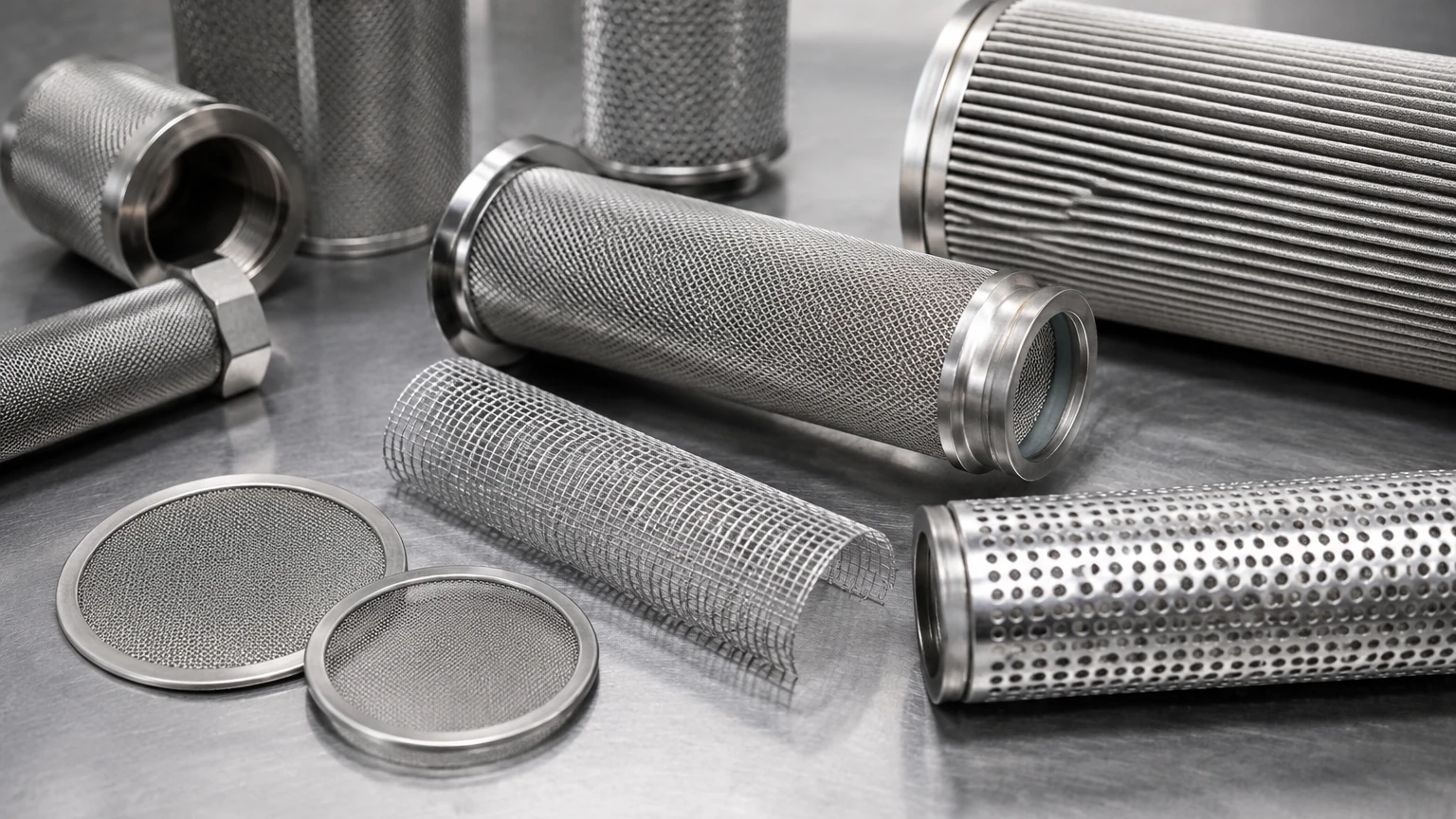
Not all filtration components are suitable for the cip process. Disposable polymer-based filters often lack the structural integrity or chemical resistance to survive repeated exposure to caustic agents and high temperatures. This is where stainless steel filtration solutions, such as those manufactured by Kaifil, become indispensable.
Stainless steel wire mesh and sintered metal cartridges are designed to withstand the rigorous conditions of a CIP cycle. When selecting a filter for a CIP-enabled system, engineers should consider the following technical factors:
Material Compatibility
316L stainless steel is the industry standard for CIP applications due to its superior corrosion resistance, particularly against the chlorides often found in cleaning agents and process water. The "L" denotes low carbon content, which minimizes carbide precipitation during welding, ensuring the structural integrity of the filter housing and media over thousands of cleaning cycles.
Structural Integrity and Pressure Drop
During a CIP cycle, the filter is often subjected to reverse flow or high-pressure pulses (backpulsing) to dislodge particles. The filter media must be robust enough to resist deformation. Sintered wire mesh provides excellent mechanical strength because the individual wires are fused together at their contact points, preventing pore migration even under high differential pressure.
Surface Finish and Ra Values
In hygienic industries, the surface roughness (Ra) of the filter components is a critical specification. A smoother surface (typically Ra < 0.8 μm) prevents bacteria from adhering to the metal and ensures that the cleaning chemicals can reach every part of the surface. Electropolishing is often used on stainless steel filters to achieve these high-purity finishes.
Engineering Considerations for CIP Optimization
Implementing an effective cip process requires more than just high-quality hardware; it requires a deep understanding of the fluid dynamics within the filtration system. Engineers must address several common challenges to ensure the system remains clean and operational.
Dead Legs and Shadowing
A "dead leg" is an area in the piping or filter housing where the cleaning fluid cannot circulate effectively. Similarly, "shadowing" occurs when a part of the filter media is shielded from the flow of cleaning chemicals by a support structure or a poorly designed housing. These areas can become breeding grounds for bacteria. Modern CIP system design emphasizes smooth transitions, the elimination of pockets, and the use of spray balls or specialized nozzles to ensure 360-degree coverage.
Monitoring and Verification
To ensure the cip process has been successful, engineers rely on various sensors and analytical tools. Conductivity sensors are used to monitor the concentration of cleaning chemicals and to determine when the system has been sufficiently rinsed. Flow meters ensure that the required turbulence is achieved, and temperature probes verify that the sanitization thresholds have been met. For filtration specifically, monitoring the differential pressure (ΔP) before and after the CIP cycle is the most effective way to verify that the filter media has been restored to its original permeability.
Gasket and Seal Selection
The seals within a filter housing are often the weakest link in a CIP system. Standard elastomers may degrade when exposed to aggressive acids or high-heat steam (SIP – Sterilization-In-Place). Engineers typically specify EPDM, PTFE, or Viton (FKM) gaskets, depending on the specific chemical profile of the CIP cycle. It is vital to establish a replacement schedule for these components, as degraded seals can introduce contaminants into the process stream.
Common Risks and Mitigation Strategies
While the cip process is designed to protect the system, improper execution can lead to significant risks. One of the primary risks is "blinding" of the filter media. If the cleaning chemicals are not compatible with the soil, they may cause the soil to polymerize or harden, permanently clogging the filter pores. For example, applying heat to a protein-rich soil before a caustic wash can "cook" the protein onto the stainless steel mesh, making it nearly impossible to remove.
Another risk is chemical carryover. If the rinsing stages are insufficient, residual caustic or acid can contaminate the next batch of product. This is particularly dangerous in the pharmaceutical and food industries. Automated conductivity monitoring is the primary defense against this risk, ensuring that the final rinse water matches the purity of the incoming water supply.
Total Cost of Ownership (TCO)
When evaluating the transition to a CIP-compatible filtration system, engineers must look beyond the initial capital expenditure. While stainless steel filters have a higher upfront cost than disposable alternatives, the long-term savings are substantial. These savings stem from:
* Reduced Downtime: CIP cycles are significantly faster than manual cleaning, allowing for more production hours per day.
* Lower Labor Costs: Automation reduces the need for manual intervention and the risk of workplace injuries associated with handling chemicals or heavy equipment.
* Extended Component Life: High-quality stainless steel filters can last for years if the cip process is properly managed, whereas disposable filters represent a recurring expense and a waste management challenge.
* Consistency: Automated CIP ensures that every cleaning cycle is identical, reducing the risk of batch rejection due to contamination.
Conclusion for Engineering Teams
Selecting the right filtration partner is essential for successfully integrating filters into a cip process. Manufacturers like Kaifil provide the technical expertise required to match filter specifications—such as micron ratings, material grades, and structural designs—to the specific demands of an industrial CIP environment. By focusing on durability, cleanability, and precision, engineers can ensure that their filtration systems contribute to, rather than hinder, the efficiency of the cleaning cycle.
Before proceeding with a new filtration installation or upgrading an existing CIP system, technical teams should confirm the chemical concentrations, peak temperatures, and flow requirements of their cleaning protocols. This data allows for the customization of filter components that will provide reliable performance over a long service life. For more detailed technical specifications and to Review product options and application support, engineers are encouraged to visit the Main Page for comprehensive resources on stainless steel filtration solutions.