


Coalescence Filter
In industrial fluid management, the separation of immiscible liquids or the removal of liquid aerosols from gas streams is a critical process requirement. A coalescence filter serves as the primary mechanism for these separations, utilizing specialized media to merge small droplets into larger ones that can be easily removed by gravity. For engineers and procurement professionals, understanding the technical nuances of coalescence technology is essential for maintaining system integrity, protecting downstream equipment, and ensuring product purity.
Industrial filtration often requires more than just the removal of solid particulates. In many chemical, hydraulic, and compressed air systems, the challenge lies in phase separation. Whether it is removing water from diesel fuel, oil from compressed air, or separating organic solvents from aqueous solutions, the coalescence filter provides a high-efficiency solution that standard particulate filters cannot achieve.
The Mechanics of Coalescence: How Phase Separation Occurs
The operation of a coalescence filter is governed by fluid dynamics and surface chemistry. Unlike a standard barrier filter that simply traps solids, a coalescer works through a multi-stage process designed to change the physical state of the dispersed phase (the droplets) to facilitate separation from the continuous phase (the carrier fluid).
1. Interception and Attachment
As the contaminated fluid passes through the filter media—often a combination of borosilicate microfibers or specialized stainless steel mesh—the fine droplets come into contact with the fibers. This contact occurs through three primary mechanisms: inertial impaction (for larger droplets), direct interception, and Brownian motion (for sub-micron droplets). The efficiency of this stage depends heavily on the fiber diameter and the pore structure of the media.
2. Coalescence (Growth)
Once the droplets are attached to the media fibers, they begin to travel along the fiber length. As more droplets are intercepted, they collide and merge with existing droplets. This process of merging is the "coalescence" phase. The filter media is typically treated or engineered to have specific wetting properties—either hydrophilic or hydrophobic—to encourage the droplets to accumulate rather than pass through the pores.
3. Drainage and Separation
As the droplets grow in size, the drag forces of the fluid flow push them toward the outer surface of the filter element. Once the droplets reach a critical mass where the force of gravity exceeds the velocity of the fluid and the surface tension holding them to the media, they fall out of the stream. In liquid-liquid separation, the heavier liquid settles at the bottom of the housing (sump), while in gas-liquid separation, the coalesced liquid drains into a collection bowl.
Engineering Considerations for Coalescence Filter Selection
Selecting the correct coalescence filter requires a deep dive into the specific parameters of the application. Engineers must look beyond simple flow rates to ensure the filter can handle the specific surface tension and viscosity of the fluids involved.
Fluid Compatibility and Material Integrity
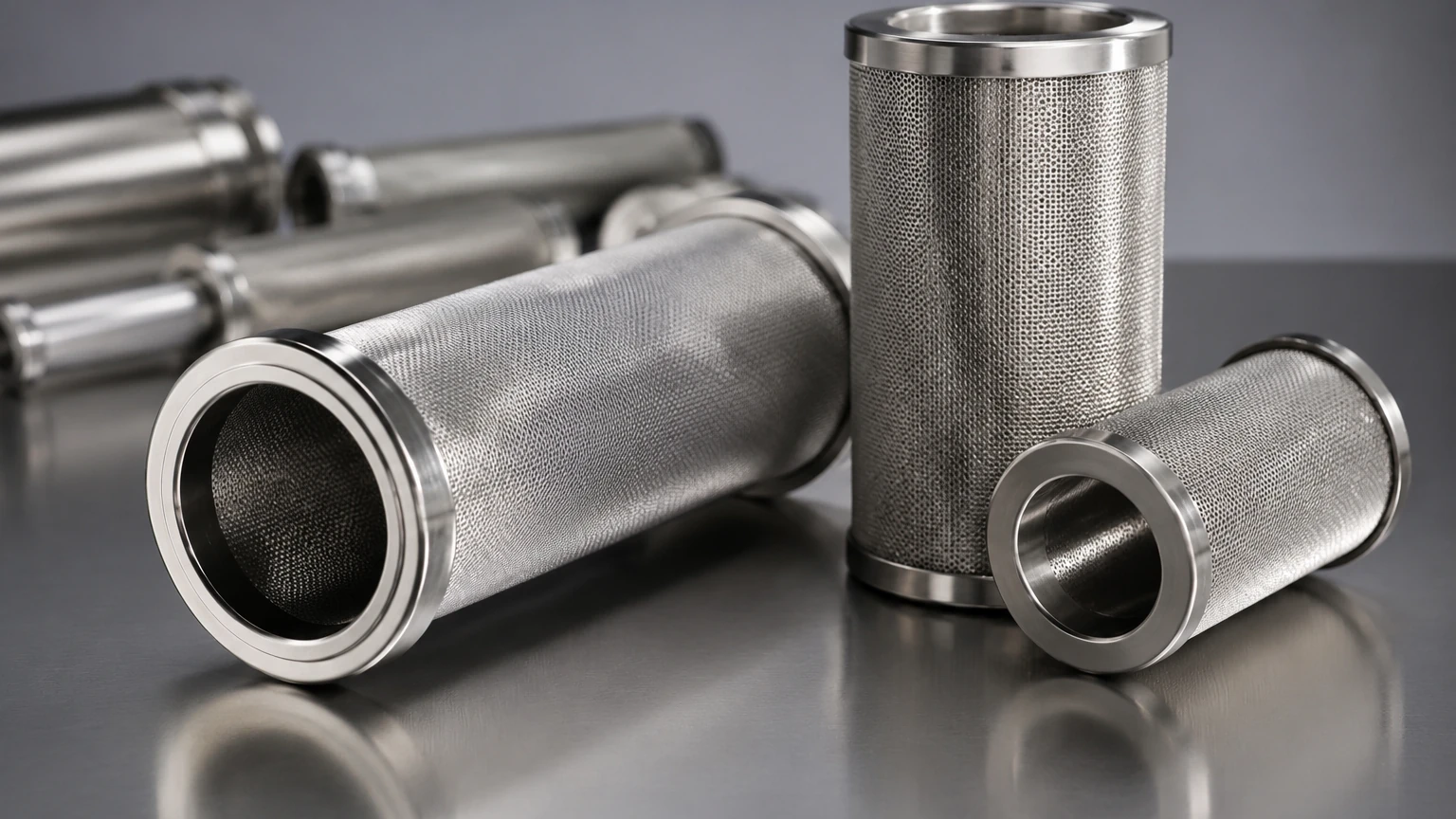
The chemical nature of the fluids determines the material requirements for the filter housing and the internal support structures. In aggressive chemical environments or high-temperature applications, stainless steel components are often preferred. Stainless steel wire mesh provides the necessary structural rigidity to support the coalescing media, preventing collapse under high differential pressure. Manufacturers like Kaifil specialize in these custom stainless steel filtration solutions, ensuring that the hardware can withstand corrosive environments without degrading.
Surface Tension and Interfacial Tension (IFT)
The ease with which droplets coalesce is largely dictated by the interfacial tension between the two phases. A low IFT (typically below 20 dynes/cm) indicates that the droplets are highly stable and difficult to separate. In such cases, standard coalescers may fail, requiring specialized media with enhanced surface treatments to break the emulsion. Engineers should confirm the IFT of their process fluids before finalizing a filter specification.
Flow Velocity and Flux
Coalescence is a velocity-sensitive process. If the fluid velocity (flux) through the media is too high, the drag forces will strip the droplets from the fibers before they have grown large enough to settle. This leads to "re-entrainment," where the droplets are carried downstream, defeating the purpose of the filter. Designing the system with sufficient surface area is critical to maintaining a low enough velocity for effective drainage.
Applications Across Industrial Sectors
The versatility of the coalescence filter makes it a staple in various demanding industries. Each sector presents unique challenges regarding contaminant loading and environmental conditions.
* Oil and Gas / Petrochemical: Used extensively to remove water from hydrocarbons such as jet fuel, diesel, and natural gas liquids. This prevents corrosion in storage tanks and protects high-precision injection nozzles.
* Compressed Air Systems: In industrial pneumatic systems, oil aerosols from compressors can contaminate pneumatic tools and end-products (especially in food and pharmaceutical packaging). Coalescing filters are the primary defense against these sub-micron oil mists.
* Hydraulic Systems: Water is a common contaminant in hydraulic oil, leading to fluid oxidation and component wear. A coalescer integrated into the kidney loop or return line can maintain water levels below the saturation point.
* Chemical Processing: Separating immiscible solvents in batch processing or removing aqueous contaminants from organic product streams is vital for maintaining product purity and meeting regulatory standards.
The Role of Stainless Steel in Coalescence Systems
While the primary coalescing media might consist of synthetic fibers, the structural integrity of the filter element is often provided by precision-engineered metal components. Stainless steel wire mesh and perforated metal cores are essential for several reasons:
1. High Pressure Stability: Industrial processes often involve pressure surges. Stainless steel support structures ensure the media does not deform or bypass during these events.
2. Thermal Resistance: Many coalescence processes occur at elevated temperatures where plastic or paper-based supports would fail. Stainless steel remains stable across a wide thermal range.
3. Cleanability of Pre-filtration Stages: Often, a coalescence filter is preceded by a particulate filter to prevent the coalescing media from clogging with solids. Using a cleanable stainless steel mesh pre-filter can significantly extend the life of the more expensive coalescing element.
For technical professionals looking for durable hardware to support these processes, the Main Page of specialized manufacturers provides insights into the customization options available for stainless steel filtration components.
Common Risks and Performance Degradation
Even a well-designed coalescence filter can experience performance issues if not managed correctly. Engineers should be aware of the following risks:
Particulate Fouling
Coalescing media is typically very fine. If the incoming fluid contains high levels of solid particulates, the media will clog rapidly. This leads to an increase in differential pressure and can eventually cause the media to rupture. Effective pre-filtration is the most common way to mitigate this risk.
Surfactants and Chemical Interference
Surfactants (surface-active agents) are the enemy of coalescence. They lower the interfacial tension and coat the fibers of the filter media, preventing the droplets from attaching and merging. In systems where detergents or certain additives are present, specialized "disarming-resistant" media may be required.
Sizing Errors
Under-sizing a coalescer is a frequent mistake in system design. While an undersized particulate filter simply requires more frequent changes, an undersized coalescer simply fails to separate the phases. If the residence time within the media is insufficient, the droplets will not grow, and the outlet fluid will remain contaminated.
Evaluation Criteria for Purchasing Decisions
When evaluating a coalescence filter for a new project or as a replacement in an existing system, technical teams should confirm several key data points with the manufacturer:
* Efficiency Rating: Usually expressed as the percentage of the dispersed phase removed at a specific flow rate (e.g., 99.9% removal of water from fuel).
* Saturation Pressure Drop: Unlike particulate filters, which start with a low pressure drop that increases over time, coalescers reach a "steady state" pressure drop once the media is saturated and drainage begins. Knowing this value is essential for pump sizing.
* Housing Design: Ensure the housing has adequate sump capacity and appropriate drainage ports (manual or automatic) to handle the volume of separated liquid.
* Customization Capabilities: In many OEM applications, standard off-the-shelf filters do not fit the space constraints or connection requirements. Working with a manufacturer that can provide custom stainless steel cartridges and housings allows for a more integrated and efficient design.
Total Cost of Ownership (TCO)
The initial purchase price of a coalescence filter is only one part of the TCO. Engineers must also consider the replacement frequency of the internal elements and the cost of potential downstream damage if the filter fails. High-quality stainless steel support structures and precision-manufactured media may have a higher upfront cost but often result in longer service intervals and more reliable protection for expensive downstream equipment like turbines, compressors, and high-pressure pumps.
By focusing on the technical requirements of the specific fluid separation task and partnering with experts in metal filtration components, industrial facilities can optimize their processes. For more information on custom filtration engineering and stainless steel components, visiting the Main Page can provide the necessary technical documentation and product specifications to support informed decision-making.
In summary, the coalescence filter is a sophisticated component that requires careful engineering. From the physics of droplet growth to the selection of corrosion-resistant stainless steel supports, every detail impacts the efficiency of the separation process. Proper selection, combined with a robust maintenance strategy, ensures that industrial systems remain clean, efficient, and operational over the long term.
