


Coalescer Oil Water Separator
In industrial fluid management, the presence of water in oil or oil in water can lead to significant operational failures, equipment corrosion, and reduced product quality. A coalescer oil water separator is a specialized filtration system designed to resolve these issues by utilizing the physical principle of coalescence to separate immiscible liquids. Unlike gravity-based settling tanks, which require extensive residence time and large footprints, coalescer systems provide a compact, high-efficiency solution for demanding environments such as chemical processing, hydraulic systems, and fuel purification.
For engineers and procurement professionals, selecting the right coalescer technology requires a deep understanding of fluid dynamics, material compatibility, and the specific requirements of the application. This guide explores the technical foundations of coalescer oil water separators, the engineering considerations for their implementation, and the criteria for selecting high-performance filtration components.
Understanding the Principles of Coalescence in Industrial Filtration
The fundamental goal of a coalescer oil water separator is to merge small, dispersed droplets of one liquid into larger droplets that can be more easily separated from the continuous phase. This process is governed by the physical properties of the liquids involved, primarily their density difference, interfacial tension, and viscosity.
The Role of Stokes' Law
Stokes' Law describes the settling velocity of a droplet in a fluid. It indicates that the velocity at which a droplet rises or falls is proportional to the square of its diameter. In practical terms, doubling the size of a droplet increases its separation speed by a factor of four. Coalescers work by forcing tiny, micron-sized droplets to collide and adhere to a high-surface-area media. As these droplets accumulate, they merge (coalesce) into larger masses that eventually overcome the drag forces of the flow and either float to the surface or sink to the bottom, depending on their relative density.
Mechanisms of Capture
In a mechanical coalescer, separation typically occurs through three primary mechanisms:
1. Direct Impaction: Larger particles or droplets strike the media fibers directly due to their momentum.
2. Interception: Droplets following the fluid flow lines come into contact with the media surface and adhere.
3. Diffusion: Very small sub-micron droplets move randomly (Brownian motion) and eventually contact the media.
Key Components of a Coalescer Oil Water Separator System
A standard industrial coalescer system is usually a two-stage process housed within a single pressure vessel. Each stage plays a distinct role in achieving high-purity fluid output.
The Coalescing Element
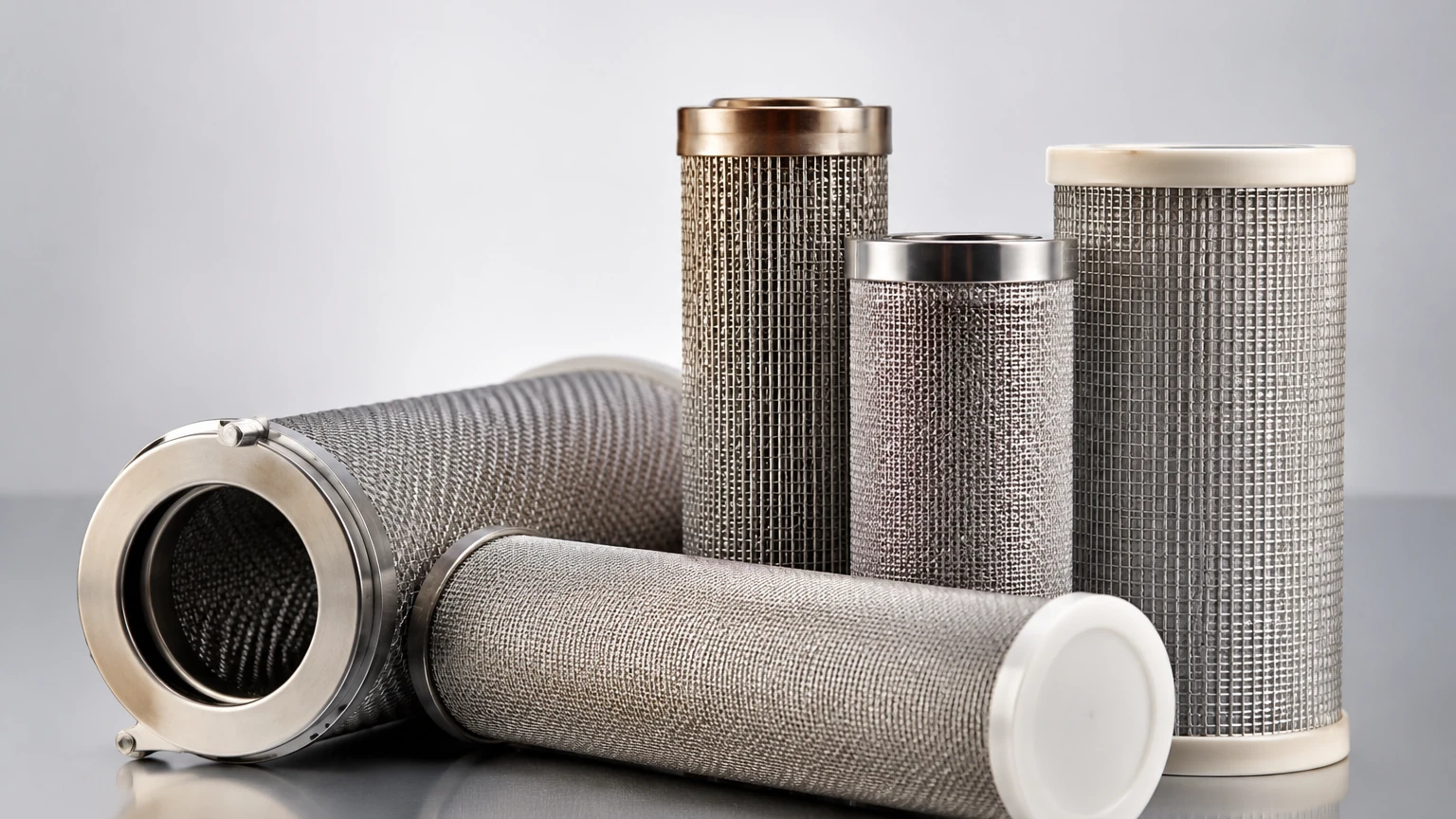
The first stage contains the coalescing cartridge. These elements are often constructed from layers of specialized media, including stainless steel wire mesh, fiberglass, or synthetic polymers. For high-temperature or chemically aggressive environments, stainless steel is the preferred material due to its structural integrity and resistance to corrosion. The media is designed with a graduated pore structure—tighter on the inside to capture small droplets and more open on the outside to allow large coalesced drops to exit.
The Separator Element
The second stage utilizes a separator element, which is typically hydrophobic (water-repelling). While the coalescing stage has already turned the fine mist into large droplets, the separator stage acts as a final barrier. In an oil-continuous system, the hydrophobic separator allows the oil to pass through while blocking the large water droplets, which then fall into a collection sump.
Housing and Monitoring Instrumentation
The vessel housing must be engineered to withstand the operating pressures of the system. It usually includes differential pressure gauges, which are critical for monitoring the health of the filter elements. An increase in differential pressure typically indicates that the media is becoming fouled with solid contaminants, necessitating a replacement or cleaning cycle.
Engineering Factors for Effective Oil-Water Separation
Designing or specifying a coalescer oil water separator involves more than just matching pipe sizes. Several technical variables must be analyzed to ensure the system performs to its rated efficiency.
Fluid Viscosity and Temperature
Viscosity is the resistance of a fluid to flow. High-viscosity fluids hinder the movement of droplets, making coalescence more difficult. Since viscosity is temperature-dependent, the operating temperature of the system must be stable. In many hydraulic or lubrication applications, heaters may be required to lower the oil's viscosity to a range where the coalescer can operate effectively.
Interfacial Tension (IFT)
Interfacial tension is a measure of the force at the boundary between the two liquids. If the IFT is too low (often caused by the presence of surfactants or detergents), the droplets become "stable" and resist merging. In such cases, standard mechanical coalescers may struggle, and specialized media treatments or electrostatic separation might be required.
Flow Velocity
Coalescence is a residence-time-dependent process. If the flow velocity through the media is too high, the shear forces can actually break apart large droplets back into a fine mist, a phenomenon known as re-entrainment. Engineers must size the separator to ensure the "face velocity" across the media remains within the manufacturer’s specified limits.
Material Selection and Technical Specifications
In industrial applications, the durability of the filtration media is as important as its separation efficiency. This is where the expertise of a professional manufacturer becomes vital. For those evaluating high-performance components, visiting the Main Page of a specialized manufacturer like Kaifil provides insights into the variety of stainless steel and alloy options available for custom filtration.
Stainless Steel Wire Mesh
Stainless steel 304 and 316L are the industry standards for coalescer supports and primary media. 316L, in particular, offers superior resistance to pitting and crevice corrosion in chloride-rich environments or acidic chemical streams. The use of precision-woven wire mesh allows for exact control over pore size and permeability.
Pleated vs. Cylindrical Designs
* Pleated Elements: These provide a significantly higher surface area within the same footprint. This reduces the flow velocity per square inch of media, extending the service life and improving the coalescing efficiency.
* Cylindrical Elements: These are often used in lower-flow applications or where the fluid contains a high load of solid particulates that might bridge the pleats of a standard filter.
Performance Evaluation and Selection Criteria
When purchasing a coalescer oil water separator, engineers should evaluate the following performance metrics to ensure the system meets the site's operational goals:
1. Effluent Quality: The target concentration of the dispersed phase in the output. For example, many turbine oil systems require water content to be reduced to below 100 ppm.
2. Micron Rating: The size of solid particles the coalescer can also remove. While the primary goal is liquid-liquid separation, coalescers often act as fine particulate filters. However, if the fluid is heavily contaminated with solids, a pre-filter is necessary to prevent the coalescer from plugging prematurely.
3. Compatibility: Ensure that all seals (O-rings), adhesives, and media materials are chemically compatible with the fluids being processed. Viton or PTFE seals are common choices for aggressive chemical applications.
4. Total Cost of Ownership (TCO): Beyond the initial purchase price, consider the cost of replacement elements and the downtime required for maintenance. High-quality stainless steel elements may have a higher upfront cost but offer longer service lives and the potential for cleaning and reuse.
Customization and OEM Solutions for Demanding Applications
Off-the-shelf coalescer systems often fail to meet the specific constraints of specialized industrial processes. Customization is frequently required in terms of vessel dimensions, mounting configurations, and media composition. For instance, in the pharmaceutical or food and beverage industries, the coalescer must meet strict sanitary standards, requiring high-polish finishes and specialized welding techniques.
OEM (Original Equipment Manufacturer) capabilities allow for the development of filtration components that fit perfectly within existing machinery, such as hydraulic power units or large-scale chemical reactors. Working with a manufacturer that understands the nuances of metal filtration ensures that the coalescer oil water separator is optimized for the specific flow rates and contaminant profiles of the application.
Maintenance and Troubleshooting for Long-Term Efficiency
A coalescer is a precision instrument that requires regular monitoring to maintain its efficiency. The most common cause of failure in oil-water separation is the fouling of the media by solid debris or the presence of surfactants that deactivate the coalescing surface.
Differential Pressure Monitoring
As previously mentioned, the differential pressure (ΔP) is the primary indicator of filter health. A sudden drop in ΔP might indicate a ruptured element or a bypass leak, while a steady rise indicates particulate buildup. Elements should generally be replaced when they reach a pre-determined ΔP limit, typically between 15 and 25 psi, depending on the system design.
Handling Surfactants
If a coalescer system suddenly stops producing clear effluent despite the elements being new, the presence of surfactants should be investigated. Surfactants lower the surface tension of the droplets, preventing them from adhering to the media. In these scenarios, upstream chemical treatment or a change in the type of oil/additive package may be necessary.
Conclusion
The coalescer oil water separator remains a cornerstone of industrial fluid purification. By leveraging the physics of coalescence and utilizing high-quality materials like stainless steel wire mesh, these systems protect critical infrastructure and ensure process consistency. Whether for chemical processing, marine fuel systems, or industrial hydraulics, the successful implementation of a coalescer depends on rigorous engineering, precise material selection, and a clear understanding of the fluid properties involved. For those seeking reliable, custom-engineered filtration components, partnering with an experienced manufacturer is the most effective way to achieve long-term performance and cost-efficiency.
