


Coalescing Company Us
In the landscape of industrial separation and purification, the role of a coalescing company in the US is pivotal for maintaining the integrity of fluid systems. Coalescing filtration is a specialized process used to separate two non-homogeneous phases—typically liquid droplets from a gas stream or one liquid from another immiscible liquid. For engineers and procurement professionals in the chemical processing, oil and gas, and pharmaceutical sectors, selecting a partner capable of delivering high-performance filtration components is essential for operational efficiency and equipment longevity.
Industrial coalescing requires a deep understanding of fluid dynamics, surface chemistry, and material science. Unlike standard particulate filtration, which relies on mechanical sieving, coalescing involves the gathering of sub-micron droplets into larger masses that can be easily removed by gravity. This process is critical in applications ranging from removing oil mist from compressed air to separating water from aviation fuel. As industrial standards in the United States become increasingly stringent regarding emissions and product purity, the demand for precision-engineered filtration solutions has grown.
The Fundamentals of Coalescing Filtration
To effectively evaluate a coalescing company in the US, one must first understand the underlying physics of the coalescing process. Coalescing filters typically operate through three distinct stages: interception, diffusion, and impaction.
Interception and Diffusion
Small droplets moving through a filter medium are influenced by different forces based on their size. For droplets larger than one micron, interception occurs when a droplet follows a gas streamline and comes into contact with a fiber. For much smaller particles (typically sub-micron), Brownian motion or diffusion causes the particles to move erratically, eventually colliding with the filter media.
The Coalescing Mechanism
Once these droplets contact the fibers of the filter media, they attach and begin to merge with other droplets. This growth continues until the droplets reach a size where the force of the fluid flow can no longer hold them against the fiber, or until they become heavy enough for gravity to pull them down. In a vertical coalescer, the liquid typically drains to a sump at the bottom of the housing. In a horizontal configuration, the separation may rely on different settling velocities.
Surface Tension and Media Selection
The effectiveness of this process is heavily dependent on the surface tension of the liquids involved. A professional coalescing company must provide media that is compatible with the specific surface tension of the fluids being processed. For instance, if the goal is to remove water from oil, the media must be hydrophilic (water-attracting) to encourage the water droplets to stick and grow, while the rest of the media might be designed to allow the oil to pass through with minimal resistance.
Material Engineering in Coalescing Systems
When sourcing components from a coalescing company in the US, the choice of material is a primary engineering consideration. While glass fiber and synthetic polymers are common in light-duty applications, industrial environments often require the durability of metal.
Stainless Steel Wire Mesh
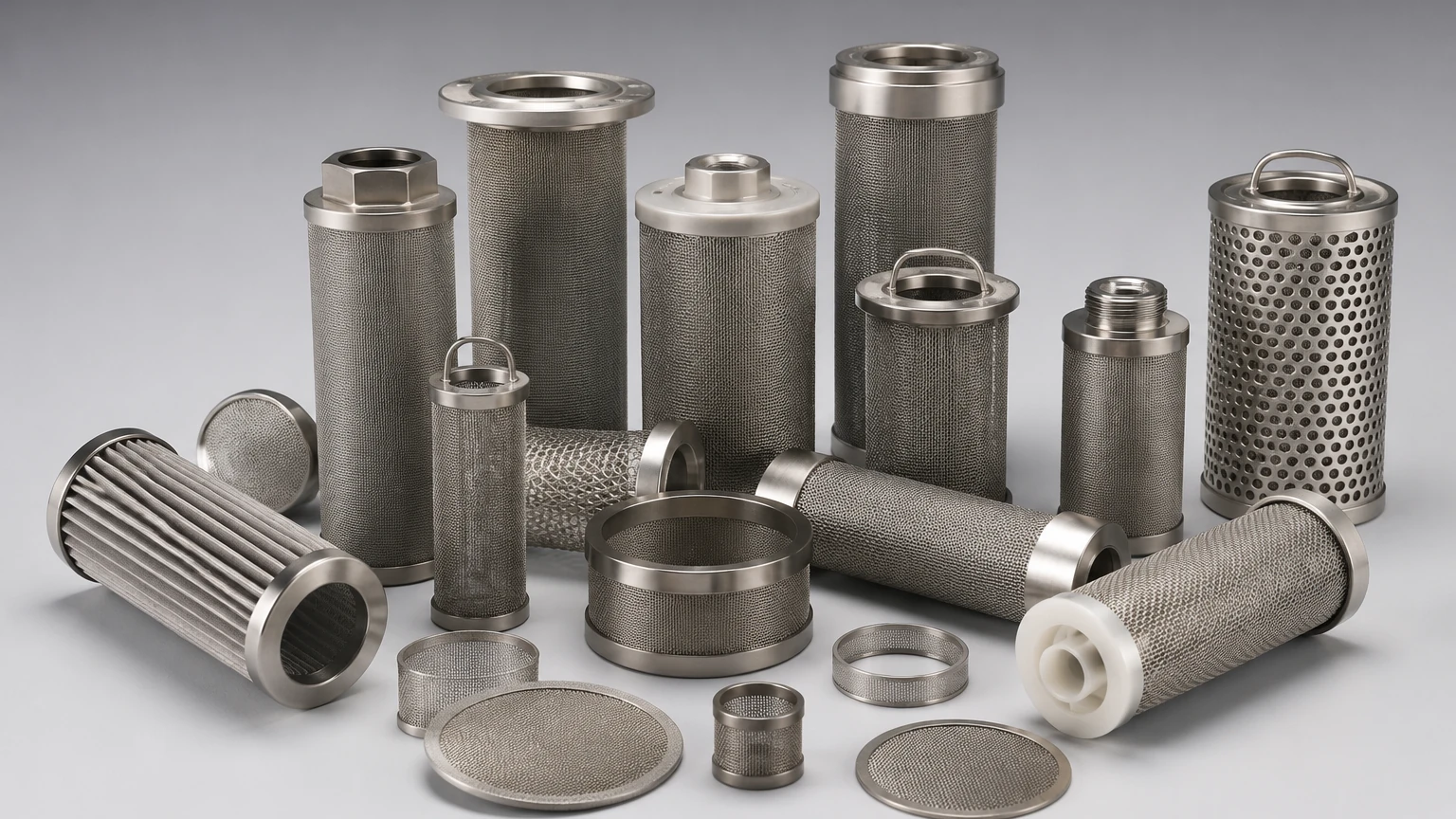
Stainless steel, particularly grades 304 and 316L, is the preferred material for demanding industrial filtration. Stainless steel wire mesh provides a stable structure that can withstand high differential pressures without deforming. This is crucial because if the filter media shifts or compresses, the pore structure changes, which can lead to "breakthrough"—where droplets are pushed through the filter before they have successfully coalesced.
Sintered Metal Media
For extreme environments involving high temperatures or corrosive chemicals, sintered metal fiber media offers superior performance. Sintering bonds the metal fibers together at their contact points, creating a rigid, porous structure. This material provides a high void volume, which translates to a lower initial pressure drop and a longer service life. Engineers often prefer sintered stainless steel for its cleanability and resistance to chemical attack, which are common requirements in the US chemical and pharmaceutical industries.
Criteria for Selecting a Coalescing Company in the US
Selecting a filtration partner involves more than just comparing micron ratings. A technical evaluation should cover several key areas to ensure the chosen solution meets the specific needs of the application.
Technical Expertise and Customization
Every industrial process has unique variables, including flow rates, temperatures, pressures, and chemical compositions. A reliable manufacturer should offer customization options rather than just off-the-shelf products. This includes the ability to adjust the density of the mesh, the layering of the media, and the overall dimensions of the filter cartridge to fit existing housings. For those seeking specialized support, you can Review product options and application support on the Kaifil Main Page to see how custom engineering addresses these variables.
Compliance with Standards
In the US market, adherence to recognized standards is a non-negotiable requirement. This includes ISO 12500, which specifically addresses the testing of filters for compressed air to determine their oil aerosol removal efficiency. Furthermore, for applications involving pressure vessels, compliance with ASME (American Society of Mechanical Engineers) codes for filter housings is essential for safety and regulatory approval.
Quality Assurance and Testing
Engineers should inquire about the company’s internal testing protocols. Does the manufacturer perform bubble point tests to verify pore size? Are there facilities for flow testing to determine the clean pressure drop? A transparent coalescing company in the US will provide material certifications (MTRs) and performance data sheets to back up their claims.
Industrial Applications and Performance Requirements
Coalescing technology is utilized across a broad spectrum of US industries, each with its own set of performance benchmarks.
Compressed Air and Gas
In compressed air systems, oil aerosols from the compressor lubricant can contaminate pneumatic tools, sensitive instruments, and end products. Coalescing filters are used to reduce oil content to levels as low as 0.01 mg/m³. In the natural gas industry, coalescers remove liquid hydrocarbons and water from the gas stream to protect downstream turbines and prevent hydrate formation in pipelines.
Fuel and Oil Purification
Water is a common contaminant in diesel, jet fuel, and lube oils. It can cause microbial growth, corrosion, and fuel injector failure. A coalescing system effectively removes emulsified water, ensuring the fuel meets ASTM specifications. In these applications, the durability of the filter element is paramount, as it must handle varying flow velocities and potential surges in water concentration.
Chemical and Petrochemical Processing
In chemical plants, coalescers are often used in liquid-liquid separation tasks, such as recovering expensive catalysts or separating organic phases from aqueous streams. The choice of 316L stainless steel is often mandatory here due to the presence of aggressive solvents or acidic environments.
Key Performance Metrics: Efficiency and Pressure Drop
When evaluating a coalescing filter, two metrics are of primary importance: separation efficiency and differential pressure (ΔP).
1. Separation Efficiency: This is usually expressed as a percentage of the total contaminant removed or as a maximum downstream concentration (e.g., < 5 ppm). It is important to note that efficiency can vary with the droplet size distribution. A high-quality coalescer should maintain high efficiency even as the droplet size decreases into the sub-micron range.
2. Differential Pressure: As fluid passes through the filter media, a pressure drop occurs. A high initial ΔP means the system must work harder, increasing energy costs. However, in coalescing, a certain amount of "wet pressure drop" is expected as the media becomes saturated with the liquid it is removing. An experienced coalescing company in the US will design elements that balance high efficiency with a manageable ΔP to optimize the total cost of ownership.
Customization and Technical Support for Filtration Systems
For many OEMs and plant engineers, a standard filter element is insufficient. Customization is often required to meet specific spatial constraints or unique chemical compatibility needs. A manufacturer like Kaifil specializes in providing these tailored solutions, utilizing advanced manufacturing techniques to produce stainless steel wire mesh and filter cartridges that meet exact specifications.
When working with a coalescing company in the US, the technical support team should be able to assist with:
* Sizing and Scaling: Ensuring the filter is large enough to handle the maximum flow rate without exceeding the critical velocity (the speed at which droplets are re-entrained into the stream).
* Material Compatibility: Advising on the best alloys and gasket materials for the specific fluids involved.
* Retrofitting: Designing elements that can replace obsolete or underperforming filters in existing systems without requiring expensive piping changes.
Total Cost of Ownership and Maintenance Strategies
While the initial purchase price of a filter is important, the total cost of ownership (TCO) is a more accurate measure of value. TCO includes the cost of the element, the energy cost associated with pressure drop, the cost of downtime for filter changes, and the potential cost of downstream equipment damage if the filter fails.
Replacement Cycles
Coalescing elements eventually need replacement when the pressure drop reaches a predetermined limit (usually 7-10 psid for compressed air systems). However, because coalescing media is designed to drain, they often have a longer service life than particulate filters, provided the incoming fluid is pre-filtered to remove solid contaminants. A professional coalescing company in the US will often recommend a staged filtration approach—using a coarse particulate filter upstream to protect the high-efficiency coalescer.
Cleanability
In certain liquid-liquid applications, stainless steel coalescing media can be cleaned and reused. This is a significant advantage over disposable synthetic filters, as it reduces waste and long-term procurement costs. Methods such as ultrasonic cleaning or backflushing can be employed, depending on the nature of the contaminants.
Conclusion
Identifying the right coalescing company in the US requires a focus on technical capability, material quality, and the ability to provide customized engineering support. By understanding the principles of coalescence and the importance of material selection, engineers can specify filtration solutions that protect their equipment and ensure the purity of their processes. Whether the application involves high-pressure gas or corrosive chemical separation, the use of durable materials like stainless steel wire mesh ensures a reliable and cost-effective filtration performance. For those looking to explore high-performance stainless steel options, visiting the Main Page provides a comprehensive overview of available technologies and custom manufacturing capabilities.
