


Industrial Dust Collector Manufacturers
In the landscape of modern manufacturing, air quality management is not merely a regulatory requirement but a fundamental component of operational efficiency and workplace safety. Industrial dust collector manufacturers provide the critical infrastructure needed to capture airborne contaminants, reclaim valuable product fines, and protect sensitive downstream equipment. However, for engineers and procurement professionals, selecting the right partner involves more than comparing CFM (cubic feet per minute) ratings. It requires a deep understanding of filtration mechanics, material science, and the long-term performance of the core filtration components.
Selecting a manufacturer is a strategic decision that impacts energy consumption, maintenance cycles, and compliance with environmental standards. This guide explores the technical considerations and evaluation criteria essential for identifying high-performance industrial dust collector manufacturers and the specialized filtration solutions that drive their systems.
Understanding the Landscape of Industrial Dust Collector Manufacturers
The market for dust collection systems is diverse, ranging from providers of massive, turnkey baghouse installations to specialized manufacturers focusing on high-precision, localized filtration. When evaluating industrial dust collector manufacturers, it is helpful to categorize them based on the technology they prioritize:
1. Baghouse Manufacturers
Baghouses are the workhorses of heavy industry, utilized in cement production, mining, and large-scale metalworking. These systems use long fabric bags to filter dust. Manufacturers in this space focus on high-volume airflow and robust structural engineering. The challenge for these systems often lies in the durability of the filter media when exposed to high temperatures or abrasive particles.
2. Cartridge Collector Manufacturers
Cartridge collectors are preferred for applications requiring high filtration efficiency in a compact footprint, such as pharmaceutical processing, laser cutting, and powder coating. These manufacturers focus on pleated media technology, which provides a larger surface area for filtration. Engineering considerations here revolve around pulse-cleaning efficiency and the prevention of "bridging" between pleats.
3. Cyclone Separator Manufacturers
Cyclones use centrifugal force to separate large particles from the air stream. Often used as pre-filters, these manufacturers emphasize aerodynamic design to maximize particle drop-out without excessive pressure loss. While they lack the fine filtration capabilities of cartridges, they are essential for reducing the load on secondary filtration stages.
Key Technical Evaluation Criteria for Manufacturers
When vetting industrial dust collector manufacturers, technical professionals must look beyond the external housing. The internal engineering of the filtration stage determines the system’s true value. Key criteria include:
Air-to-Cloth Ratio
The air-to-cloth (A/C) ratio represents the amount of air passing through one square foot of filter media. A lower ratio generally leads to longer filter life and lower pressure drop. Manufacturers who push high A/C ratios to reduce the initial footprint of the machine may inadvertently increase the total cost of ownership through frequent filter replacements and higher energy costs.
Filtration Efficiency and MERV Ratings
For industries dealing with hazardous dust, such as silica or active pharmaceutical ingredients (APIs), the Minimum Efficiency Reporting Value (MERV) is critical. Manufacturers should provide documented proof of their system's ability to capture sub-micron particles. In many high-performance applications, standard synthetic fibers are replaced with stainless steel wire mesh or sintered metal components to ensure consistent pore size and structural integrity under pressure.
Material Compatibility and Construction
Industrial environments often involve corrosive gases, high humidity, or extreme temperatures. A manufacturer’s ability to offer specialized materials, such as 304 or 316L stainless steel for both the housing and the filter elements, is a significant differentiator. For engineers in the chemical or food and beverage sectors, material traceability and compliance with FDA or 3-A standards are non-negotiable.
The Role of Specialized Filtration Components
While the dust collector housing provides the structure, the filter element is the heart of the system. Many leading industrial dust collector manufacturers partner with specialized component producers like Kaifil to integrate high-durability filtration media.
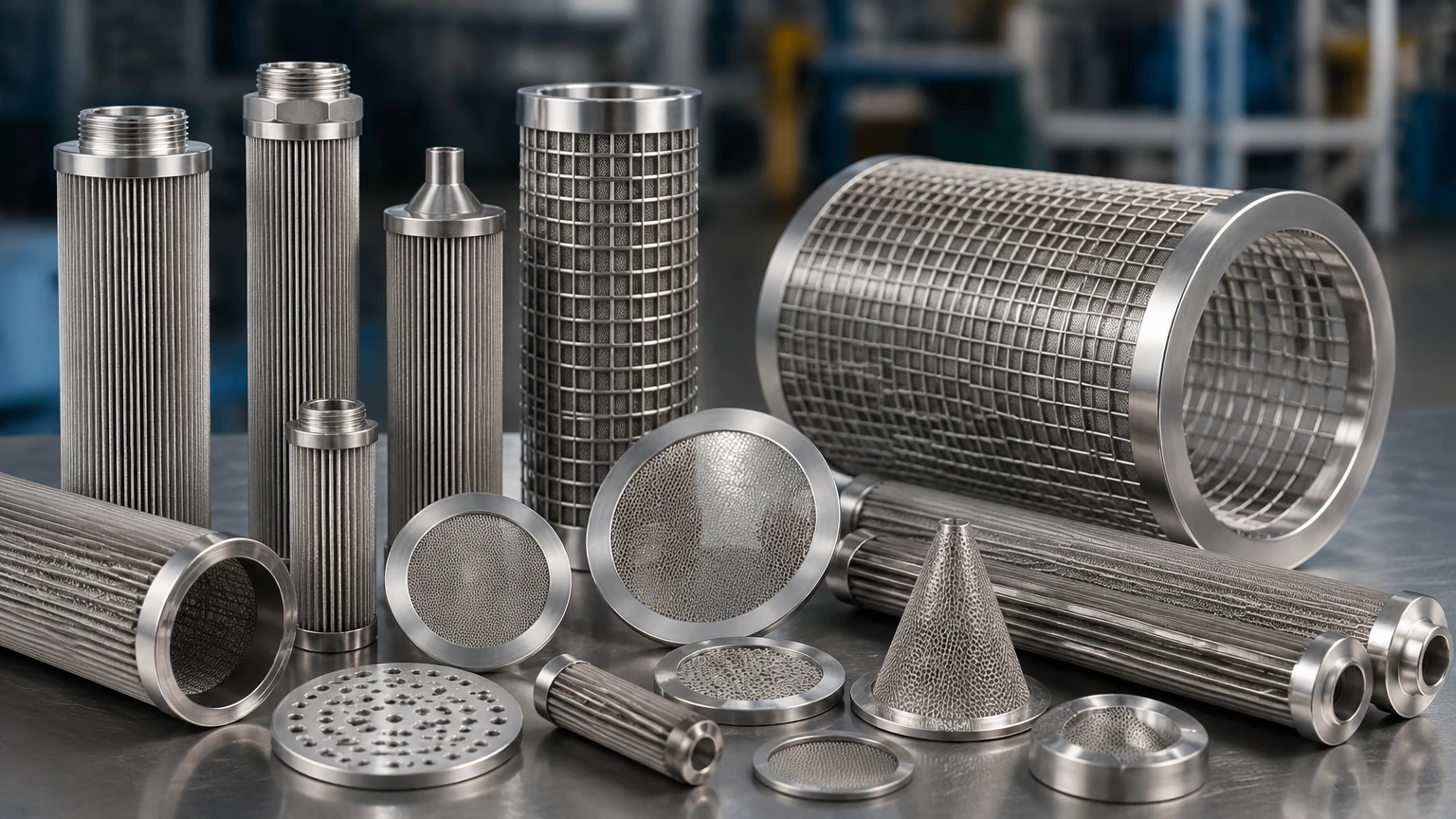
Stainless Steel Wire Mesh Filters
In applications where traditional fabric or paper filters fail due to heat or chemical attack, stainless steel wire mesh becomes the primary solution. These filters offer:
* High Temperature Resistance: Capable of operating in environments exceeding 500°F where synthetic media would melt.
* Cleanability: Unlike disposable cartridges, stainless steel mesh can be ultrasonically cleaned or back-flushed, significantly extending the service life.
* Precision: Woven wire mesh provides absolute filtration ratings, ensuring that no particles above a specific micron size pass through the system.
Custom Metal Filter Cartridges
For unique industrial processes, off-the-shelf filters often fall short. Custom-engineered metal cartridges allow for tailored pleat densities and support structures that can withstand high differential pressures without collapsing. This level of customization is essential for hydraulic systems and high-pressure gas filtration integrated within dust collection circuits.
Engineering Considerations for Customization
A common mistake in procurement is assuming that a standard model will handle a specific dust profile. Professional industrial dust collector manufacturers should offer engineering consultations to address the following:
1. Dust Characteristics: Is the dust hygroscopic (moisture-absorbing), explosive, abrasive, or oily? Each characteristic requires a different approach to filter media selection and pulse-cleaning timing.
2. System Integration: How will the collector interface with existing ductwork? Engineers must calculate the static pressure requirements to ensure the fan can overcome the resistance of both the ductwork and the loaded filter media.
3. Explosion Venting and Safety: For combustible dusts (e.g., sugar, flour, wood, certain metals), manufacturers must comply with NFPA standards, providing explosion vents, isolation valves, and fire suppression systems.
Common Risks and Pitfalls in Procurement
Navigating the offerings of various industrial dust collector manufacturers requires an awareness of common pitfalls that can lead to operational failures:
* Underestimating Pressure Drop: A system that starts with a high pressure drop will only become more expensive to operate as the filters load. This leads to increased strain on the motor and reduced suction at the source.
* Ignoring Chemical Compatibility: Using carbon steel components in a process that generates acidic vapors will lead to rapid corrosion and structural failure. Engineers should insist on stainless steel components for any corrosive or high-purity application.
* Focusing Solely on Initial Cost: The cheapest system often has the highest maintenance requirements. High-quality filtration elements, though more expensive upfront, reduce downtime and replacement frequency.
Selecting a Manufacturer: A Technical Checklist
Before finalizing a contract with industrial dust collector manufacturers, technical teams should confirm the following details:
* Testing Capabilities: Does the manufacturer have a lab to test your specific dust sample? This ensures the proposed filter media is effective for your particle size distribution.
* Lead Times for Replacement Parts: If the filter elements are proprietary, what is the lead time for replacements? Partnering with manufacturers who use standard-sized or easily customizable metal filters can mitigate this risk.
* Compliance Documentation: Can they provide material mill certificates, welding certifications, and efficiency test reports?
* OEM Support: For manufacturers of specialized machinery, does the filter provider offer OEM services to create branded, custom-fit filtration components?
For those seeking to optimize their filtration performance through precision-engineered components, visiting the Main Page of a specialized manufacturer like Kaifil can provide insights into custom stainless steel solutions that enhance the reliability of any industrial dust collection system.
The Importance of Total Cost of Ownership (TCO)
In the B2B sector, the most successful procurement strategies focus on TCO. For dust collection, this includes the purchase price, installation, energy consumption, compressed air usage (for cleaning), and the cost of replacement filters and disposal.
Industrial dust collector manufacturers that prioritize high-efficiency motors and low-pressure-drop filter media help plants reduce their carbon footprint and utility bills. Furthermore, by utilizing durable stainless steel filtration media, facilities can move away from the "throw-away" culture of disposable filters, aligning with modern sustainability goals while ensuring consistent production uptime.
Conclusion
The choice of an industrial dust collector manufacturer is a pivot point for plant safety and efficiency. By focusing on technical specifications, material integrity, and the engineering of the filtration components, B2B buyers can secure systems that perform reliably in the most demanding environments. Whether you are dealing with chemical vapors, food-grade powders, or abrasive metal fines, the integration of high-quality, custom-engineered filtration solutions is the key to long-term success.
To explore how custom stainless steel mesh and precision filter cartridges can be integrated into your industrial processes, you can Review product options and application support to find the right technical fit for your specific requirements.
