


Coalescing Filters
In industrial fluid processing and compressed gas systems, the presence of liquid contaminants—such as oil aerosols, water vapor, and sub-micron droplets—can lead to catastrophic equipment failure, product contamination, and significant downtime. Coalescing filters represent a critical engineering solution designed to remove these liquid contaminants from gas or liquid streams through a continuous process of merging small droplets into larger ones. Unlike standard particulate filters that simply trap solid debris, coalescers utilize complex physical mechanisms to separate immiscible liquids or aerosols, ensuring the purity of the process medium.
For engineers and procurement professionals, understanding the technical nuances of coalescing filtration is essential for optimizing system performance. As a specialized manufacturer of stainless steel filtration solutions, Kaifil provides the engineering expertise required to integrate these components into demanding industrial environments. Selecting the right filter involves more than just matching a port size; it requires a deep dive into fluid dynamics, material compatibility, and long-term maintenance considerations.
Understanding the Mechanics of Coalescing Filtration
The fundamental goal of a coalescing filter is to take a dispersed phase (liquid droplets) and separate it from a continuous phase (gas or another liquid). This process occurs in three distinct stages: capture, coalescence, and drainage. To achieve high efficiency, these filters typically operate from the inside of the filter element to the outside.
The Three Mechanisms of Capture
1. Direct Interception: This occurs when a particle or droplet follows a gas stream line but comes within one-half of its diameter of a filter fiber. The droplet touches the fiber and is captured by surface tension. This is most effective for larger droplets (typically above 1 micron).
2. Inertial Impaction: As the gas stream maneuvers around the dense matrix of the filter media, heavier droplets possess too much inertia to follow the curving path. They strike the fibers directly and adhere to them. This mechanism is highly dependent on the velocity of the fluid.
3. Brownian Diffusion: For extremely small sub-micron particles (often less than 0.1 microns), the droplets do not follow the gas flow but instead move in a random, zig-zag pattern due to collisions with gas molecules. This erratic movement increases the probability that the droplet will collide with a filter fiber and be captured.
Once captured, these tiny droplets travel along the fibers to the intersections of the media, where they merge with other droplets. This is the "coalescing" phase. As the droplets grow in mass, they eventually become heavy enough to be pushed by the air flow to the outer surface of the element. A specialized outer layer, often referred to as a drainage layer or "socks," allows the large drops to fall by gravity into a collection sump, where they can be removed via manual or automatic drains.
Core Components and Material Selection for Industrial Filters
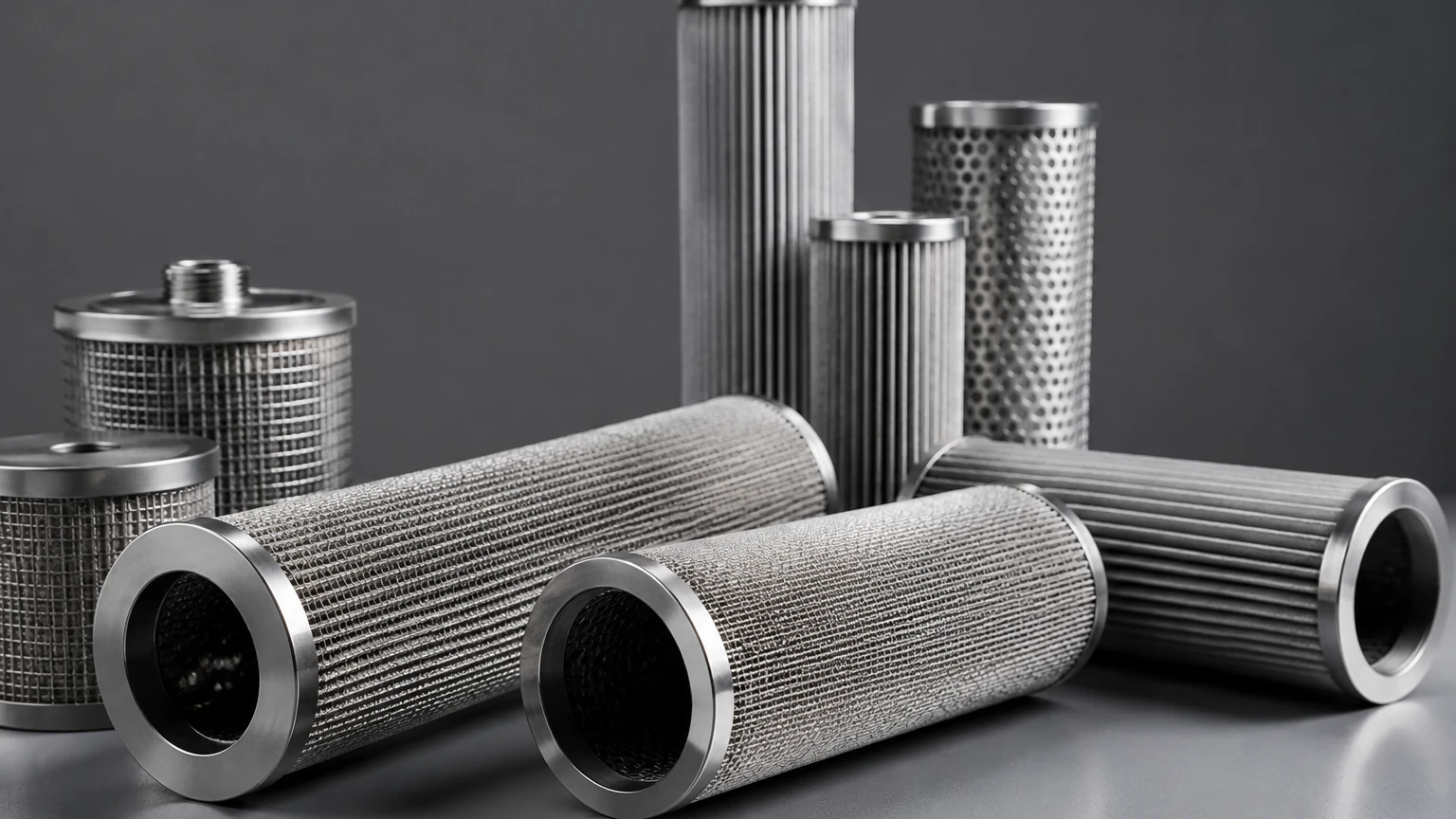
The performance of a coalescing filter is heavily dictated by its construction materials. In standard commercial applications, borosilicate glass microfibers are common. However, in industrial settings involving high temperatures, corrosive chemicals, or high-pressure differentials, stainless steel construction becomes the standard for reliability.
Filter Media
For specialized industrial applications, Kaifil utilizes high-grade stainless steel wire mesh and sintered metal fibers. These materials offer several advantages over synthetic media:
* Thermal Stability: Stainless steel can withstand temperatures far exceeding the limits of polymer-based filters, making them ideal for steam filtration or high-temperature gas processing.
* Chemical Compatibility: In the chemical and pharmaceutical industries, filters are often exposed to aggressive solvents and acids. Stainless steel 316L provides the necessary corrosion resistance to maintain structural integrity.
* Durability: Metal media can withstand higher differential pressures without the risk of media migration—where bits of the filter material break off and contaminate the downstream flow.
Housing and Sealing
The filter housing must be engineered to withstand the system's maximum operating pressure. Precision-machined stainless steel housings ensure that the sealing surfaces remain flat and leak-proof. The choice of O-rings (Viton, EPDM, or PTFE) must also be cross-referenced with the fluid being filtered to prevent swelling or degradation that could bypass the filter element.
Key Performance Indicators: Efficiency and Pressure Drop
When evaluating coalescing filters, engineers focus on two primary metrics: filtration efficiency (often expressed as a micron rating or Beta ratio) and differential pressure (DP).
Filtration Efficiency
Coalescing filters are typically rated by their ability to remove aerosols of a specific size. A high-efficiency coalescer might be rated at 99.99% for 0.01-micron droplets. It is important to note that efficiency is not a static number; it can fluctuate based on flow velocity and the concentration of the contaminant. In many industrial systems, a "pre-filter" is installed upstream of the coalescer to remove larger solid particulates, which prevents the fine coalescing media from clogging prematurely.
Differential Pressure (DP)
Differential pressure is the difference in pressure between the inlet and the outlet of the filter. Every filter introduces some resistance to flow. A "wet" coalescing filter (one that is actively saturated with liquid) will naturally have a higher DP than a dry one. Monitoring DP is the most effective way to determine when a filter element needs replacement. For most industrial systems, a terminal pressure drop of 7 to 10 psi (0.5 to 0.7 bar) indicates that the element is fouled and should be changed to avoid excessive energy costs and potential media failure.
Industrial Applications and Environmental Considerations
Coalescing technology is ubiquitous across various sectors, each with unique environmental challenges that dictate filter design.
Compressed Air Systems
In manufacturing plants, compressed air is often contaminated with compressor oil and atmospheric moisture. If these liquids reach pneumatic tools or sensitive control valves, they cause corrosion and sticking. Coalescing filters are placed after the air dryer to ensure "Instrument Quality" air.
Oil and Gas Processing
In the natural gas industry, coalescers are used to remove liquid hydrocarbons and water from the gas stream before it enters a compressor or a pipeline. This prevents "slugging," which can damage mechanical components. Because these environments are often offshore or in remote areas, the use of rugged stainless steel components is mandatory to resist salt spray and harsh weather.
Food, Beverage, and Pharmaceutical
In these industries, the primary concern is sterility and the absence of contaminants. Coalescing filters are used to ensure that the air used for packaging or product transfer is free of oil mist. Here, the cleanability of the filter housing and the use of FDA-compliant materials are paramount. You can explore more about specialized industrial filtration options on our Main Page.
Selection and Sizing Criteria for Engineering Teams
Selecting a coalescing filter based solely on pipe size is a common mistake that leads to poor performance. Proper sizing requires a detailed analysis of the following factors:
1. Flow Rate (SCFM or m³/hr): The filter must be sized for the maximum flow rate, not the average. If the velocity is too high, the gas will strip the coalesced droplets off the outer surface of the filter (re-entrainment), carrying them downstream.
2. Operating Pressure: As pressure increases, gas density increases. This affects the velocity of the gas through the media. Most filter manufacturers provide correction factors for different operating pressures.
3. Contaminant Type and Loading: Is the primary contaminant water, synthetic oil, or a chemical solvent? The surface tension of the liquid affects how easily it coalesces. High contaminant loads may require larger housings or multi-stage filtration units.
4. Allowable Pressure Drop: In energy-sensitive applications, such as large-scale air separation, even a small reduction in pressure drop can result in significant annual electricity savings.
Maintenance Protocols and Service Life Optimization
To ensure the longevity of a coalescing system, a proactive maintenance schedule is required. Unlike particulate filters, which can sometimes be cleaned (in the case of certain stainless steel meshes), high-efficiency coalescing elements with fine fiber structures are generally treated as consumables. However, the housing and the drainage system are permanent assets that require care.
Automatic Drain Maintenance
The most common cause of coalescer failure is a blocked drain. If the collected liquid cannot exit the sump, it will eventually rise to the level of the filter element. Once the element is submerged, it can no longer function, and the liquid will be forced downstream in a massive "slug." Regularly testing automatic float drains or electronic timed drains is a critical task for maintenance teams.
Monitoring and Replacement Cycles
While DP gauges provide a clear signal for replacement, some industries prefer a time-based replacement strategy (e.g., every 6 or 12 months) to ensure consistent air quality regardless of the gauge reading. This is particularly common in pharmaceutical manufacturing where the risk of a filter failure outweighs the cost of a new element.
The Role of Customization in Industrial Filtration
Standard off-the-shelf filters often fall short in specialized OEM applications. Whether it is a unique footprint requirement for a compact hydraulic power unit or a specific alloy requirement for a subsea application, customization is often the key to engineering success.
Kaifil specializes in bridging the gap between standard filtration products and custom-engineered solutions. By focusing on stainless steel and precision metal components, we provide filters that can be integrated into existing systems while meeting the specific filtration accuracy and durability requirements of the application. When engineers confirm the chemical properties of their process fluids and the physical constraints of their equipment, they can work with manufacturers to develop a filter that maximizes total cost of ownership (TCO) through reduced energy consumption and extended service intervals.
In conclusion, coalescing filters are more than just a barrier to contaminants; they are sophisticated separation devices that rely on precise physical interactions. By prioritizing material quality, accurate sizing, and robust maintenance, industrial operators can ensure the purity of their processes and the longevity of their capital equipment. For detailed technical specifications and support in selecting the right filtration components for your project, visiting the Main Page will provide access to our comprehensive product range and engineering resources.
