


Johnson Screens
In the landscape of industrial filtration and separation, the term "Johnson Screens" has become synonymous with high-performance wedge wire technology. Originally a brand name, it now frequently serves as a categorical descriptor for continuous-slot, all-welded stainless steel screens used in demanding environments. For engineers and procurement specialists, understanding the technical nuances of this technology is essential for optimizing process efficiency, ensuring structural integrity, and managing the total cost of ownership in applications ranging from water treatment to petrochemical processing.
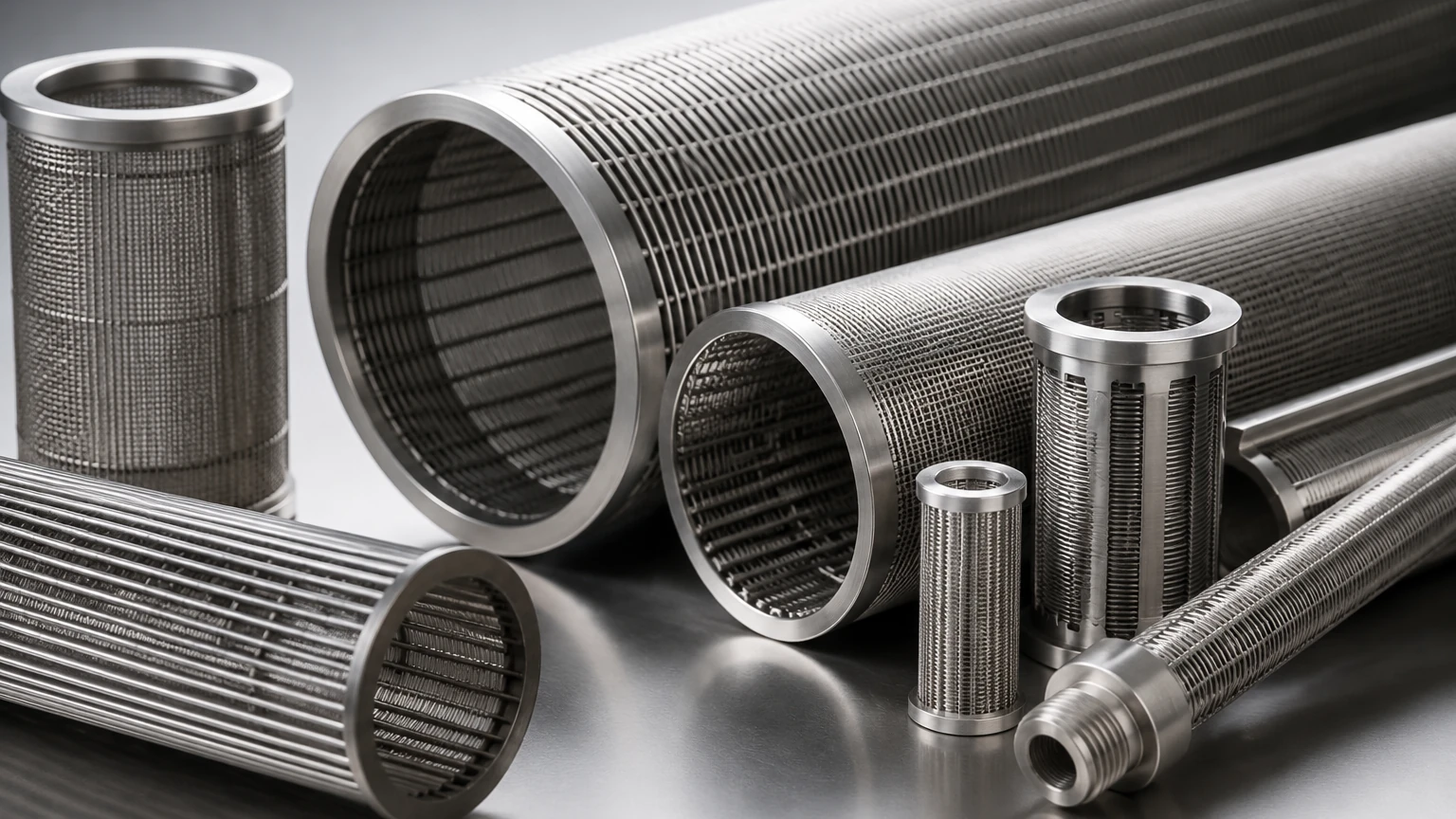
At its core, the technology relies on a V-shaped profile wire that is resistance-welded onto longitudinal support rods. This construction creates a screen that offers a unique combination of mechanical strength and filtration precision. Unlike traditional woven wire mesh or perforated plate, wedge wire provides a non-clogging surface that is particularly effective for solid-liquid separation.
Engineering Principles of Wedge Wire Design
The primary advantage of the technology often associated with Johnson Screens lies in its geometric configuration. The V-shaped profile wire is oriented so that the widest part of the "V" faces the incoming flow. This design ensures that any particle small enough to pass through the narrowest part of the slot will continue through the screen without becoming wedged.
The Non-Clogging Mechanism
Traditional filters with square or round apertures are prone to "blinding" or "pegging," where particles of a similar size to the opening become trapped. In a wedge wire screen, the two-point contact between the particle and the wire minimizes the friction that leads to clogging. This is a critical consideration for automated systems where downtime for manual cleaning must be minimized.
Structural Integrity and Welding
The manufacturing process involves advanced resistance welding, where each intersection of the profile wire and the support rod is fused. This creates a single, rigid structure. Unlike woven mesh, which can shift under high pressure, or perforated plates, which may have limited open area, wedge wire maintains its slot integrity even under significant differential pressure. This mechanical stability allows the screens to be used not only as filtration media but also as structural components in vessels, such as support grids for catalyst beds.
Key Technical Specifications and Selection Criteria
When specifying screens for industrial applications, engineers must balance several competing factors: filtration accuracy, flow rate, and mechanical load.
Slot Size and Tolerance
The slot size is the distance between the adjacent profile wires. In precision manufacturing, these slots can be as small as 20 microns or as large several millimeters. The tolerance of these slots is vital; in applications like resin traps or ion exchange units, even a slight deviation in slot width can lead to the loss of expensive media.
Open Area Percentage
The open area is a function of the slot width and the width of the profile wire. A higher open area results in a lower pressure drop and higher flow capacity. However, increasing the open area often requires using thinner profile wires, which may reduce the screen's burst strength or wear life. Engineering calculations must determine the optimal ratio to ensure the screen can handle the required flow velocity without compromising its lifespan.
Profile Wire and Support Rod Geometry
There are dozens of profile wire shapes available, each designed for specific stresses. Heavier wires are used for abrasive slurry handling, while finer wires are used for high-precision laboratory filtration. Similarly, the shape and spacing of the support rods determine the screen's ability to withstand collapse or burst pressures. For high-pressure hydraulic applications, support rods may be placed closer together to provide additional reinforcement.
Material Selection for Corrosive and High-Temperature Environments
Material science plays a pivotal role in the performance of industrial screens. While stainless steel is the standard, the specific grade must be matched to the chemical composition of the process fluid and the operating temperature.
1. Grade 304/304L: The most common choice for general water treatment and food processing. It offers good corrosion resistance and is cost-effective for non-acidic environments.
2. Grade 316/316L: Contains molybdenum, which provides superior resistance to chlorides and pitting. This is the preferred material for marine environments, pharmaceutical manufacturing, and chemical processing.
3. Duplex Stainless Steels: For extremely high-pressure or highly corrosive applications, Duplex alloys offer nearly double the yield strength of standard austenitic steels and exceptional resistance to stress corrosion cracking.
4. Specialty Alloys: In petrochemical refining where temperatures may exceed 500°C or where highly acidic catalysts are present, alloys like Hastelloy or Monel may be required to prevent premature failure.
Flow Configurations: FITO and FOTI
One of the most important decisions during the design phase is determining the flow direction. Wedge wire screens can be engineered for two primary flow patterns:
* Flow-In-To-Out (FITO): The filtration occurs on the internal surface of the cylinder. This is common in centrifuge baskets and certain types of pipe strainers where the solids are collected inside the screen for removal.
* Flow-Out-To-In (FOTI): The filtration occurs on the external surface. This is the standard configuration for intake screens, well screens, and most cartridge-style filters.
The orientation of the V-shaped wire (whether the flat side or the point faces the flow) must be correctly specified to ensure the non-clogging characteristics are maintained for the chosen flow direction.
Industrial Applications and Performance Expectations
The versatility of wedge wire technology allows it to be utilized across diverse sectors. Each industry has specific performance benchmarks that the screen must meet.
Water Treatment and Well Completion
In water well applications, Johnson-style screens are used to prevent sand from entering the pump while allowing water to flow freely. The high open area of wedge wire minimizes the entrance velocity of the water, which reduces the rate of encrustation and corrosion, thereby extending the life of the well.
Food and Beverage Processing
In breweries, lauter tun screens made of wedge wire are used to separate the wort from the grain. The precision of the slots ensures a clear extract, while the smooth surface allows for easy cleaning and sterilization, meeting strict hygienic standards.
Oil and Gas Refining
In the petrochemical industry, these screens are used in reactor internals. They must support tons of catalyst media while allowing gas or liquid to pass through at high temperatures. The ability of stainless steel wedge wire to maintain its shape under thermal expansion is a key reason for its dominance in this sector.
Maintenance and Total Cost of Ownership
While the initial capital expenditure for a high-quality wedge wire screen may be higher than that for disposable filters or woven mesh, the total cost of ownership is often lower due to durability and cleanability.
Cleaning and Backwashing
Wedge wire is ideally suited for backwashing or CIP (Clean-In-Place) systems. Because the slots widen inwardly, a reverse flow of fluid effectively dislodges accumulated solids. This allows for continuous operation in automated filtration systems, reducing labor costs and eliminating the need for frequent filter replacements.
Wear and Erosion Resistance
In applications involving abrasive slurries, the leading edges of the profile wires will eventually wear down. However, because the wire is solid metal rather than a thin strand (as in woven mesh), it can withstand significant erosion before the slot width changes enough to affect filtration accuracy. Many industrial screens can be refurbished or chemically cleaned to extend their service life further.
Customization and OEM Solutions
For many engineering projects, standard off-the-shelf screens are insufficient. Customization is often required to fit existing vessel dimensions or to meet unique flow requirements. Factors that can be customized include:
* End Fittings: Threaded NPT connections, flanges, or custom machined rings for easy installation into existing housings.
* Reinforcement: Internal or external cages for extra-high-pressure applications.
* Surface Treatments: Electropolishing for pharmaceutical applications to reduce surface roughness and improve corrosion resistance.
As a professional manufacturer, Kaifil specializes in these types of custom stainless steel filtration solutions. By focusing on precision engineering and high-quality material selection, Kaifil provides components that meet the rigorous standards expected of industrial-grade filtration. Whether you are designing a new system or looking for a replacement component that matches the performance of original Johnson Screens, technical consultation is available to ensure the design meets your specific application requirements.
For more information on custom filtration components and engineering support, you can visit the Main Page to explore the full range of manufacturing capabilities and technical resources available for industrial filtration projects.
Conclusion: Making an Informed Purchasing Decision
Selecting the right filtration media is a critical engineering decision that impacts the efficiency, safety, and profitability of an industrial process. When evaluating screens, it is important to look beyond the brand name and focus on the technical data: the alloy grade, the slot tolerance, the burst pressure rating, and the flow dynamics.
By confirming the specific environmental conditions—such as pH levels, maximum differential pressure, and particle size distribution—purchasing teams can ensure they receive a product that provides long-term reliability. Wedge wire technology, when correctly engineered and manufactured, remains one of the most robust and efficient solutions for modern industrial separation challenges.
