


Coalesor
In the landscape of industrial fluid processing, the separation of immiscible phases—whether liquid from liquid or liquid from gas—is a fundamental requirement for protecting downstream equipment, ensuring product purity, and meeting environmental regulations. A coalesor (often referred to in technical literature as a coalescer) is a specialized filtration and separation device designed to merge small droplets of a dispersed phase into larger droplets, which can then be easily separated from the continuous phase by gravity.
For engineers and procurement professionals, selecting the right coalesor involves a deep understanding of fluid dynamics, surface chemistry, and material science. As a manufacturer specializing in custom stainless steel filtration solutions, Kaifil provides high-performance components that integrate into these complex systems. This guide explores the technical principles, engineering considerations, and selection criteria essential for implementing effective coalescence technology in industrial environments.
The Principles of Coalescence in Industrial Systems
Coalescence is a multi-stage process that differs significantly from standard particulate filtration. While a traditional filter captures solid contaminants on a surface or within a depth medium, a coalesor is designed to manage fluid phases. The process generally occurs in three distinct stages: capture, coalescence, and drainage.
1. Droplet Capture
As the contaminated fluid passes through the coalescing media, the dispersed droplets (such as oil in water or water in fuel) must come into contact with the media fibers. This is achieved through three primary physical mechanisms:
* Direct Interception: Occurs when a droplet follows a fluid streamline and comes within one droplet radius of a fiber.
* Inertial Impaction: Happens when a droplet’s momentum causes it to deviate from the fluid streamline and strike a fiber.
* Brownian Diffusion: Relevant for sub-micron droplets, where random molecular motion brings the droplet into contact with the media surface.
2. Droplet Merging (Coalescence)
Once captured, the droplets must wet the surface of the media. As more droplets are captured, they move along the fibers and collide with one another. Because of the surface tension properties of the media, these small droplets merge to form larger ones. The efficiency of this stage is heavily dependent on the surface energy of the coalesor media relative to the fluids involved.
3. Drainage and Separation
When the merged droplets reach a sufficient size, the drag force of the flowing fluid or the force of gravity overcomes the adhesive forces holding the droplet to the media. These enlarged droplets then "release" and migrate to a collection area. Because the droplets are now significantly larger, the difference in density between the two phases (e.g., oil and water) allows for rapid separation according to Stokes' Law.
Types of Coalesor Applications
Industrial applications for coalescence are broadly categorized into liquid-liquid separation and gas-liquid separation. Each requires specific media configurations and housing designs to achieve optimal performance.
Liquid-Liquid Coalescence
This is commonly used in the petrochemical, pharmaceutical, and food processing industries. A typical example is the removal of water from hydrocarbon fuels or the separation of oil from industrial wastewater. In these systems, the coalesor must handle varying viscosities and chemical compositions. For instance, in the removal of water from aviation fuel, the coalesor must ensure that the fuel meets stringent dryness standards to prevent ice formation at high altitudes.
Gas-Liquid Coalescence
Also known as mist elimination, this process removes liquid aerosols from gas streams. It is critical in natural gas processing, where liquid hydrocarbons and water must be removed to prevent damage to compressors and turbines. In compressed air systems, a coalesor removes oil mist generated by lubricated compressors, ensuring the air is suitable for sensitive pneumatic tools or food-grade packaging lines.
Engineering Considerations for Coalesor Selection
Selecting a coalesor is not a one-size-fits-all process. Engineers must evaluate several technical parameters to ensure the system performs reliably over its intended service life. To explore specific component designs and custom options, technical teams often visit the Main Page of specialist manufacturers to review material compatibility and pressure ratings.
Fluid Properties and Chemistry
The physical properties of the fluids are the most critical factors in design. These include:
* Density Difference: The greater the difference in density between the continuous and dispersed phases, the easier the separation. If the densities are nearly identical, mechanical coalescence becomes significantly more challenging.
* Viscosity: High-viscosity fluids resist the movement of droplets through the media and slow down the rate of coalescence. This often requires larger housing sizes to reduce flow velocity.
* Interfacial Tension (IFT): This is a measure of the force at the interface of the two liquids. Low IFT (often caused by the presence of surfactants or "soaps") can "disarm" a coalesor, preventing droplets from merging effectively.
Flow Velocity and Flux Rates
Coalescence is a velocity-sensitive process. If the fluid moves too quickly through the media (high flux), the shear forces may break apart the droplets before they can coalesce or strip them from the media before they reach a sufficient size. Conversely, if the velocity is too low, the droplets may not have enough kinetic energy to impact the fibers. Engineers must calculate the optimal "face velocity" to balance efficiency with throughput.
Temperature and Chemical Compatibility
Industrial processes often operate at extremes. The coalesor media and housing must withstand the operating temperature without losing structural integrity or altering its surface energy. Furthermore, the materials must be chemically inert to the fluids involved to prevent corrosion or leaching. Stainless steel is often the preferred material for demanding chemical and pharmaceutical applications due to its broad compatibility and durability.
Material Selection: The Role of Stainless Steel
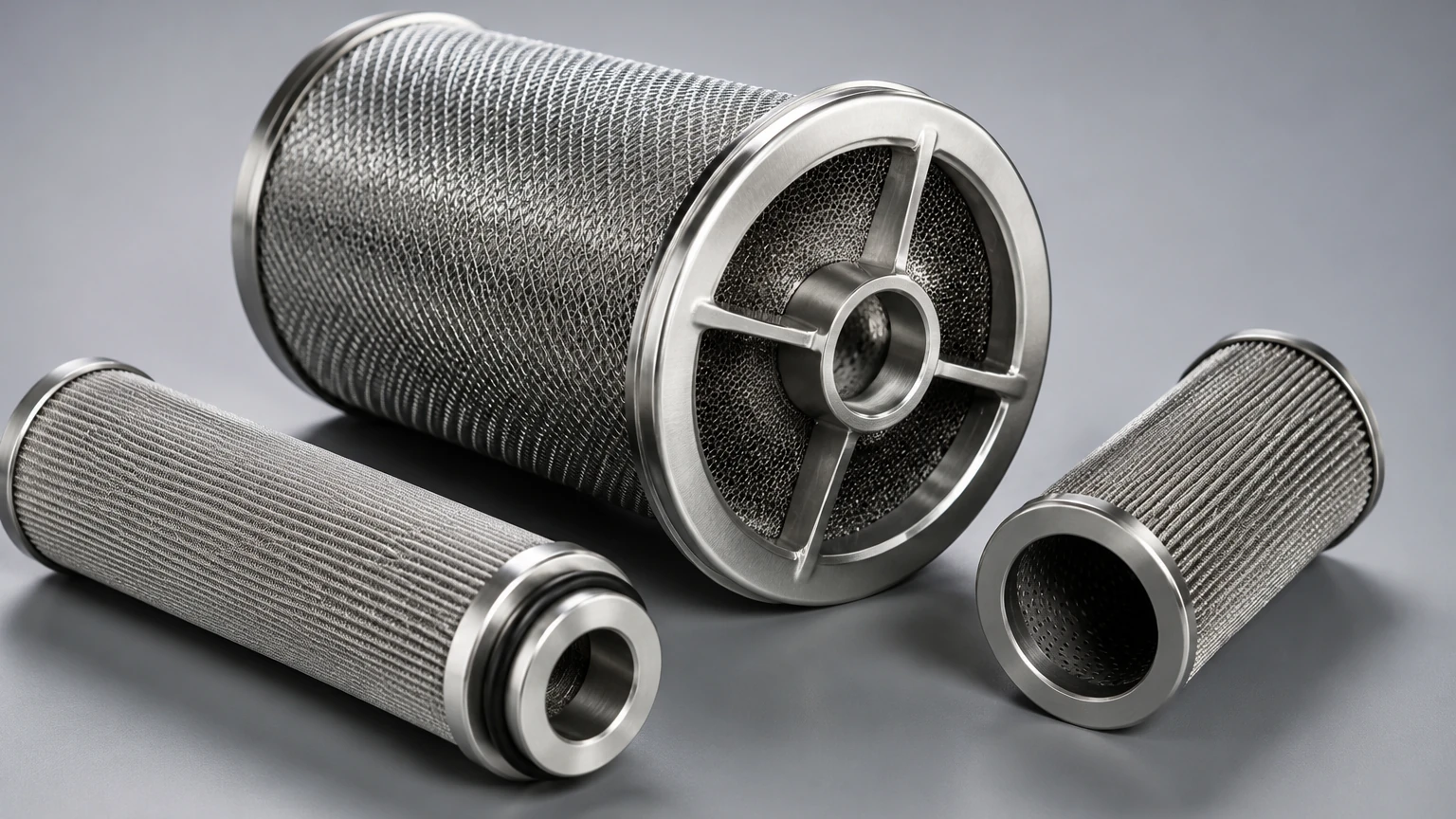
While synthetic fibers and fiberglass are common in standard applications, many industrial environments require the robustness of metal media. Stainless steel wire mesh and sintered metal fibers offer unique advantages for high-performance coalesor components.
* Durability: Unlike synthetic media, stainless steel can withstand high differential pressures and mechanical shocks without collapsing.
* Cleanability: In many processes, the ability to clean and reuse the filtration element is a significant cost-saving factor. Stainless steel coalescing elements can often be backwashed or chemically cleaned.
* Precision Engineering: Metal mesh can be manufactured with extremely tight tolerances, allowing for predictable pore sizes and consistent performance in critical separation tasks.
* Surface Modification: Stainless steel can be treated to be either hydrophobic (water-repelling) or hydrophilic (water-attracting), which is essential for tailoring the coalesor to specific liquid-liquid separation needs.
Operational Challenges and Maintenance
To maintain the efficiency of a coalesor system, engineers must implement a robust monitoring and maintenance strategy. Failure to do so can lead to "carryover," where the dispersed phase passes through the system unseparated, potentially causing catastrophic failure in downstream equipment.
Pressure Drop Monitoring
As the coalesor captures fine particulates (which often accompany fluid contaminants), the differential pressure across the media will increase. While a coalesor is not primarily a particulate filter, it will inevitably act as one. Monitoring the pressure drop is the most effective way to determine when the element is becoming fouled and requires cleaning or replacement.
Pre-filtration Requirements
To extend the life of a coalesor, it is standard engineering practice to install a particulate pre-filter upstream. By removing solid contaminants before they reach the coalescing media, the coalesor can focus solely on phase separation, leading to longer service intervals and more consistent performance.
Understanding "Disarming"
In liquid-liquid applications, surfactants can coat the coalescing media, changing its surface tension and preventing droplets from attaching and merging. This is known as disarming. When a coalesor is disarmed, it may still appear clean (low pressure drop) but will fail to separate the phases. Regular testing of the effluent is necessary to detect this condition.
Total Cost of Ownership (TCO)
When evaluating a coalesor, the initial purchase price is only one component of the total cost. Procurement teams should consider the following:
* Service Life: How long does the element last before it must be replaced or cleaned?
* Energy Costs: What is the pressure drop? Higher pressure drops require more pumping or compression power.
* Product Loss: How efficient is the separation? Invaluable product lost to the waste stream can quickly exceed the cost of a high-quality coalesor.
* Downstream Protection: What is the cost of repairing a turbine or reactor if the coalesor fails? Investing in a high-performance, custom-engineered solution often provides the lowest TCO by preventing expensive downtime.
Conclusion
The implementation of a coalesor is a critical decision for any industrial process involving multi-phase fluids. By focusing on the fundamental principles of droplet capture and merging, and by carefully selecting materials like stainless steel for their durability and precision, engineers can ensure long-term operational success. Whether the goal is to protect a high-pressure compressor or to ensure the purity of a pharmaceutical intermediate, understanding the technical nuances of coalescence is the first step toward an optimized system. For those seeking specialized guidance or custom-manufactured components, engaging with experienced manufacturers who understand the rigors of industrial filtration is essential for achieving reliable, high-performance separation.
