


Column Frit
In the field of high-performance liquid chromatography (HPLC), solid-phase extraction (SPE), and various industrial chemical reactors, the column frit serves as a critical interface between the fluid stream and the stationary phase. While often perceived as a simple porous disc, the engineering behind a column frit determines the efficiency of the separation process, the longevity of the column, and the overall system pressure. For engineers and procurement specialists in the pharmaceutical, chemical processing, and laboratory equipment sectors, understanding the nuances of frit design and material science is essential for optimizing filtration performance.
As a specialized manufacturer of stainless steel filtration solutions, Kaifil provides precision-engineered components designed to withstand the rigorous demands of industrial environments. This guide explores the technical considerations, material properties, and selection criteria for column frits in professional applications.
The Fundamental Role of Column Frits
A column frit is a porous component positioned at the inlet and outlet of a filtration or chromatography column. Its primary functions are three-fold:
1. Bed Retention: The frit must retain the packing material (stationary phase) within the column. If the pore size of the frit is too large relative to the particle size of the packing media, the media will leak into the system, leading to column failure and downstream contamination.
2. Flow Distribution: At the inlet, the frit acts as a flow distributor. It ensures that the mobile phase or process fluid is introduced uniformly across the entire cross-section of the column bed. Uneven distribution leads to "channeling," which significantly reduces separation efficiency.
3. Particulate Protection: The frit protects the sensitive column bed from particulates present in the sample or mobile phase. By acting as a final stage of filtration, it prevents the clogging of the interstitial spaces between packing particles.
Material Engineering: Why Stainless Steel is Preferred
While frits can be manufactured from various materials, including PEEK (polyetheretherketone), titanium, and polyethylene, 316L stainless steel remains the industry standard for most industrial and high-pressure applications. The selection of material is governed by chemical compatibility, mechanical strength, and thermal stability.
Chemical Compatibility
316L stainless steel offers excellent resistance to a wide range of solvents and chemicals common in pharmaceutical and industrial processing. It is particularly resistant to organic solvents and many aqueous buffers. In environments where extreme corrosion resistance is required—such as applications involving high concentrations of halides—specialized alloys or passivated stainless steel surfaces may be specified.
Mechanical Strength and Pressure Resistance
In HPLC and high-pressure reactors, system pressures can exceed 5,000 to 10,000 PSI. Plastic frits like PEEK may deform or compress under these loads, altering the porosity and flow characteristics. Stainless steel frits maintain their structural integrity, ensuring consistent flow rates and retention characteristics throughout the lifecycle of the column.
Thermal Stability
Industrial processes often operate at elevated temperatures to reduce solvent viscosity or accelerate reaction kinetics. Stainless steel frits provide a stable coefficient of thermal expansion, ensuring that the seal between the frit and the column wall remains tight even during thermal cycling.
Understanding Porosity and Micron Ratings
The most critical specification of a column frit is its micron rating. This rating defines the size of the particles that the frit is designed to retain. However, in an engineering context, it is vital to distinguish between nominal and absolute ratings.
* Nominal Rating: This indicates the ability of the frit to retain a majority of particles of a specific size. It is often used for sintered metal powder frits where the pore structure is tortuous.
* Absolute Rating: This refers to the diameter of the largest hard spherical particle that will pass through the frit under specified test conditions.
The "Rule of Thumb" for Selection
To prevent clogging and ensure effective retention, engineers typically follow the rule that the frit's pore size should be significantly smaller than the average particle size of the packing media. A common industry standard is to select a frit with a micron rating that is approximately 1/2 to 1/3 the diameter of the smallest packing particles. For example, if a column is packed with 5-micron particles, a 0.5-micron or 2-micron frit is generally recommended.
Sintered Metal Powder vs. Multi-Layer Wire Mesh
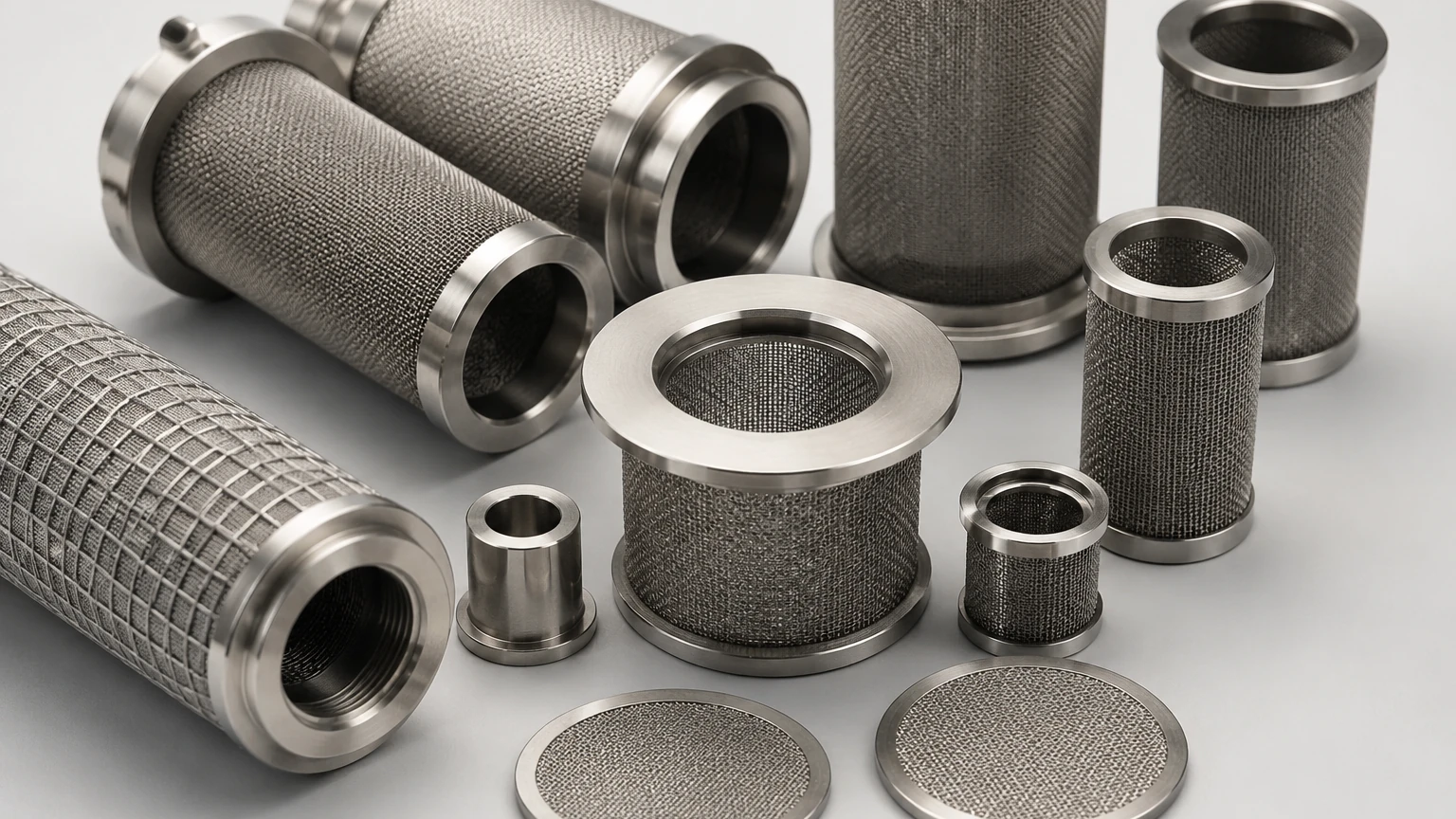
Kaifil specializes in different manufacturing methods for column frits, primarily focusing on sintered metal powder and precision wire mesh constructions. Each has distinct advantages depending on the application.
Sintered Metal Powder Frits
These are produced by compressing stainless steel powder into a mold and heating it below its melting point. This process creates a rigid, porous structure with a highly tortuous path.
* Advantages: Exceptional depth filtration, high mechanical strength, and the ability to achieve very fine micron ratings (down to 0.2 microns).
* Applications: Ideal for analytical HPLC columns and applications requiring high-efficiency particulate removal.
Multi-Layer Sintered Wire Mesh
This involves bonding multiple layers of stainless steel wire mesh together through a sintering process.
* Advantages: More precise control over the pore size, higher flow rates due to higher porosity, and easier cleaning (surface filtration rather than depth filtration).
* Applications: Preferred for large-scale industrial columns, chemical reactors, and applications where backpressure must be kept to an absolute minimum.
Technical Evaluation: Backpressure and Dead Volume
When specifying a column frit, two performance metrics must be carefully balanced: backpressure and dead volume.
Minimizing Backpressure
Every frit introduces a degree of flow resistance. Excessive backpressure can strain pumps, generate heat, and limit the flow rate of the entire system. Backpressure is influenced by the frit's thickness, diameter, and porosity. Engineers must calculate the expected pressure drop ($ΔP$) using Darcy's Law for porous media to ensure the system remains within its operational limits.
Reducing Dead Volume
In chromatography, "dead volume" (the volume within the frit that is not part of the active column bed) can lead to peak broadening and reduced resolution. A well-designed frit should have a minimal thickness while maintaining sufficient mechanical strength. Furthermore, the interface between the frit and the column housing must be precision-machined to eliminate gaps where fluid can stagnate.
Customization and OEM Requirements
For manufacturers of industrial equipment, off-the-shelf components rarely meet the exact requirements of a proprietary system. Customization is often necessary in the following areas:
* Dimensional Tolerances: Precision is paramount. A frit that is even slightly undersized will allow fluid to bypass the filter (leakage), while an oversized frit will not fit the housing. Kaifil provides components with tight tolerances to ensure a perfect press-fit or drop-in installation.
* Edge Sealing: To prevent fluid bypass, frits can be encapsulated in a ring of PEEK, PTFE, or stainless steel. This "ringed frit" design ensures that all fluid is forced through the porous media.
* Surface Finish: In pharmaceutical applications, the cleanliness and surface finish of the metal are critical to prevent sample adsorption or contamination. Electropolishing and specialized cleaning protocols are often employed.
Maintenance and Replacement Cycles
In industrial filtration, the column frit is a consumable component. Over time, the accumulation of fine particulates or chemical precipitates will lead to an increase in system backpressure.
Signs of Frit Failure
1. Pressure Spikes: A gradual or sudden increase in operating pressure often indicates a clogged inlet frit.
2. Split Peaks or Tailing: In chromatography, if the frit is partially clogged or the flow distribution is compromised, it will manifest as poor peak symmetry.
3. Reduced Flow Rates: In gravity-fed or low-pressure systems, a clogged frit will significantly slow down process timelines.
Cleaning Protocols
While some stainless steel frits can be cleaned via sonication in a suitable solvent or backflushing, many high-precision applications require replacement to ensure consistent results. The cost of a replacement frit is typically negligible compared to the value of the column packing material or the cost of system downtime.
Conclusion: Selecting a Reliable Partner
The performance of a column frit is a determining factor in the success of industrial separation and filtration processes. By focusing on material purity, precise porosity control, and mechanical integrity, engineers can ensure their systems operate at peak efficiency. When sourcing components, it is essential to work with a manufacturer that understands the technical rigors of the industry.
Kaifil offers extensive expertise in developing custom stainless steel filtration solutions tailored to specific application requirements. For technical specifications, material certifications, or to discuss custom dimensions for your project, please Review product options and application support on our Main Page. Our engineering team is available to assist with material selection and design optimization to ensure your filtration systems achieve maximum durability and performance.
