


Drum Filter Manufacturer
In the landscape of industrial liquid-solid separation, the role of a drum filter manufacturer is critical for ensuring process efficiency, regulatory compliance, and equipment longevity. Drum filters, particularly rotary vacuum drum filters (RVDF) and gravity drum filters, are essential components in continuous filtration processes where high volumes of slurry or effluent must be processed with minimal downtime. Selecting a manufacturer requires a deep understanding of engineering specifications, material science, and the specific hydraulic demands of the application.
For engineers and procurement professionals, the search for a drum filter manufacturer often begins with a need for technical reliability. Whether the application involves wastewater treatment, food processing, or chemical manufacturing, the filtration media—often a precision-engineered stainless steel wire mesh—must withstand mechanical stress, chemical corrosion, and varying pressure differentials.
Understanding the Role of a Drum Filter Manufacturer in Industrial Processes
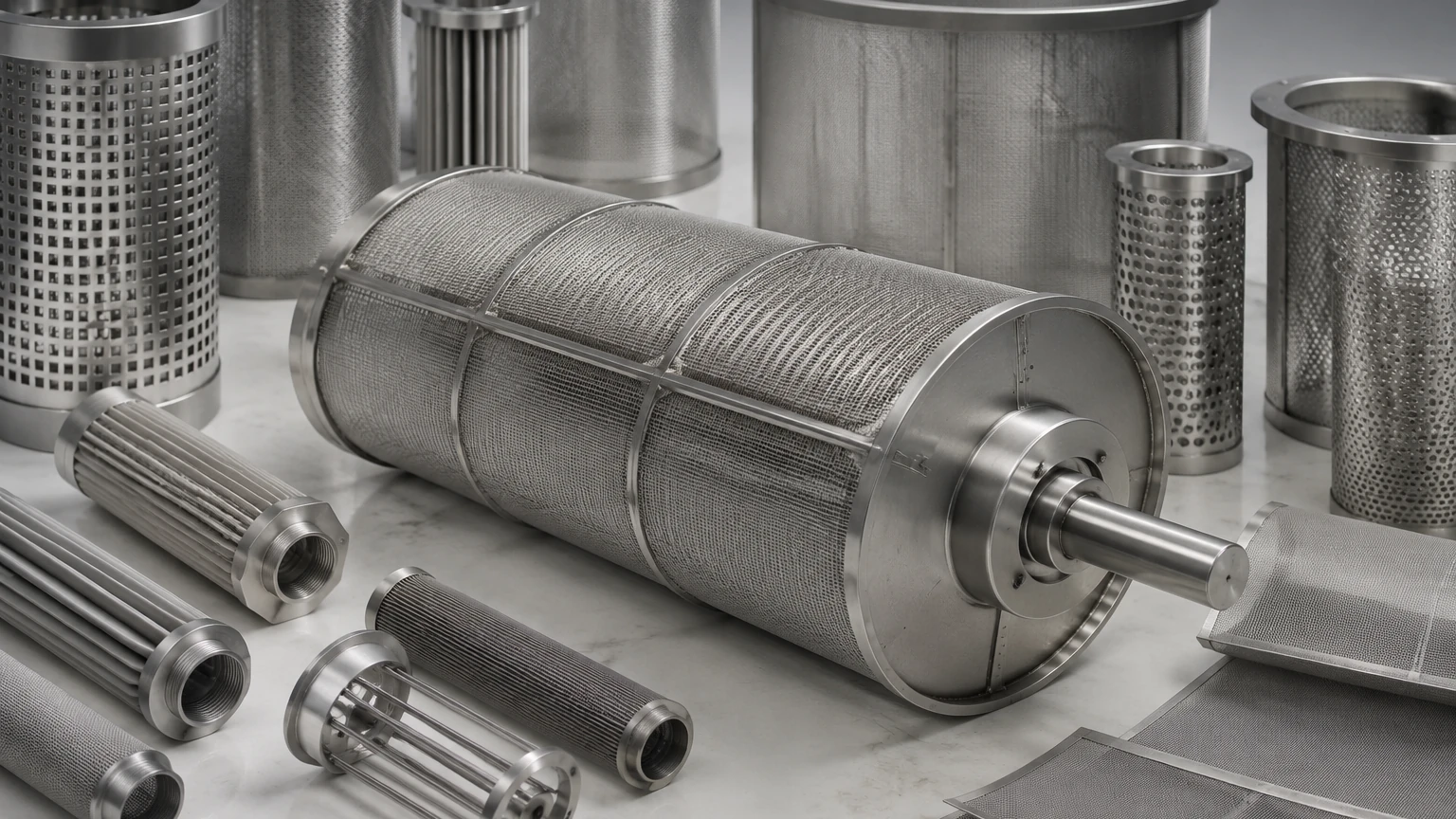
A drum filter manufacturer does more than assemble hardware; they provide the engineering backbone for continuous separation systems. The primary function of a drum filter is to remove suspended solids from a liquid stream by passing the fluid through a rotating drum covered in filter media. As the drum rotates, the solids are trapped on the surface, while the clarified liquid passes through to the interior.
Manufacturers must account for several variables during the design phase. These include the solids concentration in the feed, the particle size distribution, the required flow rate (flux), and the chemical nature of the filtrate. A specialized manufacturer focuses on the structural integrity of the drum and the precision of the filter mesh to ensure that the system can operate 24/7 without premature fatigue or bypass leakage.
Technical Specifications and Engineering Considerations
When evaluating a drum filter manufacturer, technical specifications should be the primary focus. The performance of the filter is largely determined by the interaction between the drum’s mechanical design and the filtration media.
Material Selection and Corrosion Resistance
Industrial environments often involve exposure to aggressive chemicals or high temperatures. A professional manufacturer typically utilizes stainless steel grades such as 304, 316, or 316L.
- Type 304: Suitable for general industrial use and standard water treatment.
- Type 316/316L: Preferred for applications involving chlorides, acids, or pharmaceutical-grade requirements due to superior pitting resistance.
- Specialty Alloys: In highly corrosive environments, manufacturers may offer Duplex stainless steel or exotic alloys to prevent stress corrosion cracking.
Filtration Accuracy and Micron Ratings
The choice of wire mesh is the most critical factor in achieving the desired filtrate quality. Manufacturers provide various weave patterns—such as plain weave, twilled weave, or Dutch weave—to balance filtration precision with flow capacity. Engineering teams must confirm the nominal versus absolute micron rating to ensure that the filter captures the target particle size without excessive pressure drop.
Structural Integrity of the Drum
The drum must maintain perfect concentricity to ensure an even seal against the discharge scrapers or backwash nozzles. A manufacturer’s ability to provide precision-machined components and reinforced internal bracing determines how well the drum handles the weight of the filter cake and the vacuum or gravitational forces applied during operation.
Key Evaluation Criteria for Selecting a Drum Filter Manufacturer
Choosing the right partner involves assessing their ability to meet custom engineering requirements rather than just providing off-the-shelf products. Engineers should evaluate the following criteria:
1. OEM and Customization Capabilities: Can the manufacturer adapt the drum dimensions, mesh type, and connection interfaces to fit existing infrastructure? Customization is often necessary for retrofitting older systems or optimizing for unique slurry characteristics.
2. Quality Control and Testing: A reliable manufacturer should provide material certifications (MTRs) and perform rigorous testing, such as bubble point tests for mesh integrity and hydraulic flow testing to verify performance curves.
3. Manufacturing Precision: Look for manufacturers that utilize advanced welding techniques (such as TIG or laser welding) and CNC machining to ensure that the filter components are durable and free of crevices where bacteria or contaminants could accumulate.
4. Technical Support: The manufacturer should offer guidance on the optimal mesh selection based on the specific viscosity and particle morphology of the process fluid.
Common Applications and Industry-Specific Requirements
Drum filters are utilized across a broad spectrum of industries, each with unique challenges that a manufacturer must address.
* Chemical Processing: Requires high resistance to solvents and acids. Manufacturers must ensure that all gaskets, seals, and the metal mesh are chemically compatible with the process stream.
* Food and Beverage: Demands sanitary designs. This includes smooth surface finishes (low Ra values), food-grade materials, and designs that facilitate Clean-in-Place (CIP) procedures to prevent microbial growth.
* Pharmaceuticals: Requires high-precision filtration and full traceability of materials. The manufacturer must provide documentation that complies with strict regulatory standards.
* Water and Wastewater Treatment: Often involves high flow rates and varying solids loading. The manufacturer must design systems that can handle seasonal fluctuations in water quality without frequent blinding of the filter media.
Performance Expectations and Maintenance Cycles
The total cost of ownership (TCO) for a drum filter is heavily influenced by the quality of the initial manufacturing. A well-engineered drum filter should offer high uptime and predictable maintenance intervals.
Replacement Cycles
The filter media is a wear item. A manufacturer that uses high-quality stainless steel wire mesh will typically offer longer service lives compared to those using lower-grade materials or synthetic fabrics. Engineers should ask about the ease of replacing the mesh—specifically, whether the drum design allows for sectional replacement of the media or if the entire drum must be stripped.
Backwash Efficiency
For automatic drum filters, the efficiency of the backwash system is paramount. The manufacturer must design the spray nozzles and the mesh support structure to ensure that solids are effectively removed during the cleaning cycle, maintaining a low differential pressure and reducing energy consumption.
How Kaifil Supports Custom Filtration Needs
As a specialist in stainless steel filtration solutions, Kaifil provides the technical expertise required to support the components used by a drum filter manufacturer. By focusing on precision-engineered wire mesh and custom filter cartridges, Kaifil addresses the critical need for durability and accuracy in industrial separation.
Whether you are looking for high-performance replacement mesh for an existing system or seeking a partner to develop custom filtration components for new equipment, reviewing technical options is an essential step. You can explore the full range of capabilities and technical specifications on the Main Page to understand how customized metal filtration can improve your process efficiency. Kaifil’s experience in material selection and advanced manufacturing ensures that filtration components meet the rigorous demands of chemical, pharmaceutical, and industrial applications.
Frequently Asked Questions for Engineering and Purchasing Teams
Before finalizing a contract with a drum filter manufacturer, engineering and purchasing teams should confirm the following details:
What is the expected flux rate for our specific slurry?
Flux rate (liters per square meter per hour) varies based on the solids concentration and the micron rating of the mesh. The manufacturer should provide empirical data or pilot testing results to support their claims.
How does the manufacturer handle mesh blinding?
Inquire about the recommended backwash pressure and the compatibility of the mesh weave with the particle shape. Certain weaves are more resistant to "plugging" or "blinding" than others.
What documentation is provided with the equipment?
For B2B procurement, documentation should include material grade certifications, hydrostatic test reports, and detailed maintenance manuals with clear part numbers for replacement components.
Can the manufacturer assist with material compatibility?
If the process fluid contains trace amounts of corrosive elements, the manufacturer should be able to recommend the appropriate stainless steel grade or coating to prevent premature failure.
By focusing on these technical and operational factors, organizations can select a drum filter manufacturer that provides long-term value, ensuring that their filtration processes remain efficient, reliable, and cost-effective.
