


Continuous Self-cleaning Filter
In industrial liquid processing, the transition from manual batch filtration to automated systems represents a significant shift toward operational efficiency and process stability. A continuous self-cleaning filter is an automated filtration system designed to remove suspended solids from liquids without interrupting the flow or requiring frequent manual intervention. For engineers and facility managers, understanding the mechanical principles, material constraints, and integration requirements of these systems is essential for optimizing production uptime and maintaining product quality.
Unlike traditional bag or cartridge filters that necessitate process downtime for element replacement once a terminal pressure drop is reached, a continuous self-cleaning filter employs a mechanical cleaning cycle. This allows the system to maintain a relatively constant differential pressure while handling high solids loading or viscous fluids. For more information on specialized filtration components, visit the Main Page to explore technical specifications and manufacturing capabilities.
Mechanical Principles of Continuous Self-cleaning Filtration
The core functionality of a continuous self-cleaning filter relies on the ability to clean the filter element while the fluid is still passing through the system. There are two primary mechanical approaches used in industrial environments: mechanical scraping and backwashing.
Mechanical Scraping Systems
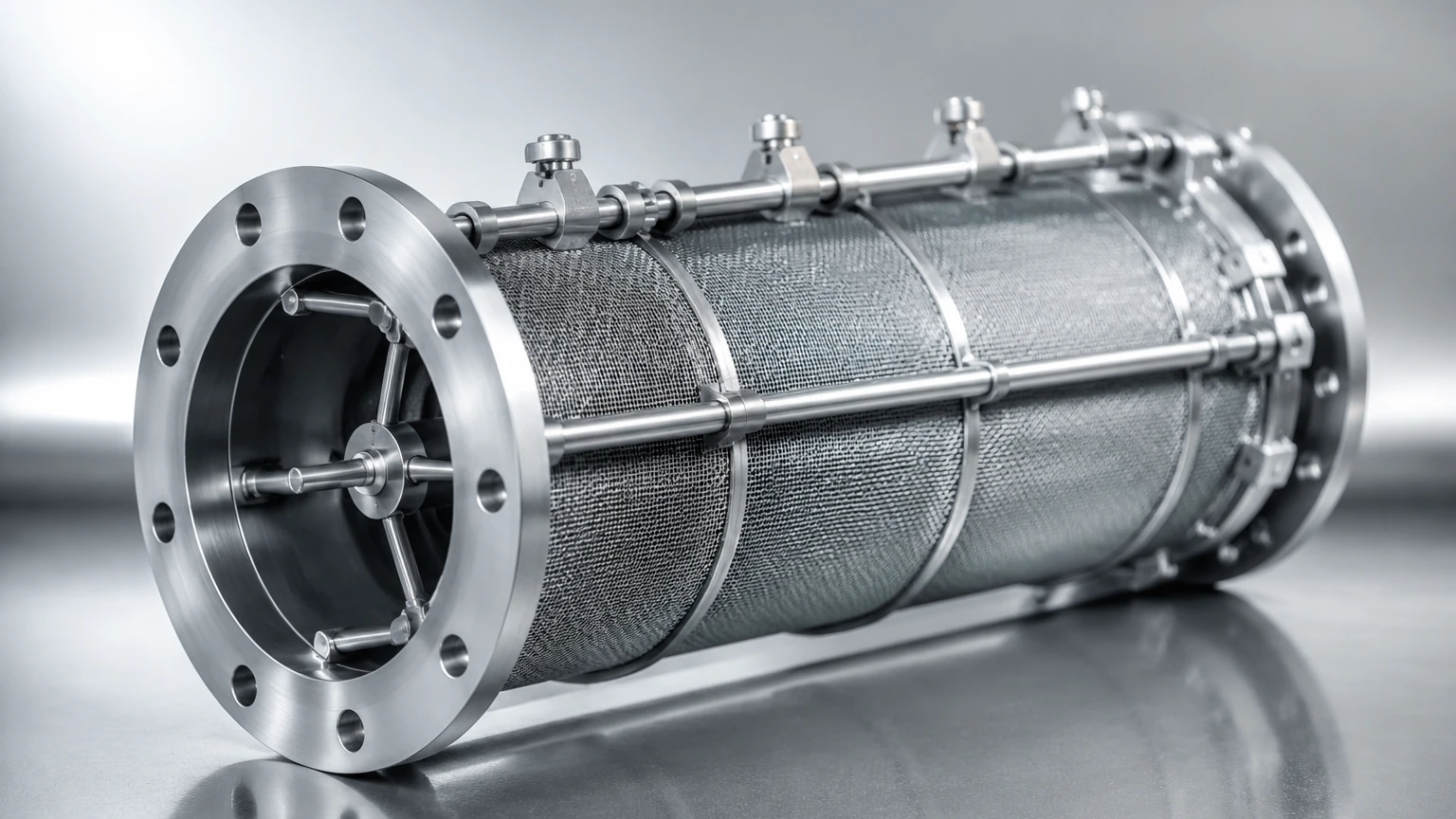
In a scraper-based system, the process fluid enters the filter housing and passes through a cylindrical filter element, typically made of wedge wire or perforated stainless steel. As solids accumulate on the surface of the element, the internal pressure increases. A cleaning mechanism—consisting of a blade or brush—rotates or moves linearly along the surface of the element. This action physically displaces the accumulated debris, which then settles into a collection chamber at the bottom of the housing. This concentrated sludge is periodically purged through an automated discharge valve.
Backwashing Mechanisms
Backwash systems utilize a portion of the filtered fluid (or an external clean fluid source) to flush the filter element in reverse. When the differential pressure reaches a set point, a rotating arm or valve sequence isolates a section of the filter element and reverses the flow through it. The high-velocity reverse flow dislodges particles trapped in the mesh or wedge wire, carrying them out through a waste line. This method is particularly effective for low-viscosity fluids like cooling water or thin chemicals.
Material Engineering: Stainless Steel and Alloy Selection
For a continuous self-cleaning filter to withstand the rigors of industrial chemical processing or food production, material selection is paramount. Stainless steel is the industry standard due to its mechanical strength and resistance to corrosion.
1. Grade 304 Stainless Steel: Suitable for general industrial water filtration and mildly corrosive environments. It offers excellent structural integrity and is cost-effective for non-acidic applications.
2. Grade 316L Stainless Steel: Preferred for pharmaceutical, food and beverage, and chemical applications. The addition of molybdenum provides superior resistance to chlorides and pitting corrosion, while the low carbon content (316L) prevents sensitization during welding.
3. Specialty Alloys: In highly aggressive environments, such as seawater filtration or concentrated acid processing, duplex stainless steels or high-nickel alloys may be required to prevent stress corrosion cracking.
The filter element itself—the most critical component—is often constructed as a wedge wire screen. This V-shaped profile provides a two-point contact for particles, which significantly reduces the risk of "stapling" or permanent clogging compared to standard square mesh. For precision applications, sintered multi-layer wire mesh may be used to provide high mechanical stability and precise micron ratings.
Critical Performance Metrics for Engineering Specifications
When specifying a continuous self-cleaning filter, engineers must evaluate several key performance indicators (KPIs) to ensure the system meets the application’s demands. Relying on generic sizing charts often leads to premature wear or insufficient filtration.
Flow Rate and Flux
The flow rate (GPM or m³/h) must be balanced against the effective filtration area. The "flux"—the flow rate per unit of surface area—determines how quickly the filter cake builds up. For high-solids applications, a lower flux is required to prevent the cleaning mechanism from being overwhelmed.
Differential Pressure (Delta P)
The system operates between an initial (clean) differential pressure and a terminal (dirty) differential pressure. In a self-cleaning system, the cleaning cycle is typically triggered when the Delta P reaches a threshold (e.g., 0.5 to 1.0 bar). If the system is undersized, the cleaning cycle will trigger too frequently, leading to excessive wear on seals and actuators.
Micron Rating and Efficiency
It is important to distinguish between nominal and absolute micron ratings. In self-cleaning systems, the mechanical action of the scraper can sometimes push deformable particles through the mesh. Therefore, the rating must be selected based on the particle size distribution (PSD) of the contaminant and the required cleanliness level of the downstream process.
Operational Risks and Mitigation Strategies
While automated, these systems are not immune to operational challenges. Engineers should be aware of the following risks during the design phase:
* Abrasive Wear: In applications involving sand, metal shavings, or glass, the scraping blades and the filter element can suffer from accelerated wear. Hardened scraper materials or specialized coatings are often necessary to extend service life.
* Seal Integrity: The dynamic seals that isolate the motor drive and the purge valve are common points of failure. Selecting the correct elastomer (Viton, EPDM, or PTFE) based on chemical compatibility and temperature is critical.
* Bypass and Leakage: If the scraper blade is not perfectly aligned or if the element becomes distorted due to high pressure, unfiltered fluid may bypass the element. Regular inspection of the internal tolerances is required to maintain filtration efficiency.
* Viscosity Fluctuations: Changes in fluid temperature can significantly alter viscosity, which in turn affects the torque required by the cleaning motor. Systems handling resins or oils must be equipped with motors and controllers capable of handling variable torque loads.
Economic Impact: Total Cost of Ownership (TCO)
The initial capital expenditure (CAPEX) for a continuous self-cleaning filter is higher than that of manual simplex or duplex strainers. However, the Total Cost of Ownership (TCO) is often lower when analyzed over a 3-to-5-year period.
1. Labor Savings: Manual filter changes require technician time, safety permits (for hazardous fluids), and potential exposure to the process medium. Automation eliminates these recurring labor costs.
2. Consumable Reduction: By using a permanent stainless steel element, the cost of purchasing, storing, and disposing of filter bags or cartridges is eliminated. This also aligns with corporate sustainability goals by reducing solid waste.
3. Product Yield: In manual systems, a certain volume of product is often lost during every filter change. Self-cleaning filters use a concentrated purge mechanism that minimizes fluid loss, which is particularly valuable in high-value chemical or food processing.
4. Energy Efficiency: By maintaining a lower average differential pressure compared to a filter that is allowed to clog significantly before replacement, the system reduces the load on process pumps, leading to lower energy consumption.
Customization and OEM Integration
Standard off-the-shelf filters rarely meet the specific geometric and functional requirements of complex industrial skids. Customization is a core requirement for successful implementation. Engineering teams should confirm the following customization options with their manufacturer:
* Inlet/Outlet Configuration: Custom flange orientations (e.g., offset, inline, or right-angle) to fit existing piping footprints without extensive modifications.
* Control Systems: Integration with existing Plant PLC systems via Modbus, Profibus, or 4-20mA signals. This allows for remote monitoring of pressure, cycle frequency, and alarm states.
* Heating Jackets: For fluids that solidify at room temperature (like waxes or chocolate), steam or electric heating jackets can be integrated into the filter housing to maintain fluid temperature.
* Explosion-Proof Ratings: For chemical plants or refineries, the motor and control box must meet specific ATEX or UL ratings for hazardous environments.
Conclusion: Selection Checklist for Engineers
Before finalizing a purchase for a continuous self-cleaning filter, the following data points should be verified with the manufacturer:
* Fluid Properties: Viscosity at operating temperature, specific gravity, and chemical compatibility with SS316L and seals.
* Contaminant Profile: Particle size distribution, concentration (PPM), and the nature of the solids (fibrous, abrasive, or gelatinous).
* Operational Parameters: Maximum operating pressure, design temperature, and available utility power (pneumatic or electric).
* Maintenance Access: Space requirements for removing the internal element for annual inspection.
By focusing on these technical parameters and choosing high-quality stainless steel components, industrial operators can ensure long-term reliability and precise filtration performance in the most demanding environments.
