


Culinary Steam Filter
In the landscape of industrial food processing, pharmaceutical manufacturing, and chemical engineering, the quality of steam is often as critical as the quality of the raw ingredients themselves. Culinary steam, specifically defined as steam that is used for direct injection into food products or for the sterilization of food-contact surfaces, must meet rigorous purity standards to prevent contamination. Achieving this level of purity requires a specialized culinary steam filter. These filtration systems are engineered to remove solid particulates such as pipe scale, rust, and sediment that naturally accumulate within steam distribution systems.
For engineers and facility managers, selecting the correct filtration solution involves a deep understanding of material science, fluid dynamics, and regulatory compliance. As a manufacturer specializing in custom stainless steel filtration, Kaifil provides the technical expertise necessary to navigate these complex requirements, ensuring that industrial processes remain efficient and compliant with international safety standards.
The Role of Culinary Steam in Industrial Processing
Steam is a versatile utility in industrial environments, serving as a heat source, a cleaning agent, and a direct processing medium. However, steam is rarely pure when it leaves the boiler. "Plant steam" often contains chemical additives used for boiler feed water treatment, as well as metallic debris from the internal surfaces of carbon steel piping. When this steam is intended for use in the food and beverage or pharmaceutical sectors, it must be upgraded to "culinary grade."
A culinary steam filter acts as the final barrier between the utility system and the sensitive process. By removing contaminants at the point of use, these filters protect the end product from off-flavors, discoloration, and physical impurities. Furthermore, high-quality filtration protects downstream equipment, such as spray nozzles, heat exchangers, and sensitive valves, from abrasive wear and clogging. This technical necessity translates directly into operational reliability and product safety.
Engineering Standards and Regulatory Compliance
The primary benchmark for culinary steam in the United States and many international markets is the 3-A Sanitary Standard (specifically 609-03). This standard dictates that culinary steam must be free of entrained liquid water and filtered to remove 95% of all particles 2 microns or larger in size. In practical application, this usually requires a filter with an absolute rating of 5 microns.
From an engineering perspective, compliance is not just about the micron rating but also about the materials of construction. The filter element and the housing must be fabricated from non-toxic, corrosion-resistant materials. 316L stainless steel is the industry standard due to its ability to withstand the high temperatures and corrosive nature of pressurized steam without leaching metallic ions into the process stream. When sourcing components, it is essential to verify that the manufacturer adheres to these stringent material requirements to ensure long-term regulatory approval and process integrity.
Technical Specifications: Material and Micron Ratings
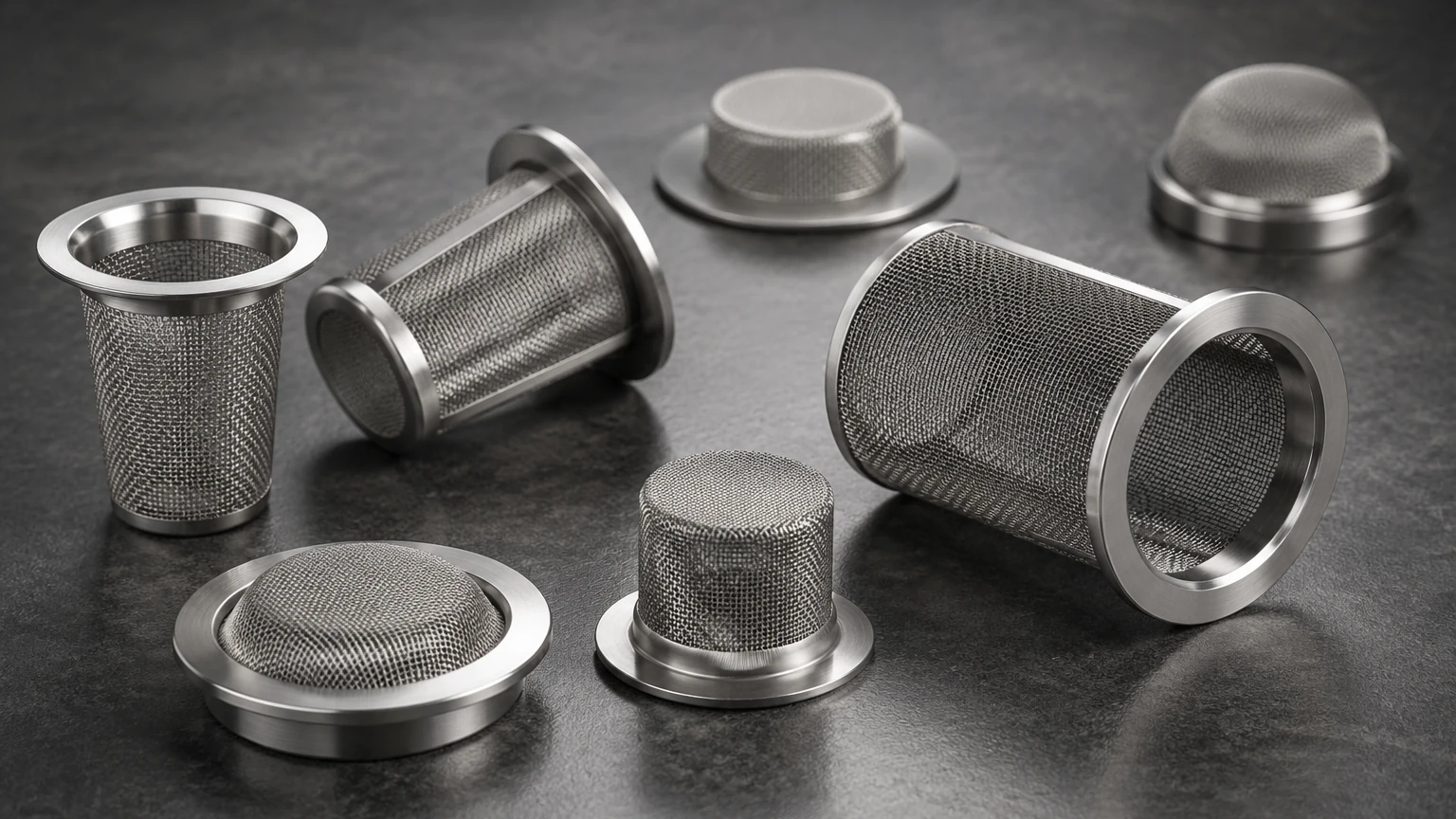
When evaluating a culinary steam filter, the internal filter element is the most critical component. Unlike standard liquid filters, steam filters must handle high velocities and thermal expansion cycles. There are two primary types of stainless steel elements used in these applications:
1. Sintered Stainless Steel Powder Elements: These are created by fusing stainless steel powder under high heat and pressure. The result is a robust, porous structure with a tortuous path for steam to pass through. Sintered elements offer excellent depth filtration and high mechanical strength, making them ideal for high-pressure steam applications where durability is paramount.
2. Pleated Wire Mesh Elements: These utilize multiple layers of stainless steel wire mesh, often sintered together for stability and then pleated to increase the surface area. Pleated designs offer lower initial pressure drops and higher dirt-holding capacities compared to cylindrical elements. This is particularly beneficial in systems where steam flow rates are high and space for the filter housing is limited.
Selection between these types depends on the specific particulate load of the system and the allowable pressure drop. Engineers must also consider the "absolute" vs. "nominal" rating. For culinary applications, an absolute rating is required to guarantee that no particles above the specified size can pass through the medium, regardless of pressure fluctuations.
Design Considerations for Steam Filtration Systems
Integrating a culinary steam filter into an existing or new process line requires careful calculation of several variables. A common mistake is undersizing the filter, which leads to excessive steam velocity and premature element failure.
Steam Velocity and Pressure Drop
Steam velocity should generally be kept below 25 to 35 meters per second (80 to 115 feet per second) to prevent erosion of the filter medium and to minimize noise. A high pressure drop (delta P) across the filter indicates that the element is either too small for the flow rate or is becoming blinded by contaminants. Engineers should design for an initial clean pressure drop of less than 0.1 bar (1.5 psi) to allow for sufficient operational life before cleaning is required.
Condensate Management
Steam filters are designed to remove solids, not large volumes of liquid water. However, condensate is inevitable in steam lines. If slugs of condensate hit a filter element at high speed, they can cause mechanical damage. Therefore, a high-efficiency steam separator and a properly sized steam trap should always be installed upstream of the culinary steam filter. This ensures that the steam entering the filter is "dry," which optimizes the filtration efficiency and extends the life of the stainless steel mesh or sintered powder.
Housing Design
The filter housing must be designed to withstand the maximum operating pressure and temperature of the steam system. In the food and pharmaceutical industries, the housing should feature a sanitary design, typically with Tri-Clamp or similar connections, to facilitate easy disassembly for inspection. The internal surface finish (Ra) is also a factor; a smooth, polished surface prevents the buildup of bacteria and simplifies the sterilization process.
Maintenance, Cleaning, and Service Life
One of the primary advantages of using stainless steel for a culinary steam filter is that the elements are cleanable and reusable. This significantly reduces the total cost of ownership compared to disposable polymer filters. However, a rigorous maintenance schedule is required to maintain performance.
Cleaning Protocols
Filter elements can be cleaned using ultrasonic baths or chemical cleaning agents (such as dilute nitric acid or caustic solutions) to remove embedded particulates. The choice of cleaning method depends on the nature of the contaminants. For example, if the steam system has high levels of iron oxide (rust), an acid wash may be necessary to restore the original flow characteristics. It is vital to ensure that the cleaning process does not compromise the structural integrity of the sintered or mesh layers.
Integrity Testing and Replacement
While stainless steel elements are durable, they are not infinite. Thermal cycling and repeated cleaning can eventually lead to fatigue or the enlargement of pores. Regular integrity testing, such as a bubble point test, should be performed to ensure the filter still meets its 5-micron absolute rating. If the pressure drop across the filter returns to high levels shortly after cleaning, or if the element fails an integrity test, it must be replaced immediately to avoid downstream contamination.
Selecting the Right Culinary Steam Filter for Your Application
Choosing a filtration solution is a balance between technical requirements and economic reality. Engineers should ask the following questions during the procurement phase:
* What is the maximum flow rate (kg/hr or lbs/hr) at the minimum operating pressure? Steam density changes with pressure, so sizing must be based on the worst-case scenario (lowest pressure).
* What is the required steam quality? Does the application strictly follow 3-A standards, or are there even tighter internal quality specs?
* Are there specific chemical compatibility requirements? While 316L is standard, some highly corrosive environments might require specialized alloys.
* What is the desired maintenance interval? Larger filters have more surface area and can run longer between cleanings, but they have a higher initial footprint and cost.
For those looking to explore specific configurations or seeking custom-engineered components, you can Review product options and application support to find solutions tailored to your unique industrial requirements. Leveraging the expertise of a dedicated manufacturer like Kaifil ensures that the filtration system is not just a commodity purchase, but a precision-engineered component of your production line.
Conclusion: The Strategic Value of High-Quality Filtration
In B2B industrial environments, the culinary steam filter is more than just a piece of hardware; it is a critical safeguard for brand reputation and consumer safety. By removing 95% of particles 2 microns and larger, these filters ensure that steam meets the highest sanitary standards. For the engineer, the focus remains on selecting 316L stainless steel components that offer the right balance of micron rating, pressure drop, and cleanability.
Investing in a robust filtration strategy—comprising proper sizing, upstream condensate removal, and a dedicated maintenance program—minimizes downtime and prevents the costly consequences of product contamination. As industries continue to face tighter regulatory scrutiny and increasing demands for purity, the role of precision-engineered stainless steel filtration will only become more central to successful industrial operations. By partnering with specialists who understand the nuances of steam dynamics and material performance, companies can achieve long-term efficiency and uncompromising quality in their culinary steam applications. For more information on custom filtration solutions, visit the Kaifil Main Page.
