


Cuno Filter Cartridge
In the landscape of industrial liquid processing, the selection of a filtration medium is a critical engineering decision that impacts product purity, equipment longevity, and operational overhead. The term Cuno filter cartridge refers to a broad category of depth and surface filtration products originally developed by Cuno Inc. (now part of 3M). These cartridges have become an industry standard for applications ranging from food and beverage production to complex chemical processing. For engineers and procurement specialists, understanding the technical nuances of these cartridges—and knowing when to transition to high-performance stainless steel alternatives—is essential for optimizing system performance.
Industrial filtration requires a balance between flow rate, pressure drop, and particle retention. Whether managing a high-viscosity resin or a delicate pharmaceutical intermediate, the choice of filter cartridge dictates the efficiency of the entire process. This guide explores the technical foundations of the cuno filter cartridge, its common applications, and the engineering considerations involved in selecting durable filtration components for demanding environments.
Technical Foundations of Depth and Surface Filtration
The cuno filter cartridge typically utilizes depth filtration technology. Unlike surface filters, which trap particles on a single plane, depth filters utilize a thick medium to capture contaminants throughout the entire cross-section of the filter wall. This design is particularly effective for fluids with a high concentration of deformable or gelatinous particles.
Material Composition and Construction
Many standard cartridges are constructed from resin-bonded fibers, polypropylene, or cellulose. The manufacturing process often involves a "graded density" construction, where the outer layers of the cartridge are coarser to catch large debris, while the inner layers become progressively tighter to capture finer particles. This prevents the surface from blinding prematurely and extends the service life of the filter.
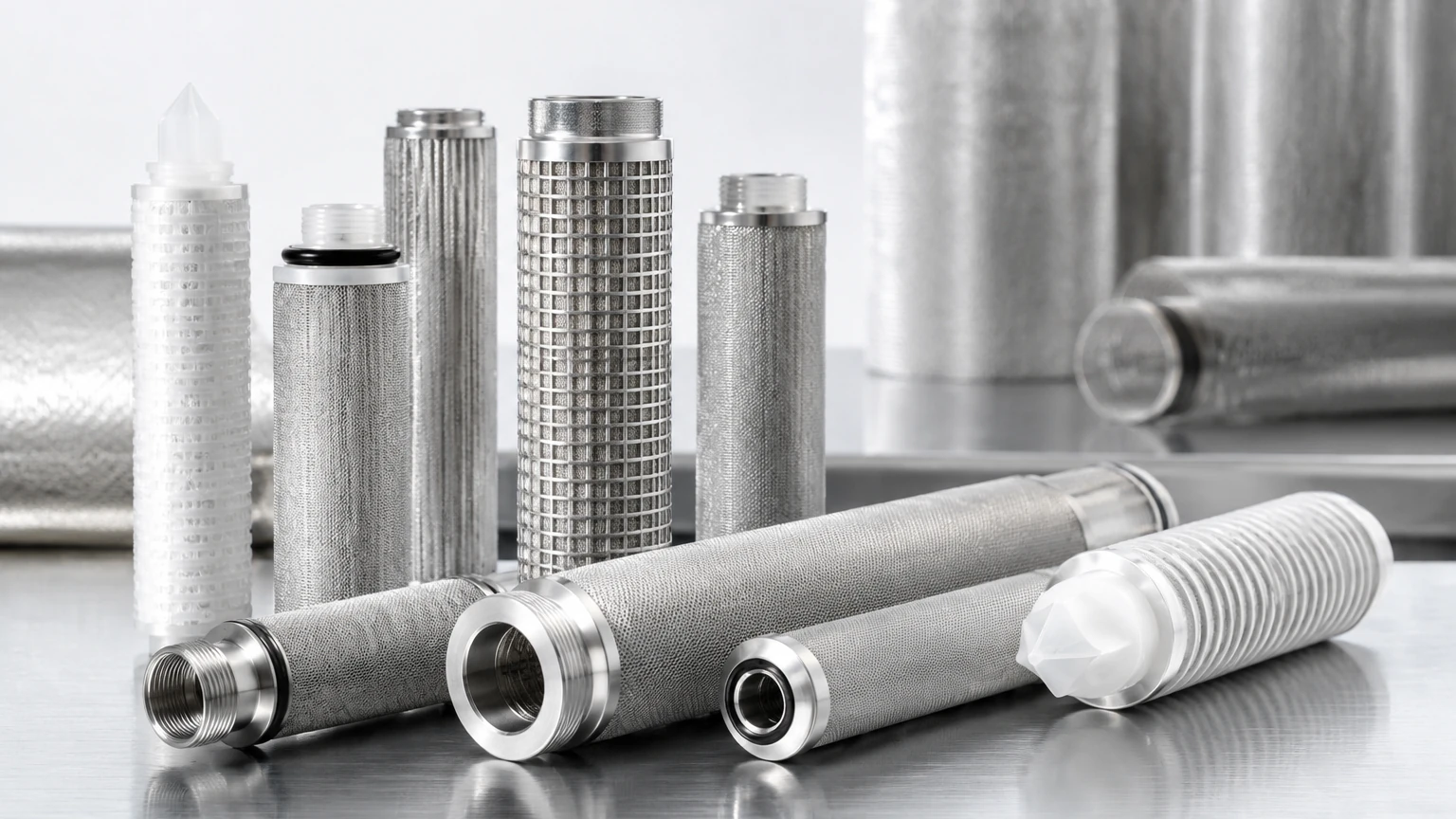
However, in high-temperature or chemically aggressive environments, polymer-based materials may face limitations. This is where precision-engineered metal components, such as those found on the Main Page of specialized manufacturers like Kaifil, become necessary. Stainless steel wire mesh and sintered metal cartridges provide the structural integrity required to withstand differential pressures that would collapse a standard fiber-based cartridge.
Micron Ratings: Nominal vs. Absolute
When evaluating a cuno filter cartridge, engineers must distinguish between nominal and absolute micron ratings. A nominal rating indicates the filter's ability to retain a majority of particles of a certain size, while an absolute rating signifies a 99.9% or higher retention efficiency. For critical applications in the pharmaceutical or electronics industries, absolute-rated cartridges are mandatory to ensure consistent output quality.
Common Applications and Industry Use Cases
The versatility of the cuno filter cartridge has led to its adoption across diverse sectors. Its ability to handle varying flow rates and contaminant loads makes it a staple in both primary and secondary filtration stages.
Food and Beverage Processing
In the production of bottled water, soft drinks, and alcoholic beverages, filtration is used to remove sediment, clarify the liquid, and protect downstream membrane filters. Cartridges used in this sector must comply with FDA requirements for food contact and be capable of withstanding routine sanitization cycles. Stainless steel housings and reinforced cartridges are often preferred here to ensure no material migration occurs during high-pressure cleaning.
Chemical and Petrochemical Industries
Chemical processing involves fluids that are often corrosive or operate at extreme temperatures. While some cuno filter cartridge models are designed for chemical compatibility, many engineers opt for 304 or 316L stainless steel filtration elements. These metal filters offer superior resistance to solvent degradation and can be cleaned and reused, reducing the waste stream associated with disposable polymer cartridges.
Power Generation and Hydraulic Systems
In power plants and heavy machinery, maintaining the purity of lubricating oils and hydraulic fluids is vital. A cuno filter cartridge is often employed to remove wear particles and oxidation byproducts. In these high-pressure systems, the mechanical strength of the filter medium is paramount to prevent "media migration," where pieces of the filter itself break off and enter the fluid stream.
Key Evaluation Criteria for Industrial Filter Selection
Selecting the right filtration solution requires more than just matching a part number. Engineers must conduct a thorough analysis of the process conditions to ensure the chosen cartridge will perform reliably under stress.
1. Fluid Compatibility: The chemical nature of the fluid (pH levels, solvent content) must be compatible with the cartridge media and the seals (O-rings/gaskets). For example, EPDM or Viton seals may be required depending on the oil or chemical content.
2. Temperature Limits: Standard polymer cartridges often lose structural integrity above 140°F (60°C). If the process involves steam sterilization or high-temperature fluids, stainless steel wire mesh filters are the standard choice.
3. Flow Rate and Viscosity: Higher viscosity fluids require larger surface areas or coarser media to maintain an acceptable flow rate without exceeding the maximum allowable pressure drop ($ΔP$).
4. Contaminant Type: Is the contaminant hard and abrasive, or soft and deformable? Depth filters like the cuno filter cartridge excel at capturing deformable particles, whereas surface filters (like pleated wire mesh) are better for hard, consistent-sized particles.
Limitations of Disposable Cartridges and the Shift to Metal
While disposable cuno filter cartridge options are cost-effective for low-volume or intermittent applications, they present challenges in continuous industrial operations. The primary drawback is the ongoing cost of replacement and the environmental impact of used filter disposal.
Furthermore, disposable cartridges are prone to "unloading." This occurs when an increase in differential pressure causes the trapped contaminants to be pushed through the filter media and back into the clean effluent. Stainless steel filter cartridges, characterized by their rigid pore structure, do not suffer from unloading. They provide a fixed pore size that remains constant even as the pressure increases, ensuring a reliable barrier against contaminants.
For organizations looking to optimize their filtration systems, exploring the custom stainless steel solutions available through the Kaifil Main Page can reveal opportunities for significant long-term savings. Metal filters can be cleaned via backwashing, ultrasonic cleaning, or chemical baths, allowing them to be reused for years rather than weeks.
Engineering Custom Filtration Solutions for OEM Applications
In many cases, standard off-the-shelf cartridges do not meet the specific geometric or performance requirements of a new piece of equipment. OEM (Original Equipment Manufacturer) applications often require customized filtration components that fit within specialized housings or meet unique flow dynamics.
Custom End-Cap Configurations
To ensure a leak-proof seal, cartridges come with various end-cap styles, such as Double Open End (DOE), Code 7 (226 O-rings with a locking fin), or Code 3 (222 O-rings). Custom manufacturing allows for the creation of these interfaces in high-grade metals, ensuring a perfect fit with existing Cuno-style housings while upgrading the internal media to stainless steel mesh.
Precision Micron Control
Advanced manufacturing techniques, such as vacuum sintering and precision wire weaving, allow for the creation of filter media with highly specific micron ratings. This level of control is essential for industries like aerospace or precision hydraulics, where even a few microns of deviation can lead to catastrophic component failure.
Total Cost of Ownership and Sustainability
When evaluating the procurement of a cuno filter cartridge system, it is important to look beyond the initial purchase price. The Total Cost of Ownership (TCO) includes:
* Purchase Price: The cost of the individual cartridge.
* Labor Costs: The time required for maintenance staff to change out spent filters.
* Disposal Costs: Fees associated with hauling away contaminated filter waste.
* Downtime: The lost production time during filter changeovers.
* Product Loss: The volume of fluid trapped within the discarded filter media.
By switching to cleanable stainless steel filters, many industrial facilities find that the higher initial investment is recouped within the first year of operation. Additionally, reducing the volume of disposable plastic and fiber waste aligns with corporate sustainability goals and reduces the environmental footprint of the manufacturing process.
Conclusion: Making an Informed Selection
The cuno filter cartridge remains a cornerstone of industrial filtration due to its established history and functional design. However, as industrial processes become more demanding and the focus on sustainability grows, the role of high-quality, customized metal filtration components is expanding.
Engineers should carefully audit their current filtration stages, looking for signs of premature failure, media migration, or excessive replacement costs. By consulting with manufacturers specializing in stainless steel filtration, such as Kaifil, technical teams can develop solutions that provide the precision of a cuno filter cartridge with the durability and reusability of advanced metal alloys. For more information on custom filtration designs and technical specifications, visit the Main Page to explore professional-grade filtration options tailored to your specific industrial needs.
