


Filter Compressor High Quality
In industrial compressed air and gas systems, the integrity of the compressor is fundamentally linked to the quality of its filtration components. Identifying a filter compressor high quality standard involves more than selecting a part based on dimensions alone; it requires an engineering-first approach to material science, pressure dynamics, and contaminant retention. For engineers and procurement teams, high-quality filtration is the primary defense against premature component wear, system downtime, and downstream product contamination.
Industrial compressors, whether centrifugal, screw, or reciprocating, generate significant heat and pressure. These conditions demand filtration media that can maintain structural integrity while effectively removing particulates, oil aerosols, and moisture. Selecting the right filtration solution ensures that the compressed air meets the specific ISO 8573-1 air quality classes required for sensitive applications in the pharmaceutical, food and beverage, and chemical processing industries.
The Technical Role of Filtration in Compressor Systems
Filtration in a compressor system serves several critical functions. At the intake, filters prevent atmospheric dust and debris from entering the compression chamber, where they could cause abrasive wear on rotors or pistons. Internally, oil-injected compressors rely on high-efficiency separators to recover lubricating oil from the air stream, ensuring the oil remains within the lubrication circuit and the discharged air is clean.
When searching for a filter compressor high quality solution, engineers must prioritize the "Beta Ratio" and the efficiency of the media. High-quality filters are designed to provide a low initial pressure drop (Delta P). A high pressure drop forces the compressor to work harder, increasing energy consumption and accelerating the thermal degradation of lubricants. By utilizing precision-engineered stainless steel or specialized synthetic media, systems can achieve the necessary filtration fineness without compromising flow rates.
Engineering Criteria for High-Quality Filter Selection
Evaluating a compressor filter requires a deep dive into its technical specifications. The following criteria are essential for determining the performance and reliability of a filter element:
1. Media Integrity and Material Selection
Traditional cellulose or fiberglass filters are common but may not be suitable for all industrial environments. In demanding applications, stainless steel wire mesh or sintered metal filters offer superior resistance to high temperatures and corrosive gases. Stainless steel provides a fixed pore structure, which prevents "media migration"—a phenomenon where filter fibers break loose and enter the downstream air flow.
2. Micron Rating: Absolute vs. Nominal
A high-quality filter will specify an absolute micron rating. While a nominal rating indicates the filter can stop a percentage of particles at a certain size, an absolute rating provides a verified guarantee that no particles above the specified size will pass through the media. For critical compressor components, absolute filtration is often necessary to prevent the clogging of precision orifices and valves.
3. Pressure Differential and Collapse Strength
Compressor filters must withstand significant pressure differentials, especially during cold starts or when the media begins to load with contaminants. High-quality elements are constructed with reinforced inner cores and robust end caps to prevent structural collapse, which could lead to a catastrophic release of contaminants into the system.
The Advantages of Stainless Steel Filtration in Compressors
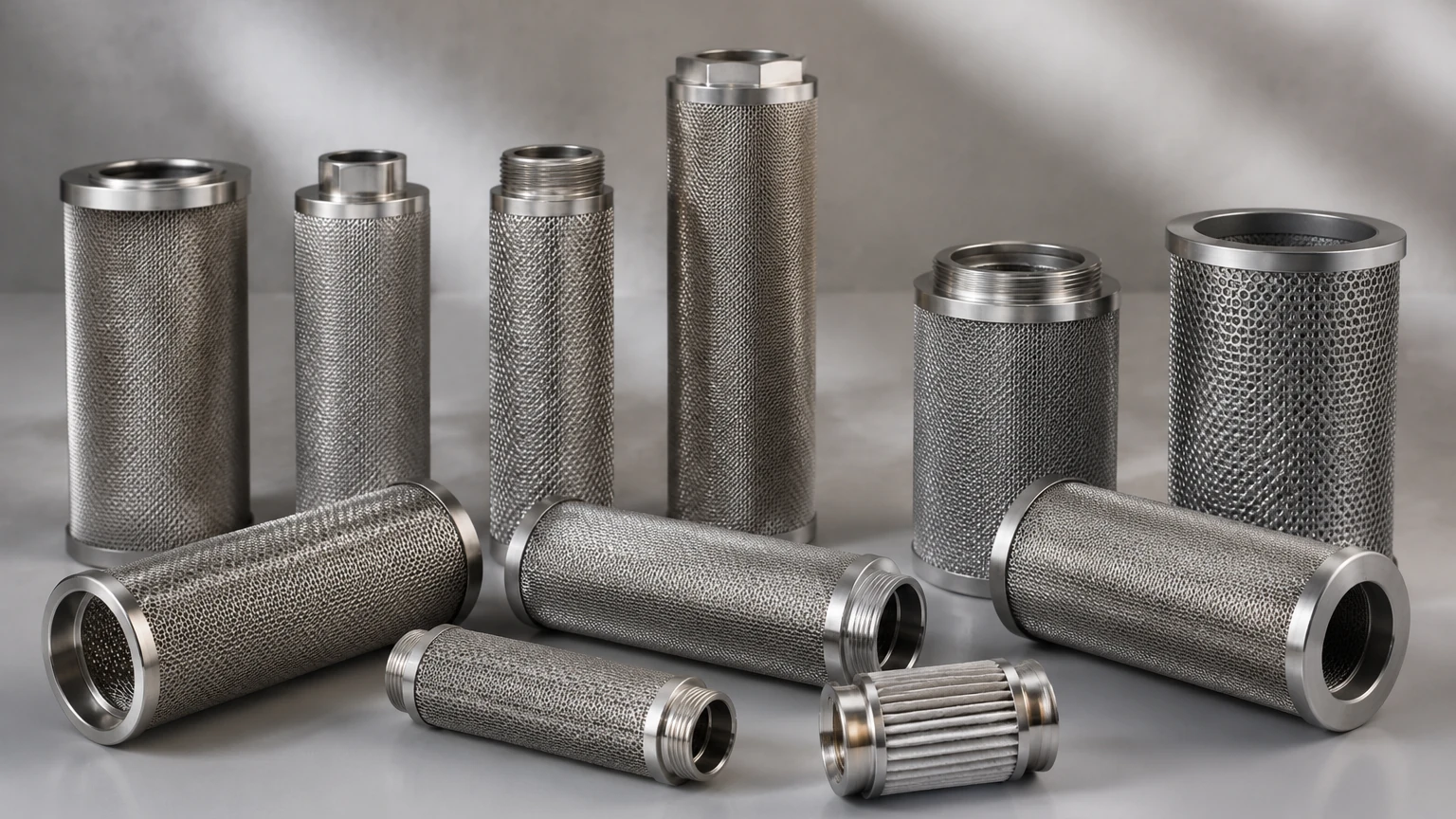
As a manufacturer specializing in custom stainless steel filtration, Kaifil emphasizes the use of metal media for high-performance compressor applications. Stainless steel wire mesh filters offer several distinct advantages over disposable alternatives:
* Durability: Stainless steel can withstand extreme pressure surges and mechanical vibrations common in industrial compressor houses.
* Chemical Compatibility: In chemical processing or offshore environments, filters are often exposed to aggressive vapors. Stainless steel (304, 316, or 316L) provides the necessary corrosion resistance to maintain long-term performance.
* Cleanability: Unlike synthetic media, many stainless steel filter elements can be cleaned and reused. This is particularly beneficial in systems with high particulate loading, where the cost of frequent disposable filter changes would be prohibitive.
* Thermal Stability: Compressors generate heat during the compression cycle. Metal filters maintain their pore geometry and filtration efficiency at temperatures that would cause synthetic fibers to soften or degrade.
For more information on specialized filtration components, you can visit the Main Page to explore technical specifications and material options.
Evaluating Total Cost of Ownership (TCO)
When procurement teams evaluate a filter compressor high quality option, the focus should shift from the initial purchase price to the Total Cost of Ownership (TCO). A lower-cost, lower-quality filter often results in higher long-term expenses due to:
1. Energy Costs: A filter with poor flow characteristics increases the system's differential pressure. Even a small increase in Delta P can lead to a significant rise in the compressor's annual energy consumption.
2. Maintenance Frequency: High-quality filters typically have a higher dirt-holding capacity, meaning they require fewer change-outs. This reduces labor costs and minimizes system downtime.
3. Downstream Protection: The most significant cost of poor filtration is the damage it causes to downstream equipment. Contaminated air can lead to the failure of pneumatic actuators, the spoilage of food products, or the contamination of pharmaceutical batches.
By investing in high-quality filtration, facilities ensure that their compressor systems operate at peak efficiency with minimal risk of unplanned interruptions.
Customization and OEM Considerations
Standard off-the-shelf filters do not always meet the unique requirements of specialized industrial equipment. Customization is often necessary to optimize filtration for specific flow rates, housing dimensions, or environmental conditions. High-quality OEM (Original Equipment Manufacturer) solutions allow for the development of filters that are perfectly matched to the compressor's performance curve.
Customization options include:
* Variable Mesh Weaves: Selecting specific weave patterns (such as plain, twilled, or Dutch weave) to balance filtration fineness with flow capacity.
* Reinforced Structures: Adding external support shrouds or internal pleat support to handle high-viscosity fluids or high-pressure air.
* Specific End-Cap Configurations: Ensuring a leak-proof seal within the existing filter housing through precision-machined fittings or specialized gaskets.
Maintenance and Performance Monitoring
Even a filter compressor high quality element requires proper management to ensure continued performance. Monitoring the pressure drop across the filter is the most effective way to determine when a filter needs servicing. Many modern compressor systems are equipped with differential pressure sensors that alert operators when the element has reached its loading limit.
In systems using cleanable stainless steel filters, it is vital to follow the manufacturer's cleaning protocols—such as ultrasonic cleaning or backflushing—to ensure the media is fully restored without damaging the pore structure. Regular inspection of seals and gaskets during filter changes is also essential to prevent bypass, where air flows around the filter media rather than through it.
Conclusion: Selecting a Reliable Filtration Partner
Achieving high-quality compressed air is a technical challenge that requires a deep understanding of filtration mechanics and material performance. For engineers, the goal is to find a balance between filtration efficiency, pressure drop, and service life. By focusing on the engineering details—such as absolute micron ratings, material compatibility, and structural integrity—purchasing teams can secure components that protect their infrastructure and optimize their processes.
Whether you are replacing existing elements or designing a new system, choosing a manufacturer with expertise in precision metal filtration is a critical step. For technical support and a comprehensive look at industrial filtration solutions, refer to the Main Page to review product options and application support. High-quality filtration is not just a component; it is an investment in the reliability and efficiency of the entire industrial operation.
