


Cuno Filter
In the landscape of industrial liquid processing, the term "Cuno filter" has become synonymous with high-capacity depth filtration and specialized cartridge systems. Originally developed by the Cuno Engineering Corporation (now part of 3M), these filtration systems are foundational in industries ranging from food and beverage production to chemical processing and pharmaceutical manufacturing. For engineers and procurement specialists, understanding the technical nuances of these filters—and the high-performance stainless steel alternatives available—is critical for optimizing process efficiency and reducing long-term operational costs.
Industrial filtration is rarely a one-size-fits-all solution. Whether a facility utilizes traditional depth cartridges or is looking to transition to durable, cleanable stainless steel components, the selection process must be guided by rigorous engineering standards. This guide explores the mechanics of depth filtration, the technical specifications of the cuno filter category, and the strategic advantages of integrating custom metal filtration solutions into existing systems.
The Mechanics of Depth Filtration in Industrial Systems
To understand the role of a cuno filter, one must first understand the principle of depth filtration. Unlike surface filtration, where particles are trapped on a single plane (such as a fine wire mesh), depth filtration utilizes a thick medium to capture contaminants throughout its entire structure. This is often achieved through a tortuous path of fibers or porous materials that trap particles via mechanical straining and adsorption.
In many cuno filter designs, the medium is constructed from cellulose, polypropylenes, or specialized resins. As fluid passes through the cartridge, larger particles are trapped near the surface, while progressively smaller particles are captured deeper within the matrix. This multi-layered approach allows for a high "dirt-holding capacity," meaning the filter can operate for longer periods before reaching its terminal differential pressure ($ΔP$).
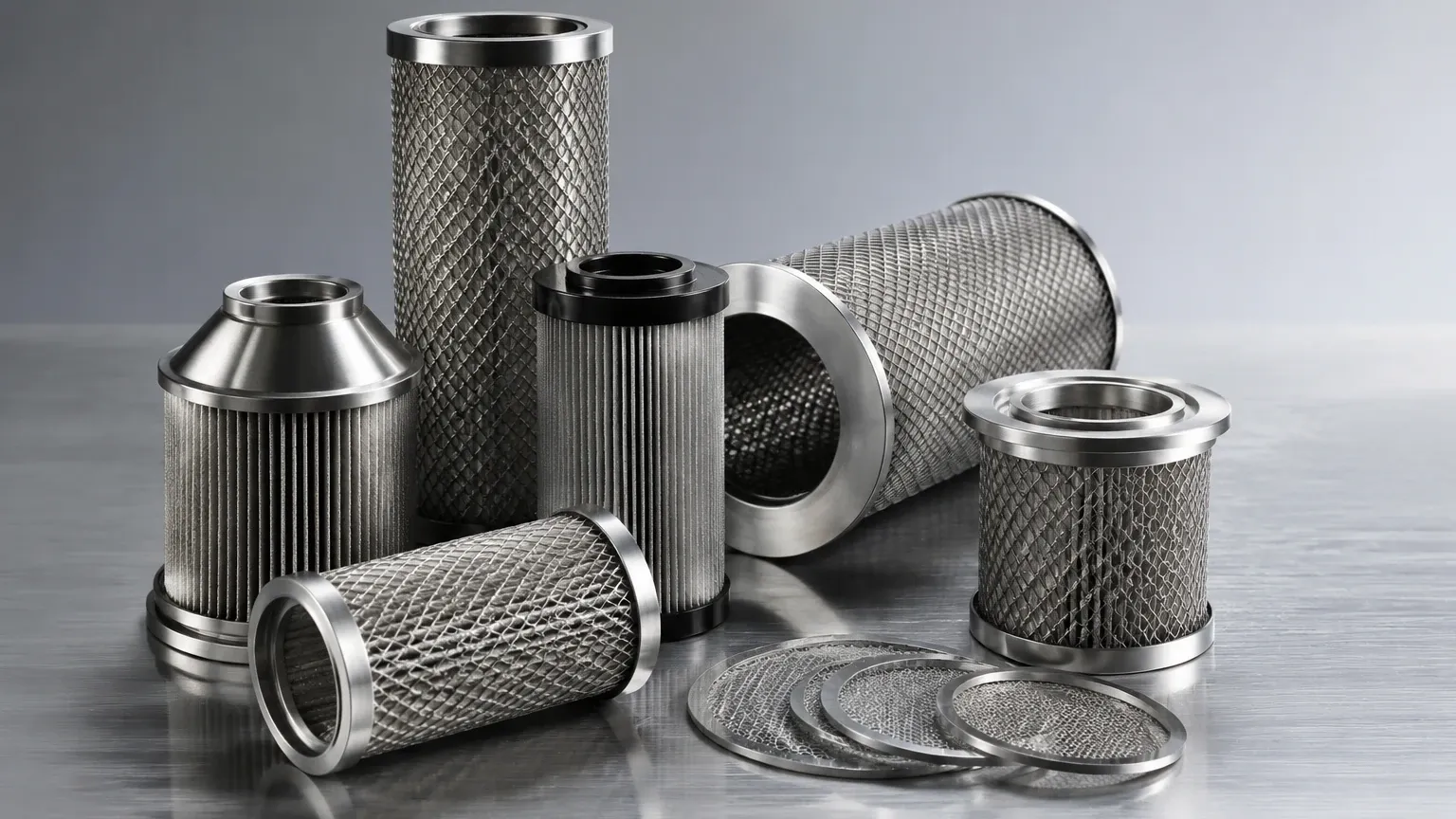
However, for applications involving high temperatures, aggressive solvents, or high-pressure differentials, traditional polymer-based depth filters may reach their physical limits. This is where stainless steel filtration components, such as those manufactured by Kaifil, provide a robust alternative. By utilizing sintered metal fibers or multi-layered wire mesh, engineers can replicate the high dirt-holding capacity of a depth filter while gaining the structural integrity of 304 or 316L stainless steel.
Engineering Considerations: Micron Ratings and Efficiency
When specifying a cuno filter or a stainless steel equivalent, the most critical metric is the micron rating. However, engineers must distinguish between "nominal" and "absolute" ratings to ensure process integrity.
1. Nominal Micron Rating: This is an arbitrary value indicating the filter's ability to retain a percentage (usually 50% to 95%) of particles of a specific size. While useful for general pre-filtration, nominal ratings are often insufficient for critical stages in pharmaceutical or fine chemical production.
2. Absolute Micron Rating: This refers to the diameter of the largest hard spherical particle that will pass through the filter under specified test conditions. In high-precision environments, an absolute-rated filter is required to guarantee that no contaminants above a certain threshold enter the downstream process.
For those managing systems designed for cuno filter cartridges, it is essential to evaluate the "Beta Ratio" (β). The Beta Ratio is a calculation of the number of particles of a certain size in the upstream fluid versus the number in the downstream fluid. A higher Beta Ratio indicates higher filtration efficiency. When transitioning from disposable depth filters to permanent stainless steel cartridges, matching these efficiency profiles is necessary to maintain product quality without over-engineering the solution and causing unnecessary pressure drop.
Material Compatibility and Chemical Resistance
The longevity of a filtration system is heavily dependent on the compatibility between the filter media and the process fluid. Standard cuno filter cartridges made of cellulose or resin-bonded fibers are excellent for water-based applications and many oils. However, they may fail when exposed to:
* High Temperatures: Most polymer filters lose structural integrity above 80°C (176°F).
* Extreme pH Levels: Strong acids or bases can degrade cellulose fibers, leading to media migration—where the filter material itself becomes a contaminant.
* High Viscosity Fluids: Thick fluids require higher pressures to move through the media, which can cause disposable cartridges to collapse or "channel," allowing unfiltered fluid to bypass the media.
In these demanding environments, stainless steel filter cartridges are the preferred choice. Stainless steel 316L offers superior resistance to corrosion and can withstand operating temperatures exceeding 300°C. For facilities currently using cuno filter housings, custom-engineered stainless steel inserts can be designed to fit the existing hardware, providing a seamless upgrade to a more durable filtration medium.
Sizing and Housing Compatibility for Retrofit Projects
One of the most common challenges for maintenance engineers is finding replacement components for legacy cuno filter housings. These housings often feature specific dimensions, sealing mechanisms (such as double open-end or specific O-ring configurations), and flow patterns that must be respected to prevent bypass.
When sourcing components, it is vital to confirm the following dimensions:
* Outer Diameter (OD): Standard industrial cartridges are often 2.5 inches or 2.75 inches, but variations exist.
* Length: Common lengths include 10, 20, 30, and 40 inches.
* End Cap Configuration: Whether the filter requires a flat gasket, a 222 O-ring, a 226 locking tab, or a spear end, the fit must be airtight.
Kaifil specializes in the production of custom stainless steel filtration solutions that are designed to be drop-in replacements for standard cuno filter cartridges. By utilizing precision machining and advanced welding techniques, these metal filters can mirror the geometry of disposable units while offering the benefits of a permanent, cleanable asset. This allows companies to move away from the "consumable model" of filtration without the capital expense of replacing entire housing units.
Operational Efficiency: Managing Differential Pressure
The performance of any filtration system—whether it uses a cuno filter or a wire mesh cartridge—is monitored through differential pressure (ΔP). This is the difference in pressure between the inlet and the outlet of the filter housing.
At the start of a cycle (Clean ΔP), the pressure drop should be minimal. As the filter captures contaminants, the available flow paths decrease, and the ΔP begins to rise. Engineers must establish a "terminal ΔP," which is the point at which the filter must be cleaned or replaced.
Operating a system beyond its terminal ΔP can lead to several failures:
* Media Migration: The pressure forces particles through the media or breaks the media itself.
* Structural Failure: The cartridge may crush or deform, leading to total bypass.
* Pump Strain: The upstream pump must work harder to maintain flow, leading to increased energy consumption and potential mechanical failure.
For reusable stainless steel filters, the cleaning process (such as backwashing or ultrasonic cleaning) is triggered by these pressure readings. This predictable maintenance cycle is a hallmark of efficient industrial filtration management.
Economic Evaluation: Reusable vs. Disposable Filtration
The decision to use a traditional disposable cuno filter versus a reusable stainless steel filter often comes down to a Total Cost of Ownership (TCO) analysis.
Disposable Filters (Consumables):
* Pros: Low initial purchase price, easy to replace, no cleaning required.
* Cons: Ongoing procurement costs, high waste disposal costs (especially if filtering hazardous materials), risk of supply chain disruptions, and lower temperature/pressure limits.
Reusable Stainless Steel Filters:
* Pros: Long service life (often years), no disposal waste, capable of handling extreme conditions, and consistent performance after cleaning.
* Cons: Higher initial capital expenditure (CapEx) and the requirement for a cleaning protocol.
For high-volume production lines, the cost of disposing of used cuno filter cartridges can eventually exceed the cost of the filters themselves. By switching to a custom stainless steel solution, plants can achieve a return on investment (ROI) within a few months to a year, depending on the frequency of filter changes. Furthermore, stainless steel components contribute to corporate sustainability goals by significantly reducing the industrial waste stream.
Why Customization Matters in Industrial Filtration
Every industrial process has unique variables—flow velocity, particle morphology, fluid chemistry, and local regulatory requirements. A standard off-the-shelf cuno filter may work for many, but it is rarely optimized for a specific line's maximum efficiency.
Customization allows engineers to specify the exact wire mesh weave, the number of layers in a sintered laminate, and the specific alloy required for the task. At Kaifil, we work closely with global customers to develop these high-performance components. Whether it is a specialized hydraulic system or a sensitive food processing line, the ability to customize the filtration media ensures that the system provides the precise balance of flow rate and particle retention.
When evaluating your next filtration purchase, consider the long-term reliability and technical support offered by a dedicated manufacturer. For more information on our range of stainless steel cartridges and custom filtration components, you can visit our Main Page to review product options and application support.
Conclusion: Making an Informed Selection
Selecting the right filtration technology—be it a traditional cuno filter or an advanced stainless steel cartridge—requires a deep understanding of the process environment. Engineers must weigh the benefits of depth filtration against the durability of metal media, always keeping an eye on micron accuracy, material compatibility, and the total cost of operation.
By focusing on technical specifications rather than brand names alone, purchasing teams can identify solutions that offer the best protection for their downstream equipment and the highest quality for their end products. As industrial requirements become more stringent, the shift toward robust, cleanable, and high-precision filtration components continues to be a defining trend in modern manufacturing. Whether you are retrofitting an existing system or designing a new process from the ground up, professional engineering guidance is the key to achieving optimal filtration performance.
