


Cyclone Liquid Separator
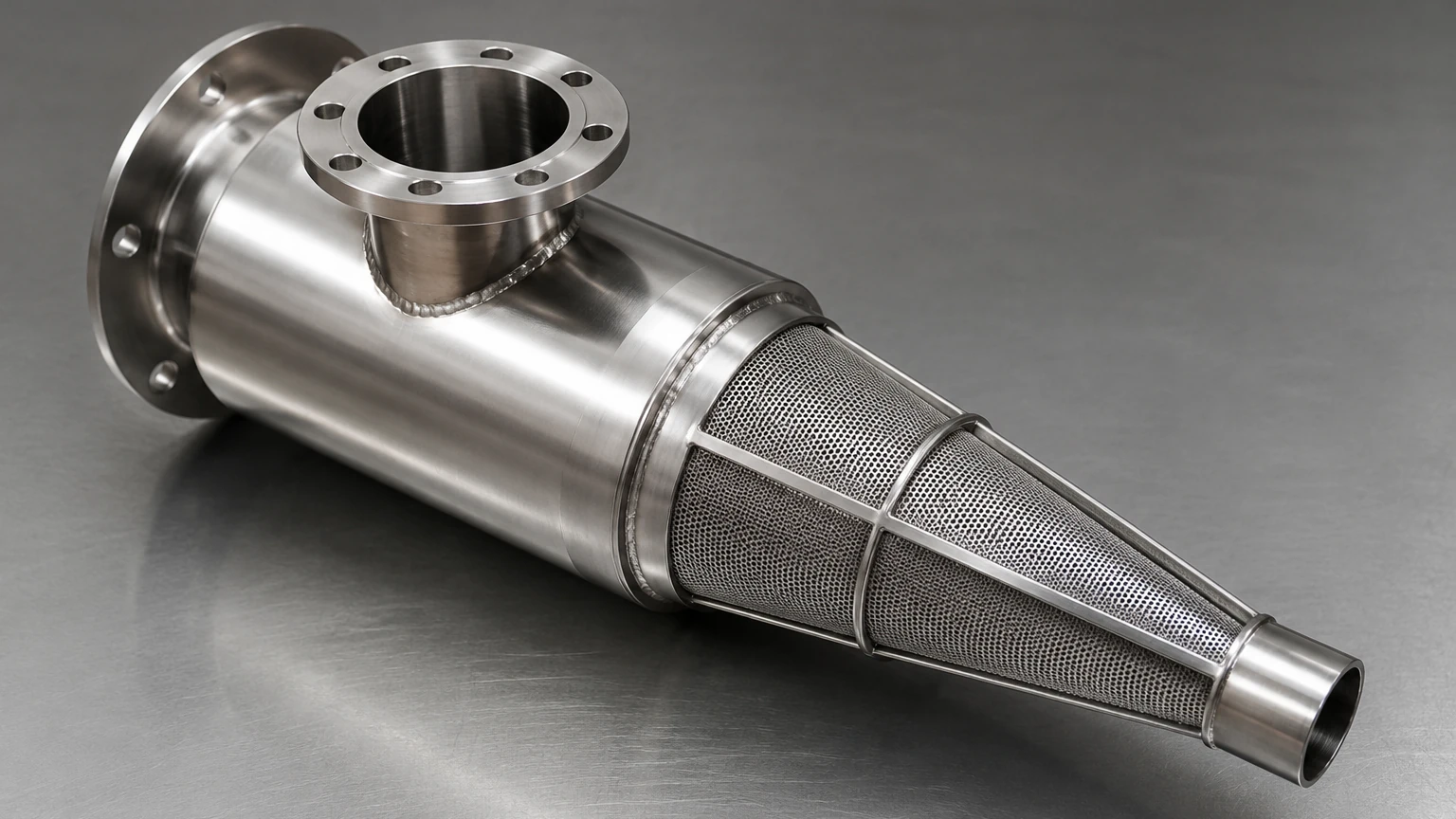
In industrial fluid management, the efficient removal of suspended solids and heavy particulates is a prerequisite for maintaining system integrity and protecting downstream equipment. The cyclone liquid separator, also known as a centrifugal separator or hydrocyclone, serves as a primary filtration stage designed to handle high-volume flows with minimal maintenance. Unlike barrier-style filters that rely on physical media to trap particles, a cyclone liquid separator utilizes centrifugal force to achieve separation based on density differences between the liquid and the contaminants.
For engineers and procurement teams, understanding the mechanical principles, material requirements, and sizing parameters of these units is essential for optimizing process efficiency. As a specialized manufacturer of stainless steel filtration solutions, Kaifil provides technical insights into how these components integrate into broader industrial systems to ensure long-term reliability.
Understanding the Mechanics of Centrifugal Separation
The operation of a cyclone liquid separator is governed by fluid dynamics rather than mechanical straining. The process begins when the process fluid enters the cylindrical-conical chamber through a tangential inlet. This specific entry angle forces the fluid into a rapid rotational motion, creating a primary vortex that moves downward toward the apex of the cone.
As the fluid spins, the centrifugal force acts on the particles within the liquid. Denser particles—such as sand, scale, or metal fines—are pushed outward against the interior walls of the separator. Due to the combination of gravity and the downward velocity of the vortex, these separated solids migrate toward the bottom discharge port, often referred to as the underflow.
Simultaneously, a secondary, upward-moving vortex forms in the center of the chamber. This inner vortex consists of the clarified liquid, which moves toward the top of the unit and exits through the overflow or vortex finder. Because this process does not involve a filter medium that can clog, the pressure drop remains relatively constant, provided the flow rate is maintained within the design parameters.
Engineering Considerations for Cyclone Separator Selection
Selecting the appropriate cyclone liquid separator requires a detailed analysis of the fluid properties and the target particle size. Unlike precision cartridges found on the Main Page, which offer absolute micron ratings, separators are typically rated by their "cut point"—the particle size at which 50% of the solids are removed.
Flow Rate and Pressure Drop
Centrifugal separation is highly dependent on velocity. If the flow rate is too low, the centrifugal force generated will be insufficient to drive particles to the outer wall, leading to poor separation efficiency. Conversely, excessive flow rates can lead to high pressure drops and increased internal erosion. Engineers must balance the required throughput with the available pump head to ensure the separator operates within its peak efficiency curve.
Specific Gravity and Particle Size
The efficiency of a cyclone liquid separator is directly proportional to the difference in density between the liquid and the solid. Materials with a high specific gravity, such as stainless steel chips or silica sand, are separated much more easily than organic materials or light plastics. Generally, these units are most effective for removing particles larger than 50 to 75 microns, though high-efficiency designs can target smaller fractions depending on the fluid's viscosity.
Concentration of Solids
Separators are ideal for applications with high solids loading where traditional mesh filters would require frequent cleaning or replacement. However, the underflow must be managed—either through a continuous bleed or a timed purge valve—to prevent the accumulation of solids from disrupting the vortex and causing re-entrainment of contaminants into the clean stream.
Material Integrity: The Role of Stainless Steel in Corrosive Environments
In industrial sectors such as chemical processing, food and beverage, and pharmaceutical manufacturing, the material of construction is as critical as the design of the separator itself. While carbon steel or plastic units may suffice for simple water treatment, demanding environments require the durability of stainless steel.
Kaifil specializes in custom stainless steel filtration components, emphasizing the use of 304 and 316L grades to withstand corrosive fluids and high-temperature operations. Stainless steel provides several advantages in cyclone liquid separator applications:
1. Corrosion Resistance: Essential for handling brackish water, acidic chemicals, or cleaning-in-place (CIP) solutions.
2. Erosion Resistance: The high-velocity spinning of abrasive particles can quickly wear down softer materials. Hardened or high-grade stainless steel ensures the internal geometry of the separator remains intact over years of service.
3. Hygienic Standards: For food and pharmaceutical applications, stainless steel surfaces can be polished to specific Ra (Roughness Average) values to prevent bacterial growth and facilitate thorough cleaning.
Optimizing Industrial Systems: Separators vs. Barrier Filtration
A common question for engineers is whether to use a cyclone liquid separator or a barrier filter, such as a wire mesh cartridge. In many high-performance systems, the answer is to use both in a multi-stage configuration.
Pre-Filtration and Protection
A cyclone liquid separator is often installed as a pre-filter. By removing the bulk of heavy solids (sand, scale, or metal fragments) before the fluid reaches precision filters, the separator significantly extends the service life of more expensive downstream components. This reduces the frequency of manual cleaning and the total cost of replacement filter media.
Comparison of Performance
* Maintenance: Separators have no moving parts and no media to replace, making them virtually maintenance-free if the purge cycle is automated. Barrier filters require periodic intervention.
* Filtration Accuracy: Barrier filters provide a definitive physical limit on particle size (e.g., 5-micron mesh). Separators are more effective at removing "heavy" particles but may allow neutrally buoyant or very small particles to pass through.
* Footprint: Cyclone separators are compact and can be mounted vertically or horizontally (depending on design), making them suitable for skid-mounted industrial equipment where space is at a premium.
For a comprehensive view of how these components fit into a complete filtration strategy, professionals can Review product options and application support to compare different filtration technologies.
Common Operational Risks and Mitigation Strategies
While cyclone liquid separators are robust, certain operational factors can compromise their performance. Engineering teams should be aware of the following risks:
Air Entrainment
If air is allowed to enter the separator, it can disrupt the vortex stability. This often results in "short-circuiting," where contaminated fluid bypasses the separation zone and exits through the clean water outlet. Ensuring airtight seals and proper piping layout is critical.
Fluctuating Flow Rates
As mentioned previously, centrifugal separation relies on consistent velocity. In systems with variable frequency drives (VFDs) or fluctuating demand, a single large separator may become inefficient at low flows. In such cases, engineers often specify a manifold of several smaller separators (a multi-cyclone arrangement) that can be brought online or offline to match the flow demand.
Underflow Clogging
The solids collection chamber at the bottom of the unit must be cleared regularly. If the solids are allowed to back up into the cone, they will be swept back into the upward vortex. Automated purge valves, triggered by a timer or a differential pressure sensor, are the standard solution for preventing this issue.
Customization and Integration for Demanding Applications
No two industrial processes are identical, and off-the-shelf separation solutions often fall short of specific performance requirements. Customization is a core component of effective filtration engineering. When designing or purchasing a cyclone liquid separator, technical teams should confirm the following with their manufacturer:
* Inlet/Outlet Configurations: Custom flange sizes (ANSI, DIN, JIS) and orientations to match existing piping.
* Surface Finishes: Requirement for electropolishing or specialized coatings for chemical compatibility.
* Pressure Ratings: Ensuring the vessel wall thickness and weld specifications meet the safety standards of the specific facility (e.g., ASME Section VIII).
* Integration with Precision Components: Designing the separator to work in tandem with stainless steel wire mesh or sintered metal cartridges for sub-micron filtration.
Kaifil’s expertise in manufacturing precision metal filter components allows for the development of integrated systems where the cyclone separator handles the high-load pre-treatment, and custom-designed stainless steel cartridges provide the final polishing. This dual-stage approach ensures maximum fluid purity with the lowest possible operational overhead.
Conclusion
The cyclone liquid separator is a vital tool for industrial fluid clarification, offering a mechanical solution to solid-liquid separation that is both durable and efficient. By leveraging centrifugal force, these units provide a first line of defense for sensitive industrial equipment, reducing maintenance costs and improving process stability. When constructed from high-grade stainless steel and sized correctly for the specific application, they represent a long-term investment in system reliability. For engineers seeking to optimize their filtration processes, focusing on the synergy between centrifugal separation and precision barrier filtration is the key to achieving superior performance.
