


Wastewater Screening Equipment
In industrial wastewater treatment, the primary objective is the removal of physical contaminants that can compromise downstream processes or damage sensitive machinery. Wastewater screening equipment serves as the first line of defense in this sequence. By capturing solids, debris, and particulate matter before they reach pumps, membranes, or biological treatment stages, these systems ensure operational continuity and protect the capital investment of the entire treatment facility.
For engineers and procurement professionals, selecting the correct screening solution requires a deep understanding of fluid dynamics, material science, and the specific characteristics of the waste stream. Whether the application involves chemical processing, food production, or municipal water treatment, the performance of the screening media—often constructed from high-grade stainless steel—determines the efficiency of the entire system.
The Role of Screening in Industrial Wastewater Treatment
Wastewater screening equipment is categorized based on the size of the openings and the method of solids removal. The process is generally divided into two main stages: coarse screening and fine screening.
Coarse Screening
Coarse screens typically feature openings larger than 6mm (0.25 inches). Their primary function is to remove large debris such as rags, plastics, and large organic matter. In industrial settings, this stage protects high-capacity pumps from clogging and mechanical failure. While often mechanical in nature, the durability of the screen material is paramount, as it must withstand high impact and heavy loading.
Fine Screening
Fine screening equipment utilizes openings ranging from 0.5mm to 6mm. This stage is critical for removing smaller particulates that could interfere with secondary treatment processes, such as activated sludge systems or membrane bioreactors (MBR). Fine screens often utilize stainless steel wire mesh or perforated plates to achieve precise filtration accuracy. For specialized applications requiring even higher precision, micro-screening (with openings less than 0.5mm) may be employed.
Technical Specifications of Filtration Media
The heart of any wastewater screening equipment is the filtration media. As a manufacturer specializing in custom stainless steel filtration solutions, Kaifil emphasizes that the choice of media directly impacts head loss, capture efficiency, and maintenance frequency.
Stainless Steel Wire Mesh
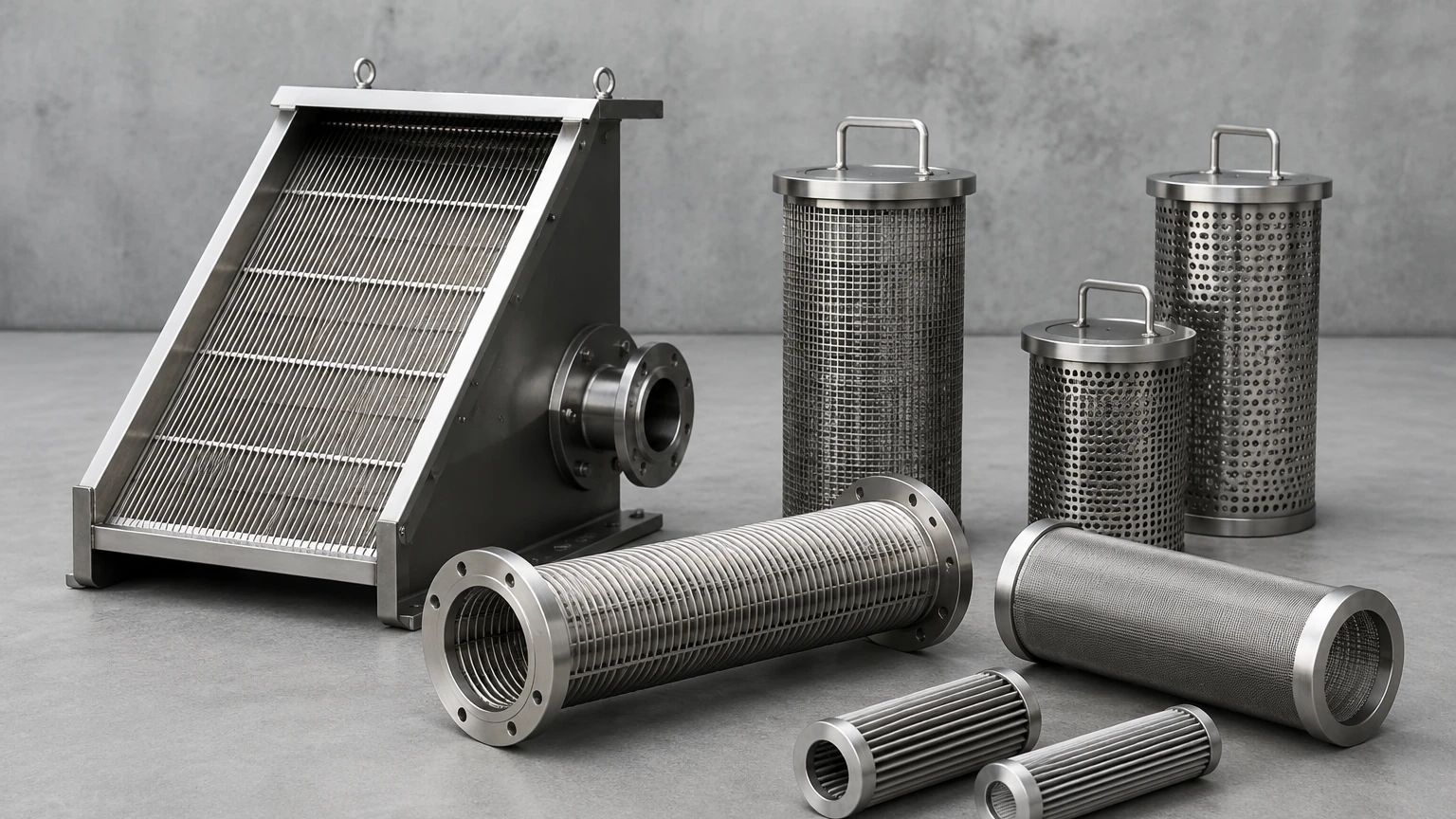
Woven wire mesh is a versatile medium for fine screening. It provides a high percentage of open area, which minimizes pressure drop while maintaining a precise micron rating. In wastewater applications, Dutch weave or plain weave configurations are selected based on the required mechanical strength and the nature of the solids being filtered.
Wedge Wire (V-Wire)
Wedge wire is frequently used in rotary drum screens and static screens. Its V-shaped profile creates a widening gap that allows particles to pass through easily once they have cleared the surface, significantly reducing the risk of blinding (clogging). This design is particularly effective for high-flow environments where continuous operation is required.
Perforated Plates
For applications involving high pressure or abrasive solids, perforated stainless steel plates offer superior structural integrity. These are often used in heavy-duty industrial screening where the media must resist deformation under significant hydraulic loads.
Engineering Selection Criteria for Screening Equipment
When specifying wastewater screening equipment, engineers must evaluate several technical parameters to ensure the system meets the site’s operational demands.
Flow Rate and Hydraulic Loading
The maximum and average flow rates (measured in m³/h or GPM) determine the required surface area of the screen. If the screen is undersized, the approach velocity will be too high, leading to "breakthrough," where flexible solids are forced through the mesh, or excessive head loss, which can cause upstream flooding.
Aperture Size and Capture Efficiency
The aperture size must be balanced against the desired capture efficiency. While smaller openings remove more solids, they also increase the rate of blinding and require more frequent cleaning. Engineers must analyze the particle size distribution (PSD) of the influent to select an aperture that optimizes solids removal without necessitating excessive maintenance.
Material Grade and Chemical Compatibility
Industrial wastewater often contains corrosive elements, varying pH levels, and high temperatures. Stainless steel 304 is the standard for many applications, but 316L is frequently required for environments with high chloride concentrations or acidic conditions. In pharmaceutical or food and beverage applications, the material must also meet specific sanitary standards to prevent bacterial growth and ensure ease of sterilization.
Application-Specific Requirements
Different industries present unique challenges for wastewater screening equipment. A one-size-fits-all approach often leads to premature equipment failure or inefficient treatment.
* Chemical Processing: Screens must be resistant to a wide array of solvents and corrosive agents. Custom metal filtration components are often required to withstand specific chemical reactions within the waste stream.
* Food and Beverage: Wastewater in this sector often contains high levels of fats, oils, and greases (FOG), as well as organic solids like peelings or grains. Screening media must be designed for easy cleaning and resistance to organic fouling.
* Pharmaceutical: High-precision filtration is necessary to ensure that no active pharmaceutical ingredients (APIs) or specialized particulates bypass the primary treatment stage. This often involves the use of high-grade stainless steel filter cartridges and precision mesh.
Maintenance, Durability, and Replacement Cycles
The total cost of ownership (TCO) of wastewater screening equipment is heavily influenced by its maintenance requirements. A screen that is prone to blinding or mechanical wear will incur high costs in terms of labor and downtime.
Cleaning Mechanisms
Most modern screening systems include automated cleaning mechanisms. These may include:
* Backwashing: High-pressure water jets used to clear the mesh from the clean side.
* Mechanical Scrapers: Blades that physically remove accumulated solids from the screen surface.
* Vibratory Systems: Used in some fine screening applications to keep particles in motion and prevent them from settling in the mesh openings.
Wear Resistance
In grit-heavy environments, the abrasive nature of the wastewater can thin the wire mesh or widen the apertures over time. Selecting high-durability materials and robust designs, such as those found on the Main Page of specialized manufacturers, ensures that the filtration accuracy remains consistent throughout the component's service life.
Customization and OEM Integration
Many industrial facilities operate with legacy systems or unique spatial constraints that make off-the-shelf screening equipment impractical. Customization is often necessary to achieve optimal performance. This includes:
* Custom Dimensions: Tailoring the screen size to fit existing channels or tanks.
* Specialized Fittings: Engineering custom flanges, housings, or support structures to integrate seamlessly with existing piping.
* Layered Media: Using multi-layer sintered mesh or reinforced cartridges for applications that require both high precision and high structural strength.
By working with a manufacturer capable of providing OEM solutions, engineering teams can ensure that the replacement parts or new installations are perfectly aligned with their specific process requirements.
Evaluating Total Cost of Ownership
While the initial purchase price of wastewater screening equipment is a significant factor, it is often overshadowed by long-term operational costs. Engineers should consider the following when evaluating TCO:
1. Energy Consumption: The power required for automated cleaning and moving parts.
2. Consumable Costs: The frequency and cost of replacing filter mesh, cartridges, or wear strips.
3. Downtime: The impact on the entire plant if the screening system fails and downstream processes must be halted.
4. Disposal Costs: Efficient screening reduces the volume of sludge produced in later stages, which can significantly lower waste disposal fees.
Conclusion
Effective wastewater screening is a technical necessity for any industrial operation. By selecting the appropriate screening media, material grade, and equipment design, facilities can protect their infrastructure and ensure compliance with environmental regulations. For those seeking specialized components, reviewing product options and application support from an experienced manufacturer is the best way to guarantee that the chosen solution will perform reliably under demanding conditions. For more information on custom stainless steel filtration components, visit the Kaifil Main Page.
