


Define Sparge
In the realm of industrial process engineering, to define sparge is to describe the controlled injection of a gas into a liquid medium through a porous material. This process is fundamental to various chemical, biological, and mechanical operations where the goal is to maximize the contact surface area between the gas and the liquid phases. Unlike simple bubbling, which might involve large, inconsistent gas pockets, industrial sparging relies on precision-engineered components—often made from sintered stainless steel or multi-layered wire mesh—to produce a consistent distribution of micro-bubbles.
For engineers and procurement teams, understanding how to define sparge within the context of their specific application is critical for optimizing mass transfer efficiency. Whether the objective is oxygenation in a bioreactor, carbonation in beverage production, or the stripping of volatile organic compounds in chemical processing, the performance of the sparging system is dictated by the geometry of the porous media and the fluid dynamics of the system. To explore the technical specifications of these components, professionals often refer to the Main Page of specialized manufacturers to evaluate material compatibility and filtration grades.
The Fundamental Principles of Industrial Sparging
At its core, sparging is a mass transfer operation. The efficiency of this operation is governed by the interfacial area between the gas and the liquid. According to Henry's Law and the principles of mass transfer, the rate at which a gas dissolves into or reacts with a liquid is directly proportional to the total surface area of the gas bubbles.
When we define sparge in a technical sense, we focus on the creation of "fine bubbles." Smaller bubbles have a higher surface-area-to-volume ratio than larger bubbles. For instance, a specific volume of gas broken into bubbles with a diameter of 1 mm provides significantly more surface area than the same volume of gas released as 10 mm bubbles. This increased surface area facilitates faster gas absorption or stripping, reducing the time and gas volume required for a process.
Furthermore, smaller bubbles rise more slowly through the liquid column due to buoyancy and drag forces. This increased "residence time" allows for more prolonged interaction between the gas and the liquid, further enhancing the efficiency of the mass transfer. In industrial environments, achieving this requires porous media with tightly controlled pore size distributions, such as those found in high-quality stainless steel filter elements.
Sintered Metal Media: The Engineering Behind Fine Bubble Generation
To effectively define sparge performance, one must examine the hardware used to generate the bubbles. Traditional methods, such as drilled pipes or simple nozzles, often produce large bubbles that rise quickly and coalesce, leading to poor efficiency and high gas wastage.
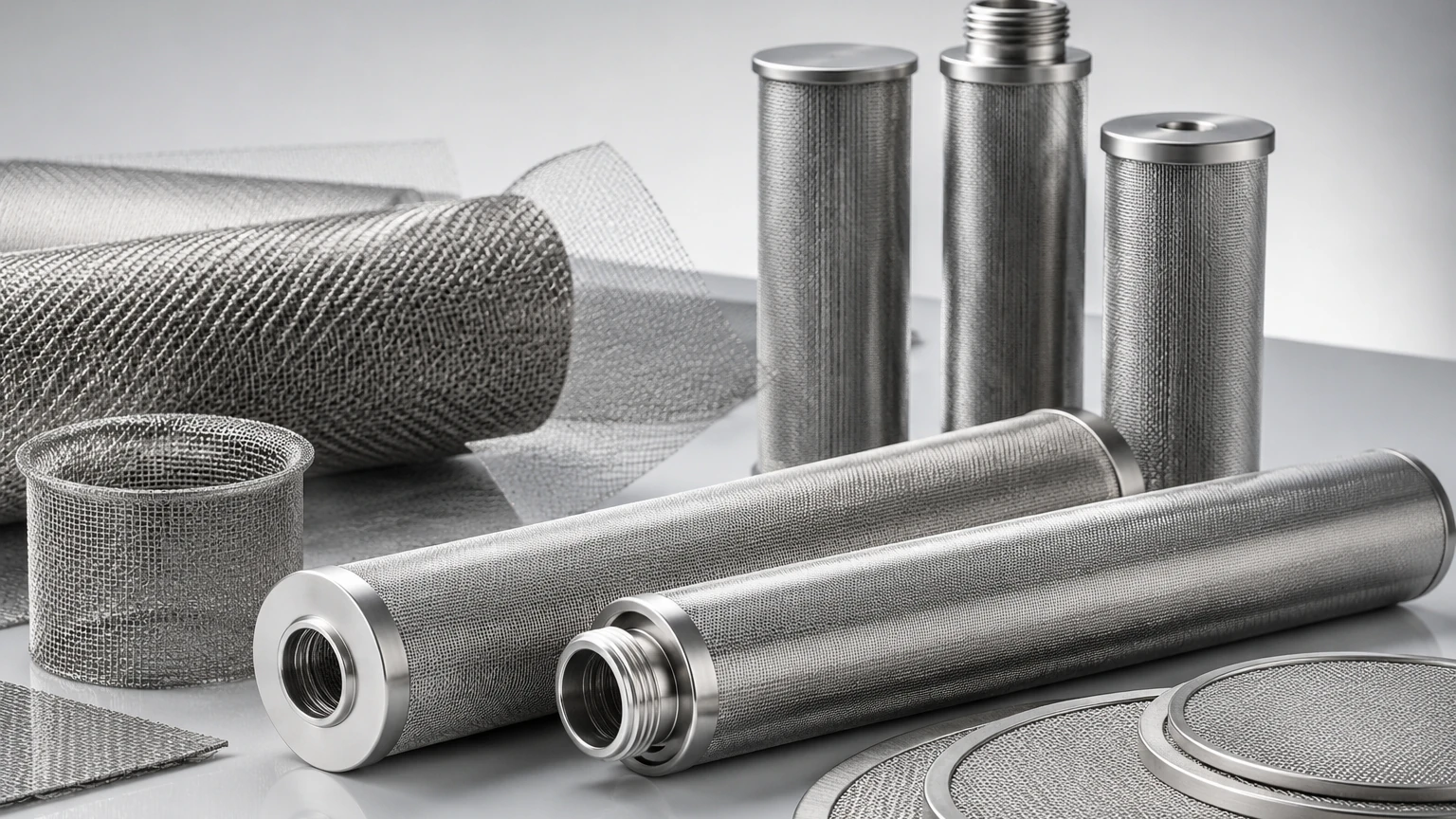
Modern industrial applications favor sintered metal media. Sintering is a metallurgical process where metal powders or layers of wire mesh are fused together under heat and pressure without melting the material. This creates a robust, porous structure with a labyrinth of interconnecting pathways.
1. Pore Size Control: Sintered stainless steel allows for precise control over pore sizes, typically ranging from 0.5 microns to 100 microns. This precision ensures that the resulting bubbles are uniform in size.
2. Structural Integrity: Unlike ceramic or plastic alternatives, stainless steel spargers can withstand high internal pressures and mechanical stresses, which is vital in high-flow industrial reactors.
3. Uniform Distribution: The high density of pores across the surface of a sintered element ensures that gas is emitted evenly, preventing "channeling" where gas escapes through a single path of least resistance.
Critical Factors in Sparger Design and Selection
When engineers set out to define sparge requirements for a new project, several technical parameters must be calculated to ensure the system meets performance expectations.
Bubble Size and Pore Diameter
While it is a common misconception that bubble size equals pore size, the two are related by the surface tension of the liquid and the gas exit velocity. In most aqueous solutions, the bubble diameter produced by a porous metal sparger is approximately 10 to 20 times the mean pore size of the media. Therefore, selecting a 10-micron media grade is a standard starting point for applications requiring high-efficiency gas-liquid contact.
Exit Velocity and Flux
The gas flow rate per unit area of the sparger surface, known as flux, is a critical design limit. If the exit velocity is too high, bubbles will emerge so rapidly that they collide and coalesce into larger bubbles immediately upon leaving the surface, defeating the purpose of using a fine-pore medium. Engineers must balance the total surface area of the sparger with the required gas flow rate to maintain an optimal exit velocity.
Pressure Drop (Delta P)
The resistance to flow offered by the porous media results in a pressure drop. This must be accounted for in the gas supply system. A well-designed sparger minimizes unnecessary pressure drop while maintaining the mechanical strength needed to resist the system's operating pressure.
Material Compatibility and Environmental Resilience
In many B2B sectors, the environments in which spargers operate are highly demanding. Therefore, to define sparge utility, one must consider the material's resistance to corrosion and temperature.
Stainless steel 316L is the industry standard for most sparging applications due to its excellent corrosion resistance and ability to withstand high temperatures. In the pharmaceutical and food industries, 316L is preferred because it can be easily cleaned and sterilized. For more aggressive chemical environments, alloys like Hastelloy® or Monel® may be utilized, though stainless steel remains the most cost-effective and versatile choice for the majority of industrial filtration and sparging needs.
Durability is also a factor in the total cost of ownership. Porous metal spargers are resistant to thermal shock and can operate in temperatures exceeding 400°C (750°F) in oxidizing atmospheres, and even higher in reducing environments. This makes them suitable for steam injection or high-temperature chemical synthesis where polymer-based components would fail.
Industrial Applications: From Fermentation to Chemical Stripping
The versatility of porous metal components allows industries to define sparge processes across a wide spectrum of activities:
* Biotechnology and Fermentation: In bioreactors, sparging is used to deliver oxygen to aerobic microorganisms or cell cultures. Because these organisms are often shear-sensitive, the gentle introduction of micro-bubbles via sintered spargers is preferred over high-speed mechanical agitation.
* Food and Beverage: Carbonation of soft drinks and beer requires the rapid dissolution of CO2. Similarly, nitrogen sparging is used to remove dissolved oxygen from oils and juices to prevent oxidation and extend shelf life.
* Chemical Processing: Sparging is used for "stripping," where an inert gas like nitrogen or steam is bubbled through a liquid to remove unwanted volatile components or dissolved gases like oxygen or water vapor.
* Water Treatment: Ozonation, the process of injecting ozone gas into water for disinfection, relies heavily on fine-bubble sparging to ensure the ozone reacts completely with organic contaminants before the gas escapes the tank.
Maintenance and Longevity of Porous Metal Spargers
A common question among maintenance engineers is how to handle fouling. Because spargers are porous, they can eventually become clogged by particulates in the gas stream or by precipitates and biological growth from the liquid side.
To maintain the defined sparge performance, regular cleaning protocols should be established. Fortunately, stainless steel spargers are highly cleanable. Common methods include:
* Backpulsing: Reversing the flow of gas or liquid through the sparger to dislodge surface contaminants.
* Chemical Cleaning: Soaking the element in solvents, acids, or caustic solutions to dissolve accumulated scales or organic matter.
* Ultrasonic Cleaning: Using high-frequency sound waves in a cleaning bath to remove deeply embedded particles from the porous matrix.
Proper maintenance ensures that the pressure drop remains within design limits and the bubble size distribution remains consistent over years of operation.
Custom OEM Solutions for Complex Filtration and Sparging
Every industrial process has unique constraints, from tank geometry to specific gas-to-liquid ratios. Consequently, many engineers find that off-the-shelf sparging components do not fully meet their needs. Customization is often required to optimize the sparger's shape—whether it be a simple pipe, a flanged element, or a complex manifold system—to fit the specific vessel.
Working with a manufacturer that understands the nuances of stainless steel filtration allows for the development of bespoke sparging solutions. By selecting the appropriate wire mesh or sintered powder grade, manufacturers can tailor the porosity and mechanical strength to the application. For those in the procurement or engineering phase of a project, reviewing the technical capabilities on a manufacturer's Main Page provides the necessary foundation to specify the correct components for long-term operational success.
In summary, to define sparge in a modern industrial context is to acknowledge the intersection of material science and fluid dynamics. By utilizing precision-engineered porous metal media, industries can achieve superior mass transfer rates, reduce gas consumption, and ensure the reliability of their most critical processes.
