


Different Types of Casing
In industrial filtration, the term "casing" refers to the structural components that house, support, or protect the filter media. Whether it is the external pressure vessel that contains the entire filtration process or the internal support sleeve that prevents a wire mesh element from collapsing under pressure, the choice of casing is critical to the safety and efficiency of the system. Selecting the correct configuration requires an understanding of the different types of casing available, their material properties, and how they interact with specific fluid dynamics.
For engineers and procurement teams, the casing is not merely a container; it is a precision-engineered component that must withstand mechanical stress, chemical corrosion, and thermal fluctuations. This guide explores the various types of casings used in stainless steel filtration solutions and the technical factors that influence their selection.
The Role of Casing in Industrial Filtration Systems
The primary function of a casing is to provide structural integrity. In high-pressure environments, such as hydraulic systems or chemical processing lines, the filter media (such as fine wire mesh or sintered metal) is often fragile. Without a robust casing, the differential pressure—the difference in pressure between the upstream and downstream sides of the filter—could cause the media to deform, tear, or bypass.
Beyond structural support, different types of casing serve to:
1. Direct Fluid Flow: Casings are designed to ensure that the process fluid passes through the filter media uniformly, preventing "channeling" where fluid takes the path of least resistance and exhausts the media unevenly.
2. Contain Pressure: External filter housings act as pressure vessels, designed to meet specific safety standards (such as ASME or PED) to prevent leaks or catastrophic failures.
3. Facilitate Maintenance: Well-designed casings allow for quick access to filter elements, reducing downtime during cleaning or replacement cycles.
Structural Casings for Filter Elements
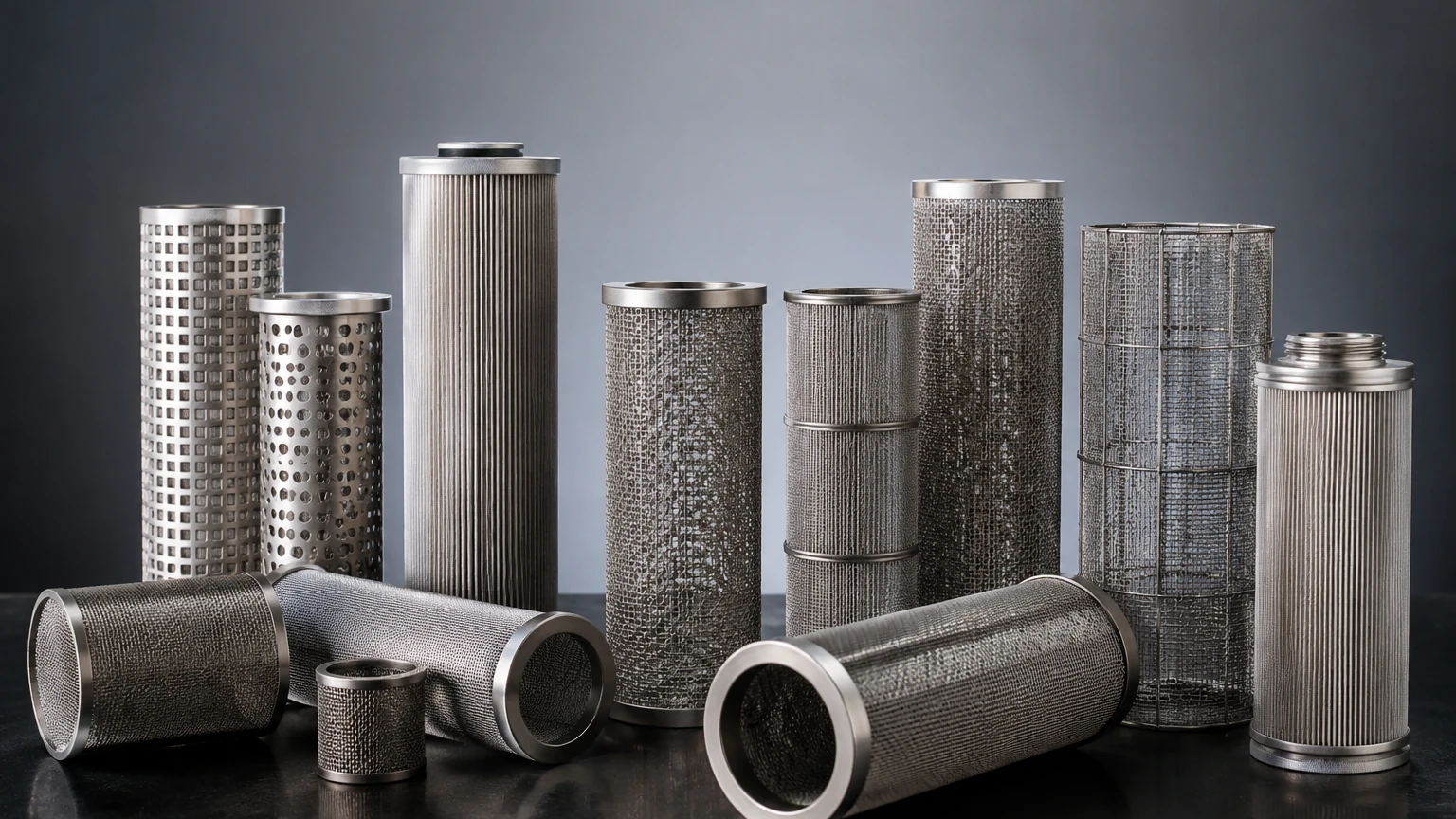
When discussing the internal components of a filter cartridge, the casing often refers to the support core or the outer protective shroud. These are essential for maintaining the geometry of the filter under flow-induced stress.
Perforated Metal Casings
Perforated stainless steel is one of the most common types of casing for industrial filter cartridges. These tubes provide a high degree of mechanical strength while maintaining a significant open area for fluid passage. The hole pattern—staggered or straight—and the hole diameter are calculated based on the required flow rate and the viscosity of the fluid. In heavy-duty applications, a thick-walled perforated casing ensures that the filter element remains rigid even during high-pressure surges.
Expanded Metal Casings
Expanded metal is created by slitting and stretching a single sheet of stainless steel. This results in a diamond-shaped pattern that offers excellent structural rigidity with less weight than perforated metal. Expanded casings are frequently used as outer guards to protect delicate pleated wire mesh from mechanical damage during handling and installation.
Wire-Wrapped Casings
Often seen in oil and gas or water well applications, wire-wrapped casings (or wedge wire screens) consist of V-shaped profile wires wrapped around longitudinal support rods. This type of casing is exceptionally strong and provides a non-clogging surface, making it ideal for high-solids loading where backwashing is required.
Pressure Vessel Casings: Filter Housings
In a broader industrial context, the casing often refers to the filter housing itself. These are categorized based on their capacity and the type of element they contain.
Single-Round Filter Housings
Designed for lower flow rates, these casings hold a single filter cartridge. They are commonly used in pilot plants, laboratories, or as point-of-use filters in pharmaceutical and food processing. Because they are smaller, they are easier to manufacture with high-precision finishes, such as electropolishing, to meet sanitary requirements.
Multi-Round Filter Housings
For large-scale industrial applications, multi-round casings can hold anywhere from three to over a hundred filter cartridges. These large vessels are engineered to handle massive flow volumes while ensuring that pressure drop across the system remains within operational limits. The internal design must ensure that flow is distributed equally among all cartridges to prevent premature clogging of individual elements.
Bag Filter Housings
Bag filter casings are designed specifically for filter bags rather than cartridges. They typically feature a top-entry or side-entry design and include an internal support basket (another form of casing) to prevent the bag from bursting under the weight of the collected contaminants.
Material Selection for Industrial Filter Casings
The environment in which the filter operates dictates the material of the casing. While plastics or carbon steels are used in some low-end applications, industrial filtration primarily relies on stainless steel and specialized alloys.
* 304 Stainless Steel: The standard choice for general industrial use, offering good corrosion resistance and durability in water treatment and basic chemical applications.
* 316L Stainless Steel: The "L" stands for low carbon, which improves weldability and resistance to intergranular corrosion. 316L is the industry standard for pharmaceutical, food and beverage, and marine environments due to its superior resistance to chlorides and organic acids.
* Duplex and Super Duplex: In highly aggressive environments, such as desalination plants or offshore oil rigs, different types of casing made from duplex stainless steel are used. These materials provide nearly double the yield strength of austenitic stainless steels and exceptional resistance to stress corrosion cracking.
* High-Nickel Alloys: For extreme temperatures or highly acidic processes, alloys like Hastelloy or Inconel may be used for the casing to ensure long-term survival of the filtration unit.
Connection and Sealing Types for Industrial Casings
A casing is only as reliable as its connections. The method used to integrate the casing into the piping system affects both the ease of installation and the integrity of the seal.
1. Threaded Connections (NPT/BSP): Common in smaller single-round housings and low-pressure systems. They are simple to install but can be prone to leaking if not properly sealed with PTFE tape or specialized compounds.
2. Flanged Connections (ANSI/DIN): The standard for high-pressure and large-diameter industrial casings. Flanges provide a robust, bolt-on connection that can withstand significant mechanical stress and vibration.
3. Sanitary (Tri-Clamp) Connections: Essential for the food, beverage, and pharmaceutical industries. These connections are designed to be "crevice-free," preventing the buildup of bacteria or process residue. They allow for rapid disassembly for cleaning (Clean-in-Place or CIP).
4. O-Ring and Gasket Seals: The internal sealing between the filter element and the casing is critical. Common materials include Viton, EPDM, and Silicone, selected based on chemical compatibility and operating temperature.
Engineering Considerations for Custom Casing Design
Off-the-shelf solutions do not always meet the rigorous demands of specialized industrial processes. When designing custom different types of casing, engineers must evaluate several technical parameters:
* Differential Pressure (ΔP) Rating: The casing must be rated to withstand the maximum expected differential pressure, including a safety margin for potential pressure spikes.
* Flow Velocity: If the fluid velocity is too high within the casing, it can cause erosion of the metal surfaces or create turbulence that interferes with the filtration efficiency.
* Corrosion Allowance: In certain chemical applications, engineers specify a "corrosion allowance," which is an extra thickness added to the casing walls to account for the gradual loss of metal over the service life of the equipment.
* Surface Finish: For many industries, the internal surface roughness (measured in Ra) is vital. A smoother surface reduces the risk of contaminant adhesion and improves the effectiveness of sterilization cycles.
Maintenance and Replacement Cycles for Filter Casings
While the filter media is a consumable item, the casing is generally considered a long-term asset. However, casings require regular inspection to ensure continued safety. In high-pressure systems, the casing should be checked for signs of metal fatigue, stress corrosion cracking, or erosion around the inlet and outlet ports.
In systems using perforated or expanded metal support casings, it is important to inspect the welds. Vibration from pumps can cause harmonic resonance, which may lead to weld failure over time. If a support casing fails, it can lead to the collapse of the filter media, resulting in downstream contamination and potential damage to expensive equipment like turbines or high-pressure nozzles.
Conclusion
Understanding the different types of casing is fundamental to optimizing an industrial filtration system. From the internal perforated cores that provide structural support to the heavy-duty pressure vessels that contain the entire process, each casing type plays a specific role in ensuring filtration performance and operational safety. By selecting the right materials, connection types, and structural designs, engineers can significantly reduce the total cost of ownership and improve the reliability of their filtration processes.
For more information on custom stainless steel filtration solutions and technical specifications for various filter components, you can visit the Main Page to explore professional engineering support and product options tailored to your specific application requirements.
