


Disc Filters
In the landscape of industrial filtration, disc filters represent a critical component for achieving high-precision separation in both liquid and gas streams. Engineered to withstand extreme temperatures, high pressures, and corrosive environments, these components are foundational to the operational integrity of chemical processing, hydraulic systems, and pharmaceutical manufacturing. As a specialized manufacturer, Kaifil provides custom stainless steel filtration solutions designed to meet the rigorous specifications required by modern engineering teams. Understanding the technical nuances of disc filter design, material properties, and performance metrics is essential for optimizing system efficiency and ensuring long-term reliability.
Understanding the Construction of Industrial Disc Filters
Disc filters, often referred to as filter discs, are circular filtration elements typically constructed from stainless steel wire mesh, sintered metal fiber, or sintered wire cloth. Unlike disposable polymer filters, these metal components offer a unique combination of mechanical strength and reusability. The construction process varies based on the required filtration accuracy and the physical demands of the application.
Single-Layer vs. Multi-Layer Mesh
Single-layer disc filters are often used for coarse filtration or as support structures. However, for precision applications, multi-layer designs are preferred. These involve stacking multiple layers of wire mesh—ranging from fine filtration layers to coarse support layers—and bonding them together. This layering technique enhances the structural integrity of the disc, preventing the mesh from deforming under high differential pressure.
Sintered Metal Technology
For the most demanding environments, sintered disc filters are the industry standard. Sintering is a process where multiple layers of stainless steel wire mesh are bonded together through heat and pressure in a vacuum furnace. This creates a molecular bond between the wires at every contact point, resulting in a porous metal plate that maintains its pore size even under extreme mechanical stress. Sintered metal filters provide superior resistance to migration, ensuring that no metal fragments or fibers enter the downstream flow.
Edge Treatment and Framing
To ensure a proper seal within a filter housing, disc filters often require specific edge treatments. Common options include spot welding, aluminum or stainless steel edging (rimming), or specialized resin bonding. A well-engineered edge prevents bypass—where unfiltered fluid escapes around the perimeter of the disc—and provides a stable seating surface for gaskets or O-rings.
Key Performance Metrics for Engineering Evaluation
When selecting disc filters for an industrial process, engineers must look beyond simple dimensions. Performance is dictated by several interconnected variables that influence both the quality of the filtrate and the operational cost of the system.
Filtration Accuracy (Micron Rating)
The micron rating defines the size of particles the filter is capable of capturing. It is categorized into "nominal" and "absolute" ratings. A nominal rating indicates the filter's ability to retain a majority of particles at a certain size, while an absolute rating—typical of high-quality stainless steel mesh—guarantees the retention of all particles above a specific threshold. Kaifil’s manufacturing processes allow for precise control over pore size, ranging from sub-micron levels to several hundred microns.
Permeability and Pressure Drop (ΔP)
Permeability refers to the ease with which a fluid passes through the filter media. A high-performance disc filter must balance fine filtration with low resistance to flow. An excessive initial pressure drop (ΔP) can lead to increased energy consumption by pumps and may shorten the effective service life of the filter as it reaches its terminal pressure drop more quickly. Engineers must calculate the clean pressure drop based on fluid viscosity, flow rate, and the effective filtration area of the disc.
Dirt Holding Capacity
This metric determines how much contaminant a filter can retain before the pressure drop becomes unacceptable. Sintered fiber felt discs generally offer higher dirt holding capacity than plain square weave mesh because they provide a three-dimensional depth filtration effect, trapping particles throughout the thickness of the media rather than just on the surface.
Material Selection and Chemical Compatibility
The longevity of a disc filter is heavily dependent on its material composition. Stainless steel is the primary choice due to its versatility, but the specific grade must be matched to the process fluid.
* Grade 304 Stainless Steel: The standard choice for general industrial applications, offering good corrosion resistance and mechanical properties at a cost-effective price point. It is widely used in food and beverage applications where high-strength cleaning agents are not present.
* Grade 316L Stainless Steel: Containing molybdenum, 316L offers superior resistance to pitting and crevice corrosion, particularly in chloride-rich environments. The "L" denotes low carbon content, which is essential for components that require welding, as it prevents carbide precipitation that can lead to intergranular corrosion.
* Specialty Alloys: For highly aggressive chemical processes or extreme temperatures exceeding 400°C, alloys such as Hastelloy, Monel, or Inconel may be utilized. These materials maintain their structural integrity and corrosion resistance in environments where standard stainless steel would fail.
For more information on material specifications and custom engineering support, technical teams can visit the Main Page to review comprehensive product options.
Critical Applications in Demanding Environments
Disc filters are utilized across a spectrum of industries where precision and durability are non-negotiable. Their ability to be cleaned and reused makes them particularly attractive in high-value or high-volume processes.
Chemical and Petrochemical Processing
In the chemical industry, disc filters are used for catalyst recovery, monomer filtration, and the removal of impurities from corrosive solvents. The ability of stainless steel to withstand high-temperature reactions allows these filters to be placed directly in the process stream, protecting downstream equipment like heat exchangers and reactors from fouling.
Hydraulic and Lubrication Systems
Precision hydraulic systems in aerospace and heavy machinery require extremely clean oil to prevent component wear and valve sticking. Disc filters are often integrated into high-pressure line filters or used as "last chance" filters located immediately upstream of sensitive components. Their high collapse pressure rating is vital in these applications, where sudden pressure spikes are common.
Pharmaceutical and Biotechnology
In these sectors, filtration components must meet stringent sanitary standards. Stainless steel disc filters are ideal because they can be sterilized using steam-in-place (SIP) or autoclave methods. They are used in the production of active pharmaceutical ingredients (APIs) and in the filtration of sterile gases, where the absence of media migration is a critical safety requirement.
Food and Beverage Production
From filtering frying oils to clarifying syrups and carbonated beverages, disc filters provide a robust solution that complies with food safety regulations. Their smooth surface allows for effective Clean-in-Place (CIP) procedures, reducing downtime between batches.
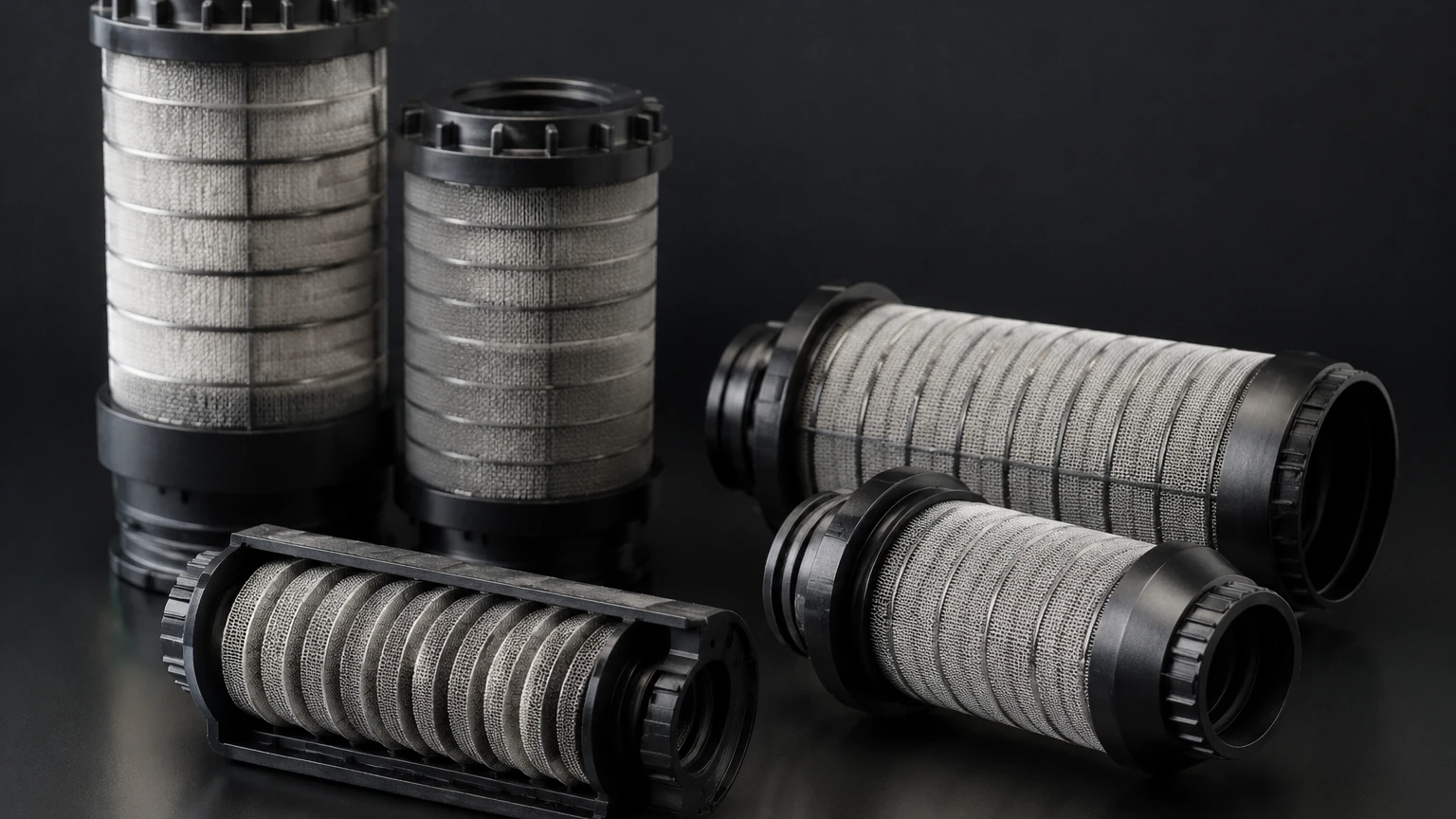
Customization and OEM Integration
One of the primary advantages of working with a dedicated manufacturer like Kaifil is the ability to customize disc filters to fit specific equipment designs. Off-the-shelf solutions often fail to meet the exact flow characteristics or spatial constraints of a proprietary system.
Geometry and Dimensions
While circular discs are standard, custom shapes—including oval, rectangular, or multi-segmented discs—can be manufactured to fit unique housing geometries. Diameters can range from a few millimeters for micro-filtration components to over a meter for large-scale industrial separators.
Layer Configuration
Engineers can specify the exact sequence of mesh layers to achieve a desired balance of filtration fineness, flow rate, and mechanical rigidity. For example, a five-layer sintered mesh might include a fine filtration layer protected by two buffer layers and supported by two heavy-duty drainage layers.
Integration with Housings
For OEM applications, disc filters can be supplied as part of a larger assembly, including threaded fittings, specialized gaskets, or reinforced centers. This reduces assembly time for the end-user and ensures that the filtration interface is optimized for the specific application.
Maintenance and Total Cost of Ownership (TCO)
While the initial purchase price of a stainless steel disc filter is higher than that of a disposable paper or polymer filter, the Total Cost of Ownership (TCO) is often significantly lower. This is primarily due to the filter's cleanability and durability.
Cleaning Methods
Stainless steel filters can be cleaned and returned to service multiple times. Common cleaning techniques include:
* Backwashing: Reversing the flow of fluid to dislodge particles from the surface of the mesh.
* Ultrasonic Cleaning: Using high-frequency sound waves in a cleaning solution to remove fine particles trapped deep within the mesh pores.
* Chemical Cleaning: Using acids, alkalis, or solvents to dissolve organic or inorganic deposits, provided the filter material is compatible with the cleaning agent.
* Thermal Burn-off: In applications involving polymers or heavy oils, controlled heating can be used to carbonize and remove contaminants.
Replacement Cycles
Determining the replacement cycle for a disc filter involves monitoring the pressure drop and inspecting the media for signs of fatigue or permanent fouling. In many industrial settings, a high-quality stainless steel disc can last for years, whereas disposable alternatives would require replacement every few weeks. This not only reduces the cost of replacement parts but also minimizes labor costs and hazardous waste disposal associated with used filter cartridges.
Conclusion: Selecting the Right Filtration Partner
Selecting the appropriate disc filter is a technical decision that impacts the efficiency, safety, and profitability of an industrial process. Engineers must account for the physical properties of the fluid, the environmental conditions of the application, and the long-term maintenance strategy. By focusing on high-quality materials and precision manufacturing, facilities can achieve consistent filtration performance and protect their critical infrastructure.
Kaifil specializes in bridging the gap between standard filtration products and custom-engineered solutions. With extensive experience in stainless steel wire mesh and sintered metal components, the company supports global industries in solving complex filtration challenges. To explore the full range of capabilities and technical specifications, professionals are encouraged to consult the Main Page for detailed product data and engineering support.
