


Pleated Water Filters
In industrial water treatment and process fluid management, the efficiency of a filtration system is often dictated by the relationship between surface area and flow rate. Pleated water filters represent a specialized engineering solution designed to maximize this relationship. Unlike depth filters, which rely on the thickness of the media to trap contaminants, pleated filters utilize a folded geometry to provide a significantly larger surface area within a compact cartridge footprint. This design allows for higher flow rates, lower initial pressure drops, and extended service life, making them a critical component in sectors ranging from chemical processing to food and beverage production.
For engineers and procurement professionals, selecting the right filtration media involves balancing mechanical strength, chemical compatibility, and filtration precision. While polymer-based pleated filters are common for light-duty applications, industrial environments often require the durability of stainless steel wire mesh or sintered metal. As a manufacturer specializing in high-performance metal filtration, Kaifil provides customized solutions that address these demanding technical requirements. Detailed information regarding our manufacturing capabilities and product range can be found on our Main Page.
Understanding the Engineering of Pleated Water Filters
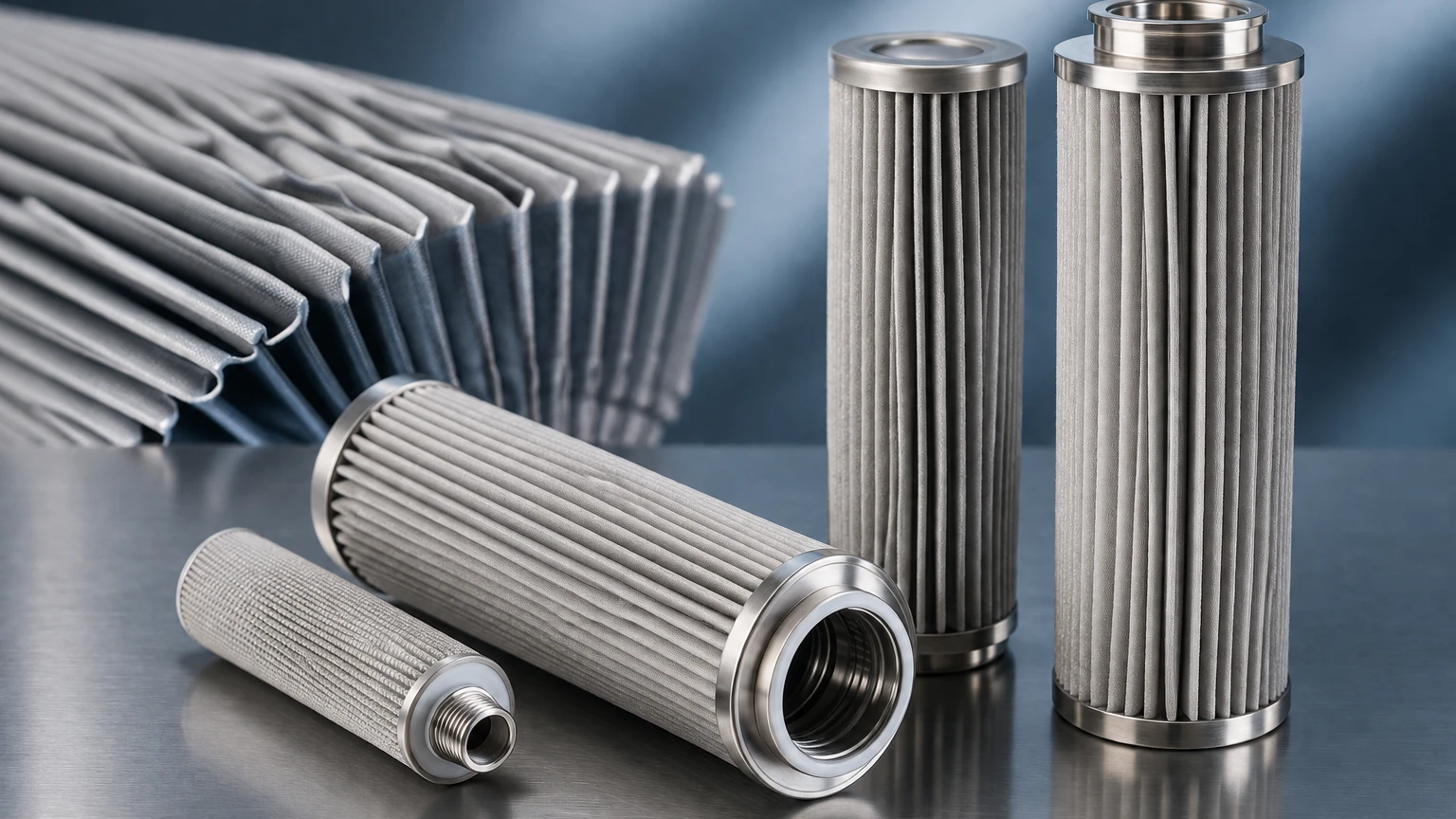
The primary advantage of pleated water filters lies in their geometric configuration. By folding the filter media into a series of pleats, the effective filtration area (EFA) is increased by several orders of magnitude compared to a standard cylindrical filter of the same dimensions. This increased area directly impacts several key performance metrics.
Flow Dynamics and Pressure Drop
In any filtration system, the resistance to flow is known as pressure drop (Delta P). A higher surface area allows the fluid to pass through the media at a lower flux (flow per unit area). Lower flux results in a lower initial pressure drop, which reduces the energy requirements of the pumping system. Furthermore, because the velocity of the fluid through the media is reduced, there is less chance of "breakthrough," where particles are forced through the pores due to high pressure.
Dirt Holding Capacity
The service life of a filter is determined by its dirt-holding capacity. In a pleated design, the large surface area provides more space for particles to accumulate before the pressure drop reaches the terminal limit (the point at which the filter must be cleaned or replaced). In industrial water applications where suspended solids are prevalent, pleated water filters significantly extend the intervals between maintenance cycles, reducing downtime and labor costs.
Material Considerations for Industrial Environments
The choice of material for pleated water filters is dictated by the operating environment, including temperature, pressure, and the chemical composition of the water. While synthetic materials like polypropylene or polyester are suitable for standard water filtration, industrial processes often involve extremes that necessitate metal media.
Stainless Steel Wire Mesh
Stainless steel (typically 304 or 316L) is the material of choice for high-temperature and high-pressure water filtration. Pleated stainless steel wire mesh filters offer exceptional mechanical strength. Unlike synthetic fibers, stainless steel does not migrate or shed into the filtrate, ensuring high purity. This is particularly important in pharmaceutical and food-grade applications where material integrity is a regulatory requirement.
Chemical Compatibility
In chemical processing or produced water treatment in the oil and gas industry, the water may contain solvents, hydrocarbons, or corrosive agents. Stainless steel pleated filters resist corrosion and chemical degradation that would cause synthetic filters to soften, swell, or fail. The use of 316L stainless steel provides enhanced resistance to pitting and crevice corrosion in chloride-rich environments.
Thermal Stability
Pleated water filters made from metal can withstand temperatures exceeding 250°C, making them suitable for steam filtration and hot process water. Synthetic filters are generally limited to temperatures below 60-80°C, after which their structural integrity and filtration efficiency decline rapidly.
Performance Evaluation: Micron Ratings and Efficiency
When specifying pleated water filters, engineers must distinguish between nominal and absolute filtration ratings. This distinction is vital for ensuring the protection of downstream equipment like high-pressure pumps or sensitive membranes.
Nominal vs. Absolute Ratings
* Nominal Rating: This is an arbitrary value provided by manufacturers, indicating that the filter will retain a major percentage (usually 60% to 90%) of particles at a specific micron size. Nominal filters are often used for pre-filtration where total removal is not required.
* Absolute Rating: This refers to the diameter of the largest hard spherical particle that will pass through the filter under specific test conditions. An absolute-rated pleated filter is essential for critical applications where the presence of even a few oversized particles could cause system failure or product contamination.
The Role of the Beta Ratio
For high-precision industrial filtration, the Beta Ratio (β) is a more accurate measure of performance. It compares the number of particles of a given size in the influent (upstream) to the number in the effluent (downstream). A higher Beta Ratio indicates higher filtration efficiency. For instance, a Beta 1000 rating means that for every 1000 particles entering the filter, only one passes through, representing 99.9% efficiency.
Application-Specific Selection for Industrial Sectors
Pleated water filters are versatile components used across various industries, each with unique performance requirements.
Food and Beverage Industry
In this sector, water is used both as an ingredient and for cleaning-in-place (CIP) processes. Pleated filters must meet stringent hygiene standards. Stainless steel pleated elements are preferred because they can be sterilized using steam or chemicals without losing their structural integrity. They effectively remove spoilage organisms, yeast, and sediment, ensuring product consistency.
Pharmaceutical and Biotechnology
Filtration in the pharmaceutical industry requires absolute retention and zero media migration. Pleated water filters are used to treat process water, protecting expensive reverse osmosis (RO) membranes from premature fouling. The high surface area of pleated designs is particularly beneficial here, as it allows for the high-volume throughput required in large-scale manufacturing.
Hydraulic and Cooling Systems
Industrial machinery relies on cooling water and hydraulic fluids to operate efficiently. Contaminants in these fluids can cause abrasive wear on valves and seals. Pleated filters are used to maintain the cleanliness levels required by ISO standards, ensuring the longevity of the equipment. Metal pleated elements are often used in hydraulic systems due to their ability to withstand high-pressure spikes.
Maintenance, Cleaning, and Total Cost of Ownership
One of the most significant advantages of stainless steel pleated water filters over disposable synthetic options is their cleanability. While the initial capital expenditure for a metal filter is higher, the total cost of ownership (TCO) is often lower over the long term.
Cleaning Methodologies
Metal pleated filters can be cleaned and reused multiple times. Common cleaning methods include:
* Backwashing: Reversing the flow of water to dislodge particles from the surface of the pleats.
* Ultrasonic Cleaning: Using high-frequency sound waves in a cleaning solvent to remove fine particulates trapped deep within the mesh.
* Chemical Cleaning: Using acids or alkalis to dissolve organic or inorganic scaling, provided the filter material is compatible.
* Burn-off/Pyrolysis: For filters used in polymer or heavy oil applications, high heat can be used to carbonize contaminants, which are then removed via ultrasonic cleaning.
Environmental Impact
By opting for cleanable pleated water filters, industrial facilities can significantly reduce their waste stream. Disposable cartridges contribute to landfill waste and require frequent procurement and logistics management. A reusable stainless steel element can last for years, aligning with corporate sustainability goals and reducing the environmental footprint of the filtration process.
Customization and OEM Solutions for Specialized Requirements
Standard off-the-shelf filters do not always meet the specific needs of complex industrial systems. Factors such as non-standard housing dimensions, extreme pressure requirements, or specific end-cap configurations necessitate customized solutions.
As a dedicated manufacturer, Kaifil specializes in the design and production of custom pleated water filters. Our engineering team works closely with clients to determine the optimal pleat density, media selection, and structural reinforcement required for their specific application. Whether it is a unique micron rating or a specialized alloy for corrosive environments, we provide OEM services that ensure the filter integrates seamlessly into the existing infrastructure.
When designing a custom filter, we consider:
1. Housing Compatibility: Ensuring the end-caps (DOE, 222, 226, etc.) provide a bypass-free seal.
2. Structural Support: Adding internal cores or external cages to prevent pleat collapse under high differential pressure.
3. Media Layering: Combining different layers of wire mesh to provide both fine filtration and mechanical support.
Conclusion: Making an Informed Selection
Selecting the appropriate pleated water filters is an engineering decision that impacts the efficiency, safety, and cost-effectiveness of industrial operations. By understanding the advantages of pleated designs—specifically the increased surface area and lower pressure drops—and evaluating the benefits of durable materials like stainless steel, technical professionals can optimize their filtration processes.
For those seeking reliable, high-performance filtration components tailored to specific industrial needs, Kaifil offers the expertise and manufacturing precision required to deliver effective results. To explore our full range of stainless steel filter cartridges and custom filtration solutions, please visit our Main Page.
