


Disc Water Filter
In the landscape of industrial liquid-solid separation, the disc water filter represents a sophisticated evolution of depth filtration technology. Designed to handle high-flow rates while maintaining precise particle retention, these systems are increasingly utilized in demanding sectors such as chemical processing, cooling water management, and pre-filtration for membrane systems. Unlike traditional screen filters that rely on surface-level capture, a disc water filter utilizes a stack of compressed, grooved discs to create a three-dimensional filtration matrix. This technical overview explores the engineering principles, material considerations, and selection criteria essential for technical professionals and purchasing teams evaluating these systems for industrial applications.
Understanding Disc Filtration Technology
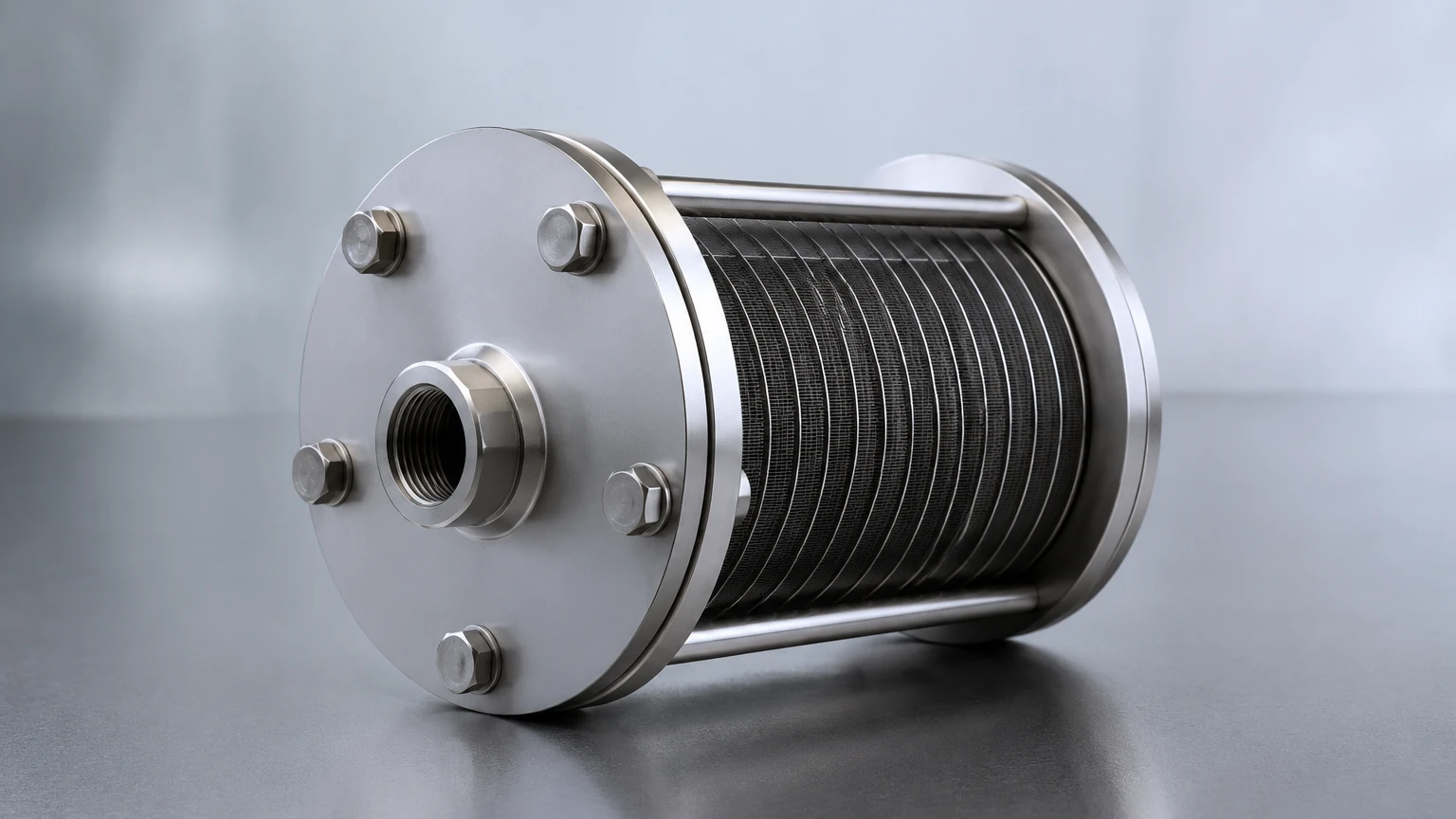
The core of a disc water filter is the filter element, which consists of a series of thin, synthetic or metal discs stacked together and compressed on a central spine. Each disc is manufactured with microscopic grooves on both sides. When these discs are stacked and compressed, the grooves intersect at specific angles, creating a complex network of channels and trap points. This structure allows the filter to function as a depth filter, capturing particles not just on the outer surface of the stack, but throughout the entire depth of the compressed disc media.
From an engineering perspective, the filtration efficiency is determined by the geometry and density of these grooves. Coarser grooves are used for primary filtration or high-turbidity water, while finer grooves provide precision down to 20 microns or less. During the filtration cycle, the water flows from the outside of the stack toward the center, leaving contaminants trapped within the groove intersections. As the solids accumulate, the differential pressure across the stack increases, eventually triggering a cleaning cycle.
Key Engineering Specifications and Performance Metrics
When specifying a disc water filter for an industrial process, several technical parameters must be analyzed to ensure the system meets the operational requirements of the facility. Engineers must look beyond simple flow rates to understand how the filter will perform under varying load conditions.
Micron Rating and Filtration Grade
Micron ratings for disc filters typically range from 20 to 400 microns. It is important to note that because these are depth filters, they often exhibit higher dirt-holding capacities than screen filters of the same micron rating. The choice of rating depends on the downstream equipment's sensitivity; for example, protecting a reverse osmosis (RO) membrane usually requires a much finer disc water filter than a system designed for large-scale agricultural irrigation.
Flow Capacity and Velocity
Flow capacity is generally measured in cubic meters per hour (m³/h) or gallons per minute (GPM). However, the nominal flow rate provided by manufacturers often assumes clean water. In industrial settings with high Total Suspended Solids (TSS), the effective flow rate may be lower. Engineers must calculate the "filtration velocity"—the speed at which water passes through the disc surface area—to prevent premature clogging and ensure consistent effluent quality.
Differential Pressure (ΔP)
The pressure drop across a clean disc stack is usually minimal (often less than 0.1 bar). As the filter captures debris, the ΔP increases. Most automated systems are programmed to initiate a backwash cycle when the differential pressure reaches a set point, typically between 0.5 and 0.8 bar. Understanding the maximum allowable pressure for the housing and the disc stack is critical for system safety.
Material Compatibility and Industrial Durability
While many commercial disc filters utilize polypropylene or reinforced polyamide discs, industrial-grade applications often require more robust materials to withstand chemical exposure, high temperatures, or abrasive particles. At Kaifil, the focus remains on high-performance materials like stainless steel for filtration components, which offer superior mechanical strength and longevity compared to standard plastics.
Chemical Resistance
In chemical processing or wastewater treatment, the fluid may contain solvents, acids, or bases that can degrade standard polymers. It is essential to verify that the disc material and the O-rings/seals are compatible with the specific chemical profile of the process fluid. Stainless steel 304 or 316L housings and internal supports are often preferred for their resistance to corrosion and thermal stress.
Thermal Stability
Industrial processes often operate at elevated temperatures where plastic components may lose structural integrity or deform. A disc water filter designed for high-temperature applications must utilize materials that maintain their groove geometry under thermal load, ensuring that the filtration precision does not drift during operation.
Comparing Disc Filtration with Screen and Media Alternatives
Selecting the right filtration technology requires a comparative analysis of disc filters against screen filters and media (sand/multi-media) filters. Each has distinct advantages depending on the particle size distribution and the nature of the contaminants.
* Disc vs. Screen Filters: Screen filters provide surface filtration. They are excellent for removing rigid, oversized particles but can struggle with organic matter or "sticky" contaminants that can blind the screen surface. The disc water filter, with its depth filtration capability, is significantly more effective at handling organic loads and algae, as the contaminants are distributed through the stack rather than forming a thin film on a surface.
* Disc vs. Media Filters: Media filters are traditional depth filters capable of very fine filtration. However, they have a large physical footprint, require significant amounts of backwash water, and are prone to channeling. Disc filters provide similar depth filtration benefits in a much more compact footprint, with significantly lower backwash water consumption and faster cleaning cycles.
Operational Maintenance and Automated Backwashing Systems
One of the primary advantages of modern disc water filter systems is their ability to self-clean without manual intervention. The backwash mechanism is a marvel of hydraulic engineering. When a cleaning cycle is triggered (via timer or differential pressure), the flow direction is reversed, and the compression on the disc stack is released.
In a loosened state, the discs are free to spin. High-pressure water jets are directed at the discs, causing them to rotate rapidly while the trapped particles are flushed out. This process typically takes only 15 to 30 seconds per filter module. Because the discs are physically separated and spun during the backwash, the cleaning efficiency is much higher than that of a static screen, ensuring that the filter returns to its original "clean" differential pressure after every cycle.
For maintenance teams, the primary tasks include:
1. Periodic Inspection of Seals: Ensuring that the manifold and housing gaskets remain leak-free.
2. Monitoring Backwash Frequency: An unexpected increase in backwash frequency may indicate a change in the raw water quality or the need for chemical cleaning of the discs if scaling has occurred.
3. Disc Replacement: While durable, discs can eventually wear or become permanently fouled in extreme conditions. High-quality stainless steel components can significantly extend these replacement cycles.
Integration and System Design Considerations
Integrating a disc water filter into an existing industrial process requires careful planning regarding the hydraulic layout and control systems. For continuous operation, a multi-module manifold system is recommended. This allows one module to backwash while the others continue to provide filtered water to the process, preventing downstream flow interruptions.
Furthermore, the disposal of backwash effluent must be considered. While disc filters are water-efficient, the concentrated waste stream must be managed according to local environmental regulations. In some closed-loop systems, the backwash water is sent to a secondary recovery tank to minimize total water loss.
For engineers looking for specific configurations or custom metal filtration components to enhance their system's durability, visiting the Main Page provides access to technical resources and customized manufacturing options. Whether the requirement is for high-pressure housings or specialized stainless steel filter cartridges, selecting a manufacturer with deep technical expertise is vital for long-term reliability.
Total Cost of Ownership (TCO) and ROI
When evaluating the purchase of a disc water filter, the initial capital expenditure (CAPEX) is only one part of the equation. The Total Cost of Ownership (TCO) includes energy consumption, water loss during backwashing, and the cost of replacement parts.
Disc filters often provide a superior Return on Investment (ROI) in industrial settings due to:
* Reduced Water Waste: The high-efficiency backwash uses a fraction of the water required by media filters.
* Lower Energy Costs: Low initial pressure drops mean pumps do not have to work as hard to maintain flow.
* Space Savings: The modular, compact design reduces the need for expensive floor space in the plant.
* Minimal Downtime: Automated cleaning and robust construction ensure the system remains online with minimal manual oversight.
Conclusion
The disc water filter is a versatile and highly efficient solution for industrial liquid-solid separation. By combining the benefits of depth filtration with the convenience of automated self-cleaning, it addresses the challenges of high-turbidity water and organic contamination that often baffle simpler filtration methods. For technical professionals, the key to a successful installation lies in the precise matching of disc geometry, material selection, and system hydraulics to the specific demands of the application. By focusing on quality components and engineered solutions, such as those available through the Main Page, facilities can achieve reliable, long-term filtration performance that protects downstream equipment and optimizes process efficiency.
