


Filter Cartridge Manufacturers
In industrial process engineering, the selection of filtration components is a critical decision that impacts system efficiency, product purity, and equipment longevity. For procurement teams and engineers, identifying the right filter cartridge manufacturers involves more than a simple price comparison. It requires a deep dive into material science, manufacturing precision, and the ability to meet specific technical requirements across diverse sectors such as chemical processing, pharmaceuticals, and food and beverage production.
Industrial filtration systems rely on cartridges to remove contaminants from liquid or gas streams. These components must withstand varying pressures, temperatures, and chemical environments. Consequently, the relationship between a facility and its filter cartridge manufacturers is often one of technical partnership rather than a simple vendor-client transaction.
Understanding the Role of Filter Cartridge Manufacturers in Industrial Supply Chains
Filter cartridge manufacturers serve as the backbone of process reliability. Their role encompasses the design, fabrication, and testing of filter media and housings. In a B2B context, these manufacturers are expected to provide products that adhere to strict tolerances and international standards.
For engineers, the primary goal is to find a manufacturer capable of producing filters that offer consistent performance. This consistency is achieved through controlled manufacturing processes, such as precision welding and advanced sintering techniques. When evaluating potential partners, it is essential to look at their specialized capabilities—whether they focus on standard polymer-based filters or high-performance stainless steel solutions. For those seeking specialized industrial components, reviewing the Main Page of a dedicated manufacturer can provide insights into the scope of available technologies.
Key Evaluation Criteria for Selecting a Manufacturer
Selecting a manufacturer requires a systematic approach to evaluating their technical and operational strengths. The following criteria are essential for making an informed decision:
1. Material Expertise and Traceability
Industrial environments often involve aggressive chemicals or extreme temperatures. Manufacturers must demonstrate expertise in material selection, particularly with stainless steel alloys like 304 and 316L. These materials are preferred for their corrosion resistance and ability to be cleaned and reused. A reputable manufacturer should provide material certifications (MTRs) to ensure the alloy composition meets the specified requirements.
2. Manufacturing Precision and Technology
The structural integrity of a filter cartridge depends on the manufacturing methods used. For metal filters, TIG (Tungsten Inert Gas) welding and vacuum sintering are standard for high-quality production. These methods ensure that the filter media is securely bonded to the end caps and support cores, preventing bypass—a common failure mode where unfiltered fluid escapes through gaps in the assembly.
3. Customization and OEM Capabilities
Many industrial applications require non-standard dimensions or unique filtration ratings. Filter cartridge manufacturers that offer OEM (Original Equipment Manufacturer) services provide a significant advantage. This allows engineers to request custom lengths, diameters, end-cap configurations (such as DOE, 222, or 226), and micron ratings tailored to their specific flow rates and particle distribution profiles.
4. Testing and Quality Assurance
Performance claims must be backed by rigorous testing. Inquire about the manufacturer’s testing protocols, which may include:
* Bubble Point Testing: To verify the pore size and integrity of the filter media.
* Differential Pressure Testing: To determine the clean pressure drop and the maximum allowable pressure before the cartridge requires cleaning or replacement.
* Efficiency Ratings: Understanding the difference between nominal and absolute filtration ratings is vital for process accuracy.
Technical Considerations: Stainless Steel vs. Synthetic Media
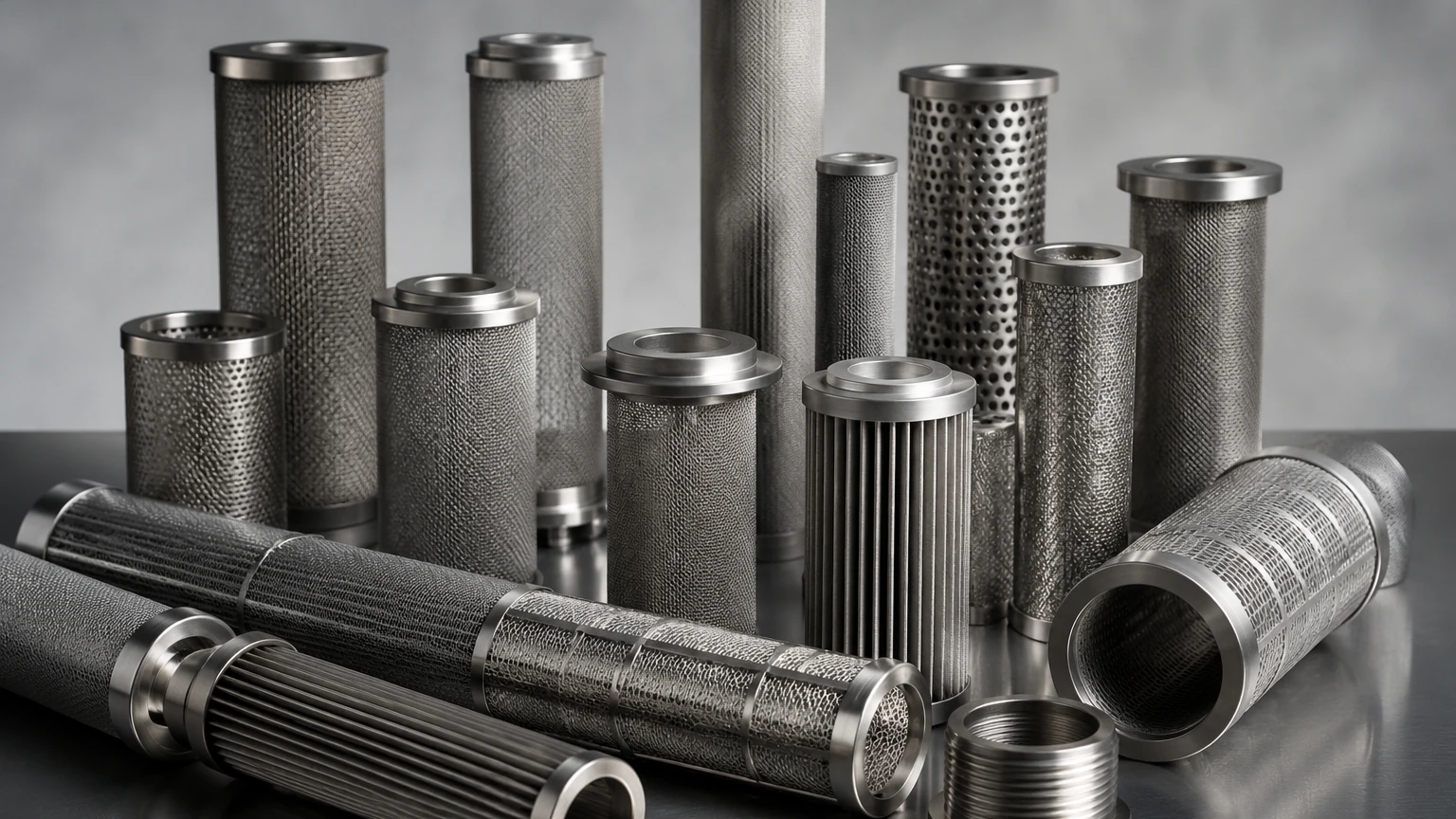
While synthetic filters (such as polypropylene or PES) are common in many applications, stainless steel filter cartridges are the preferred choice for demanding industrial environments. Filter cartridge manufacturers specializing in metal media offer products that provide several engineering advantages:
* Thermal Stability: Stainless steel can operate at temperatures far exceeding the melting points of polymers, making them ideal for steam filtration and high-temperature chemical reactions.
* Mechanical Strength: Metal cartridges can withstand high differential pressures without collapsing, which is critical in hydraulic systems and high-viscosity fluid processing.
* Cleanability: Unlike disposable filters, stainless steel cartridges can be cleaned via backwashing, ultrasonic cleaning, or chemical baths. This reduces the total cost of ownership by extending the service life of the component.
Navigating Customization and Engineering Support
One of the most significant challenges for purchasing teams is finding a manufacturer that understands the nuances of a specific application. A generic catalog item may not suffice for a pharmaceutical line requiring FDA-compliant materials or a chemical plant handling highly acidic solvents.
When engaging with filter cartridge manufacturers, it is beneficial to provide a detailed technical specification sheet. This should include:
* The chemical composition of the fluid being filtered.
* Operating temperature and pressure.
* Target particle size for removal.
* Flow rate requirements.
* Existing housing dimensions (if the filter is a replacement).
Manufacturers with strong engineering backgrounds can assist in optimizing these specifications to improve filtration efficiency and reduce energy consumption associated with high pressure drops.
Common Risks in Procurement and How to Mitigate Them
Procuring industrial filters involves certain risks that can lead to downtime or product contamination. Awareness of these risks allows for better vetting of filter cartridge manufacturers:
* Media Migration: In poorly manufactured filters, fibers or particles of the filter media itself can break off and enter the filtrate. Choosing manufacturers that use high-quality sintered mesh or wedge wire can eliminate this risk.
* Inconsistent Micron Ratings: Some manufacturers use nominal ratings that only capture a percentage of particles at a given size. For critical applications, always specify absolute ratings and request validation data.
* Lead Time Instability: In a globalized market, supply chain disruptions can delay projects. It is important to confirm the manufacturer’s production capacity and their ability to meet delivery schedules, especially for custom orders.
The Economic Impact: Total Cost of Ownership (TCO)
In B2B procurement, the initial purchase price of a filter cartridge is only one part of the economic equation. Engineers must consider the Total Cost of Ownership (TCO). While stainless steel cartridges from premium filter cartridge manufacturers have a higher upfront cost than disposable alternatives, their durability and reusability often lead to lower long-term expenses.
Factors influencing TCO include:
* Replacement Frequency: How often does the process need to be stopped to change filters?
* Disposal Costs: Disposable filters generate waste, which may be classified as hazardous depending on the application.
* Energy Costs: Filters with high initial pressure drops require more pump energy to maintain flow rates.
By selecting a manufacturer that prioritizes high-permeability designs and durable materials, facilities can significantly optimize their operational budgets.
Conclusion: Taking the Next Step in Filter Selection
Identifying reliable filter cartridge manufacturers is a foundational step in ensuring the success of industrial filtration processes. By focusing on technical expertise, material quality, and customization capabilities, engineers can secure components that meet the rigorous demands of their specific industries.
Before finalizing a supplier, confirm their ability to provide technical documentation, their experience with similar applications, and their willingness to support custom engineering requirements. For those in the process of evaluating high-performance filtration solutions, the Main Page of an established manufacturer like Kaifil serves as a valuable resource for technical specifications and product ranges designed for the most challenging industrial environments.
Whether the goal is to improve product purity in a food processing plant or to protect sensitive equipment in a hydraulic system, the right manufacturing partner will provide the precision and reliability necessary for long-term operational success.
