


Disco Poroso
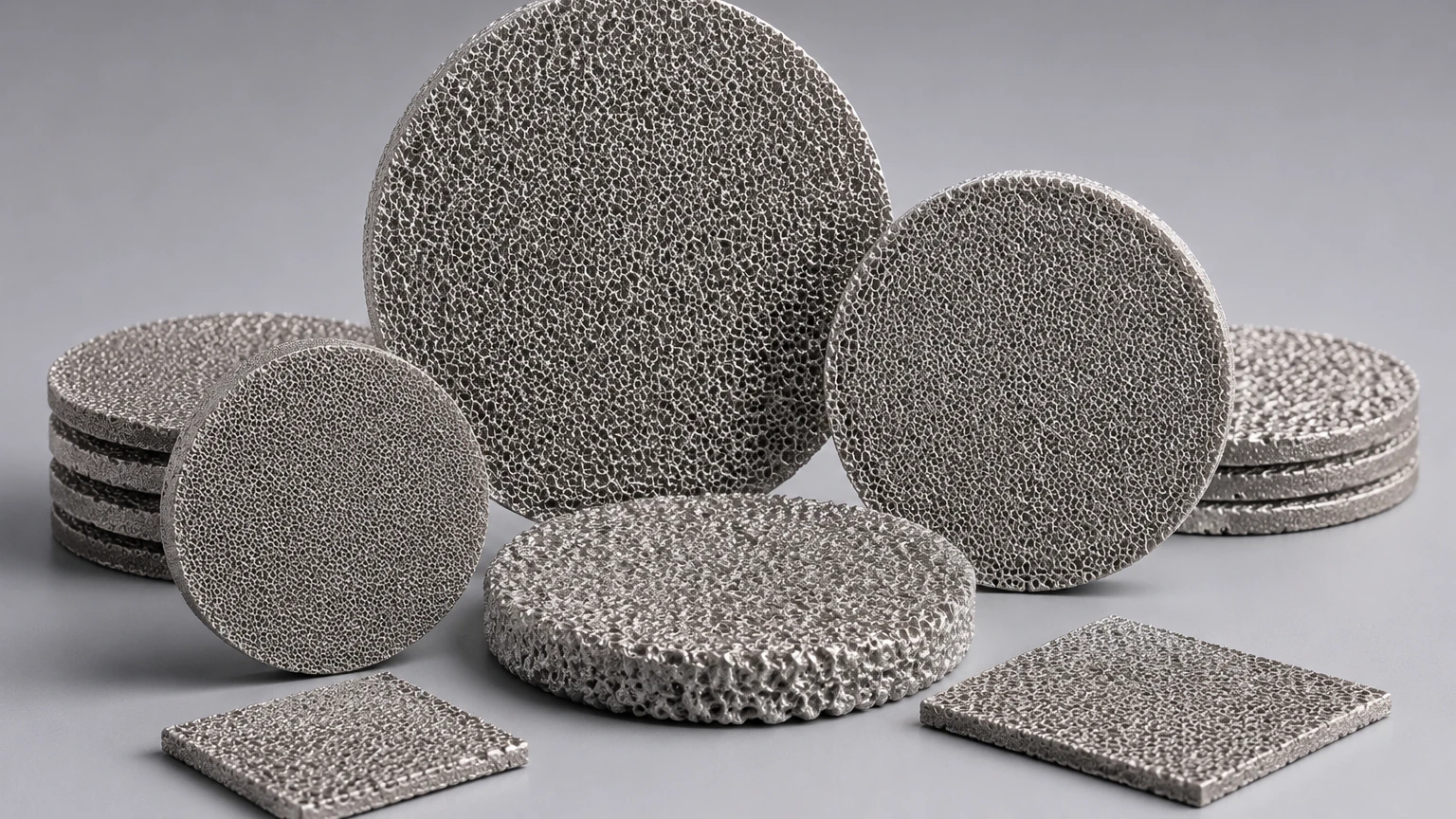
In industrial filtration and fluid control, the term "disco poroso" refers to a precision-engineered porous disc, typically manufactured from sintered metal powders or multi-layer stainless steel wire mesh. These components are critical in applications requiring high mechanical strength, thermal stability, and precise permeability. Unlike polymer-based filters, a metallic disco poroso can withstand extreme pressures and corrosive environments, making it a staple in the chemical processing, pharmaceutical, and aerospace industries.
For engineers and procurement specialists, selecting the correct disco poroso involves a deep understanding of material science and fluid dynamics. As a specialized manufacturer, Kaifil provides customized filtration solutions that address these complex requirements, ensuring that every component meets the rigorous standards of modern industrial operations. To explore the full range of available filtration technologies, professionals often visit the Main Page to evaluate specific product configurations and technical support options.
Manufacturing Methods: Sintered Powder vs. Sintered Mesh
The performance characteristics of a disco poroso are largely determined by its manufacturing process. There are two primary methods used to create these porous structures: powder metallurgy and wire mesh sintering.
Sintered Metal Powder Discs
Sintered powder discs are produced by compacting spherical or irregular metal powders into a mold and then heating them in a controlled-atmosphere furnace. The temperature is kept below the melting point of the metal, allowing the particles to bond at their contact points through a process called diffusion. This creates a rigid, porous structure with a highly tortuous path for fluid flow.
Engineers often specify sintered powder discs when they require very fine filtration (down to 0.5 microns) or specific flow resistance. The density and pore size can be tightly controlled by varying the powder grain size and the compaction pressure.
Sintered Wire Mesh Discs
Alternatively, a disco poroso can be constructed from multiple layers of stainless steel wire mesh. These layers are stacked and sintered together to form a monolithic plate, which is then cut into discs. This method offers superior mechanical strength and predictable pore geometry. Because the mesh layers are woven, the resulting disc has a more uniform pore distribution compared to powder-based media. This is particularly advantageous in high-flow applications where minimizing pressure drop is a priority.
Material Selection and Chemical Compatibility
The longevity of a disco poroso in an industrial system depends heavily on its material composition. Stainless steel, specifically Grade 316L, is the industry standard due to its excellent corrosion resistance and mechanical properties. However, for more aggressive environments, specialized alloys are utilized.
1. Stainless Steel 316L: Offers high resistance to pitting and crevice corrosion in chloride environments. It is the preferred choice for food and beverage and pharmaceutical applications due to its inert nature.
2. Hastelloy: Used in highly acidic or high-temperature environments where standard stainless steel would fail. Hastelloy C-276 is common in chemical processing plants handling wet chlorine gas or ferric chlorides.
3. Inconel: Selected for high-heat applications, such as gas filtration in power plants or aerospace components, where the disc must maintain structural integrity at temperatures exceeding 600°C.
4. Monel: Often used in marine engineering or environments involving hydrofluoric acid.
When specifying a disco poroso, engineers must confirm the chemical composition of the fluid, the operating temperature, and the potential for oxidative or reductive reactions that could compromise the filter media.
Technical Specifications: Pore Size and Permeability
Understanding the technical metrics of a disco poroso is essential for accurate system integration. The two most critical factors are the micron rating and the permeability coefficient.
Micron Rating: Absolute vs. Nominal
* Nominal Rating: This indicates the ability of the disc to retain a majority of particles of a specific size. It is a measure of efficiency rather than a guarantee of total exclusion.
* Absolute Rating: This refers to the diameter of the largest hard spherical particle that will pass through the disc under specified test conditions. In sterile pharmaceutical filtration, absolute ratings are mandatory to ensure process safety.
Porosity and Flow Rate
Porosity is the measure of the void space within the disco poroso, usually expressed as a percentage. Higher porosity generally leads to higher flow rates and lower pressure drops, but it may reduce the mechanical strength of the disc. Engineers must find the optimal balance between the required flow rate and the disc's ability to withstand the differential pressure (ΔP) across the media. If the ΔP becomes too high, the disc may deform or the captured contaminants may be forced through the pores, a phenomenon known as "breakthrough."
Industrial Applications of Disco Poroso
The versatility of the disco poroso allows it to function as more than just a filter. Its ability to distribute gas or liquid evenly makes it valuable in various specialized processes.
Gas Sparging and Aeration
In bioreactors and fermentation tanks, a disco poroso is used to introduce gases (like oxygen or CO2) into a liquid. The fine pores of the disc break the gas into micro-bubbles, which significantly increases the surface area for gas-liquid contact. This improves mass transfer efficiency, which is critical for the growth of microorganisms or the completion of chemical reactions.
Flame Arrestors
Due to their ability to dissipate heat and their tortuous pore structure, sintered metal discs are used as flame arrestors. They allow gas to flow through while preventing the passage of a flame, protecting sensitive equipment and personnel in volatile environments.
Flow Restrictors and Dampeners
In hydraulic systems, a disco poroso can act as a fixed flow restrictor. By providing a consistent and predictable resistance to fluid flow, these discs help stabilize system pressure and protect downstream sensors from pressure surges or turbulence.
Vacuum Filtration and Dehydration
In laboratory and industrial separation processes, these discs support filter paper or membranes, providing a rigid, flat surface that allows the filtrate to pass through while withstanding the force of the vacuum.
Engineering Considerations for Customization
Off-the-shelf filtration components rarely meet the exact needs of specialized industrial machinery. Customization is often necessary to ensure seamless integration. When working with a manufacturer like Kaifil, engineers should be prepared to define several parameters:
* Dimensions: Precise diameter and thickness are required for housing compatibility. Thickness directly impacts the pressure drop and the dirt-holding capacity of the disc.
* Edge Treatment: Depending on the installation method, the edges of the disco poroso may need to be welded to a solid metal ring (machined flange) or encapsulated in a polymer gasket to prevent bypass.
* Surface Finish: For food and pharmaceutical applications, the surface may require electropolishing to ensure there are no crevices where bacteria can grow.
* Reinforcement: In high-pressure applications, a porous disc may be backed by a perforated plate or a coarser mesh layer to prevent mechanical failure.
Maintenance, Cleaning, and Total Cost of Ownership
One of the primary advantages of a metallic disco poroso over disposable alternatives is its cleanability. While the initial investment is higher, the total cost of ownership is often lower due to the extended service life.
Cleaning Protocols
Depending on the nature of the contaminants, several cleaning methods can be employed:
1. Ultrasonic Cleaning: High-frequency sound waves create cavitation bubbles that dislodge particles from deep within the pores.
2. Backwashing: Reversing the flow of fluid through the disc to flush out accumulated debris.
3. Chemical Cleaning: Using acids, alkalis, or solvents to dissolve organic or inorganic scaling. This requires the disc material to be fully compatible with the cleaning agent.
4. Thermal Burn-off: Heating the disc to high temperatures to oxidize organic contaminants (only applicable for high-temperature alloys).
Replacement Cycles
Despite their durability, a disco poroso will eventually reach the end of its functional life. This usually occurs when the "clean" pressure drop (the ΔP after a cleaning cycle) remains significantly higher than the original specification. This indicates that the internal pores have become permanently blinded by fine particles. Monitoring the pressure drop across the filter is the most effective way to determine the optimal time for cleaning or replacement.
Conclusion
The disco poroso is a fundamental component for achieving precision in industrial fluid systems. Whether used for fine particulate filtration, gas diffusion, or flow control, its performance is dictated by the quality of the sintering process and the accuracy of its technical specifications. By selecting high-grade materials and customized designs, industrial operators can ensure process stability and reduce long-term maintenance costs.
For technical teams seeking to optimize their filtration processes, understanding the nuances of pore geometry, material compatibility, and mechanical reinforcement is the first step toward a successful installation. For more detailed product specifications and to consult with engineering experts on custom filtration designs, please visit the Main Page.
