


Donaldson Hepa Filter Industrial
In the landscape of industrial manufacturing, maintaining air purity and process integrity is a critical engineering challenge. High-Efficiency Particulate Air (HEPA) filtration represents the gold standard for removing airborne contaminants, and systems like the donaldson hepa filter industrial series are frequently specified for environments where sub-micron particles can compromise product quality or worker safety. For engineers and facility managers, understanding the technical nuances of these filters—ranging from media composition to the integration of robust pre-filtration—is essential for optimizing system performance and controlling operational costs.
Industrial HEPA filters are designed to capture at least 99.97% of particles with a diameter of 0.3 micrometers. In heavy-duty industrial applications, however, the challenge is not just the efficiency of the filter, but its ability to maintain that efficiency under high pressure, varying temperatures, and exposure to chemical vapors. This guide explores the technical considerations for implementing HEPA filtration in industrial settings and how specialized components, such as those found on our Main Page, support the longevity of these high-performance systems.
The Role of Donaldson HEPA Filter Industrial Systems in Contamination Control
The implementation of a donaldson hepa filter industrial solution is typically driven by the need for ultra-clean air in sectors such as pharmaceuticals, microelectronics, and food processing. Unlike standard HVAC filters, HEPA filters utilize a dense mat of randomly arranged fibers—usually fiberglass—to trap particles through three primary mechanisms: interception, impaction, and diffusion.
1. Interception: Occurs when a particle following a line of flow in the air stream comes within one radius of a fiber and adheres to it.
2. Impaction: Larger particles, unable to follow the curving contours of the air stream around a fiber, are forced to embed in it directly.
3. Diffusion: An enhancing mechanism for the smallest particles (typically below 0.1 µm), which collide with gas molecules and wander erratically (Brownian motion), increasing the probability of hitting a fiber.
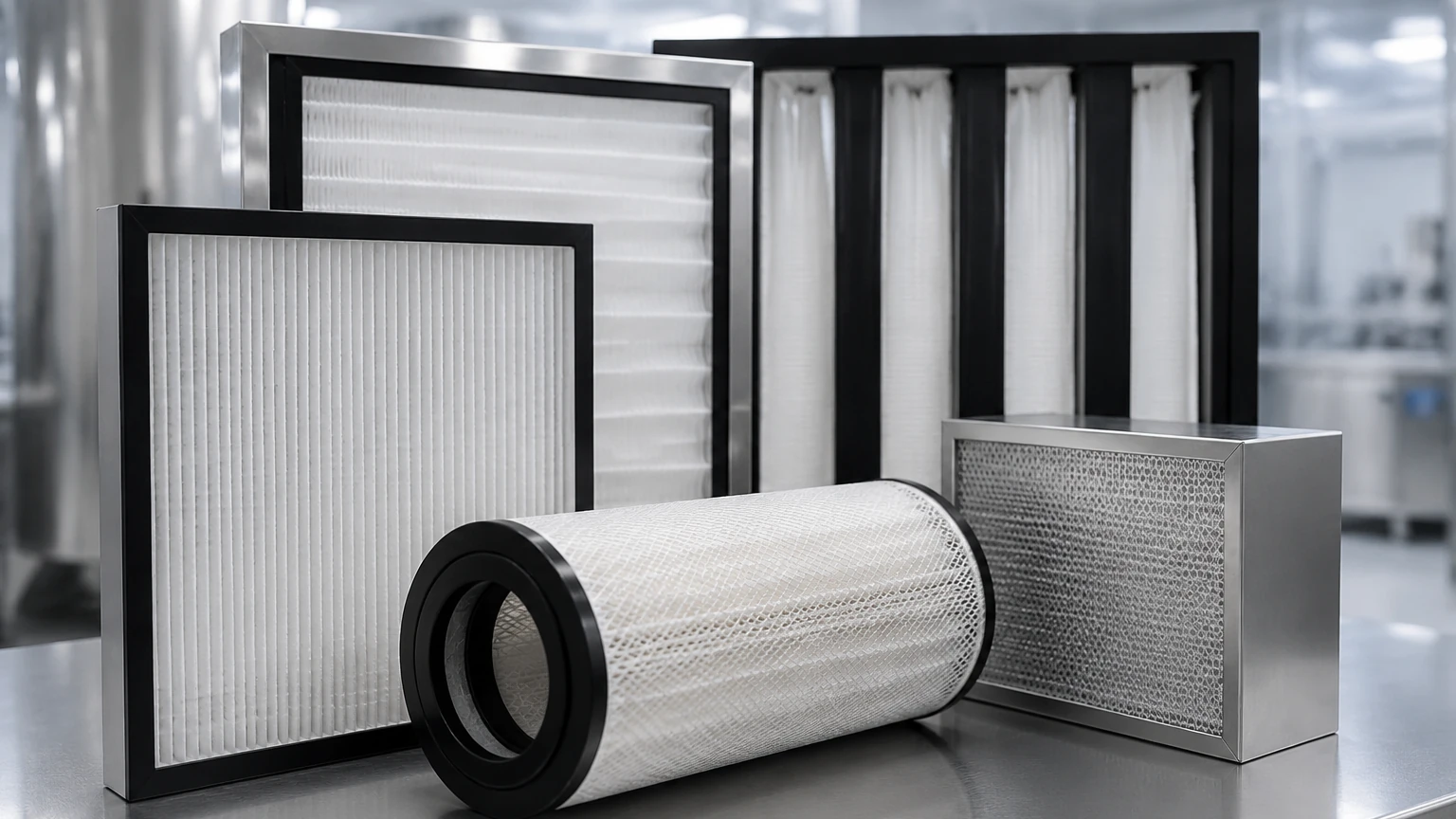
In an industrial context, these filters are often housed in heavy-duty galvanized or stainless steel frames to withstand the mechanical stresses of high-capacity air handling units. The integrity of the seal between the filter and the housing is paramount; even a microscopic gap can allow bypass air, rendering the HEPA rating moot.
Engineering Specifications: Efficiency, Airflow, and Pressure Drop
When specifying a donaldson hepa filter industrial unit, engineers must balance three competing factors: filtration efficiency, airflow capacity (measured in Cubic Feet per Minute or CFM), and initial pressure drop.
Efficiency Ratings
While the standard HEPA rating is 99.97%, many industrial applications require ULPA (Ultra-Low Penetration Air) filters, which reach 99.999% efficiency for particles as small as 0.12 µm. The choice between HEPA and ULPA depends on the ISO Cleanroom class required for the process. For instance, an ISO Class 5 environment necessitates much more stringent filtration than an ISO Class 8 warehouse.
Pressure Drop and Energy Consumption
Pressure drop, or resistance to airflow, is a critical metric for energy efficiency. As a filter loads with dust, the resistance increases, requiring the fan motor to work harder to maintain the required CFM. Industrial HEPA filters are often designed with high-capacity pleating to increase the surface area of the media, which lowers the initial pressure drop and extends the service life. Engineers should look for filters that offer a low "clean" pressure drop while providing the necessary structural rigidity to prevent pleat bunching under high loads.
Material Selection and Durability in Harsh Environments
Industrial environments are rarely "clean" in the environmental sense. They may involve high humidity, corrosive gases, or extreme temperatures. The standard aluminum or particle-board frames used in commercial HEPA filters are often insufficient for these settings.
Stainless steel frames and specialized gaskets (such as silicone or EPDM) are frequently required to ensure chemical compatibility and structural integrity. In applications involving chemical processing or steam sterilization, the filter media itself may need to be moisture-resistant or treated to prevent microbial growth. For organizations seeking custom-engineered solutions for these demanding environments, reviewing the technical capabilities on our Main Page can provide insights into how stainless steel components enhance filtration durability.
Integrating Pre-filtration to Extend HEPA Lifespan
One of the most common mistakes in industrial air system design is failing to provide adequate pre-filtration for HEPA elements. Because HEPA filters are expensive and have a high resistance to flow, they should never be used as the primary stage for capturing large dust loads.
The Role of Stainless Steel Wire Mesh
In many industrial settings, a multi-stage filtration approach is used. This often begins with a coarse pre-filter, followed by a secondary fine filter (MERV 14-16), and finally the HEPA stage. For heavy-duty applications involving high temperatures or abrasive particles, stainless steel wire mesh filters serve as an excellent first-stage barrier.
Stainless steel mesh is washable, durable, and capable of handling high-velocity air without shedding fibers. By capturing the bulk of the particulate matter, these metal filters protect the delicate glass fiber media of the donaldson hepa filter industrial unit, significantly reducing the frequency of expensive HEPA replacements. Custom stainless steel filter cartridges can also be integrated into the system to handle specific process byproducts that might otherwise clog a standard pleated pre-filter.
Application Analysis: From Pharmaceuticals to Chemical Processing
The requirements for a donaldson hepa filter industrial system vary significantly across different sectors:
* Pharmaceuticals: Here, the focus is on sterile air. HEPA filters must be capable of being validated through integrity testing (DOP testing) and must often withstand decontamination cycles using vaporized hydrogen peroxide (VHP).
* Food and Beverage: Filtration is used to prevent cross-contamination and ensure the purity of ingredients. Filters must comply with food safety regulations, and housings are typically made of 304 or 316L stainless steel to allow for frequent washdowns.
* Chemical Processing: The primary concern is often the capture of hazardous dust or the protection of sensitive catalysts. Filters must be selected based on their resistance to specific chemical vapors and their ability to operate in potentially explosive atmospheres (ATEX compliance).
In each of these cases, the filter is only as good as its housing and the pre-filtration stages that support it. Precision-engineered metal components ensure that the entire filtration assembly remains airtight and functional over long operational cycles.
Evaluating Total Cost of Ownership (TCO) for Industrial Filtration
When purchasing a donaldson hepa filter industrial solution, the initial purchase price is only a small fraction of the Total Cost of Ownership (TCO). Engineers must account for:
1. Energy Costs: As noted, higher pressure drop leads to higher electricity consumption. Investing in a filter with more media area can pay for itself in energy savings within months.
2. Replacement Frequency: The cost of the filter itself, plus the labor required to change it and the potential downtime for the process.
3. Disposal Costs: HEPA filters used in hazardous environments may require specialized disposal as toxic waste, which can be expensive.
To optimize TCO, it is often more cost-effective to invest in high-quality, permanent pre-filtration components. For example, replacing disposable pre-filters with cleanable stainless steel wire mesh filters can eliminate a recurring waste stream and provide more consistent protection for the HEPA stage. Detailed specifications for these types of industrial-grade components are available on our Main Page.
Maintenance and Performance Monitoring
Effective maintenance of an industrial HEPA system relies on data rather than guesswork. Differential pressure gauges (such as Magnehelic gauges) should be installed across every filter stage.
* Baseline Pressure: Record the pressure drop when the filters are new and the system is balanced.
* Change-out Points: Manufacturers typically specify a final pressure drop (e.g., 2.0 inches of water gauge) at which the filter must be replaced.
* Visual Inspection: Regularly check for signs of gasket failure, frame corrosion, or media damage. In high-vibration environments, the mechanical fasteners holding the HEPA filter in place should be checked for tightness to prevent bypass.
Conclusion: Selecting the Right Filtration Partner
Implementing a donaldson hepa filter industrial system is a significant investment in process quality and safety. However, the filter element is just one part of a complex engineering puzzle. Achieving the desired air purity requires a holistic approach that includes robust housing design, precise material selection, and strategic pre-filtration.
By understanding the technical requirements of your specific application—whether it involves high-temperature chemical processing or sterile pharmaceutical manufacturing—you can select components that offer the best balance of efficiency and durability. For those looking to enhance their industrial filtration systems with custom stainless steel solutions, wire mesh filters, or precision metal components, our Main Page offers a wealth of technical resources and product options designed to meet the most demanding industrial standards.
