3 a Ssi
In the landscape of industrial processing, particularly within the food, beverage, dairy, and pharmaceutical sectors, the integrity of filtration systems is paramount. Maintaining a sterile environment and ensuring product purity requires more than just high-efficiency filters; it necessitates equipment designed under rigorous hygienic principles. Central to these principles in the North American market and increasingly globally is the 3-A Sanitary Standards, Inc., commonly referred to as 3-A SSI. For engineers and procurement specialists, understanding the technical nuances of 3-A SSI is essential when selecting stainless steel filtration components that must withstand aggressive cleaning cycles while preventing microbial contamination.
Understanding the Role of 3-A SSI in Industrial Filtration
3-A SSI is an independent, not-for-profit corporation dedicated to advancing hygienic equipment design for the food, beverage, and pharmaceutical industries. The organization represents a unique collaboration between three distinct groups: regulatory sanitarians, equipment fabricators, and processors. This tripartite structure ensures that the standards developed are technically sound, commercially viable, and compliant with public health requirements.
The primary mission of 3-A SSI is to protect public health through the application of sanitary standards and accepted practices. For filtration systems, this means that every component—from the wire mesh filter media to the housing and internal supports—must be designed to be easily cleaned and inspected. Unlike general industrial standards that focus primarily on pressure ratings or flow efficiency, 3-A SSI prioritizes "cleanability" at the microscopic level. This focus reduces the risk of "dead zones" where bacteria can proliferate, ensuring that the filtration process does not become a source of contamination.
When evaluating suppliers on the Main Page of a manufacturer like Kaifil, engineers look for the ability to meet these exacting design criteria. 3-A SSI standards are voluntary, but they are often treated as mandatory by regulatory inspectors and quality assurance teams because they provide a verified baseline for sanitary safety.
Engineering Requirements for Sanitary Stainless Steel Filters
Designing a filter to meet 3-A SSI requirements involves specific engineering considerations that differ significantly from standard industrial filtration. The focus is on the physical geometry of the filter and the quality of its construction.
One of the most critical aspects is the elimination of "dead legs" or stagnant areas. In a standard hydraulic filter, a sharp 90-degree internal corner might be acceptable. However, under 3-A SSI guidelines, all internal angles must have a minimum radius to ensure that cleaning fluids can reach every surface during a Clean-In-Place (CIP) cycle. For example, a minimum radii of 1/8 inch (3.18 mm) is often required for internal corners to prevent the entrapment of organic matter.
Furthermore, the method of joining metal components is strictly regulated. 3-A SSI requires that all permanent joints be continuously welded. These welds must be smooth, free of pits, folds, and crevices, and ground to a finish that matches the surrounding parent metal. In filtration cartridges, this often involves specialized TIG (Tungsten Inert Gas) or orbital welding techniques to ensure that the seam where the wire mesh meets the end cap is completely sealed and flush. Any porosity in a weld can harbor biofilm, which is resistant to standard sanitization protocols.
Material Science and Surface Finish Standards
Material selection is the foundation of any 3-A SSI compliant component. The standards generally specify the use of AISI 300 Series stainless steel or alloys that are equally corrosion-resistant and non-toxic. T304 stainless steel is common, but T316L is the industry standard for high-hygiene applications due to its superior resistance to pitting and stress-corrosion cracking, especially when exposed to the chlorides found in many sanitizing agents.
Beyond the alloy itself, the surface finish—measured as Roughness Average (Ra)—is a defining technical requirement. 3-A SSI typically mandates a surface finish of 32 micro-inches (0.8 μm) Ra or better for all product-contact surfaces. Achieving this finish requires a combination of mechanical polishing and, in many cases, electropolishing.
Electropolishing is a chemical process that removes a microscopic layer of metal, smoothing out the peaks and valleys of the surface. This not only achieves the required Ra value but also passivates the stainless steel, enhancing its chrome-to-iron ratio and making it more resistant to corrosion. For a wire mesh filter, this process is particularly beneficial as it ensures that the intersections of the wires are smooth and less likely to trap particles or bacteria.
Comparing 3-A SSI with Global Hygienic Standards
Engineers operating in global markets must often navigate multiple regulatory frameworks. While 3-A SSI is the dominant standard in the United States, it is frequently compared to the European Hygienic Engineering & Design Group (EHEDG) standards.
While both organizations aim to improve food safety through equipment design, their approaches differ. 3-A SSI is traditionally more prescriptive, providing specific dimensions and material requirements. EHEDG tends to be more performance-based, often requiring rigorous testing to prove that a piece of equipment can be cleaned. However, in recent years, there has been significant harmonization between the two. Many components designed to 3-A SSI standards will meet or exceed EHEDG requirements, making them suitable for international deployment.
It is also important to distinguish 3-A SSI from FDA (Food and Drug Administration) compliance. FDA regulations, specifically 21 CFR 177, focus on the "food grade" nature of the materials themselves—ensuring that the plastics, elastomers, and metals do not leach harmful substances into the product. 3-A SSI builds upon this by focusing on the *design and fabrication* of the equipment. A filter can be made of FDA-approved materials but fail 3-A SSI standards if its physical design prevents effective cleaning.
Implementation of Clean-In-Place (CIP) for Sanitary Systems
One of the primary drivers for adhering to 3-A SSI standards is the facilitation of Clean-In-Place (CIP) procedures. CIP allows for the cleaning of the interior surfaces of pipes, vessels, and filters without the need for disassembly. This is critical for maintaining high production uptimes in modern processing plants.
For a filter to be truly CIP-compatible, the flow dynamics within the housing must be carefully engineered. The 3-A SSI guidelines ensure that there are no areas of low flow or turbulence that could prevent the cleaning solution from making full contact with the filter media. In stainless steel filter cartridges, this means the support core must be designed with sufficient open area to allow high-velocity cleaning fluids to flush out trapped contaminants effectively.
Engineers must also consider the compatibility of gaskets and seals. 3-A SSI requires that elastomers used in sanitary filters be non-absorbent, non-toxic, and capable of withstanding the high temperatures (often exceeding 180°F / 82°C) and caustic chemicals used in CIP cycles. Common materials include EPDM, Silicone, and Viton, all of which must meet 3-A SSI's specific material standards (Standard 18-03).
Selection Criteria for Engineers and Procurement Teams
When sourcing filtration components, engineers should look beyond a simple "sanitary" label. True compliance involves a rigorous verification process. 3-A SSI utilizes a Third-Party Verification (TPV) program, where independent professionals inspect the equipment and the manufacturing facility to ensure every detail of the standard is met. Only then can a manufacturer display the 3-A Symbol.
Key questions for procurement teams to ask when evaluating stainless steel filters include:
1. Is the component TPV verified? Ask for the 3-A SSI certificate to ensure the specific model and size are covered.
2. What is the Ra value of the product-contact surfaces? Verify that it meets the 32 micro-inch (0.8 μm) threshold.
3. Are Material Test Reports (MTRs) available? This confirms the chemical composition of the stainless steel used in production.
4. How is the filter media secured? Ensure that mesh or sintered components are welded rather than epoxied, as epoxies may not meet sanitary standards for long-term use.
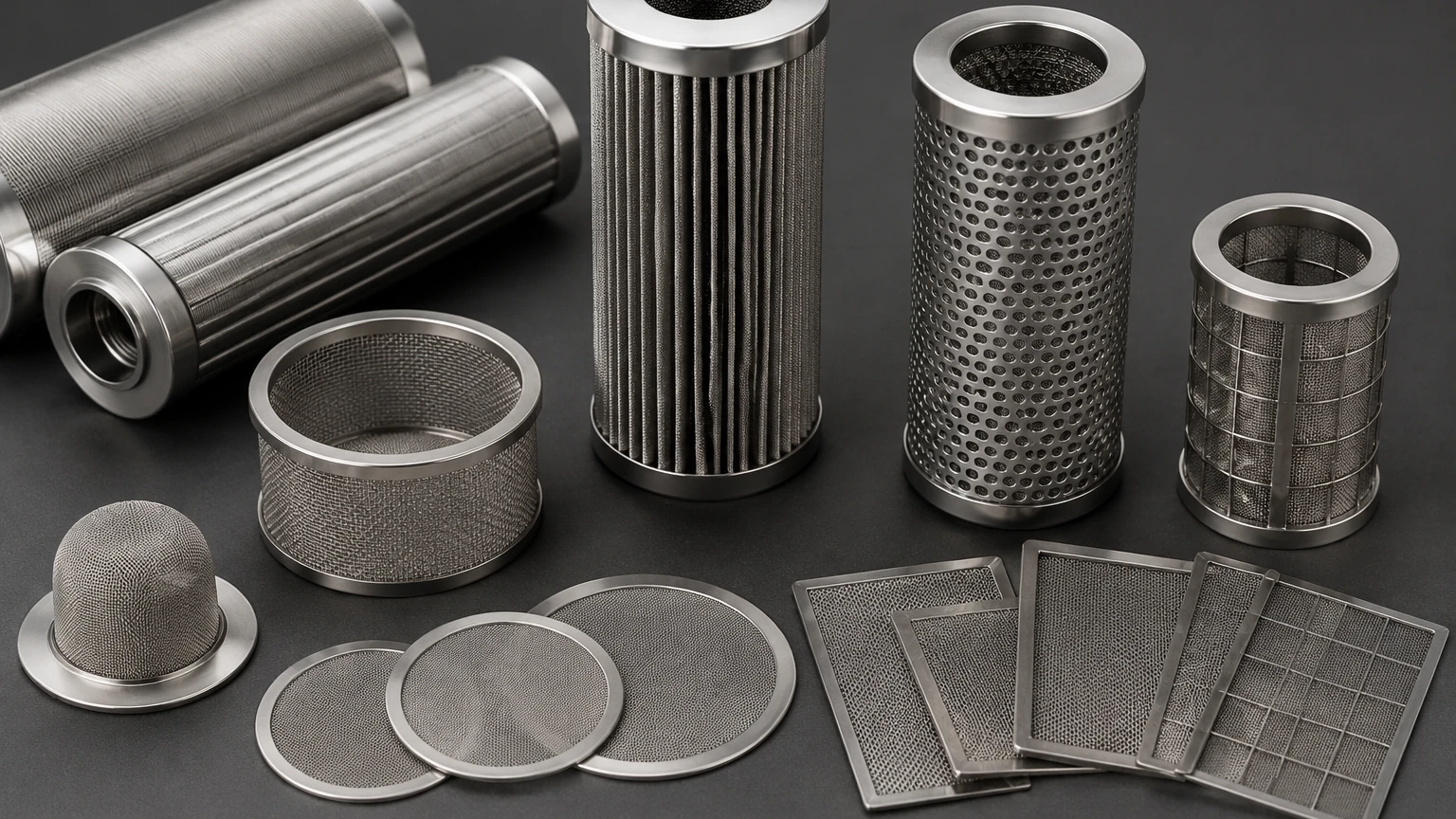
Customization is often required in industrial filtration. Kaifil specializes in providing custom stainless steel filtration solutions that can be tailored to specific process requirements while maintaining the integrity of sanitary design principles. Whether it is a unique micron rating for a pharmaceutical application or a specialized housing for a dairy line, the engineering must remain rooted in the fundamentals of cleanability and durability.
Total Cost of Ownership and Long-Term Reliability
While 3-A SSI compliant filters may have a higher initial acquisition cost compared to standard industrial filters, the total cost of ownership (TCO) is typically lower in sanitary applications. The use of high-grade 316L stainless steel and superior surface finishes extends the service life of the filter by resisting corrosion and mechanical wear.
More importantly, the ease of cleaning associated with 3-A SSI design reduces the consumption of water, chemicals, and energy during CIP cycles. It also significantly reduces the risk of batch contamination, which can lead to costly product recalls and damage to brand reputation. By investing in components that adhere to these recognized standards, processing facilities ensure a higher level of operational safety and regulatory compliance, ultimately supporting a more efficient and reliable production environment.