


Donaldson Hepa Filters Industrial
In the landscape of industrial air filtration, the requirement for high-efficiency particulate air (HEPA) performance is a critical engineering standard. For facilities managing hazardous dust, pharmaceutical powders, or micro-electronic assembly, the integration of Donaldson HEPA filters industrial solutions represents a benchmark in air quality management. These systems are engineered to capture 99.97% of airborne particles as small as 0.3 microns, providing a level of protection that standard filtration media cannot achieve. Understanding the technical nuances of these filters, their material composition, and their integration into broader industrial systems is essential for engineers and procurement professionals tasked with maintaining facility compliance and operational safety.
The Engineering Standards of Industrial HEPA Filtration
HEPA filtration is defined by its efficiency, but in an industrial context, efficiency must be balanced with durability and airflow capacity. Donaldson HEPA filters industrial applications often involve environments where high volumes of air must be processed without significant drops in static pressure. The standard HEPA rating (H13 or H14 under EN 1822) requires rigorous testing using the Most Penetrating Particle Size (MPPS) method.
In industrial settings, these filters are not standalone units; they are part of a complex ecosystem designed to manage air velocity and particulate load. The media used in these filters typically consists of sub-micron glass fibers or expanded polytetrafluoroethylene (ePTFE) membranes. These materials are pleated to maximize the surface area within a compact frame, reducing the face velocity and allowing for deeper particulate loading. For engineers, the primary concern is the "Delta P" or pressure drop. A high initial pressure drop can lead to increased energy consumption by fans and blowers, making the selection of high-capacity HEPA variants a priority for large-scale industrial plants.
Technical Specifications of Donaldson HEPA Filters Industrial Solutions
Donaldson utilizes several proprietary technologies to enhance the performance of their industrial HEPA filters. One of the most prominent is the use of Tetratex ePTFE membranes. Unlike traditional glass fiber media, which relies on depth filtration where particles are trapped within the matrix of the fibers, ePTFE utilizes surface filtration. This allows for easier pulse-cleaning in some configurations and prevents the “blinding” of the filter media, extending the service life significantly.
Key technical parameters to consider when evaluating these filters include:
* Rated Airflow: Measured in Cubic Feet per Minute (CFM), this determines the filter's capacity to handle the air volume of a specific zone.
* Temperature Limits: Standard HEPA filters are often limited to 150°F to 200°F (65°C to 93°C). For higher-temperature industrial exhausts, specialized frames and potting compounds are required.
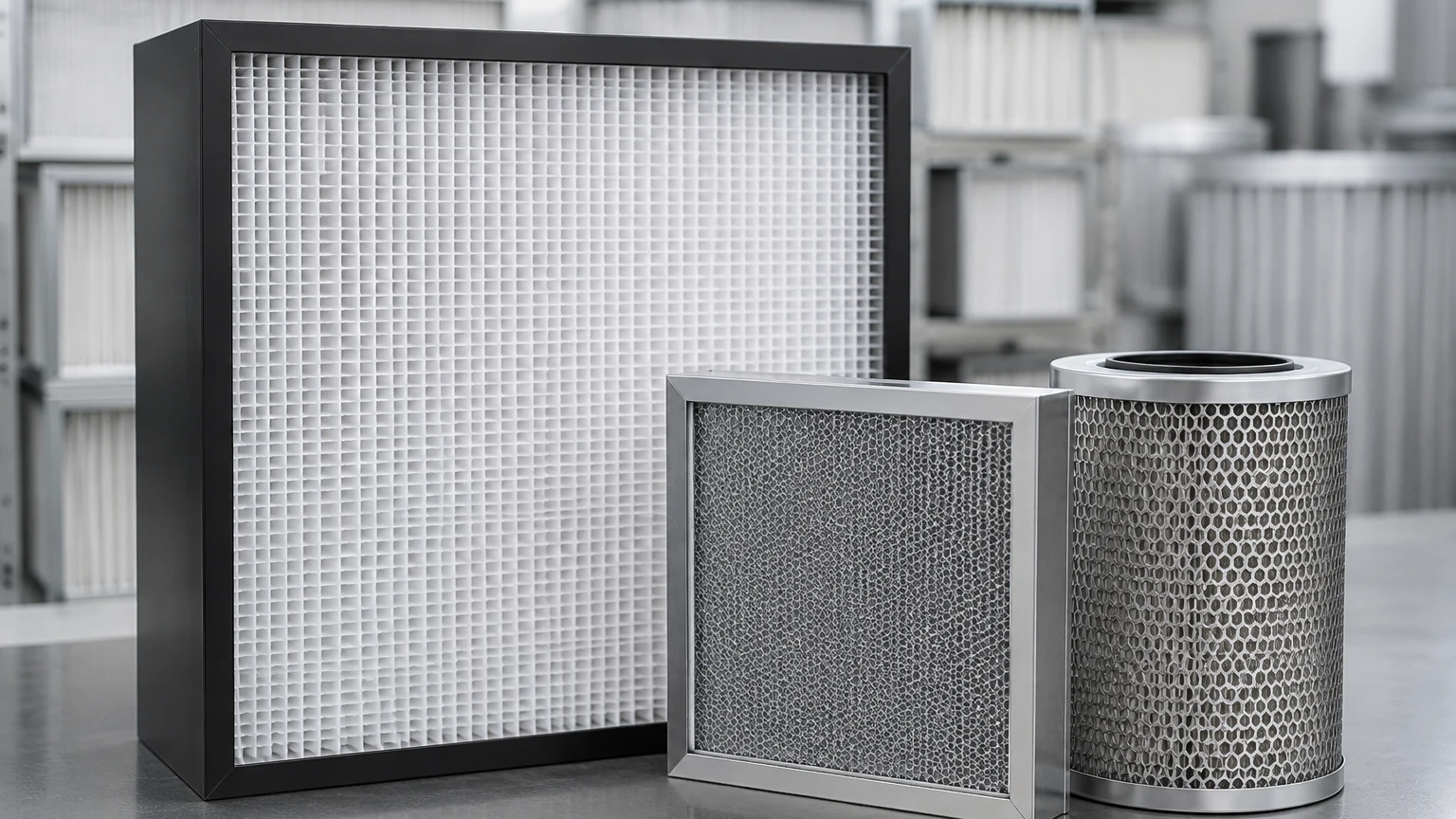
* Frame Material: Industrial HEPA filters are typically housed in galvanized steel, aluminum, or stainless steel frames. In corrosive environments, such as chemical processing plants, 304 or 316L stainless steel is the preferred choice for structural integrity.
* Gasket vs. Gel Seals: To prevent air bypass, filters must be perfectly sealed to the housing. Gel seals are often used in pharmaceutical cleanrooms for a leak-free fit, while neoprene gaskets are common in heavy industrial dust collectors.
Integration with Industrial Dust Collection Systems
While HEPA filters are exceptionally efficient, they are also sensitive to high dust loads. In an industrial workflow, they are almost always used as a secondary or "final" stage of filtration. A primary dust collector—such as a cyclone or a cartridge collector using nanofiber media—removes the bulk of the particulate matter (PM10 and PM2.5). The HEPA filter then acts as a safety monitoring filter or a polishing stage to ensure the exhausted air meets EPA or OSHA standards for indoor air quality.
For industries dealing with toxic substances like hexavalent chromium, lead, or silica, the Donaldson HEPA filters industrial setup ensures that even if the primary filter fails, the hazardous material is contained. This redundant system is vital for facilities that recirculate air back into the workspace to save on HVAC heating and cooling costs. The reliability of the final HEPA stage is what allows for this cost-saving recirculation while maintaining a safe breathing zone for employees.
Material Compatibility: When to Choose Metal vs. Synthetic Media
While synthetic and glass fiber HEPA filters are the standard for air filtration, certain industrial environments present challenges that these materials cannot withstand. High-pressure liquid streams, extremely high temperatures (above 500°F), and highly acidic or alkaline environments can degrade standard HEPA media quickly. In these specialized cases, engineers often turn to custom stainless steel filtration components.
Manufacturers like Kaifil provide precision-engineered wire mesh and sintered metal filters that serve as high-durability alternatives or pre-filters in demanding process environments. While a standard HEPA filter is designed for air, the custom metal filtration solutions found on the Main Page are designed for liquid/solid separation and high-pressure gas applications where structural rigidity is paramount. For example, in steam filtration or hydraulic systems, a stainless steel mesh can provide the necessary micron rating while offering the ability to be cleaned and reused, a feature not available with disposable HEPA units.
Selection Criteria for Engineers and Purchasing Teams
When specifying Donaldson HEPA filters industrial units, several factors beyond the micron rating must be confirmed to ensure the longevity of the filtration system.
1. Chemical Resistance: If the air stream contains solvent vapors or corrosive gases, the binder used in glass fiber media or the adhesive used to seal the media to the frame may fail. It is critical to verify the compatibility of all filter components with the chemical profile of the exhaust.
2. Humidity and Moisture: HEPA filters are susceptible to damage from moisture. If the process involves high humidity, an ePTFE membrane is superior to glass fiber, as it is naturally hydrophobic and maintains its structural integrity when wet.
3. Certification and Testing: Every industrial HEPA filter should come with a certificate of compliance. For critical applications, on-site leak testing (DOP/PAO testing) is often required after installation to ensure that no damage occurred during shipping or handling.
4. Total Cost of Ownership (TCO): The initial purchase price of a HEPA filter is only a fraction of its total cost. Engineers should calculate the cost of replacement labor, disposal of contaminated filters, and the energy cost associated with the filter’s average pressure drop over its lifespan.
Maintenance and Lifecycle Management
Effective maintenance of industrial HEPA systems relies on data-driven decisions. Differential pressure gauges (such as Magnehelic gauges) should be installed across every HEPA bank. A sudden drop in pressure may indicate a leak or a ruptured filter, while a steady increase indicates that the filter is reaching its loading capacity.
In most industrial applications, a HEPA filter is considered spent when the pressure drop reaches double or triple its clean (initial) state, typically around 2.0 to 3.0 inches of water gauge (w.g.). However, in regulated industries like pharmaceuticals, filters may be replaced on a time-based schedule (e.g., every 12 to 24 months) regardless of pressure drop to ensure absolute compliance with safety protocols. Proper disposal is also a key consideration; filters used to capture hazardous dust must be handled as hazardous waste, adding to the operational complexity.
Customization and OEM Solutions for Unique Applications
Not every industrial process fits the standard dimensions of off-the-shelf HEPA units. Many OEM equipment manufacturers require custom-sized filters to fit into compact machinery or specialized exhaust ports. This is where the intersection of high-efficiency air filtration and custom metal fabrication becomes vital.
While Donaldson provides a wide range of standard sizes, specialized filtration needs—especially those requiring heavy-duty housings or integrated mounting hardware—often require a collaborative engineering approach. By utilizing custom stainless steel components to protect the HEPA stage, facilities can prevent premature failure. For instance, a custom-made stainless steel spark arrestor or a coarse wire mesh pre-filter can significantly extend the life of an expensive HEPA filter by removing larger debris and hot embers before they reach the sensitive high-efficiency media.
Conclusion
Donaldson HEPA filters industrial solutions are a cornerstone of modern industrial safety and process purity. By capturing the smallest and most dangerous particulates, these filters protect both the environment and the workforce. However, the success of a HEPA installation depends on more than just the filter itself; it requires a deep understanding of airflow dynamics, material science, and the specific demands of the industrial environment. Whether through the use of advanced ePTFE membranes or the integration of durable stainless steel pre-filtration components, achieving optimal filtration performance is an ongoing process of engineering refinement and careful selection.
