


What Is the Purpose of an Oil/water Separator
In industrial environments, the management of process water and wastewater is a critical operational requirement. Among the various technologies employed to maintain fluid purity and environmental safety, the oil/water separator (OWS) stands as a foundational component. Engineers and facility managers often ask, what is the purpose of an oil/water separator, specifically regarding its role in large-scale industrial cycles? At its core, an oil/water separator is designed to isolate and remove non-emulsified oils, hydrocarbons, and suspended solids from water, ensuring that the resulting effluent meets stringent discharge standards or is suitable for reuse within a closed-loop system.
Understanding the purpose of these systems requires a technical look at fluid dynamics, environmental regulations, and equipment longevity. For manufacturers like Kaifil, providing high-performance stainless steel filtration components is essential to the efficiency of these separators. By utilizing precision-engineered media, industrial systems can achieve the separation efficiency required for demanding applications in chemical processing, power generation, and manufacturing.
Environmental Compliance and Regulatory Requirements
One of the primary answers to the question of what is the purpose of an oil/water separator lies in environmental stewardship. Regulatory bodies worldwide, such as the EPA in the United States or various maritime authorities under MARPOL, mandate strict limits on the concentration of oil that can be legally discharged into municipal sewers or natural water bodies.
In most industrial jurisdictions, the allowable oil content in discharge water is typically capped between 5 ppm (parts per million) and 15 ppm. Without an effective oil/water separator, industrial runoff, wash-down water, and process byproducts would carry significant hydrocarbon loads into the environment. This leads to severe ecological damage and exposes the organization to heavy fines and legal liabilities. The separator acts as a final gatekeeper, ensuring that the water leaving the facility adheres to these legal thresholds.
Protection of Downstream Equipment and Processes
The purpose of an oil/water separator extends beyond the discharge pipe; it is also a vital tool for internal process protection. In many industrial plants, water is recycled for cooling, boiler feed, or cleaning. If oil is allowed to remain in these water streams, it can cause significant damage to downstream infrastructure:
* Heat Exchanger Fouling: Oil acts as an insulator. When it coats the internal surfaces of heat exchangers, it drastically reduces thermal efficiency, leading to higher energy consumption and potential equipment overheating.
* Membrane Damage: In facilities utilizing Reverse Osmosis (RO) or ultrafiltration, oil is a primary cause of membrane fouling. Even small amounts of hydrocarbons can irreversibly damage expensive membranes, leading to frequent replacements and system downtime.
* Sensors and Instrumentation: Precision instruments used to monitor pH, conductivity, and flow rates can be blinded by oil coatings, resulting in inaccurate data and process instability.
By integrating a robust separator early in the treatment chain, engineers can safeguard these high-value assets and maintain the reliability of the entire production line.
The Engineering Principles of Separation
To fully grasp what is the purpose of an oil/water separator, one must understand the physics that make it work. Most industrial separators rely on Stokes' Law, which governs the settling or rising velocity of a droplet in a fluid. Because oil is generally less dense than water, oil droplets naturally tend to rise to the surface.
The efficiency of this process depends on several factors:
1. Droplet Size: Larger droplets rise faster. Separators are often designed to capture droplets 20 microns or larger.
2. Specific Gravity: The greater the difference in density between the oil and the water, the more efficient the separation.
3. Temperature: Higher temperatures reduce the viscosity of the water, allowing oil droplets to rise more quickly.
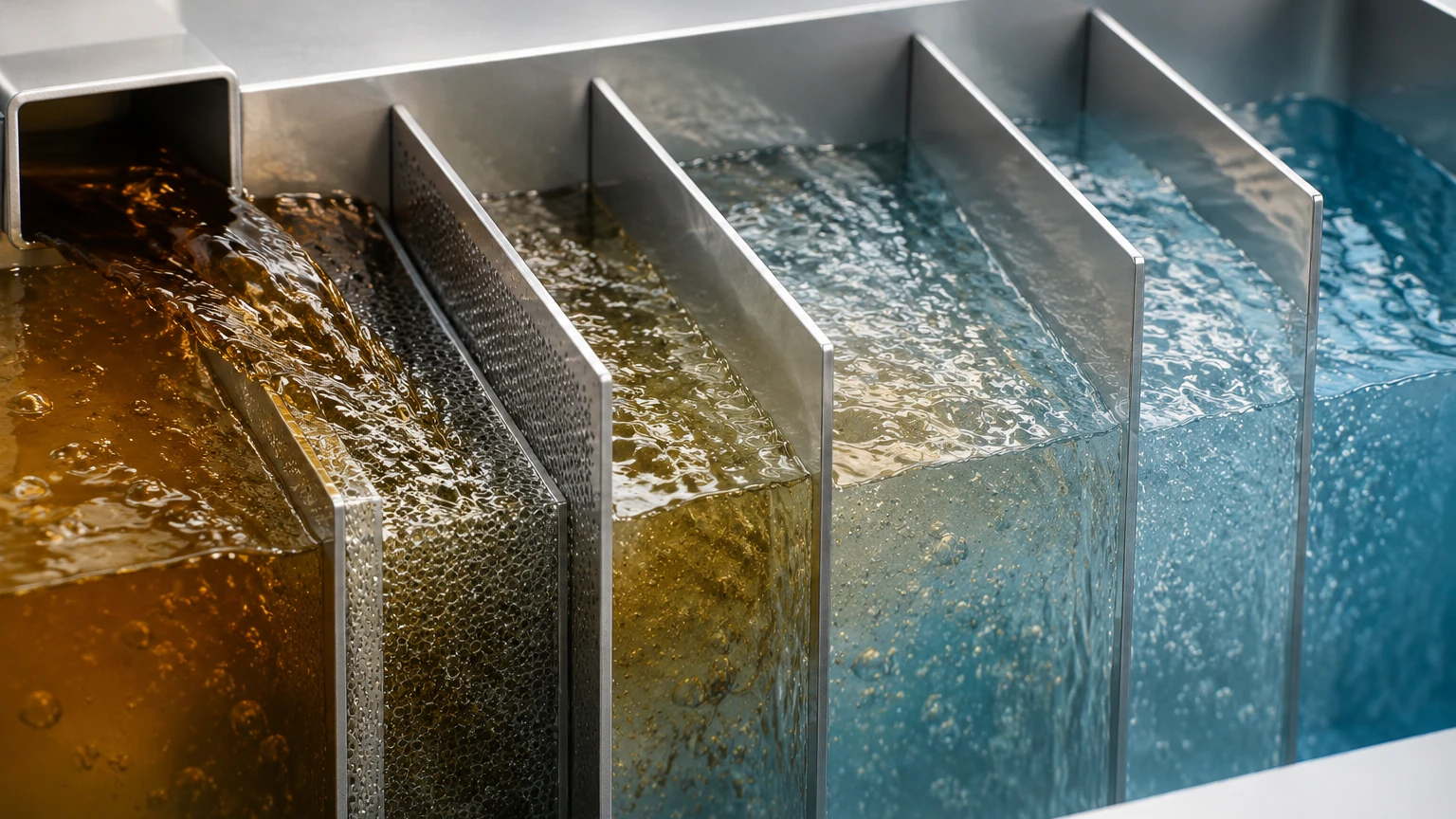
To improve upon simple gravity separation, many modern systems use coalescing media. This is where specialized components, such as those found on the Kaifil Main Page, become critical. Coalescing filters provide a high surface area that attracts small oil droplets. As these droplets collide with the media, they merge (coalesce) into larger globules. These larger globules then gain enough buoyancy to rise rapidly to the surface, where they can be skimmed off. This allows the separator to achieve much higher purity levels than a standard settling tank.
Technical Evaluation Criteria for Industrial Systems
When selecting or designing an oil/water separator, engineers must evaluate several technical parameters to ensure the system meets the intended purpose. A "one-size-fits-all" approach rarely works in complex industrial settings.
Flow Rate and Retention Time
Separators must be sized to handle the maximum expected flow rate. If the flow is too fast, the water becomes turbulent, which prevents oil droplets from rising and may even re-entrain oil that has already been separated. Laminar flow is essential for effective separation.
Oil Type and State
It is important to distinguish between "free oil" and "emulsified oil." Standard oil/water separators are designed for free oil. If the oil is chemically or mechanically emulsified (where the oil droplets are so small they remain suspended), secondary treatments like dissolved air flotation (DAF) or chemical flocculation may be required. Understanding the state of the oil is crucial to determining if a coalescing separator is the correct tool for the job.
Solids Loading
Industrial wastewater often contains grit, sand, and other solids. A well-designed separator must have a way to manage these solids—typically through a sediment chamber—to prevent them from clogging the coalescing media or damaging pumps.
Material Selection: The Advantage of Stainless Steel
The environment inside an oil/water separator is often harsh. The fluids may be acidic, alkaline, or at high temperatures. Furthermore, the presence of hydrocarbons and water creates an environment prone to corrosion. This is why material selection for internal components, such as wire mesh filters and support structures, is a critical engineering decision.
Stainless steel (304, 316L, or Duplex grades) is the industry standard for high-performance separation components for several reasons:
* Corrosion Resistance: Unlike carbon steel or plastics, stainless steel withstands the chemical attacks common in refinery and chemical plant wastewater.
* Structural Integrity: Under high flow rates or pressure differentials, stainless steel wire mesh maintains its shape, ensuring consistent filtration accuracy and coalescence performance.
* Thermal Stability: In applications like steam condensate return or hot process wash-down, stainless steel components remain stable at temperatures that would deform or degrade polymer-based media.
* Cleanability: Stainless steel media can be cleaned using high-pressure spray or chemical baths, extending the service life of the filter and reducing the total cost of ownership.
Maintenance Cycles and Operational Efficiency
While the purpose of an oil/water separator is to automate the removal of contaminants, these systems are not "set and forget." Maintaining operational efficiency requires a structured approach to maintenance. For engineers, the primary concern is the pressure drop across the coalescing media.
As the separator captures solids and heavy oils, the media will eventually begin to foul. A significant increase in differential pressure indicates that the media needs cleaning or replacement. Using high-quality stainless steel cartridges allows for more aggressive cleaning cycles compared to disposable media, which is a significant factor in long-term operational costs.
Regular sludge removal is also necessary. If the bottom of the separator fills with sediment, it reduces the effective volume of the tank, shortens the retention time, and eventually leads to "carryover," where oil is pushed through the outlet because the system can no longer process the volume effectively.
Customization in Oil/Water Separation
Every industrial facility has unique challenges, from the footprint available for equipment to the specific chemical makeup of their wastewater. Customization is often required to ensure the separator fulfills its purpose effectively. This might include:
* Custom Micron Ratings: Adjusting the wire mesh density to target specific oil droplet sizes.
* Parallel Plate Configurations: Using customized stainless steel plates to increase the effective separation area within a small tank footprint.
* Integrated Heating Elements: To maintain fluid temperature and ensure optimal oil viscosity for separation in cold climates.
By working with manufacturers who specialize in custom stainless steel filtration solutions, engineering teams can specify the exact parameters needed for their specific application, rather than settling for off-the-shelf components that may underperform in demanding environments.
Conclusion
In summary, what is the purpose of an oil/water separator? It is a multi-faceted tool essential for environmental compliance, equipment protection, and process efficiency. By leveraging the principles of gravity and coalescence, these systems remove harmful hydrocarbons from water streams, allowing industries to operate sustainably and protect their mechanical infrastructure.
For engineers tasked with designing or maintaining these systems, the focus must remain on high-quality materials and precise engineering. Components such as stainless steel wire mesh and custom filter cartridges are the heart of the separation process. Choosing the right filtration partner ensures that the oil/water separator performs its intended purpose reliably, even in the most challenging industrial conditions. To explore specific filtration components that support these systems, you can Review product options and application support to find the right technical fit for your project requirements.
Download What Is the Purpose of an Oil/water Separator as a PDF
