


Duplex Y Strainer
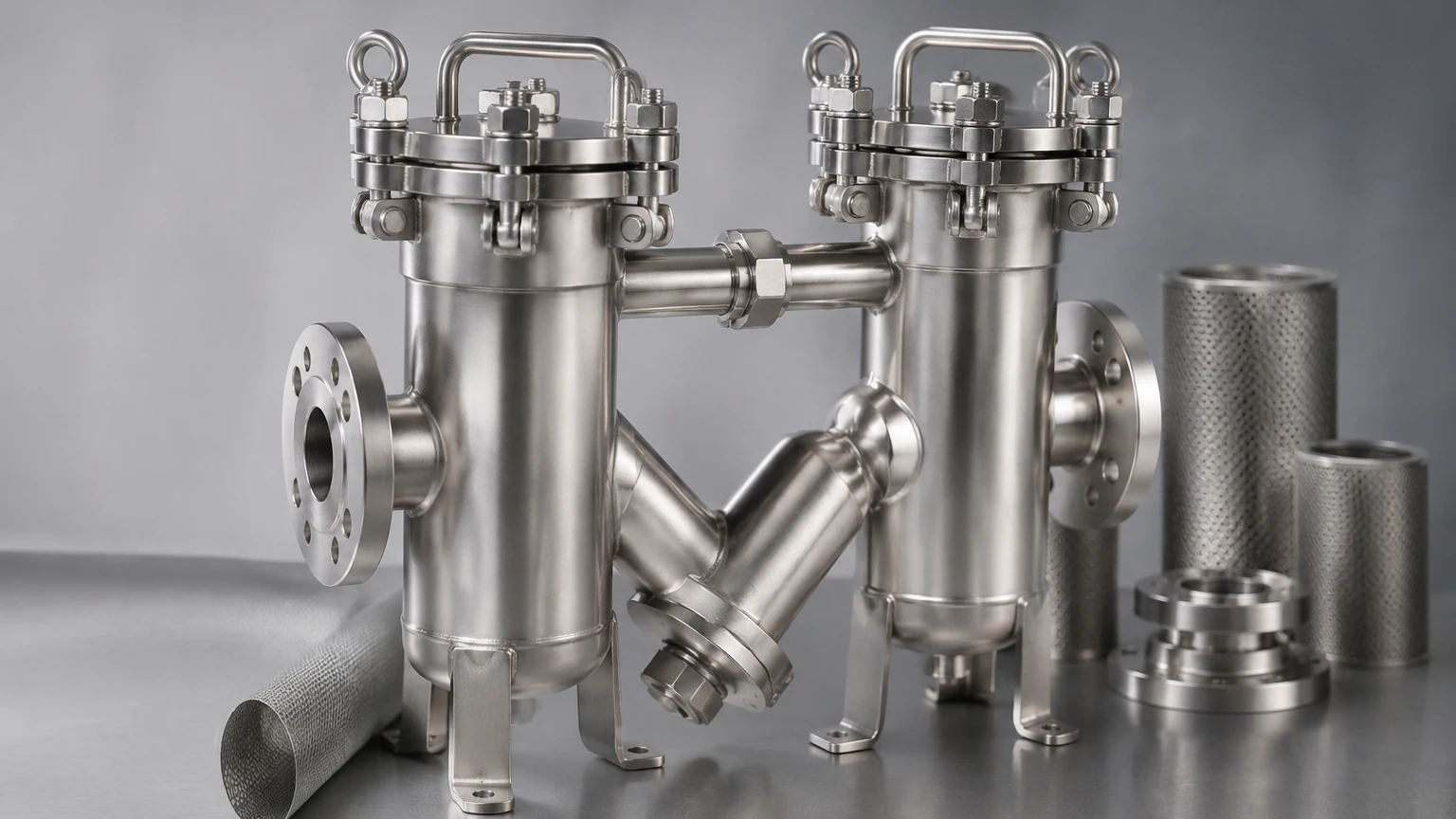
In industrial fluid handling, the necessity for continuous operation often conflicts with the physical requirement to remove particulate matter from process streams. A duplex y strainer serves as a critical engineering solution to this challenge, providing a mechanism for non-stop filtration even during maintenance or cleaning cycles. Unlike simplex strainers, which require a system shutdown to clear the filter element, a duplex configuration utilizes a dual-chamber design and a diverter valve system to ensure that the flow of liquid or gas remains uninterrupted.
For engineers and procurement specialists, selecting the right duplex y strainer involves a deep understanding of fluid dynamics, material compatibility, and the specific structural advantages of the Y-configuration. This guide explores the technical parameters, engineering considerations, and application-specific requirements essential for integrating these components into high-performance industrial systems.
Understanding the Role of Duplex Y Strainers in Continuous Industrial Flow
The primary function of a duplex y strainer is to protect downstream equipment—such as pumps, valves, meters, and heat exchangers—from damage caused by debris, scale, or foreign particles. The "Y" designation refers to the physical shape of the strainer housing, where the filter element is housed in a leg that branches off the main flow path at an angle. This design is particularly effective for high-pressure applications and systems where space may be a constraint.
The "duplex" aspect is achieved by connecting two Y-strainers in parallel via a common manifold and a changeover valve. This arrangement allows the operator to divert the fluid flow from one strainer housing to the other. When the differential pressure across the active side reaches a predetermined limit—indicating that the filter element is clogged—the flow is switched to the clean side. The dirty element can then be removed, cleaned, or replaced without stopping the process. This capability is indispensable in sectors like chemical processing, power generation, and marine engineering, where downtime can result in significant financial losses or safety risks.
Engineering Considerations for Duplex Y Strainer Construction
The durability and efficiency of a duplex y strainer are largely determined by its construction materials and the precision of its internal components. Because these strainers are often used in demanding environments, material selection is the first step in the engineering process.
Housing Materials
Stainless steel remains the gold standard for industrial filtration housings. Grade 304 stainless steel offers excellent general corrosion resistance, while Grade 316 is preferred for environments involving chlorides or high acidity, such as marine or pharmaceutical applications. For specialized chemical processes, manufacturers like Kaifil provide custom solutions that ensure the housing can withstand both the chemical nature of the fluid and the mechanical stresses of the system pressure.
Diverter Valve Mechanisms
The mechanism used to switch flow between the two chambers is a critical failure point if not engineered correctly. Common designs include:
* Ball Valve Links: Two or more ball valves connected by a mechanical linkage. This provides a tight seal and is relatively easy to automate.
* Plug Valves: A tapered or cylindrical plug that rotates to redirect flow. These are robust and provide excellent sealing surface area.
* Butterfly Valves: Often used in larger diameter piping where space and torque requirements are considerations.
Sealing and Gaskets
The integrity of the duplex system depends on the seals within the diverter valve and the strainer caps. Depending on the fluid temperature and chemical composition, engineers must choose between EPDM, Viton, PTFE, or metallic gaskets. Failure to match the seal material to the process fluid can lead to bypass leakage, where unfiltered fluid migrates to the clean side of the system.
Performance Metrics: Pressure Drop and Filtration Efficiency
When specifying a duplex y strainer, two metrics dominate the technical evaluation: the allowable pressure drop ($ΔP$) and the required filtration accuracy.
Calculating Pressure Drop
Every component in a piping system introduces resistance to flow. A strainer, by its very nature, creates a pressure drop as fluid passes through the mesh or perforated screen. Engineers must ensure that the total pressure drop across the duplex unit—including the valves and manifolds—does not exceed the system's pump capacity. Factors influencing $ΔP$ include:
* Fluid Viscosity: Thicker fluids require larger mesh openings or larger strainer housings to maintain flow.
* Specific Gravity: The density of the fluid affects the velocity and resistance.
* Ratio of Open Area: A high-quality duplex y strainer should have an open area ratio (the ratio of the total area of the holes in the screen to the cross-sectional area of the inlet pipe) of at least 4:1. This ensures that even as the screen begins to collect debris, the pressure drop remains manageable.
Mesh Count vs. Micron Rating
The internal filter element is typically a stainless steel wire mesh or a perforated plate. The choice between a coarse "strainer" and a fine "filter" depends on the particle size that needs to be removed. In many industrial applications, a perforated metal basket acts as a support for a finer inner wire mesh. This combination provides the structural strength to withstand high differential pressures while achieving filtration down to 20 microns or finer.
For those looking to explore specific mesh configurations and housing designs, reviewing technical specifications on a manufacturer's Main Page can provide insights into the standard and custom ranges available for industrial use.
Sector-Specific Applications and Requirements
The versatility of the duplex y strainer allows it to be adapted for various industries, each with its own set of regulatory and functional demands.
Chemical and Petrochemical Processing
In these environments, the primary concern is corrosion and high pressure. Duplex strainers are often used to protect expensive catalyst beds or high-speed centrifugal pumps. The ability to switch chambers without exposing workers to hazardous chemicals (via a closed-loop switchover) is a significant safety advantage.
Food and Beverage Industry
Here, hygiene is paramount. Strainers must be designed with "dead-leg" minimization in mind to prevent bacterial growth. Stainless steel 316L with a high-polish surface finish (Ra < 0.8 µm) is often required. The duplex design allows for the cleaning of the filter element during continuous production runs, which is essential for 24/7 bottling or processing lines.
Hydraulic and Lube Oil Systems
In large machinery, such as turbines or hydraulic presses, maintaining oil cleanliness is vital for component longevity. A duplex y strainer in the lubrication line ensures that wear particles are removed before they can reach critical bearings. Because oil viscosity changes significantly with temperature, these strainers often include heating jackets to maintain fluid flow during cold starts.
Maintenance Protocols and Operational Safety
While the duplex design allows for maintenance during operation, specific safety protocols must be followed to prevent accidents during the switchover and cleaning process.
1. Pressure Equalization: Before switching the flow to the standby chamber, it is often necessary to fill the standby side with fluid and equalize the pressure. This prevents a "pressure shock" or water hammer that could damage the filter element or downstream equipment.
2. Venting: Each strainer housing should be equipped with a vent valve at the highest point. This allows air to be bled from the chamber after a new element is installed, ensuring the housing is completely full of fluid before it is put into service.
3. Differential Pressure Monitoring: Relying on a fixed schedule for cleaning is inefficient. Installing differential pressure gauges (DP gauges) across the duplex unit allows operators to see exactly when a switchover is required. Many modern systems use DP transmitters to send an alert to the central control room.
Customization Options for Specialized Filtration Needs
Off-the-shelf duplex strainers may not meet the requirements of highly specialized processes. Customization is a core strength of manufacturers like Kaifil, where engineering teams can modify the standard duplex y strainer design to fit specific needs:
* Custom Flanging: Matching existing pipework often requires non-standard flange ratings (e.g., ANSI 300# or 600#) or specialized connection types like RTJ (Ring Type Joint).
* Magnetic Inserts: For systems where fine iron or steel particles are a concern (such as in engine break-in periods), magnetic rods can be added to the strainer basket to capture sub-micron metallic debris that might otherwise pass through the mesh.
* Automated Switchover: For unmanned stations or critical infrastructure, the manual handle can be replaced with pneumatic or electric actuators coupled with a controller that triggers the switchover based on pressure differential.
Procurement Checklist: What Engineers Should Confirm Before Purchase
To ensure the long-term success of a duplex y strainer installation, purchasing teams and engineers should verify the following data points with their supplier:
* Design Code Compliance: Does the unit meet ASME Section VIII, PED, or other regional pressure vessel codes?
* Maximum Allowable Working Pressure (MAWP): Ensure the housing and valves are rated for the maximum surge pressures of the system, not just the operating pressure.
* Seal Compatibility: Confirm that all O-rings and gaskets are compatible with the process fluid and the full range of operating temperatures.
* Cleaning Clearance: Ensure there is enough physical space around the installation to remove the strainer baskets. In a Y-configuration, the basket is removed at an angle, which requires specific clearance distances.
* Spare Parts Availability: Confirm the lead times for replacement mesh elements. Using non-OEM mesh can lead to improper seating and bypass.
By focusing on these technical details, industrial facilities can implement a duplex y strainer solution that not only protects their equipment but also enhances overall process reliability. The transition from a simplex to a duplex system is an investment in operational continuity, reducing the total cost of ownership by eliminating the expensive labor and lost production time associated with manual system shutdowns for filter maintenance.
