


Dust Collector Filter Cartridge Manufacturers
In industrial environments, the efficiency of air filtration systems is directly tied to process safety, regulatory compliance, and equipment longevity. Selecting the right components from reputable dust collector filter cartridge manufacturers is a critical decision for engineers and procurement teams. These components are responsible for capturing airborne particulates, protecting downstream machinery, and ensuring that exhaust air meets environmental standards. However, the market is saturated with various options, ranging from standard off-the-shelf units to highly specialized, custom-engineered metal filtration solutions.
For industries dealing with high temperatures, corrosive chemicals, or abrasive materials, standard fabric or paper filters often fall short. This is where technical expertise in stainless steel and precision metal filtration becomes indispensable. Understanding the engineering nuances behind cartridge construction allows professionals to move beyond price-based purchasing toward a value-driven strategy that prioritizes performance and durability.
The Critical Role of Filter Cartridges in Industrial Dust Collection
Dust collection systems are designed to handle high volumes of air laden with dust and debris. The filter cartridge is the heart of this system. Its primary function is to provide a large surface area for filtration within a compact footprint. This is typically achieved through pleating the filter media, which significantly increases the effective filtration area compared to flat-sheet designs.
Industrial applications vary widely, from food processing and pharmaceuticals to chemical manufacturing and metalworking. Each of these sectors presents unique challenges. For instance, in chemical processing, the filter must withstand aggressive solvents and fluctuating pH levels. In food and beverage production, the materials must be food-grade and capable of withstanding rigorous Clean-in-Place (CIP) procedures. Professional dust collector filter cartridge manufacturers must demonstrate an understanding of these diverse requirements by offering material selections that go beyond basic polyester or cellulose.
Stainless steel wire mesh and sintered metal fibers are increasingly preferred in demanding environments. Unlike synthetic media, metal filters offer exceptional structural integrity and can be cleaned and reused multiple times, providing a lower total cost of ownership over the long term. When evaluating the Main Page of a specialized manufacturer, engineers should look for evidence of these advanced material capabilities.
Essential Criteria for Evaluating Dust Collector Filter Cartridge Manufacturers
When vetting potential suppliers, technical professionals should look beyond marketing claims and focus on measurable engineering capabilities. A reliable manufacturer acts as a partner in system optimization rather than just a parts supplier.
Manufacturing Precision and Quality Control
The performance of a filter cartridge is only as good as its weakest point. This often includes the seams, the bonding between the media and the end caps, and the consistency of the pleat spacing. High-quality manufacturers utilize automated pleating and welding technologies to ensure uniformity. For stainless steel filters, TIG (Tungsten Inert Gas) welding or plasma welding is often required to ensure leak-proof joints that can withstand the mechanical stresses of pulse-jet cleaning.
Customization and Engineering Support
Many industrial systems are unique or have been modified over time, making standard replacement filters ineffective. A key differentiator among dust collector filter cartridge manufacturers is their ability to provide custom OEM solutions. This includes the ability to adjust dimensions, modify end cap configurations (such as flange, bolt-hole, or twist-lock designs), and select specific micron ratings tailored to the particle size distribution of the process dust.
Technical Documentation and Compliance
Engineers require data to make informed decisions. A reputable manufacturer should provide comprehensive technical data sheets including:
* Filtration efficiency ratings (e.g., MERV ratings or micron levels).
* Pressure drop curves (Initial vs. Operating).
* Material certifications (e.g., 304, 316, or 316L stainless steel).
* Temperature and chemical compatibility charts.
Engineering Considerations: Material Science and Filtration Efficiency
The choice of filtration media is the most significant factor in determining the cartridge's performance. While many manufacturers focus on disposable media, specialized manufacturers like Kaifil emphasize the role of stainless steel in high-performance applications.
Stainless Steel Wire Mesh
Stainless steel wire mesh is an ideal choice for applications requiring high mechanical strength and temperature resistance. It is available in various weave patterns, such as plain, twill, or Dutch weave. Each weave offers different characteristics regarding flow rate and particle retention. For dust collection, a Dutch weave often provides a superior combination of fine filtration and high strength.
Sintered Metal Media
Sintered metal fiber felt or sintered multi-layer wire mesh provides even greater depth filtration capabilities. The sintering process bonds the metal fibers or layers together at their contact points, creating a rigid and porous structure that does not migrate under high-pressure pulses. This is particularly useful in high-pressure hydraulic systems or high-velocity air streams where media migration could contaminate the downstream process.
Gasket and Seal Integrity
Even the most efficient filter media is useless if air can bypass the filter through a poorly sealed gasket. Manufacturers must provide high-quality sealing materials—such as EPDM, Silicone, Viton, or PTFE—that are compatible with the operating environment. The method of attaching the gasket to the end cap is also critical; it must remain secure during installation and throughout the filter's service life.
Navigating Customization and OEM Requirements
In many B2B scenarios, the requirement isn't just for a "filter," but for a filtration component that fits into a larger, proprietary machine design. This is where OEM (Original Equipment Manufacturer) capabilities become vital. When working with dust collector filter cartridge manufacturers, purchasing teams should confirm the following:
1. Prototyping Capabilities: Can the manufacturer produce a small batch or a single prototype for testing before moving to full-scale production?
2. Scalability: Does the manufacturer have the capacity to scale from low-volume specialized orders to high-volume recurring shipments?
3. Design Consultation: Can the manufacturer’s engineering team suggest improvements to the filter design to enhance flow rates or simplify maintenance?
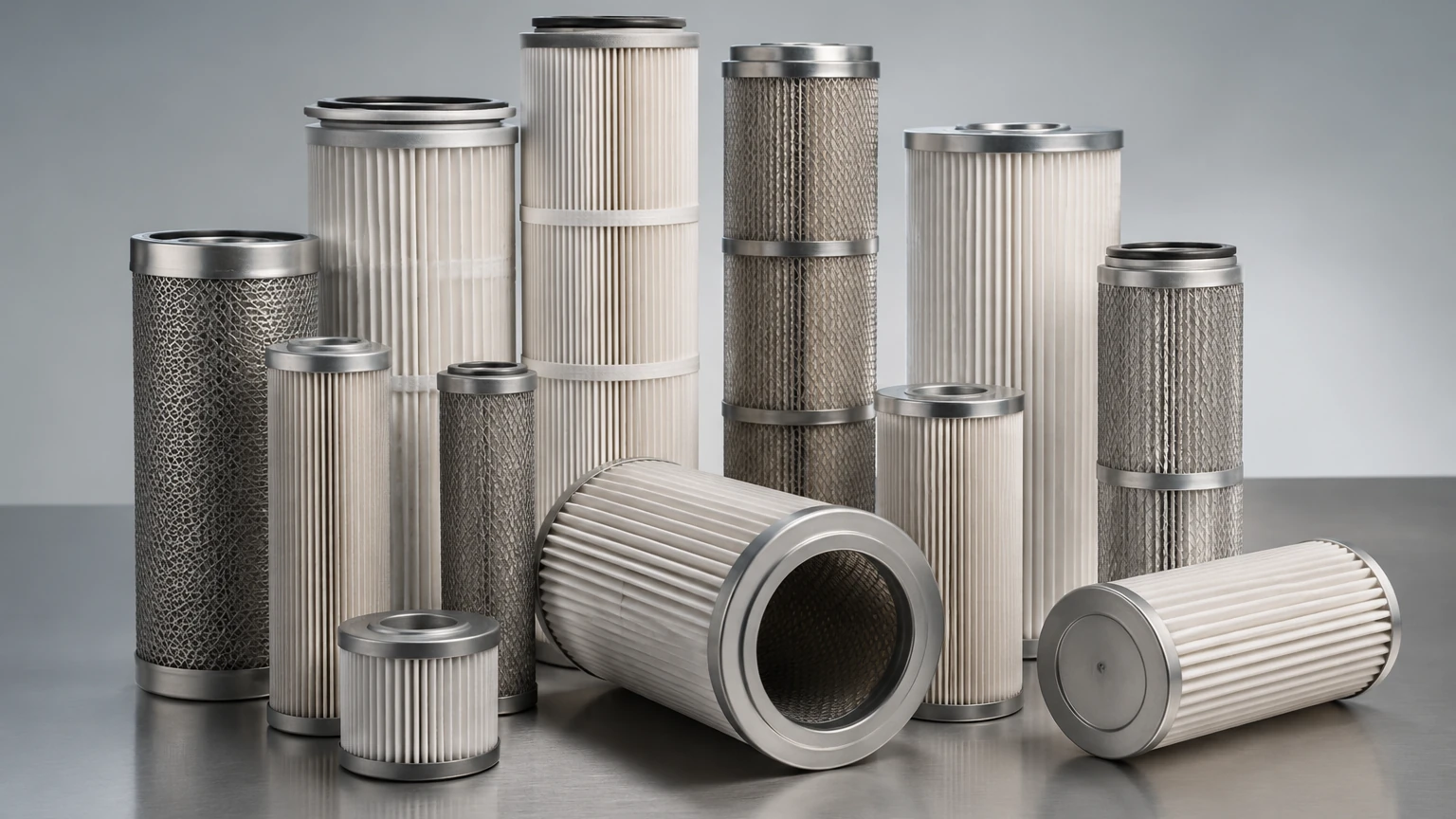
Customization also extends to the physical structure of the cartridge. For example, adding an internal support core made of perforated stainless steel can prevent the pleats from collapsing under high differential pressure. Externally, a protective outer shroud can protect the media from direct impact by large, high-velocity particles, thereby extending the life of the cartridge.
Identifying and Mitigating Risks in Filter Procurement
Procuring industrial filters involves several risks that can lead to increased downtime and maintenance costs. Awareness of these risks allows engineers to implement better screening processes for their suppliers.
The Risk of Inaccurate Filtration Ratings
Not all micron ratings are created equal. Some manufacturers use "nominal" ratings, which are often vague and represent an average retention rate. "Absolute" ratings are much more reliable, indicating that a specific percentage of particles (usually 99% or higher) above a certain size will be captured. Engineers should always clarify which rating system is being used.
Poor Structural Integrity
In pulse-jet dust collectors, the filter is subjected to frequent bursts of compressed air to dislodge the dust cake. If the cartridge is not structurally sound, these pulses can cause fatigue in the pleats or failure at the seams. This is a common issue with low-cost manufacturers who use inferior adhesives or thin-gauge metals for the end caps and cores.
Supply Chain Instability
For critical industrial processes, a delay in receiving replacement filters can result in a total plant shutdown. It is essential to work with manufacturers who have stable material sourcing and transparent lead times. Evaluating a manufacturer's history and their focus on specific industries (such as the chemical or pharmaceutical sectors) can provide insight into their reliability.
Optimizing Performance and Extending Service Life
Once the filters are sourced and installed, the focus shifts to operational efficiency. Dust collector filter cartridge manufacturers often provide guidelines on how to maximize the lifespan of their products.
Monitoring Differential Pressure
Differential pressure (the difference in pressure between the dirty side and the clean side of the filter) is the most accurate indicator of filter health. A sudden drop in differential pressure might indicate a leak or a ruptured cartridge, while a steady, excessive increase suggests that the filter is blinded and needs cleaning or replacement. High-quality metal filters allow for more aggressive cleaning cycles compared to synthetic media, which can help maintain a lower average differential pressure over time.
Proper Pulse-Jet Settings
The cleaning system must be calibrated to the specific type of cartridge in use. If the pulse pressure is too high, it can damage the media; if it is too low, the dust cake will not be effectively removed. Metal cartridges are generally more resilient to higher pulse pressures, allowing for more effective cleaning in applications involving sticky or hygroscopic dust.
Total Cost of Ownership (TCO) Analysis
While stainless steel or custom-engineered cartridges may have a higher initial purchase price than standard disposable filters, their TCO is often significantly lower. Factors contributing to a lower TCO include:
* Reduced Replacement Frequency: Metal filters can last years rather than months.
* Lower Disposal Costs: Reusable filters reduce the volume of waste generated.
* Energy Savings: Maintaining a lower differential pressure reduces the load on the system's fan, leading to lower electricity consumption.
* Reduced Downtime: Fewer filter changes mean more uptime for the production line.
Conclusion
Selecting from the vast array of dust collector filter cartridge manufacturers requires a technical approach that prioritizes material science, manufacturing precision, and application-specific engineering. For industries operating in demanding environments, the shift toward high-performance stainless steel and custom filtration solutions is not just a matter of preference, but a necessity for operational efficiency and safety.
By focusing on manufacturers who offer robust OEM capabilities, transparent technical data, and a deep understanding of industrial filtration principles, engineers can ensure their systems perform at peak efficiency. Whether the goal is to improve air quality, protect expensive machinery, or recover valuable process dust, the quality of the filter cartridge is the determining factor in success. For more information on specialized filtration components and custom manufacturing, professionals are encouraged to review product options and application support on the Main Page.
Download Dust Collector Filter Cartridge Manufacturers as a PDF
