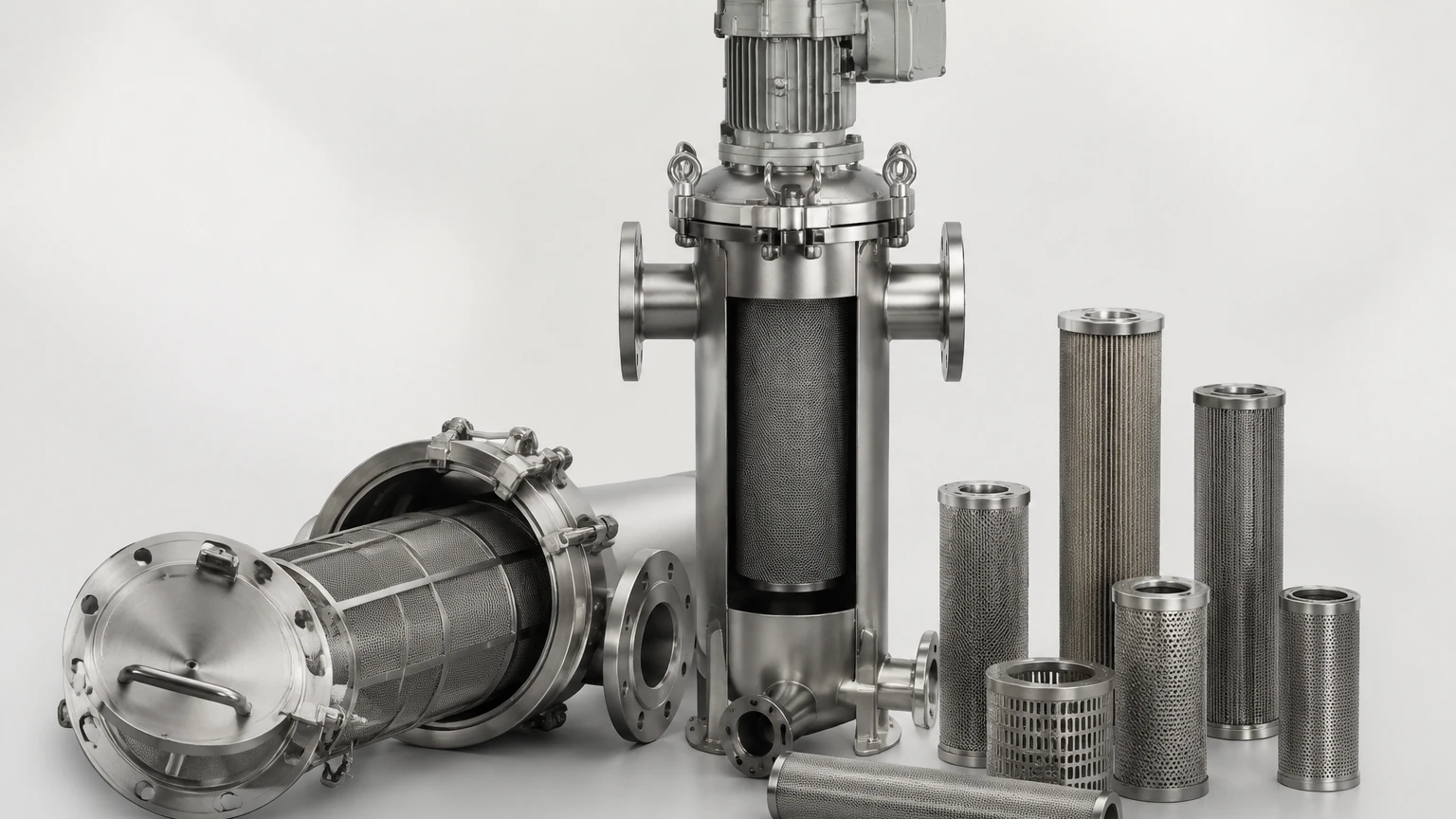
Self-cleaning Filtration Equipment
In modern industrial processing, the transition from batch operations to continuous flow systems has necessitated a shift in how solid-liquid separation is managed. Traditional manual filtration systems, while effective for low-solids applications, often introduce significant operational bottlenecks due to the downtime required for cleaning and element replacement. Self-cleaning filtration equipment addresses these challenges by automating the debris removal process, ensuring consistent flow rates and protecting downstream equipment without interrupting production. For engineers and procurement teams, selecting the appropriate self-cleaning system requires a deep understanding of fluid dynamics, material compatibility, and the mechanical principles that drive automated cleaning cycles.
Understanding the Mechanics of Self-Cleaning Filtration
The primary objective of self-cleaning filtration equipment is to maintain a low differential pressure across the filter medium by removing accumulated contaminants in real-time or at scheduled intervals. There are two dominant mechanical approaches to achieving this: backwashing and mechanical scraping.
Backwash Systems
Backwash systems utilize a reversal of flow to dislodge particles trapped on the surface or within the depth of the filter media. In a typical configuration, when the differential pressure reaches a predetermined set point, a valve opens to create a high-velocity reverse flow. This flow carries the accumulated solids out through a reject or flush port. These systems are highly effective for low-viscosity fluids and are commonly used in water treatment and cooling tower applications. The efficiency of a backwash system depends heavily on the "backwash ratio"—the volume of fluid used for cleaning relative to the total throughput.
Mechanical Scraper Systems
Mechanical scraping is often preferred for high-viscosity fluids or applications with sticky, fibrous contaminants that backwashing cannot easily dislodge. In these systems, a scraper blade—made of either reinforced polymers or stainless steel—moves across the surface of the filter element (typically a wedge wire or perforated screen). The scraper pushes the solids into a collection chamber at the bottom of the housing, which is then purged periodically. This method ensures that the filtration process remains uninterrupted and minimizes product loss, as the concentrated waste is the only material removed. For more detailed technical specifications on these mechanical configurations, engineers can review the options available on our Main Page.
Material Selection and Engineering Considerations
The durability of self-cleaning filtration equipment is fundamentally linked to the materials used in its construction. Because these systems are often deployed in corrosive or high-pressure environments, stainless steel is the industry standard. However, the specific grade of stainless steel must be matched to the chemical profile of the process fluid.
* 304 Stainless Steel: Suitable for general industrial applications, providing good corrosion resistance and structural integrity for non-corrosive fluids and standard water treatment.
* 316L Stainless Steel: The preferred choice for chemical processing, pharmaceutical, and food and beverage industries. The addition of molybdenum provides superior resistance to chlorides and organic acids, while the low carbon content (the "L" designation) prevents carbide precipitation during welding, ensuring the longevity of the filter housing and internal components.
* Duplex and Super Duplex: For highly aggressive environments, such as seawater filtration or acidic chemical streams, duplex alloys offer higher mechanical strength and exceptional resistance to pitting and stress corrosion cracking.
Beyond the housing, the filter media itself—whether it be sintered wire mesh, wedge wire, or multi-layered metal felt—must be engineered to withstand the mechanical stresses of the cleaning cycle. Sintered mesh, for example, offers high porosity and precise micron ratings, but it must be properly supported to prevent deformation during high-pressure backwash pulses.
Performance Evaluation and Selection Criteria
When evaluating self-cleaning filtration equipment, engineers must look beyond the initial capital expenditure and focus on performance metrics that impact the total cost of ownership (TCO). Key parameters include:
Filtration Accuracy (Micron Rating)
Determining the correct micron rating is a balance between protecting downstream components and preventing excessive cleaning cycles. A filter that is too fine will trigger the self-cleaning mechanism too frequently, leading to increased wear and higher fluid loss. Conversely, a filter that is too coarse may allow harmful particles to pass through. It is essential to perform a particle size distribution (PSD) analysis of the process fluid before finalizing the filter specification.
Differential Pressure (ΔP)
The clean pressure drop and the terminal pressure drop (the point at which cleaning is triggered) are critical for pump sizing and energy efficiency. Self-cleaning systems are designed to operate within a specific ΔP range. If the solids loading is higher than anticipated, the system may enter a "continuous cleaning" mode, which significantly reduces the lifespan of seals and mechanical actuators.
Flow Rate and Velocity
The internal velocity of the fluid affects both the filtration efficiency and the effectiveness of the cleaning mechanism. High velocities can drive particles deeper into the media, making them harder to remove, while low velocities may allow solids to settle in dead zones within the filter housing. Proper sizing ensures that the flux rate (flow per unit of filter area) remains within the manufacturer’s recommended limits for the specific media type.
Integration into Industrial Process Flows
Successful implementation of self-cleaning filtration equipment requires careful integration into the existing process architecture. This involves more than just plumbing the unit into the line; it requires a coordinated approach to automation and safety.
Control Systems and Automation
Modern self-cleaning filters are equipped with PLC-based control panels that monitor differential pressure, elapsed time, and manual override signals. For critical applications, these systems should be integrated into the facility’s broader SCADA (Supervisory Control and Data Acquisition) system. This allows for remote monitoring of performance trends, which can provide early warning of upstream process upsets or the need for preventative maintenance.
Redundancy and Bypass Configurations
While self-cleaning filters are designed for continuous operation, maintenance on the cleaning mechanism itself (such as seal replacement) will eventually be required. A duplex configuration—where two filter housings are installed in parallel with a changeover valve—allows one unit to be serviced while the other remains in operation. Alternatively, a bypass line with a manual strainer can be used for short-term maintenance windows, provided the downstream equipment can tolerate the lower level of filtration for a brief period.
Maintenance, Reliability, and Total Cost of Ownership
One of the most significant advantages of self-cleaning filtration equipment is the reduction in labor costs. However, "self-cleaning" does not mean "maintenance-free." To ensure long-term reliability, a structured preventative maintenance program must be established.
* Seal and Gasket Inspection: The moving parts in scraper and backwash systems rely on high-performance seals to prevent bypass and external leaks. These components should be inspected annually and replaced according to the manufacturer’s duty cycle recommendations.
* Media Integrity: Over time, abrasive particles can wear down the edges of wedge wire or erode the surface of sintered mesh. Periodic visual inspections or bubble point tests can confirm that the media still meets its original filtration specification.
* Actuator and Motor Maintenance: The pneumatic or electric actuators that drive the cleaning cycle are the heart of the system. Ensuring clean, dry air for pneumatic systems and checking electrical connections for motorized units is essential for preventing unexpected failures.
From a financial perspective, the TCO of a self-cleaning system is often lower than manual filters when factoring in the costs of replacement cartridges, disposal of contaminated waste, and the labor associated with manual cleaning. In many high-volume industrial applications, the payback period for a self-cleaning system is less than 18 months.
Customization and OEM Filtration Solutions
No two industrial processes are identical, and off-the-shelf filtration solutions often fall short in demanding environments. Customization is frequently required to address specific challenges such as extreme temperatures, high operating pressures, or unique space constraints.
As a professional manufacturer, Kaifil specializes in developing tailored filtration components that integrate seamlessly into self-cleaning systems. Whether it is a custom-dimensioned stainless steel filter cartridge or a precision-engineered wire mesh element, our engineering team works closely with global customers to ensure the filtration media is optimized for the specific solids loading and chemical environment of the application. Our expertise in material science and advanced manufacturing allows us to produce components that enhance the efficiency and durability of self-cleaning filtration equipment.
When sourcing these systems, it is vital to confirm that the manufacturer can provide detailed material certifications (MTRs) and performance documentation. Engineers should also inquire about the availability of spare parts and the level of technical support provided during the installation and commissioning phases. By addressing these factors early in the procurement process, organizations can ensure they invest in a filtration solution that delivers consistent performance and long-term value.