


Dustcolector
In industrial manufacturing and processing environments, air quality management and particulate recovery are critical operational requirements. A high-performance dustcolector system is designed to remove fine particulates from the air or gas streams, ensuring compliance with environmental regulations, protecting downstream equipment, and maintaining a safe working environment for personnel. While many standard systems utilize fabric or polymer-based media, demanding industrial applications often require the durability and precision of stainless steel filtration components.
For engineers and procurement professionals, selecting the right filtration media for a dustcolector involves a complex evaluation of thermal limits, chemical compatibility, and mechanical stresses. Kaifil specializes in manufacturing the high-precision stainless steel wire mesh and filter cartridges that serve as the core of these critical systems. By understanding the technical nuances of metal filtration, facilities can optimize their dust collection processes for long-term reliability and efficiency.
Engineering Fundamentals of Industrial Dust Collection
The primary function of an industrial dustcolector is to separate suspended solids from a gas stream. This process typically involves several stages, starting with the intake of contaminated air and ending with the discharge of cleaned air and the collection of waste material. The efficiency of this separation is governed by the physical properties of the dust particles—such as size, shape, and density—and the velocity of the air stream.
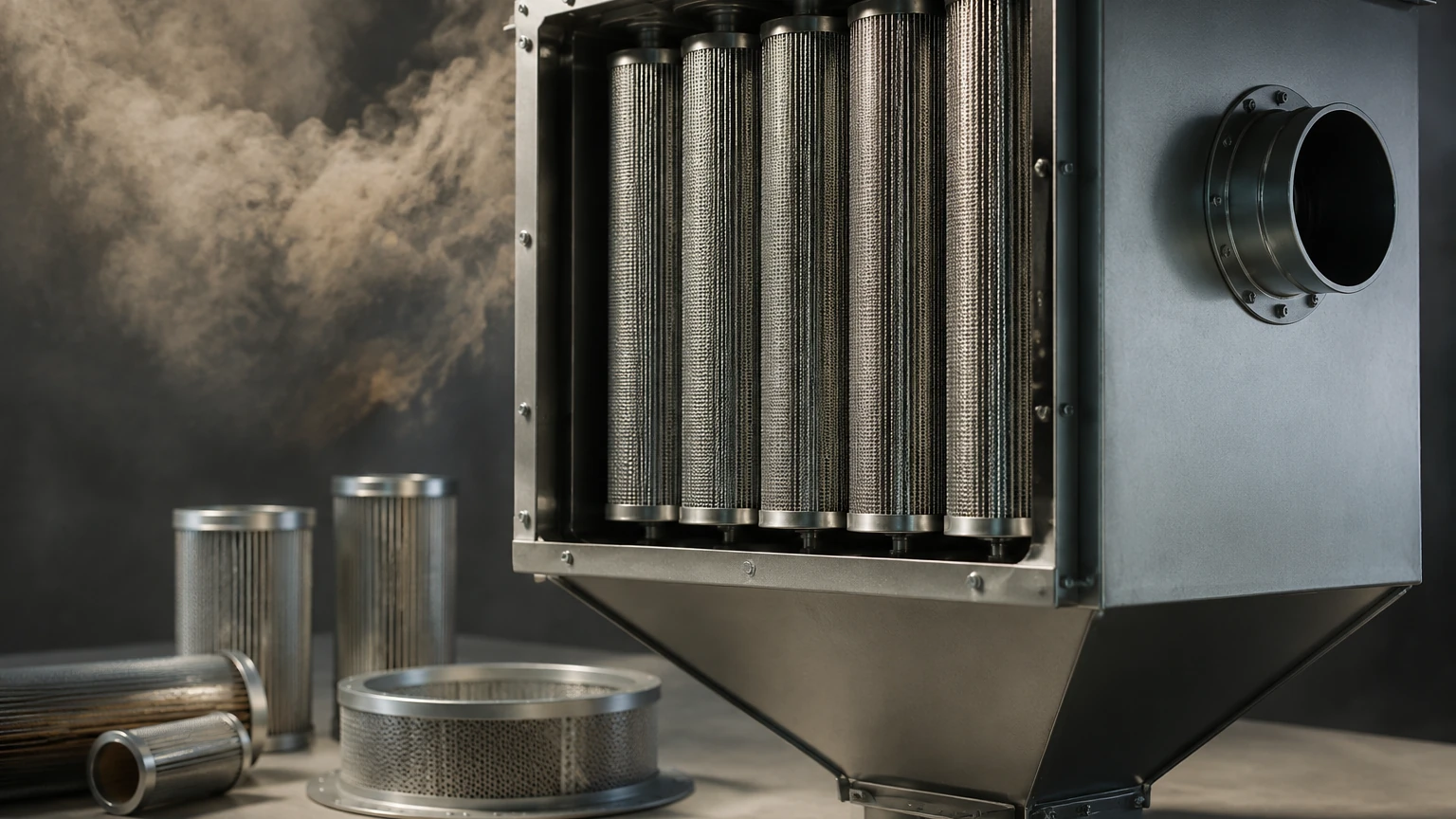
In a typical pulse-jet dustcolector, the filter elements are subjected to continuous cycles of filtration and cleaning. During the filtration phase, dust accumulates on the surface of the filter media, forming a "dust cake." This cake actually assists in the filtration process by catching smaller particles, but it also increases the pressure drop across the system. Periodically, a high-pressure pulse of compressed air is directed into the filter element, causing it to expand and shed the accumulated dust into a hopper. This mechanical stress requires filter media with exceptional structural integrity, which is why stainless steel components are often preferred in heavy-duty or high-temperature environments.
The Role of Stainless Steel Filter Media in Dustcolector Performance
Stainless steel is an ideal material for filter elements in a dustcolector when operational conditions exceed the capabilities of synthetic fibers. Synthetic bags often fail when exposed to temperatures above 200°C or when subjected to abrasive particles that cause premature tearing. In contrast, stainless steel wire mesh and sintered metal filters offer several distinct advantages:
1. Thermal Stability: Stainless steel filters can operate effectively at temperatures exceeding 500°C, making them essential for metal smelting, cement production, and chemical incineration processes.
2. Mechanical Strength: The rigid structure of a stainless steel filter cartridge prevents collapsing under high vacuum or pressure, ensuring consistent airflow within the dustcolector.
3. Corrosion Resistance: In industries such as chemical processing or food production, where the gas stream may contain acidic or alkaline vapors, stainless steel 304 or 316L provides the necessary resistance to prevent oxidation and degradation.
4. Cleanability: Unlike fabric bags that may trap particles deep within the fibers (depth filtration), stainless steel mesh facilitates surface filtration. This allows for more effective pulse cleaning and a more complete recovery of the filter's original permeability.
To explore the full range of material options and technical specifications for these components, technical teams can refer to the Main Page for comprehensive product data.
Key Evaluation Criteria for Filter Selection
When specifying components for a dustcolector, engineers must balance filtration accuracy with energy consumption. The following metrics are essential for making an informed selection:
Filtration Accuracy and Micron Rating
The micron rating of the filter media determines the smallest particle size that the dustcolector can reliably capture. For precision applications, such as pharmaceutical powder handling, a fine stainless steel mesh with a high weave density is required. It is important to distinguish between "absolute" and "nominal" ratings. An absolute rating indicates that 99.9% of particles of a specific size will be captured, providing the level of certainty required for hazardous dust management.
Pressure Drop and Energy Efficiency
The pressure drop (ΔP) is the difference in pressure between the upstream and downstream sides of the filter. A high pressure drop indicates that the dustcolector fan must work harder to pull air through the system, leading to increased energy costs. By selecting a stainless steel mesh with a high open area percentage, engineers can maintain low initial pressure drops while still achieving the necessary filtration efficiency.
Air-to-Cloth Ratio
In the context of a dustcolector, the air-to-cloth ratio refers to the volume of air passing through a square foot of filter media per minute (CFM/ft²). Metal filters often allow for a higher air-to-cloth ratio than fabric filters because they can withstand higher velocities without the risk of particle bleed-through or media damage. This allows for a more compact dustcolector design, saving valuable floor space in the facility.
Material Selection and Chemical Compatibility
The environment inside a dustcolector can be incredibly harsh. Selecting the correct alloy is paramount to preventing premature failure.
* Grade 304 Stainless Steel: The most common choice for general industrial applications. It offers good corrosion resistance and is cost-effective for dust collection in woodworking, plastics, and dry food processing.
* Grade 316L Stainless Steel: Contains molybdenum, which provides superior resistance to chlorides and acids. This is the standard for pharmaceutical and marine environments where the dustcolector may be exposed to corrosive cleaning agents or salt air.
* Specialty Alloys: For extreme environments involving high-temperature sulfur compounds or highly oxidative gases, alloys like Inconel or Monel can be utilized in the wire mesh construction to ensure the longevity of the filter element.
Customization and OEM Solutions
Every industrial facility has unique requirements based on their specific dustcolector housing and the nature of the byproduct they are managing. Kaifil provides extensive OEM and customization capabilities to meet these needs. Customization options often include:
* End Cap Configurations: Filters can be designed with various flange types, threaded connections, or bolt-on assemblies to ensure a leak-proof seal within the existing dustcolector framework.
* Support Cores: For high-pressure applications, internal perforated metal cores are added to the filter cartridge to provide additional hoop strength, preventing deformation during the pulse-jet cleaning cycle.
* Pleating Technology: By pleating the stainless steel wire mesh, the effective filtration surface area can be increased significantly within the same footprint. This reduces the face velocity of the air, lowers the pressure drop, and extends the time between cleaning cycles.
Engineers should confirm the exact dimensions, required micron ratings, and connection types before proceeding with a custom order. Technical drawings and material certifications are typically provided to ensure the component integrates seamlessly with the dustcolector system.
Maintenance, Replacement Cycles, and Total Cost of Ownership
One of the most significant advantages of using stainless steel filtration in a dustcolector is the impact on the Total Cost of Ownership (TCO). While the initial purchase price of a metal filter cartridge is higher than that of a polyester bag, the long-term savings are substantial.
Extended Service Life
A high-quality stainless steel filter can last for years, whereas fabric bags may need replacement every 6 to 12 months. In a large-scale dustcolector, the labor costs associated with frequent bag changes and the resulting production downtime can quickly exceed the cost of the filters themselves. Stainless steel's resistance to mechanical wear and chemical attack ensures that the system remains operational for longer intervals.
Cleaning and Regeneration
When a stainless steel filter eventually reaches a point where pulse cleaning is no longer sufficient to restore the pressure drop, it can often be removed and cleaned using ultrasonic baths, chemical washing, or high-pressure steam. This regeneration process allows the filter to be reused multiple times, further reducing the waste stream and the need for new replacement parts.
Monitoring and Predictive Maintenance
To maximize the efficiency of a dustcolector, facilities should implement differential pressure monitoring. A sudden drop in pressure may indicate a leak or a "bypass" in the filter, while a steady, unrecoverable increase in pressure suggests that the filter media has become blinded and requires deep cleaning. By tracking these metrics, maintenance teams can move from a reactive to a predictive maintenance model, ensuring the dustcolector always operates at peak performance.
Conclusion: Optimizing Industrial Air Quality
The selection of filtration components for a dustcolector is an engineering decision that directly impacts the safety, efficiency, and profitability of an industrial operation. Stainless steel wire mesh and filter cartridges offer the durability and precision required for the most demanding environments, from high-temperature chemical exhausts to sterile pharmaceutical powder collection.
By focusing on material compatibility, mechanical design, and long-term cleanability, engineers can ensure that their dustcolector provides reliable service with a low total cost of ownership. Kaifil remains committed to providing the technical expertise and manufacturing quality necessary to support these critical industrial applications. For more information on custom filtration designs and material options, visit the Main Page to connect with our engineering team and explore our full capabilities.
