


Electrostatic Dust
In industrial manufacturing and processing, the management of particulate matter is a critical factor in maintaining operational efficiency, equipment longevity, and workplace safety. Among the various types of particulate challenges faced by engineers, electrostatic dust represents one of the most complex. Unlike standard inert dust, electrostatic dust carries an electrical charge—typically generated through friction or contact—that fundamentally alters its behavior during filtration and collection. For technical professionals designing or maintaining filtration systems, understanding the nuances of electrostatic charge is essential for selecting the correct filter media and ensuring system reliability.
At Kaifil, we specialize in providing precision-engineered stainless steel filtration solutions designed to handle the rigors of industrial environments where electrostatic forces can compromise standard polymer-based filters. This guide explores the technical characteristics of electrostatic dust, the risks it poses to industrial systems, and why metal filtration components are often the preferred choice for managing these challenging environments.
Understanding the Mechanics of Electrostatic Dust in Industrial Environments
The phenomenon of electrostatic dust is primarily driven by the triboelectric effect. This occurs when two materials come into contact and then separate, resulting in a transfer of electrons. In industrial settings, this happens constantly: powders moving through pneumatic conveying lines, dry air rushing through ducts, or bulk solids sliding across chutes.
When particles become charged, they no longer behave as independent units governed solely by gravity and airflow. Instead, they are influenced by electrostatic fields. This leads to several distinct behaviors:
1. Agglomeration: Charged particles are attracted to one another, forming larger clusters. While this can sometimes aid in filtration by increasing particle size, it can also lead to uneven distribution across the filter surface.
2. Surface Adhesion: Perhaps the most significant challenge is the tendency of charged dust to adhere tenaciously to surfaces, including the walls of filter housings and the filter media itself. This "cling" is much stronger than simple mechanical entrapment.
3. Bipolar Charging: In many processes, particles may carry both positive and negative charges simultaneously, leading to complex interactions that can cause rapid buildup in unexpected areas of the filtration system.
Engineers must account for these behaviors when specifying filtration systems. If the electrostatic nature of the dust is ignored, the system may suffer from premature clogging, increased pressure drops, and frequent maintenance intervals.
The Impact of Electrostatic Charge on Filtration Performance
When electrostatic dust enters a filtration system, it interacts with the filter media in ways that can significantly degrade performance. In standard fabric or polymer-based bag filters, the insulating properties of the material can actually exacerbate static buildup. As dust accumulates, the electrostatic force creates a dense, tightly packed "dust cake" that is resistant to standard cleaning cycles, such as pulse-jet cleaning.
Pressure Drop and Energy Consumption
The primary indicator of filtration health is the pressure drop across the media. Electrostatic dust often leads to a phenomenon known as "blinding," where the charged particles are pulled into the pores of the media and held there by electrical attraction. This reduces the effective filtration area, forcing the system's fans or pumps to work harder to maintain airflow, which directly increases energy consumption and operational costs.
Filtration Efficiency and Accuracy
While static can sometimes improve the capture rate of very fine particles (sub-micron level), it often does so at the cost of consistency. As the charge builds up, the airflow patterns through the filter can become irregular. For precision applications in chemical processing or pharmaceuticals, maintaining a consistent filtration accuracy is paramount. Metal mesh filters, such as those found on our Main Page, offer the structural rigidity and electrical conductivity needed to maintain precise pore sizes even under the stress of electrostatic loads.
Safety Risks: Combustible Dust and Electrostatic Discharge (ESD)
Beyond performance issues, electrostatic dust poses a significant safety risk, particularly in industries handling organic powders, metals, or chemicals. Many types of industrial dust are combustible. When these particles carry a static charge, the risk of an Electrostatic Discharge (ESD) increases. A single spark in a dust-laden environment can trigger a primary explosion, often followed by more devastating secondary explosions as settled dust is lofted into the air.
Grounding and Continuity
To mitigate this risk, filtration systems must be properly grounded. Polymer filters are naturally insulative, meaning they can store large amounts of static energy until a discharge occurs. Stainless steel filters, however, are inherently conductive. When integrated into a properly grounded housing, stainless steel wire mesh and sintered metal cartridges provide a continuous path to ground, preventing the accumulation of dangerous static levels. This is a critical consideration for compliance with ATEX or NFPA standards regarding combustible dust environments.
Selecting Material for Static Dissipation: The Case for Stainless Steel
When engineers evaluate filter media for applications involving electrostatic dust, the material's electrical and thermal properties are just as important as its micron rating. Stainless steel, specifically grades like 304 and 316L, offers several advantages over synthetic alternatives:
* Electrical Conductivity: As mentioned, the ability to dissipate static charges to ground is the most effective way to manage electrostatic dust. Metal filters act as a Faraday cage of sorts, ensuring that charge does not build up on the filter surface.
* Thermal Stability: Electrostatic processes often involve friction, which generates heat. Stainless steel maintains its mechanical integrity at temperatures that would cause polymer filters to soften or fail.
* Chemical Resistance: In many chemical processing applications, the dust may be corrosive as well as electrostatic. 316L stainless steel provides excellent resistance to a wide range of industrial chemicals, ensuring a long service life.
* Durability under High Pressure: Charged dust cakes can be difficult to remove. Stainless steel filters can withstand high-pressure backwashing or ultrasonic cleaning, which would tear or degrade fabric filters.
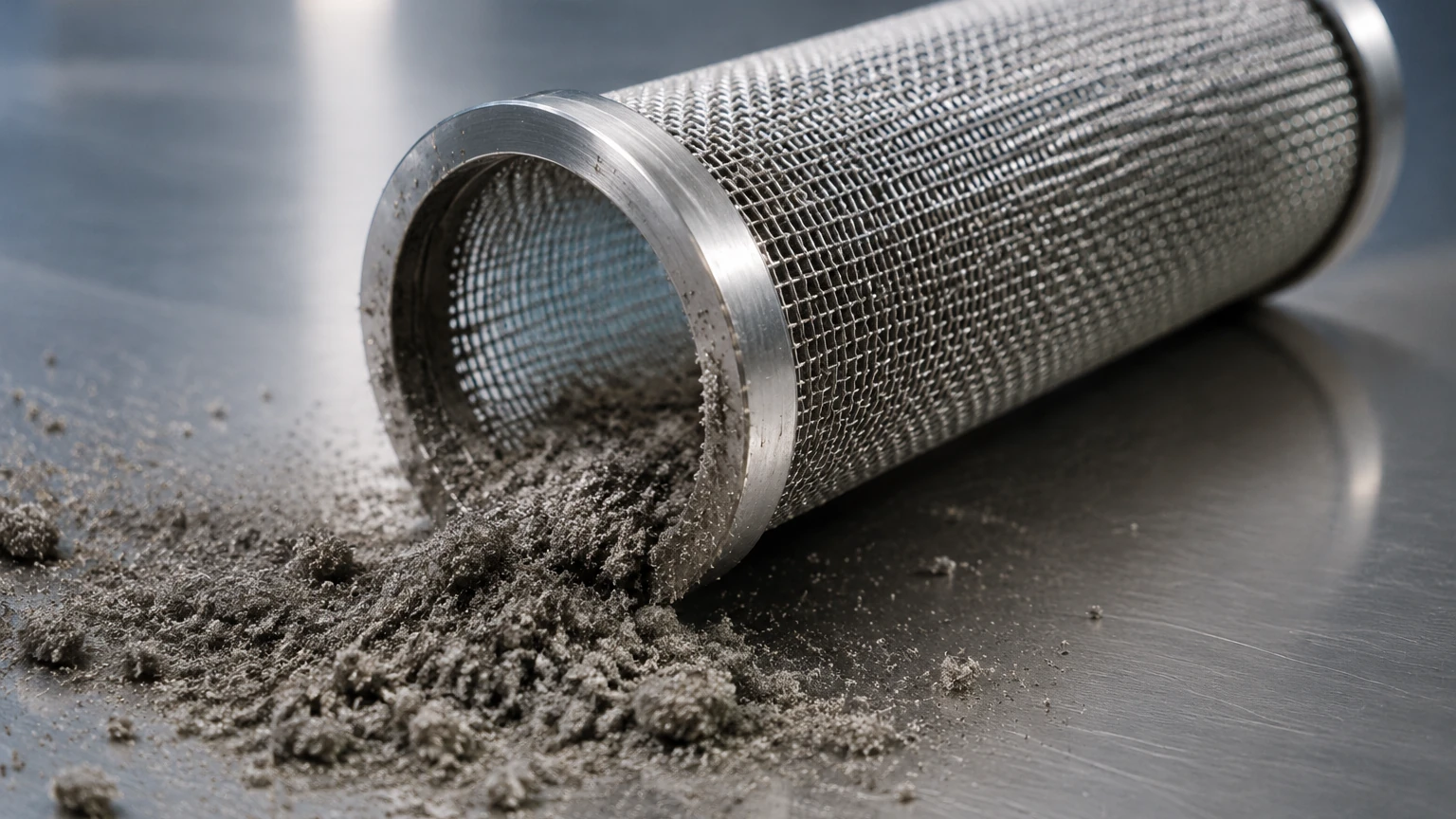
Engineering Custom Filtration Solutions for Dust Management
No two industrial processes are identical, and the characteristics of electrostatic dust can vary based on humidity, flow velocity, and material composition. Customization is often required to achieve optimal filtration performance. At Kaifil, we work closely with engineering teams to develop bespoke filtration components that address specific environmental challenges.
Wire Mesh Selection
The weave pattern of a stainless steel wire mesh—whether it is plain weave, twilled weave, or Dutch weave—affects how dust particles interact with the surface. For electrostatic applications, a smooth surface finish is often preferred to reduce the mechanical "hooking" of particles, making it easier for the static-dissipated dust to be removed during cleaning.
Structural Integrity
In high-flow environments, the filter must resist deformation. We provide reinforced filter cartridges and multi-layer sintered mesh structures that provide the necessary support to handle heavy dust loads without compromising the precision of the filtration pores. This structural reliability ensures that the system maintains its rated efficiency throughout its lifecycle.
Maintenance Protocols for Metal Filters in High-Dust Applications
One of the primary benefits of investing in stainless steel filtration for electrostatic dust management is the ability to clean and reuse the media. Unlike disposable filters, which must be replaced once blinded by static-clung dust, metal filters can be restored to near-original condition through several methods:
1. Ultrasonic Cleaning: This is the most effective method for removing fine electrostatic dust trapped within the mesh. High-frequency sound waves create cavitation bubbles that dislodge particles from deep within the pores.
2. Backpulsing and Backwashing: For automated systems, stainless steel cartridges are robust enough to handle frequent high-pressure pulses of air or liquid to clear the filter surface.
3. Chemical Cleaning: If the dust is combined with oils or resins, stainless steel allows for the use of aggressive solvents or surfactants that would destroy synthetic media.
By implementing a structured maintenance cycle, facilities can significantly reduce their total cost of ownership (TCO). While the initial investment in stainless steel filtration is higher than disposable options, the elimination of frequent replacement costs and the reduction in downtime provide a rapid return on investment.
Conclusion: Optimizing Your Filtration Strategy
Managing electrostatic dust requires a proactive engineering approach that considers the electrical, mechanical, and safety implications of the particulate matter. By choosing conductive, durable, and precision-engineered stainless steel filtration solutions, manufacturers can protect their equipment, ensure the safety of their personnel, and maintain high levels of process efficiency.
Kaifil remains committed to supporting global industries with high-performance metal filtration components. Whether you are dealing with fine chemical powders, hydraulic contaminants, or industrial air filtration, our team provides the technical expertise needed to solve complex filtration challenges. To explore our full range of custom wire mesh filters and stainless steel cartridges, we invite you to review our product options and application support on our Main Page.
When specifying your next filtration system, remember that the material of the filter is the first line of defense against the unpredictable behavior of electrostatic dust. Selecting stainless steel is not just a choice for durability; it is a choice for safety and consistent performance in the most demanding industrial environments.
