


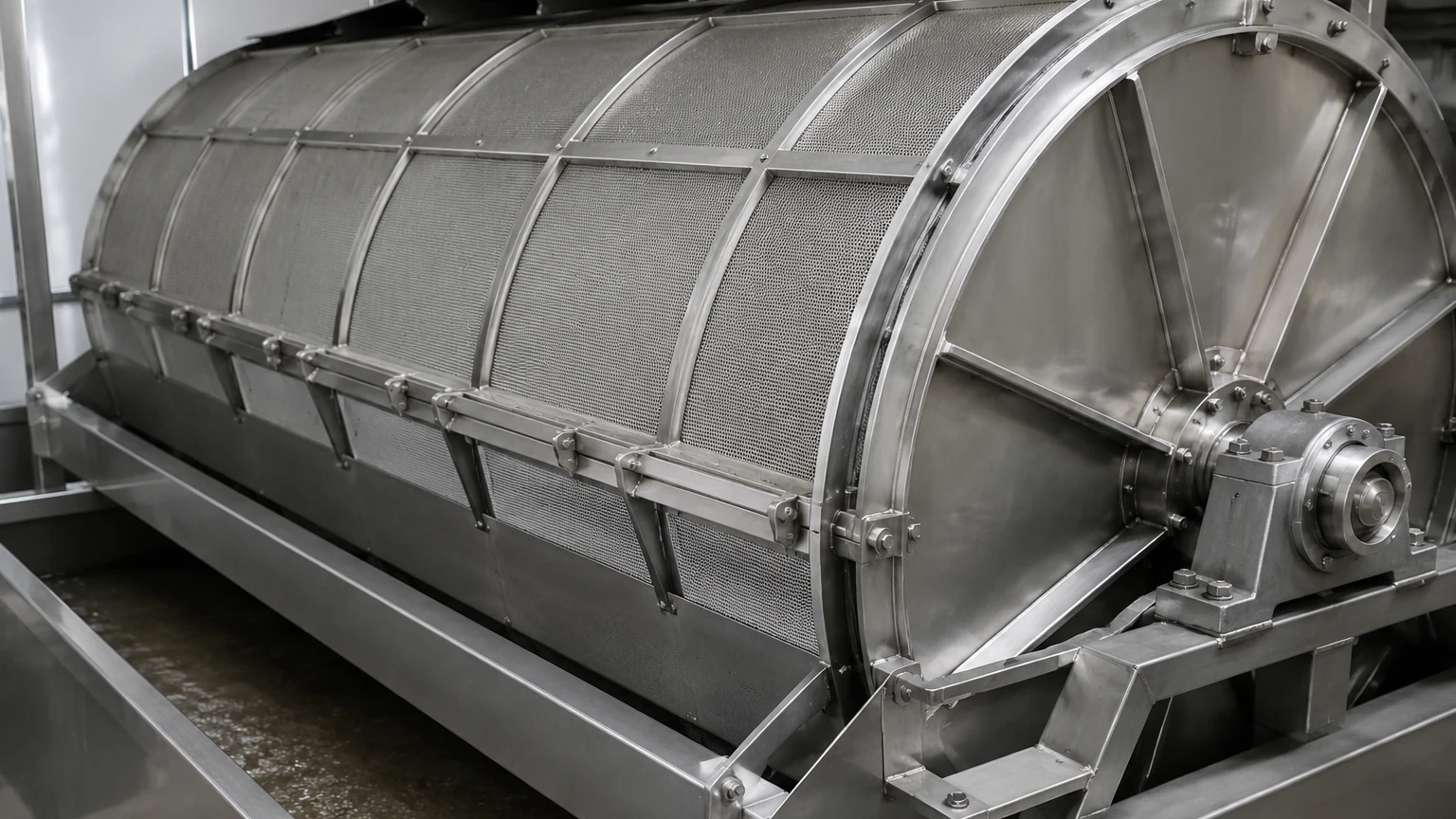
Example of Rotary Vacuum Filter
In the landscape of industrial liquid-solid separation, the rotary vacuum filter (RVF) stands as a cornerstone technology for continuous processing. Designed to handle large volumes of slurry with high solids content, these systems rely on a combination of pressure differentials and specialized filter media to achieve efficient dewatering. For engineers and procurement teams, understanding a specific example of rotary vacuum filter configurations is essential for optimizing throughput and ensuring the longevity of the filtration equipment.
Kaifil, as a specialist in custom stainless steel filtration solutions, provides the high-precision wire mesh and metal components that serve as the critical interface in these vacuum systems. Selecting the right filter media is not merely a secondary concern; it is the primary factor determining filtration accuracy, cake discharge efficiency, and the total cost of ownership.
The Fundamentals of Rotary Vacuum Filtration Mechanics
A rotary vacuum filter operates on the principle of a rotating drum partially submerged in a slurry tank. As the drum rotates, a vacuum is applied to the interior, drawing liquid (filtrate) through a filter medium—often a stainless steel wire mesh or cloth—while solids are retained on the surface to form a "cake."
The cycle is typically divided into several distinct zones:
1. Cake Formation Zone: The submerged portion of the drum where the vacuum pulls the slurry against the filter media.
2. Washing Zone: After emerging from the tank, the cake may be sprayed with wash liquid to remove impurities or recover valuable solutes.
3. Drying Zone: The vacuum continues to pull air through the cake to reduce moisture content to the desired level.
4. Discharge Zone: The processed cake is removed from the drum surface using a scraper, string, or air blow-back mechanism.
For any example of rotary vacuum filter operation, the structural integrity of the filter support and the precision of the mesh are paramount. If the mesh deforms under vacuum pressure or clogs prematurely, the entire continuous process is compromised.
Practical Example of Rotary Vacuum Filter Configurations
There is no single "universal" rotary filter; rather, several configurations exist to meet the specific rheological properties of different slurries. Below are the most common industrial examples:
1. Rotary Drum Vacuum Filter (RDVF)
This is the most common example of rotary vacuum filter technology. It features a large horizontal drum divided into internal cells. Each cell is connected to a central vacuum valve. This design is highly versatile and is frequently used in wastewater treatment, mineral processing, and chemical manufacturing. The use of stainless steel wire mesh in RDVFs provides the necessary mechanical strength to withstand the constant rotation and scraper abrasion.
2. Rotary Precoat Vacuum Filter
When dealing with very fine solids or slimy slurries that would quickly blind a standard filter cloth, a precoat filter is utilized. A layer of diatomaceous earth or perlite is first deposited on the drum. As the drum rotates through the process slurry, a thin layer of the precoat is shaved off along with the filtered solids by a slowly advancing knife. This ensures a fresh filtration surface for every revolution.
3. Rotary Disc Vacuum Filter
Instead of a single drum, this configuration uses multiple vertical discs mounted on a horizontal shaft. This significantly increases the filtration area within a smaller footprint. It is an excellent example of rotary vacuum filter application in coal preparation and paper pulp processing where high-volume throughput is required but floor space is limited.
Engineering Components: The Role of Stainless Steel Wire Mesh
Regardless of the specific example of rotary vacuum filter used, the performance is dictated by the filter media. In demanding industrial environments, stainless steel wire mesh is the preferred material due to its thermal stability and chemical resistance.
Filtration Accuracy and Micron Ratings
Engineers must specify the micron rating based on the particle size distribution of the slurry. A mesh that is too coarse will allow "fines" to pass into the filtrate, potentially damaging downstream equipment or contaminating the product. Conversely, a mesh that is too fine will increase resistance, requiring higher vacuum levels and reducing the overall flow rate. Kaifil specializes in providing precision-woven wire mesh that maintains consistent pore sizes even under the mechanical stresses of a rotary system.
Material Selection: 304 vs. 316L
In chemical processing or food and beverage applications, material compatibility is non-negotiable. While Grade 304 stainless steel is suitable for many general industrial uses, Grade 316L is often required for its superior resistance to pitting and crevice corrosion, particularly in the presence of chlorides or acidic cleaning agents. For more information on material specifications, engineers can visit the Main Page to review technical data on alloy performance in filtration environments.
Key Performance Metrics and Selection Criteria
When evaluating an example of rotary vacuum filter for a new installation or an upgrade, technical professionals should focus on several key metrics to ensure the system meets production goals.
* Cake Moisture Content: The primary goal of most RVFs is dewatering. The efficiency of the vacuum system and the breathability of the filter mesh directly impact how dry the final cake will be.
* Filtrate Clarity: In pharmaceutical or fine chemical applications, the clarity of the liquid passing through the filter is often the most important metric. This requires high-precision metal filter components that do not allow bypass.
* Throughput (Flux) Rate: This is measured in gallons per minute per square foot (GPM/ft²). It is influenced by the rotational speed of the drum, the vacuum level, and the hydraulic resistance of the filter media.
* Cake Discharge Efficiency: If the cake sticks to the mesh, it reduces the effective filtration area for the next cycle. Selecting a mesh with the right surface finish or weave type (such as a plain dutch weave or twill weave) can significantly improve release characteristics.
Maintenance and Operational Considerations
One of the greatest advantages of a rotary vacuum filter is its ability to operate continuously. However, this continuity depends on a rigorous maintenance schedule, particularly regarding the filter media.
Cleaning and CIP (Clean-In-Place)
In industries like food processing or pharmaceuticals, the filter must be cleaned regularly to prevent bacterial growth or cross-contamination. Stainless steel mesh is ideal for these applications because it can withstand high-pressure washdowns, steam sterilization, and aggressive chemical cleaning cycles that would destroy synthetic fabrics.
Replacement Cycles
While stainless steel is exceptionally durable, the constant mechanical scraping and vacuum cycling will eventually lead to wear. Engineers should monitor the pressure drop across the filter. A steady increase in pressure drop, even after cleaning, usually indicates "blinding" (permanent clogging of the pores) and signals that the filter mesh or cartridge needs replacement. Using high-quality OEM components ensures that replacement intervals are maximized, reducing downtime.
Industrial Applications and Case Contexts
To better understand the practical utility, let us look at how a specific example of rotary vacuum filter serves different sectors:
* Chemical Processing: In the production of pigments or intermediate chemicals, RVFs are used to separate crystalline solids from mother liquors. The corrosion resistance of stainless steel components is vital here.
* Food and Beverage: Sugar refineries use rotary vacuum filters to separate lime mud from raw juice. The media must be food-grade and capable of handling high temperatures.
* Mining and Metallurgy: For dewatering mineral concentrates, the abrasive nature of the slurry requires heavy-duty wire mesh that can withstand physical impact without losing its structural integrity.
* Pharmaceuticals: Precise filtration of antibiotics or active pharmaceutical ingredients (APIs) requires high-purity metal filters that do not shed fibers or leach contaminants into the product.
Conclusion: Optimizing Your Filtration System
Choosing the right example of rotary vacuum filter is only the first step. To achieve optimal performance, the internal filtration components must be engineered to match the specific demands of the application. Factors such as chemical compatibility, mechanical strength, and filtration precision are the pillars of a successful industrial filtration strategy.
Kaifil provides the technical expertise and manufacturing capabilities to support these complex systems. By focusing on high-quality stainless steel wire mesh and custom filter cartridges, we help industrial operators reduce maintenance costs and improve product quality. Whether you are designing a new system or looking to optimize an existing one, understanding the nuances of filter media is essential. For detailed product specifications and to explore our range of custom solutions, please visit our Main Page.
