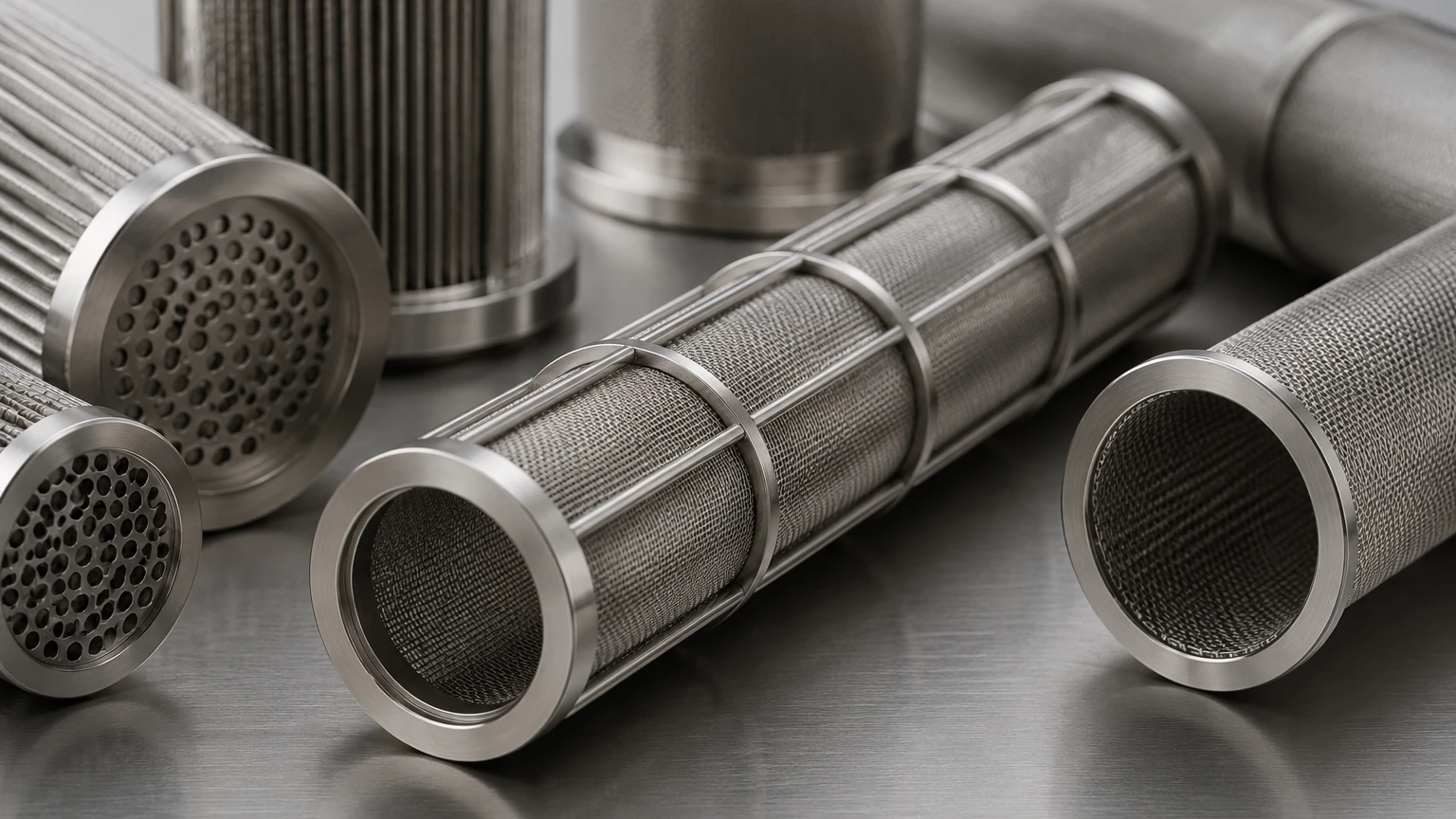
Fiber in Metal Tube Producer
In the landscape of high-precision industrial filtration, the role of a fiber in metal tube producer is critical for industries requiring extreme durability and fine particulate capture. These components, often utilizing sintered metal fiber media encapsulated within stainless steel tubes, represent a pinnacle of filtration engineering. Unlike standard disposable filters, these metal fiber solutions are designed to withstand high temperatures, corrosive chemicals, and significant pressure differentials while maintaining structural integrity. For engineering and procurement teams, understanding the technical nuances of these products is essential for optimizing system performance and reducing long-term operational costs.
Understanding Fiber in Metal Tube Technology
A fiber in metal tube assembly typically consists of non-woven stainless steel fibers that have been sintered together to form a uniform, porous filtration medium. This medium is then integrated into a metal tube, which serves as the structural housing or the primary flow path. The sintering process is vital; it bonds the fibers at their contact points through heat and pressure without the use of binders, ensuring a clean, robust structure that will not shed fibers into the filtrate.
The primary advantage of using metal fibers over traditional wire mesh or ceramic media is the high porosity—often reaching up to 80%. This high void volume allows for lower initial pressure drops and a significantly higher dirt-holding capacity. For a fiber in metal tube producer, the challenge lies in balancing the micron rating (the size of particles captured) with the permeability required for specific flow rates. These tubes are frequently used in polymer filtration, hydraulic systems, and aerospace applications where failure is not an option.
Engineering Considerations for Material Selection
When collaborating with a manufacturer like Kaifil, material selection is the first technical hurdle. The environment in which the filter operates dictates the alloy required.
1. 316L Stainless Steel: The industry standard for most applications due to its excellent corrosion resistance and mechanical strength at elevated temperatures.
2. 304 Stainless Steel: Suitable for less corrosive environments, offering a cost-effective solution for food and beverage or general industrial water treatment.
3. Specialty Alloys: For extreme chemical processing, producers may utilize Hastelloy, Inconel, or Monel. These materials are chosen for their resistance to specific acids, chlorides, or high-temperature oxidation.
Engineers must confirm the chemical compatibility of both the fiber media and the tube housing. A mismatch can lead to galvanic corrosion or premature fatigue, especially in high-cycle hydraulic applications. A professional producer provides detailed material data sheets and can advise on the metallurgical properties best suited for the intended fluid dynamics.
Manufacturing Capabilities and Customization
A reliable fiber in metal tube producer must offer extensive customization. Industrial systems rarely conform to "off-the-shelf" dimensions. Customization options typically include:
* Dimensional Specifications: Precise control over the outer diameter (OD), inner diameter (ID), and overall length of the tube to fit existing housings.
* Filtration Ratings: Sintered metal fibers can provide absolute filtration ratings from as fine as 1 micron up to 100 microns or more.
* End Fittings: Custom machining of end caps, threaded connectors (NPT, BSP), or flange mounts to ensure a leak-proof integration into the system.
* Multi-layered Structures: In some cases, the fiber media is pleated to increase surface area or backed by a coarser wire mesh layer for added mechanical support under high-pressure backwashing.
Advanced manufacturing capabilities, such as TIG (Tungsten Inert Gas) welding and plasma welding, are used to join the filtration media to the tube and end fittings. These welding techniques ensure that the joints are as strong as the base metal, preventing bypass—a common failure point in lower-quality filtration components.
Key Performance Metrics for Industrial Filtration
To evaluate the output of a fiber in metal tube producer, engineers focus on several key performance indicators (KPIs):
1. Permeability and Pressure Drop
The permeability of the metal fiber determines how much fluid can pass through the tube at a given pressure. A high-quality producer calculates the clean pressure drop ($ΔP$) based on the fluid viscosity and flow rate. Minimizing this drop is essential for reducing the energy consumption of pumps and compressors.
2. Dirt-Holding Capacity (DHC)
DHC refers to the amount of contaminant the filter can retain before the pressure drop reaches a terminal level, necessitating cleaning or replacement. Because of the random, three-dimensional structure of sintered fibers, these tubes offer superior DHC compared to surface-loading media like plain square weave wire mesh.
3. Bubble Point Pressure
This is a standard test used by producers to verify the maximum pore size and the integrity of the filter. By submerging the tube in a liquid and increasing air pressure until bubbles appear, the manufacturer can confirm that the filtration rating meets the specified absolute micron level.
Applications Across Demanding Industries
The versatility of fiber in metal tube components makes them indispensable across several sectors:
* Chemical and Petrochemical: Used for the filtration of aggressive solvents, catalysts, and high-temperature polymers. The ability to withstand thermal shock is a primary reason for selecting metal fiber tubes over ceramic alternatives.
* Pharmaceutical and Biotechnology: In these sectors, the focus is on cleanability and the absence of media migration. Sintered metal fibers provide a stable, non-shedding surface that can be sterilized via autoclaving or SIP (Steam-in-Place) processes.
* Food and Beverage: Used for steam filtration and the removal of particulates from edible oils and syrups. Compliance with food safety standards is a prerequisite for any producer in this space.
* Hydraulic and Aerospace: High-pressure hydraulic lines require filters that can handle surges without collapsing. The structural reinforcement provided by the metal tube housing ensures the fiber media remains intact under extreme stress.
Selecting a Reliable Fiber in Metal Tube Producer
Choosing a manufacturing partner involves more than just comparing price points. Technical professionals should vet potential producers based on their engineering support and quality assurance protocols.
When visiting the Main Page of a leading supplier, look for evidence of comprehensive testing facilities. A reputable producer should be able to provide documentation for ISO 9001 compliance, material traceability (MTRs), and performance testing results.
Furthermore, inquire about the producer's experience with OEM (Original Equipment Manufacturer) projects. A producer that understands how to integrate their components into larger systems can often provide valuable design feedback that simplifies the assembly process and reduces the total part count. For instance, Kaifil’s expertise in custom stainless steel filtration allows them to develop components that are optimized for both performance and manufacturability.
Total Cost of Ownership and Maintenance
While the initial investment in a fiber in metal tube is higher than that of a polymer-based filter, the total cost of ownership (TCO) is often lower. This is primarily due to the cleanability of metal media.
Methods for cleaning include:
* Ultrasonic Cleaning: Effective for removing fine particulates lodged deep within the fiber matrix.
* Chemical Cleaning: Using surfactants or acids to dissolve organic or inorganic scaling.
* Backwashing/Backpulsing: In automated systems, the flow is reversed to dislodge the filter cake, extending the interval between manual cleanings.
By selecting a durable fiber in metal tube, facilities reduce the waste associated with disposable cartridges and minimize the downtime required for filter change-outs. A producer that provides clear maintenance guidelines and cleaning protocols helps ensure the longevity of the component, which can often last for several years in continuous operation.
Conclusion
The selection of a fiber in metal tube producer is a strategic decision that impacts the efficiency, safety, and reliability of industrial processes. By focusing on technical specifications such as material grade, micron rating, and structural integrity, engineering teams can secure filtration solutions that meet the most rigorous demands. As industries move toward more sustainable and efficient operations, the role of high-performance, cleanable metal filtration media will only continue to grow. For those seeking specialized guidance and high-quality manufacturing, reviewing the available Main Page resources is the first step toward optimizing industrial filtration performance.