


Filter Centrifuge Tubes
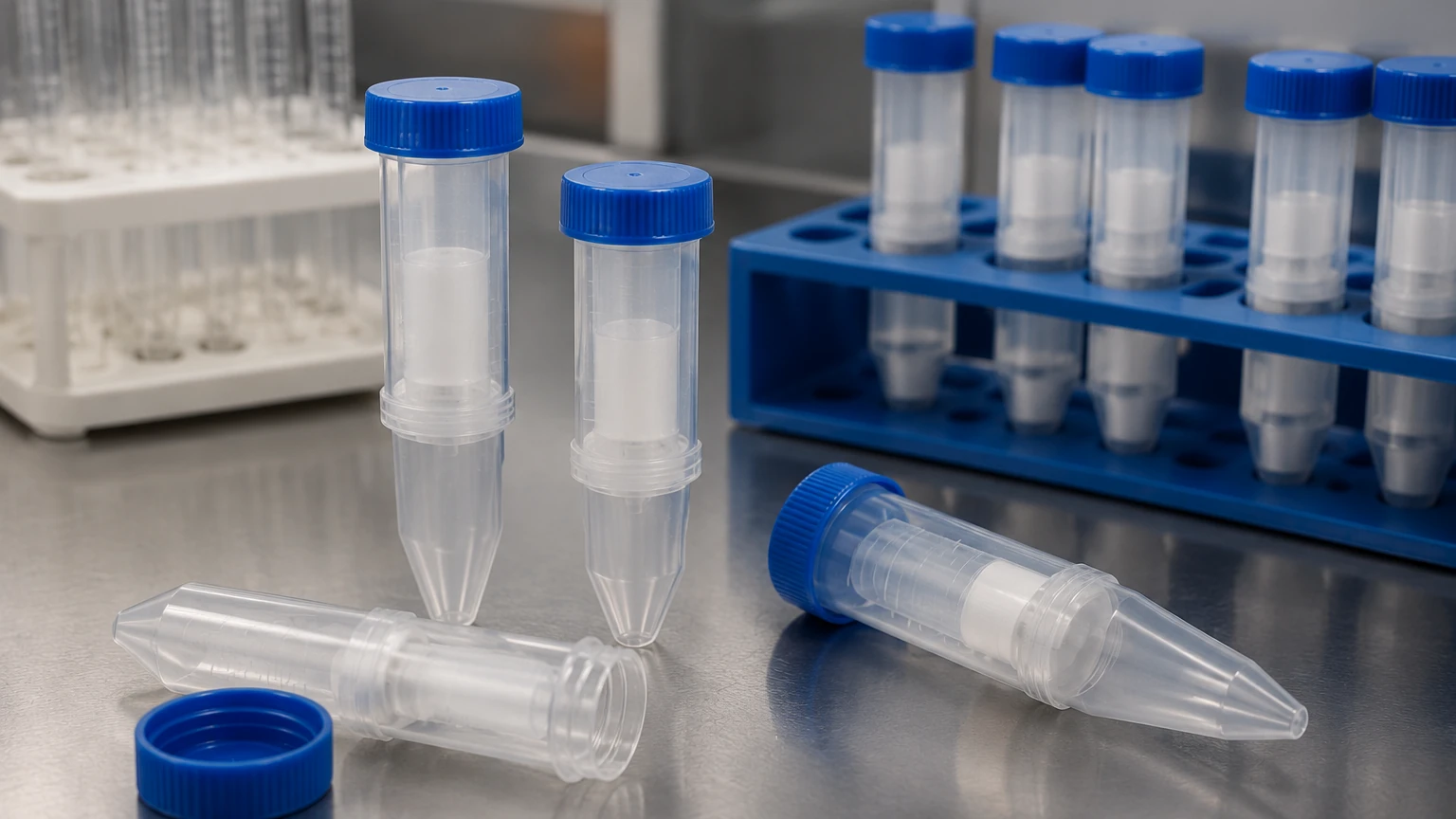
In the landscape of industrial separation and laboratory processing, filter centrifuge tubes represent a critical intersection of centrifugal force and membrane or mesh filtration technology. These specialized components are engineered to facilitate the rapid separation of solids from liquids, the concentration of solutes, or the clarification of complex chemical mixtures. Unlike standard centrifuge tubes that rely solely on sedimentation rates, filter centrifuge tubes incorporate a physical barrier—typically a precision-engineered mesh or membrane—that allows for highly specific particle size exclusion under high gravitational loads.
For engineers and procurement professionals in sectors such as pharmaceutical manufacturing, chemical processing, and biotechnology, selecting the correct filtration media within these tubes is paramount to process efficiency and product purity. As a manufacturer specializing in high-performance metal filtration, Kaifil provides the technical expertise required to navigate the complexities of industrial-grade filtration components. To explore a comprehensive range of custom filtration solutions, professionals can visit the Main Page for detailed product specifications and application support.
Understanding the Mechanics of Centrifugal Filtration
Centrifugal filtration operates on the principle of enhancing the pressure differential across a filter medium using centrifugal acceleration. In a standard gravity-fed or vacuum filtration setup, the flow rate is limited by atmospheric pressure or the weight of the fluid column. In contrast, filter centrifuge tubes utilize the high-speed rotation of a centrifuge to generate Relative Centrifugal Force (RCF), which can exceed several thousand times the force of gravity.
When a sample is placed in a filter centrifuge tube, the RCF forces the liquid phase (the filtrate) through the filter medium while the solid phase (the retentate) is retained on the surface or within the structure of the filter. This process is particularly effective for:
1. Desalting and Buffer Exchange: Removing low-molecular-weight impurities from larger macromolecular solutions.
2. Sample Concentration: Reducing the volume of a dilute sample while retaining the target analytes.
3. Clarification: Removing cellular debris, precipitates, or catalyst particles from a liquid carrier.
From an engineering perspective, the efficiency of this process is governed by the Darcy-Weisbach equation adapted for centrifugal fields, where the pressure drop is a function of the angular velocity, the radius of the centrifuge rotor, and the permeability of the filter mesh.
Material Selection for Industrial Filter Centrifuge Tubes
While many laboratory-scale filter centrifuge tubes utilize polymer-based membranes (such as PES, PVDF, or PTFE), industrial B2B applications often demand the durability and chemical resistance of stainless steel. Kaifil specializes in the production of stainless steel wire mesh and sintered metal components that serve as the functional core of high-end centrifugal separation systems.
Stainless Steel 304 and 316L
For most industrial applications, Type 304 and Type 316L stainless steel are the materials of choice. 316L, in particular, offers superior resistance to pitting and crevice corrosion in chloride-rich environments, making it ideal for pharmaceutical and chemical processing where aggressive cleaning agents or corrosive solvents are present.
Advantages Over Polymers
Compared to plastic-based filter inserts, stainless steel filter centrifuge components offer several distinct advantages:
* Thermal Stability: Stainless steel can withstand extreme temperatures, allowing for the processing of hot samples or high-temperature sterilization (autoclaving) without structural deformation.
* Mechanical Strength: Under high RCF (often exceeding 15,000 x g), polymer membranes can rupture or compress, leading to a loss of filtration accuracy. Stainless steel mesh maintains its pore geometry even under intense mechanical stress.
* Chemical Compatibility: Stainless steel is inert to a wider range of organic solvents, acids, and bases compared to common plastics like polypropylene or polycarbonate.
Key Engineering Specifications and Performance Metrics
When specifying filter centrifuge tubes for industrial use, engineers must evaluate several technical parameters to ensure the component meets the rigorous demands of the application.
Micron Rating and Pore Distribution
The micron rating defines the size of particles the filter is capable of retaining. In centrifugal filtration, the "absolute" vs. "nominal" rating is critical. An absolute rating ensures that 99.9% of particles above a certain size are captured. For high-precision tasks, such as removing fine catalyst particles, a tightly controlled pore distribution in a stainless steel Dutch weave mesh is often required.
Relative Centrifugal Force (RCF) Rating
Every filter centrifuge tube assembly has a maximum RCF limit. Exceeding this limit can result in the bypass of the filter medium or catastrophic failure of the tube structure. Industrial-grade tubes must be rated for the specific G-forces required to overcome the viscosity of the fluid being processed.
Effective Filtration Area (EFA)
The EFA determines the throughput capacity of the tube. A larger surface area allows for faster processing times and reduces the likelihood of "blinding" (clogging) of the filter. Engineering designs often incorporate pleated mesh structures to maximize EFA within the constrained diameter of a standard centrifuge bucket.
Holdup Volume
In high-value pharmaceutical applications, minimizing the holdup volume—the amount of liquid retained within the filter media after processing—is essential for maximizing product yield. Precision-engineered metal filters can be designed with minimal dead space to address this requirement.
Applications in High-Precision Industrial Processes
Filter centrifuge tubes are utilized across a diverse spectrum of industries, each with unique performance requirements.
Pharmaceutical and Biotechnology
In the production of biologics and vaccines, centrifugal filters are used for protein concentration and the removal of cell debris. The ability to sterilize stainless steel components via Steam-in-Place (SIP) or autoclaving makes them invaluable for maintaining aseptic conditions.
Chemical and Petrochemical Processing
Engineers often use centrifugal filtration to recover expensive catalysts from reaction mixtures. The robust nature of metal filter centrifuge tubes allows for the handling of abrasive particles and aggressive chemical reagents that would degrade standard laboratory equipment.
Food and Beverage Industry
For the clarification of essential oils, flavorings, and concentrated extracts, filter centrifuge tubes provide a high-throughput solution that ensures clarity without stripping away the volatile compounds that define the product's sensory profile.
Customization and OEM Solutions for Specialized Filtration
Standard off-the-shelf filter centrifuge tubes often fail to meet the specific requirements of complex industrial workflows. This is where custom manufacturing and OEM capabilities become essential. Kaifil works closely with engineering teams to develop bespoke filtration components tailored to specific equipment and process parameters.
Customization options typically include:
* Bespoke Mesh Weaves: Selecting from plain, twill, or Dutch weaves to balance flow rate and filtration precision.
* Integrated Support Structures: Adding perforated metal backings to fine wire mesh to prevent deformation under high-pressure loads.
* Dimensional Tailoring: Designing filter inserts that fit proprietary centrifuge rotor geometries or specialized industrial centrifuges.
* Surface Treatments: Applying electro-polishing or specialized coatings to enhance corrosion resistance or reduce particle adhesion.
By focusing on these technical nuances, manufacturers can provide solutions that integrate seamlessly into existing production lines, improving both the reliability and the total cost of ownership of the filtration system.
Maintenance, Sterilization, and Long-Term Durability
One of the primary B2B considerations for choosing stainless steel filter centrifuge tubes over disposable plastic alternatives is the lifecycle cost. While the initial investment in metal filtration components is higher, the ability to clean and reuse these parts provides significant long-term savings and reduces environmental impact.
Cleaning Protocols
To maintain optimal flow rates and prevent cross-contamination, a robust cleaning protocol is necessary. Stainless steel filters are compatible with:
* Ultrasonic Cleaning: Using high-frequency sound waves in a cleaning solvent to dislodge particles trapped deep within the mesh.
* Chemical Cleaning: Utilizing caustic or acidic washes to dissolve organic or inorganic fouling.
* Backpulsing: Directing fluid flow in the reverse direction to clear the surface of the filter.
Durability and Fatigue
In a high-cycle industrial environment, the fatigue life of the filter medium is a critical factor. Engineers must monitor for signs of mesh fraying or structural weakening, particularly at the weld points where the mesh is joined to the tube body. High-quality manufacturing processes, such as vacuum brazing or precision TIG welding, ensure that these joints remain intact under repeated centrifugal stress.
Conclusion: Strategic Procurement of Filtration Components
Selecting the right filter centrifuge tubes involves more than just matching a micron rating to a particle size. It requires a deep understanding of fluid dynamics, material science, and the mechanical stresses of centrifugation. For B2B buyers and engineers, the focus should remain on technical performance, chemical compatibility, and the potential for customization to meet specific process goals.
As industrial processes become more refined, the demand for high-performance, durable filtration solutions continues to grow. By partnering with a specialized manufacturer like Kaifil, organizations can ensure they are utilizing components designed for the rigors of modern industry. For further information on custom stainless steel filtration products, including wire mesh filters and cartridges, please refer to the Main Page to connect with technical experts and explore tailored solutions for your filtration challenges.
