


Filter Compressor Air
In industrial environments, compressed air is often referred to as the "fourth utility," alongside electricity, water, and gas. It powers pneumatic tools, controls sensitive instrumentation, and facilitates complex manufacturing processes. However, atmospheric air is naturally contaminated with dust, water vapor, and hydrocarbons. When this air is compressed, the concentration of these contaminants increases significantly. To protect downstream equipment and ensure process integrity, it is essential to effectively filter compressor air.
For engineers and facility managers, selecting the right filtration system is not merely about choosing a part number; it involves understanding the fluid dynamics, material compatibility, and the specific air quality requirements of the application. This guide examines the technical aspects of compressed air filtration, focusing on how high-quality components, such as those found on the Kaifil Main Page, contribute to system efficiency and longevity.
Understanding Contaminants in Compressed Air Systems
To properly filter compressor air, one must first identify the types of pollutants present in the system. These typically fall into three categories: solid particulates, water (liquid and vapor), and oil (aerosols and vapors).
Solid Particulates
Atmospheric air contains millions of particles per cubic meter. In an industrial setting, this includes dust, pollen, and soot. Additionally, the compression process itself can introduce pipe scale and rust from the distribution piping. These solids are abrasive and can cause premature wear on pneumatic seals, valves, and motors.
Water and Moisture
When air is compressed, its ability to hold water vapor decreases. As the air cools post-compression, moisture condenses into liquid water. If not removed, this water leads to corrosion within the piping, washes away necessary lubrication in pneumatic tools, and can freeze in outdoor lines during winter months.
Oil and Hydrocarbons
In oil-lubricated compressors, a small amount of lubricant inevitably enters the air stream, known as "oil carryover." This oil can exist as liquid droplets, aerosols, or vapors. For industries like food and beverage or pharmaceuticals, even trace amounts of oil can lead to product contamination and costly recalls.
Key Filtration Technologies for Compressor Air
Effective filtration requires a multi-stage approach. No single filter can efficiently remove all types of contaminants. Instead, a series of filters with different mechanisms is employed.
Particulate Filters
Particulate filters are designed to remove solid dust and scale. These filters typically use a combination of surface filtration and depth filtration. Stainless steel wire mesh is a preferred material for pre-filtration stages because of its durability and ability to be cleaned. These filters capture larger particles through mechanical straining, preventing them from reaching more sensitive downstream components.
Coalescing Filters
Coalescing filters are perhaps the most critical components in a compressed air system. They are designed to remove liquid water and oil aerosols. The process works by forcing the air through a fine media—often a borosilicate micro-fiber or specialized stainless steel mesh—where small droplets collide and merge (coalesce) into larger drops. These drops then fall to the bottom of the filter housing to be discharged via a drain.
Adsorption Filters
For applications requiring the removal of oil vapors and odors, adsorption filters (typically containing activated carbon) are used. These do not mechanically strain the air but instead use chemical bonding to trap vapor molecules on the surface of the media. These are essential in breathing air applications and high-purity laboratory settings.
Engineering Considerations for Filter Selection
When specifying a system to filter compressor air, engineers must balance filtration efficiency with system performance. Several key metrics define the suitability of a filter for a specific industrial application.
Micron Rating: Absolute vs. Nominal
A common point of confusion in filter selection is the micron rating. A nominal rating refers to a filter's ability to retain a major weight percentage of particles of a certain size. An absolute rating, however, indicates that the filter will capture 99.9% or more of particles at that specific size. For critical applications, absolute-rated stainless steel cartridges are often required to ensure consistent air quality.
Pressure Drop ($ΔP$)
Every filter introduces a degree of resistance to the airflow, known as pressure drop. A high pressure drop forces the compressor to work harder to maintain the required downstream pressure. It is estimated that for every 2 PSI (0.14 bar) of pressure drop, the compressor's energy consumption increases by approximately 1%. Selecting filters with high-porosity stainless steel media can help minimize $ΔP$ while maintaining high filtration efficiency.
Flow Rate and Velocity
Filters must be sized based on the maximum flow rate of the compressor, usually measured in Standard Cubic Feet per Minute (SCFM) or cubic meters per minute (m³/min). If the air velocity through the filter media is too high, it can lead to "re-entrainment," where captured liquids are stripped back into the air stream, or it can cause structural damage to the filter element itself.
The Role of Stainless Steel in Industrial Air Filtration
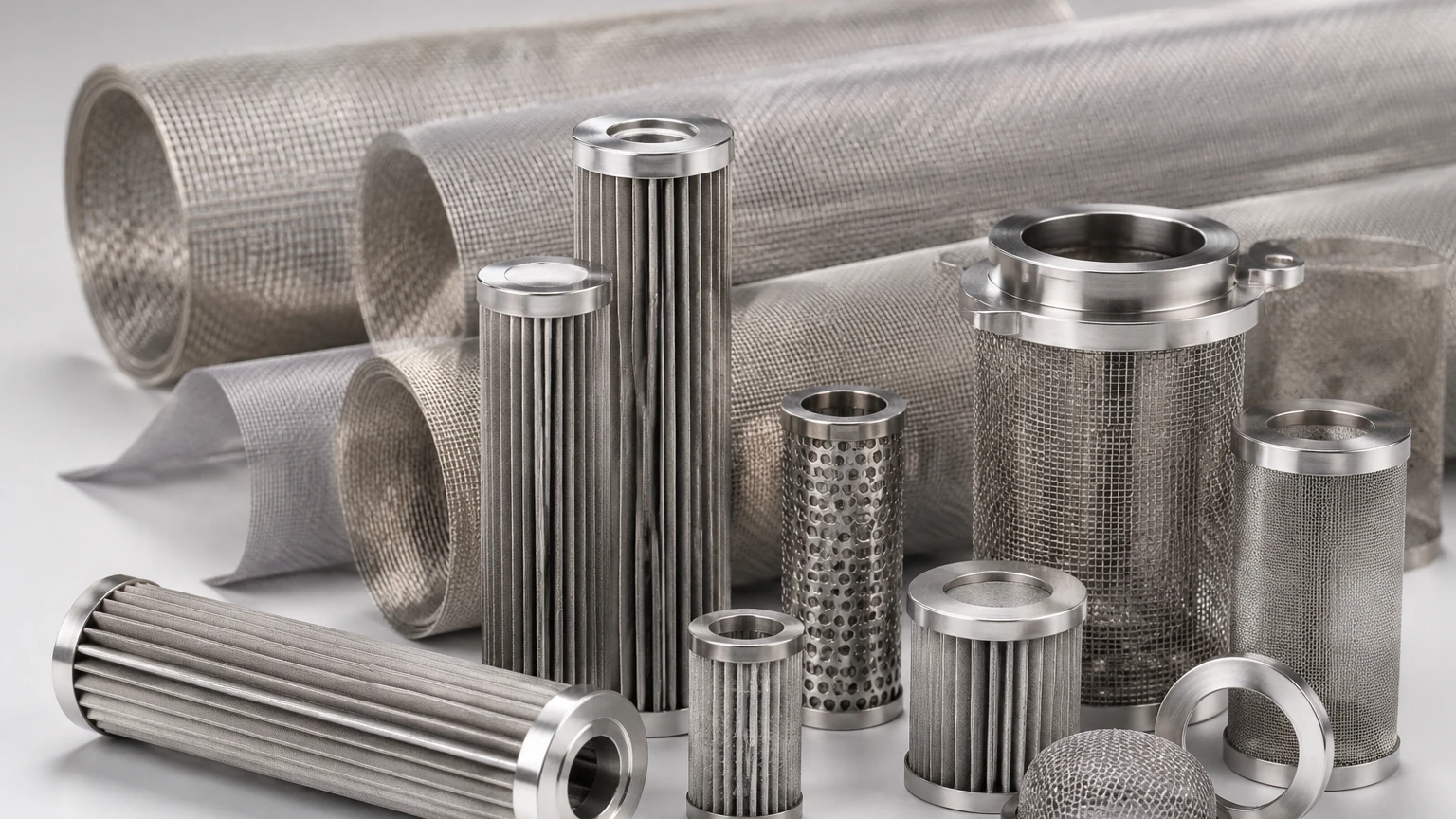
While many standard filters use plastic or paper media, demanding industrial environments often require stainless steel components. As a specialist in custom stainless steel filtration, Kaifil provides solutions that address the limitations of conventional materials.
Corrosion Resistance
Compressed air systems are inherently moist environments. Carbon steel or plastic components can degrade over time when exposed to a mix of water and synthetic compressor oils. Stainless steel (304 or 316L) provides superior resistance to corrosion, ensuring that the filter itself does not become a source of contamination.
Temperature and Pressure Stability
In certain industrial processes, compressed air may be heated or used in high-pressure environments where standard filter housings would fail. Stainless steel filter cartridges can withstand extreme temperatures and high differential pressures without deforming or shedding fibers into the air stream.
Cleanability and Sustainability
One of the primary advantages of stainless steel wire mesh filters is that they are often cleanable. Unlike disposable paper or glass fiber elements, stainless steel filters can be backwashed or ultrasonically cleaned, significantly reducing the total cost of ownership and the environmental impact of filter disposal.
Optimizing Efficiency and Reducing Total Cost of Ownership
To maintain an effective system to filter compressor air, facility managers must look beyond the initial purchase price. The total cost of ownership (TCO) includes the cost of the filter, the energy cost associated with pressure drop, and the labor costs for maintenance.
Monitoring Pressure Differential
Installing differential pressure gauges across filter housings is a best practice. These gauges provide a visual or electronic signal when the filter element is loaded with contaminants and needs to be cleaned or replaced. Operating a filter beyond its recommended pressure drop is one of the most common causes of wasted energy in industrial plants.
Regular Maintenance Cycles
Even the highest quality filters require maintenance. For coalescing filters, the elements should typically be replaced annually or when the pressure drop exceeds a certain threshold (usually 5-7 PSI). For cleanable stainless steel elements, a regular cleaning schedule should be established based on the particulate load of the specific environment.
Proper Drainage
Removing the liquids captured by filters is just as important as the filtration process itself. Automatic float drains or electronic timed drains should be checked daily to ensure they are not clogged. A failed drain can cause the filter housing to fill with liquid, leading to a total failure of the filtration system.
Customization Options for OEM Compressor Applications
Many industrial compressors require non-standard filtration components due to space constraints or unique operating parameters. Customization is a core strength of manufacturers like Kaifil, who work with engineers to develop bespoke solutions.
Tailored Dimensions and End Caps
Custom filter cartridges can be designed to fit existing housings, featuring specific end-cap configurations (such as NPT threads, O-rings, or flange mounts) to ensure a leak-proof seal. This is particularly useful for upgrading older compressor systems with modern, high-efficiency stainless steel media.
Layered Mesh Configurations
Depending on the specific contaminants, a filter may utilize multiple layers of stainless steel wire mesh with varying weave patterns. This "graded density" approach allows for high dirt-holding capacity and precise micron control, extending the time between maintenance intervals.
Conclusion
Achieving high-quality compressed air requires a technical understanding of the contaminants involved and the mechanical principles used to remove them. By selecting the appropriate micron ratings, considering the impact of pressure drop, and utilizing durable materials like stainless steel, industrial operators can protect their equipment and optimize energy efficiency.
For engineers seeking reliable, customized filtration components that meet the rigorous demands of modern industry, exploring the technical capabilities of a dedicated manufacturer is the next logical step. To learn more about specific material options and engineering support, visit the Kaifil Main Page to review product options and application support.
