


Filter Housing Stainless Steel
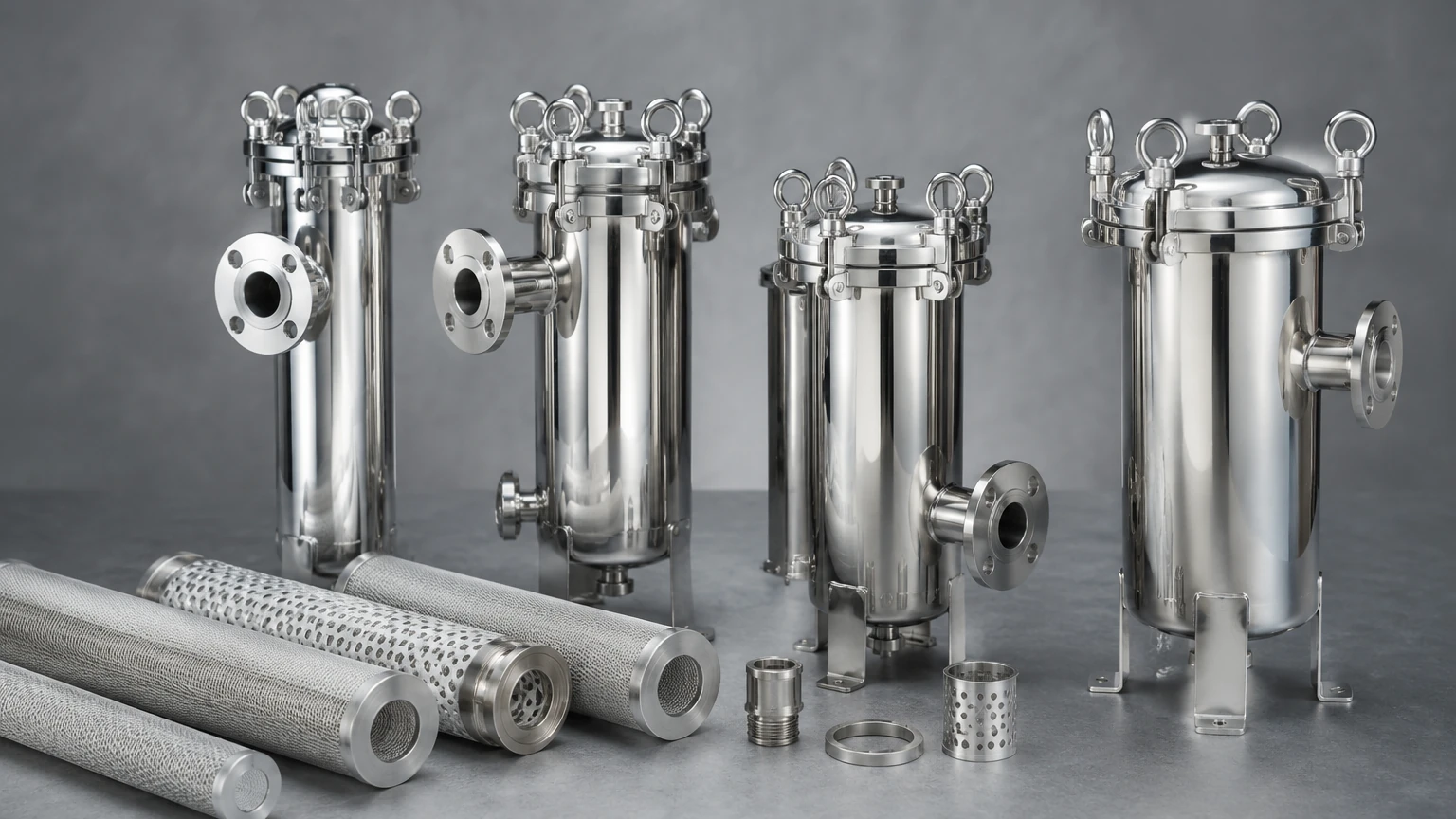
In the landscape of industrial process engineering, the filter housing stainless steel assembly serves as the critical containment vessel for filtration media. Its primary function is to direct fluid flow through a filter element—such as a wire mesh cartridge or a sintered metal component—while maintaining structural integrity under varying pressures and temperatures. For engineers and procurement teams, selecting the appropriate housing is not merely a matter of sizing; it involves a complex evaluation of material science, fluid dynamics, and regulatory compliance.
Stainless steel is the preferred material for industrial filter housings due to its exceptional mechanical strength and resistance to corrosion. Unlike plastic or carbon steel alternatives, a filter housing stainless steel unit can withstand aggressive chemical environments, high-pressure surges, and extreme thermal cycles without compromising the purity of the filtrate. This article examines the technical specifications, design considerations, and selection criteria essential for integrating these components into professional filtration systems.
Material Grades and Chemical Compatibility
The performance of a filter housing stainless steel unit is fundamentally dictated by the grade of alloy used in its construction. The two most prevalent grades in industrial filtration are Grade 304 and Grade 316L.
Grade 304 Stainless Steel
Grade 304 is an austenitic alloy containing chromium and nickel. It offers excellent corrosion resistance for general-purpose applications, such as water treatment, light chemicals, and food processing where chloride concentrations are low. It is a cost-effective solution for environments that do not face extreme oxidative stress.
Grade 316L Stainless Steel
Grade 316L (low carbon) is the industry standard for demanding applications. The addition of molybdenum (typically 2-3%) significantly enhances its resistance to pitting and crevice corrosion, particularly in chloride-rich environments or acidic conditions. The "L" designation indicates low carbon content, which minimizes carbide precipitation during welding, thereby preserving the alloy's corrosion resistance at the weld joints. This grade is mandatory for pharmaceutical, marine, and high-purity chemical processing.
Surface Treatments and Passivation
Beyond the base alloy, the surface finish of the housing impacts its longevity and performance. Industrial housings may undergo pickling and passivation to remove surface contaminants and restore the protective oxide layer. In sanitary applications, electropolishing is often employed to achieve a specific Roughness Average (Ra), reducing the surface area where bacteria or particulates can adhere.
Structural Design and Pressure Ratings
Filter housings are classified as pressure vessels and must be engineered to withstand the maximum operating pressure (MOP) of the system. Design codes, such as ASME Section VIII, provide the framework for calculating wall thickness, flange ratings, and weld integrity.
Pressure Drop (ΔP) Considerations
The total pressure drop across a filtration system is the sum of the pressure drop across the housing and the pressure drop across the filter element. An efficiently designed filter housing stainless steel unit features optimized internal flow paths to minimize turbulence and parasitic pressure loss. Engineers must calculate the "Clean Pressure Drop" to ensure the system pump can maintain the required flow rate even as the filter element begins to load with contaminants.
Closure Mechanisms
The method used to seal the housing lid is a critical safety and operational factor. Common closure types include:
* Swing Bolt Closures: Ideal for high-pressure applications and frequent element changes. They provide a robust, high-torque seal.
* V-Band Clamps: Used in lower-pressure systems where quick access is required. They are lightweight and economical.
* Threaded Caps: Typically found on small, single-cartridge housings for low-flow applications.
Sanitary vs. Industrial Configurations
The internal architecture of a filter housing stainless steel assembly varies significantly depending on the industry.
Industrial Filter Housings
Industrial-grade housings focus on durability and high dirt-holding capacity. They often feature NPT or flanged connections and may have internal support structures for heavy-duty wire mesh baskets. These are commonly used in hydraulic systems, cooling water loops, and bulk chemical transfer.
Sanitary Filter Housings
In the pharmaceutical and food and beverage sectors, housings must adhere to sanitary design principles. This includes the absence of "dead legs" (areas where fluid can stagnate), rounded internal corners for easy cleaning, and Tri-Clamp or hygienic flange connections. These housings are designed to be compatible with Clean-in-Place (CIP) and Steam-in-Place (SIP) protocols, ensuring that the entire system can be sterilized without disassembly.
Seal and Gasket Selection
While the housing body is stainless steel, the integrity of the filtration system depends on the elastomeric seals. The choice of gasket material must be compatible with both the process fluid and the operating temperature. Common materials include:
* Buna-N (Nitrile): Suitable for oils, water, and general industrial fluids at moderate temperatures.
* EPDM: Excellent for steam, water, and polar solvents; widely used in food and beverage applications.
* Viton (FKM): High-temperature resistance and broad chemical compatibility, especially with hydrocarbons and acids.
* PTFE (Teflon): Virtually inert to all chemicals but offers less elasticity, often requiring specialized housing grooves.
Sizing and Flow Dynamics
Correctly sizing a filter housing stainless steel unit requires more than matching the pipe size. Engineers must evaluate the flux—the rate of flow per unit area of the filter media—and the viscosity of the fluid.
Flow Velocity
High flow velocities within the housing can lead to erosion of the stainless steel surfaces over time and can cause "channeling" through the filter media. Most industrial designs aim for a velocity that maintains laminar flow where possible, especially near the inlet and outlet ports.
Multi-Round vs. Single-Round Housings
For high-flow applications, a multi-round housing containing several filter cartridges in parallel is used. This configuration reduces the footprint of the filtration station and allows for higher total flow rates while keeping the velocity through each individual element within optimal limits. When selecting a multi-round housing, the internal manifold design is crucial for ensuring even distribution of fluid across all elements.
Integration with Filter Elements
The housing and the filter element must work in perfect synchrony. As a manufacturer of precision filtration components, Kaifil emphasizes the importance of the interface between the housing's internal seat and the element's end cap. A poor fit at this junction allows "bypass," where unfiltered fluid escapes around the element, rendering the entire process ineffective.
Whether using pleated stainless steel cartridges or wedge wire screens, the housing must provide sufficient clearance for the element to expand and contract under thermal stress. Furthermore, the housing should include features such as a spring-loaded cap or a tie-rod assembly to ensure the element remains seated during pressure surges or backwashing cycles.
Maintenance and Operational Safety
To ensure the longevity of a filter housing stainless steel system, a rigorous maintenance schedule is required. This involves monitoring the differential pressure across the unit. A sudden drop in ΔP may indicate a ruptured element or a failed seal, while a rapid increase suggests heavy loading or a change in upstream process conditions.
Venting and Draining
Every industrial filter housing should be equipped with a vent port at the highest point and a drain port at the lowest point. Venting is essential to remove trapped air during startup, which can cause air binding or water hammer. Draining allows for the safe removal of fluid before opening the housing for element replacement, minimizing operator exposure to potentially hazardous chemicals.
Safety Interlocks
In high-pressure or high-temperature systems, safety interlocks or pressure relief valves (PRVs) should be integrated into the housing assembly. These components prevent the housing from being opened while under pressure and protect the vessel from over-pressurization events that could lead to catastrophic failure.
Conclusion: Selecting the Right Solution
Choosing a filter housing stainless steel unit is a strategic decision that affects the efficiency, safety, and cost-effectiveness of an industrial process. By understanding the nuances of material grades, pressure vessel design, and flow dynamics, engineers can specify a housing that provides reliable service for decades.
For organizations seeking customized filtration solutions, working with a manufacturer that understands both the housing and the internal filtration media is essential. From material selection to precision manufacturing, the right partner ensures that every component meets the specific demands of the application. To explore technical specifications and customized filtration options, please visit our Main Page for comprehensive product details and engineering support.
