


Filter Mesh for Water
In industrial water treatment and processing, the selection of an appropriate filter mesh for water is a critical engineering decision that directly impacts system efficiency, equipment longevity, and operational costs. Whether the application involves cooling water systems, wastewater treatment, or high-purity process water in the pharmaceutical industry, the physical characteristics of the filtration medium determine how effectively contaminants are removed while maintaining required flow rates.
Stainless steel wire mesh is the preferred material for industrial water filtration due to its mechanical strength, corrosion resistance, and ability to be manufactured to precise tolerances. For technical professionals looking to optimize their systems, understanding the nuances of mesh geometry, material grades, and structural integrity is essential. To explore a full range of industrial filtration components, engineers can consult the Main Page for detailed product specifications.
Understanding the Technical Requirements of Filter Mesh for Water
Selecting a filter mesh for water requires a balance between filtration accuracy (micron rating) and hydraulic performance. In industrial environments, water often carries a diverse load of suspended solids, ranging from organic debris and sand to fine metallic particles. The mesh must act as a reliable barrier without causing excessive energy loss through pressure drops.
Micron Rating and Particle Retention
The micron rating of a mesh defines its ability to remove particles of a specific size. In water applications, this is typically categorized as either absolute or nominal. Absolute filtration ensures that 100% of particles larger than the specified micron size are captured, which is vital for protecting sensitive downstream components like high-pressure spray nozzles or reverse osmosis membranes. Nominal ratings, while useful for general pre-filtration, allow a percentage of particles to pass through based on the statistical distribution of the mesh openings.
Open Area and Flow Capacity
The percentage of open area in a filter mesh for water determines the flow capacity. A higher open area reduces the initial pressure drop across the filter, which translates to lower pumping costs. However, increasing the open area often involves using thinner wires, which can compromise the mechanical strength of the filter element under high-pressure conditions or during backwashing cycles. Engineers must calculate the required effective filtration area (EFA) to ensure the system can handle peak flow rates without exceeding the maximum allowable pressure differential.
Material Selection: Stainless Steel Grades for Industrial Water Systems
The chemical composition of the water being filtered is the primary driver for material selection. While several metals can be used, stainless steel remains the industry standard due to its passive oxide layer, which prevents rust and contamination.
Type 304 Stainless Steel
Type 304 is the most common grade used for general-purpose water filtration. It offers excellent durability and cost-effectiveness for applications involving municipal water, cooling tower loops, and mildly corrosive industrial fluids. It is suitable for environments where the chloride concentration is relatively low and the temperature is moderate.
Type 316L Stainless Steel
For applications involving brackish water, seawater, or water with high chloride content, Type 316L is required. The addition of molybdenum in 316L provides significantly better resistance to pitting and crevice corrosion. In the pharmaceutical and food and beverage industries, 316L is often preferred because its low carbon content minimizes carbide precipitation during welding, ensuring the integrity of the filter structure in sterile environments. When high-performance materials are required, reviewing the options on the Main Page can help procurement teams identify the correct grade for their specific chemical environment.
Weave Patterns and Their Impact on Filtration Efficiency
The method by which the wires are woven determines the pore shape, stability, and cleaning characteristics of the filter mesh for water. Different weave patterns are suited to different stages of the water treatment process.
Plain Weave
Plain weave is the simplest and most common structure, where each warp wire crosses over and under each weft wire. This creates a square aperture that provides a high open area and predictable flow characteristics. It is ideal for coarse filtration and pre-screening where high flow rates are a priority.
Twill Weave
In a twill weave, the wires are woven over two and under two, allowing for the use of heavier wires for a given mesh count. This results in a more robust mesh that can withstand higher mechanical loads. Twill weave is often used for finer filtration where a plain weave would be too delicate.
Dutch Weave (Plain and Twill)
Dutch weaves utilize different diameters for the warp and weft wires. This creates a dense, three-dimensional structure with small, curved paths for the water to travel through. Dutch weave mesh is excellent for fine filtration and high-pressure applications because it offers superior strength and a higher dirt-holding capacity compared to square mesh. It is frequently used in the manufacturing of stainless steel filter cartridges for precision water treatment.
Evaluating Flow Rates and Pressure Drop in Mesh Selection
A primary concern for engineers is the "clean pressure drop"—the resistance the filter mesh for water offers when it is first installed. As the mesh captures debris, the pressure drop increases. If the initial pressure drop is too high, the service interval between cleanings will be unacceptably short.
Factors Influencing Pressure Drop:
1. Mesh Count: Higher mesh counts (more wires per inch) generally lead to higher pressure drops because the total open area is reduced.
2. Fluid Velocity: Pressure drop increases with the square of the velocity. Sizing the filter housing to maintain a low approach velocity is critical for efficiency.
3. Viscosity and Temperature: While water viscosity is relatively low, significant temperature fluctuations can affect flow dynamics, especially in industrial cooling or heating loops.
To optimize these variables, engineers often specify multi-layered mesh structures. By sintering multiple layers of mesh together, a filter can achieve fine filtration on the surface while being supported by coarser, high-strength layers that provide structural rigidity without significantly increasing the pressure drop.
Durability and Maintenance: Maximizing the Lifespan of Water Filters
One of the greatest advantages of using a high-quality stainless steel filter mesh for water is its cleanability. Unlike disposable polymer filters, metal mesh can be cleaned and reused multiple times, significantly reducing the total cost of ownership.
Cleaning Methods
* Backwashing: This is the most common automated cleaning method. By reversing the flow of water, particles trapped on the surface of the mesh are dislodged and flushed out. The mesh must be strong enough to withstand the reverse pressure without deforming.
* Ultrasonic Cleaning: For fine meshes where particles may become deeply embedded in the weave, ultrasonic cleaning uses high-frequency sound waves to create cavitation bubbles that strip away contaminants.
* Chemical Cleaning: In systems where mineral scaling or organic bio-fouling occurs, the mesh can be treated with mild acids or alkaline solutions. The corrosion resistance of 316L stainless steel is particularly beneficial here.
Signs of Wear and Replacement
While durable, filter mesh is not permanent. Engineers should monitor for signs of "blinding" (permanent clogging) or mechanical fatigue. If the pressure drop does not return to the baseline after cleaning, or if there is evidence of wire displacement or fraying, the filter element should be replaced to prevent bypass or downstream contamination.
Customization Options for Specialized Water Treatment Applications
Industrial water systems are rarely "one size fits all." Customization is often necessary to integrate the filter mesh for water into existing infrastructure or to meet specific process requirements. Professional manufacturers like Kaifil specialize in tailoring these components to exact engineering drawings.
Customized Configurations
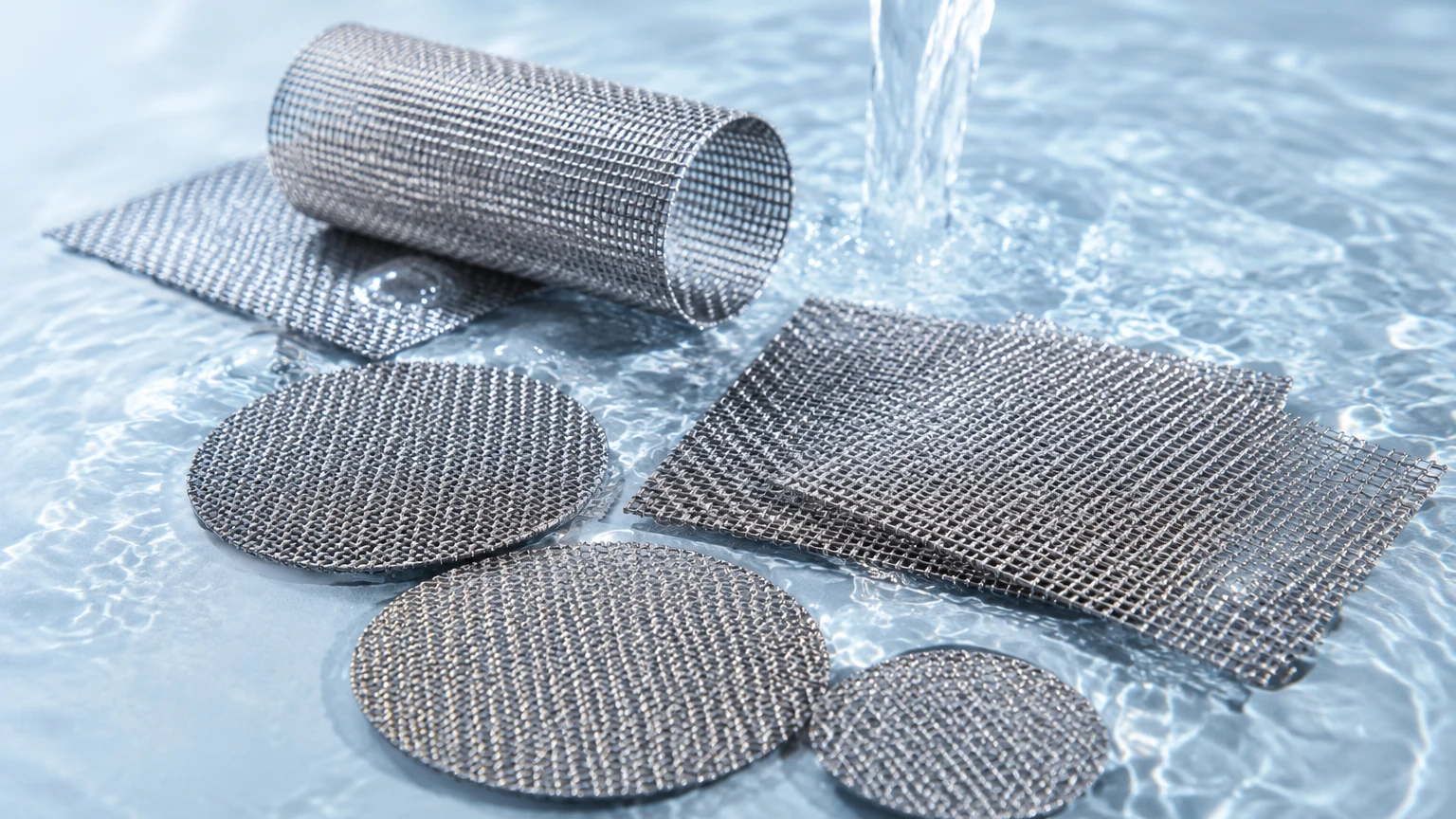
* Cylindrical and Conical Filters: Often used in pipeline strainers to provide a large surface area within a compact footprint.
* Pleated Mesh Cartridges: Pleating the mesh increases the filtration surface area by 3 to 9 times compared to a standard cylinder, allowing for much higher flow rates or longer service life in the same housing size.
* Reinforced Structures: For high-pressure hydraulic or water injection systems, mesh can be reinforced with perforated metal cores or outer shrouds to prevent collapse.
By working with a dedicated manufacturer, purchasing teams can ensure that the filtration components are optimized for both performance and manufacturability. Information regarding custom OEM capabilities and precision metal filter components can be found on the Main Page.
Conclusion: Selecting the Right Partner for Filtration Solutions
The performance of an industrial water system is only as reliable as its filtration components. Choosing the correct filter mesh for water involves a detailed analysis of particle size, flow requirements, chemical compatibility, and mechanical stress. Stainless steel mesh provides a robust, cleanable, and long-lasting solution that meets the rigorous demands of modern industry.
For engineers and procurement professionals, the focus should remain on technical precision and material integrity. By prioritizing high-quality manufacturing and customized designs, facilities can achieve efficient water treatment while minimizing downtime and maintenance costs. For more information on selecting the right filtration media and exploring custom engineering solutions, visit the Main Page to connect with technical experts in the field.
