


Filter Mesh Supplier
In industrial filtration, the performance of a system is fundamentally limited by the quality and precision of the filter media employed. Selecting a reliable filter mesh supplier is not merely a procurement task; it is a critical engineering decision that impacts process efficiency, product purity, and equipment longevity. For engineers and technical purchasing teams, understanding the technical nuances of wire mesh and the capabilities required of a manufacturer is essential to ensuring that filtration components meet the rigorous demands of chemical processing, pharmaceuticals, food production, and hydraulic systems.
As a professional manufacturer specializing in custom stainless steel filtration solutions, Kaifil provides high-performance components designed for precision and durability. Navigating the selection of a filter mesh supplier requires an evaluation of material science, weaving technology, and quality control protocols to ensure that the final product aligns with specific application requirements.
Technical Foundations: Material Selection and Weave Types
A primary responsibility of a filter mesh supplier is to provide guidance on the physical and chemical properties of the mesh. The choice of material and the configuration of the weave determine the filter’s resistance to corrosion, temperature, and mechanical stress.
Material Grades and Chemical Compatibility
Stainless steel is the industry standard due to its versatility. However, the specific grade must be matched to the environment:
- SS 304/304L: Suitable for general industrial applications where moderate corrosion resistance is required.
- SS 316/316L: The preferred choice for marine environments, chemical processing, and pharmaceutical applications due to the addition of molybdenum, which enhances resistance to chlorides and pitting.
- Specialty Alloys: For extreme conditions involving high temperatures or highly aggressive chemicals, suppliers may offer Monel, Inconel, or Hastelloy.
Weave Patterns and Filtration Characteristics
The weave pattern dictates the pore geometry and the mechanical strength of the mesh. A sophisticated filter mesh supplier should offer various configurations:
- Plain Weave: The simplest form where each warp wire crosses over and under each shute wire. It provides high open area and low pressure drop, ideal for coarse filtration.
- Twill Weave: Each warp wire passes over and under two shute wires. This allows for thicker wires in a given mesh count, increasing the strength of the mesh for finer filtration tasks.
- Dutch Weave (Plain and Twill): These weaves use a heavier warp wire and a finer shute wire, creating a dense, strong mesh with small, curved openings. This is essential for high-pressure applications and precision micron ratings.
- Reverse Dutch Weave: Often used in continuous plastic filtration (ribbon filters), where high mechanical strength in the warp direction is necessary.
Evaluating Manufacturing Capabilities and Quality Control
When vetting a filter mesh supplier, engineering teams must look beyond the catalog and assess the manufacturer’s internal quality standards. Industrial filtration requires consistency; a single defect in a large roll of mesh can compromise the integrity of an entire batch of filter cartridges.
Precision and Tolerances
Filtration accuracy is measured in microns. A reputable supplier must demonstrate the ability to maintain tight tolerances in both wire diameter and aperture size. For critical applications, nominal filtration (where a percentage of particles are captured) is often insufficient, and absolute filtration ratings are required. Suppliers should provide data on the maximum pore size to ensure no particles larger than the specified rating can pass through the media.
Testing and Validation
Technical professionals should inquire about the testing methods employed by the supplier. Standard quality checks include:
- Bubble Point Testing: Used to determine the pore size and integrity of the filter element.
- Air Permeability Testing: Measures the resistance to airflow, which is a proxy for the mesh's porosity and consistency.
- Material Traceability: Reliable suppliers provide Material Test Reports (MTRs) to confirm the chemical composition of the stainless steel, ensuring it meets ASTM or ISO standards.
Secondary Processing and Fabrication
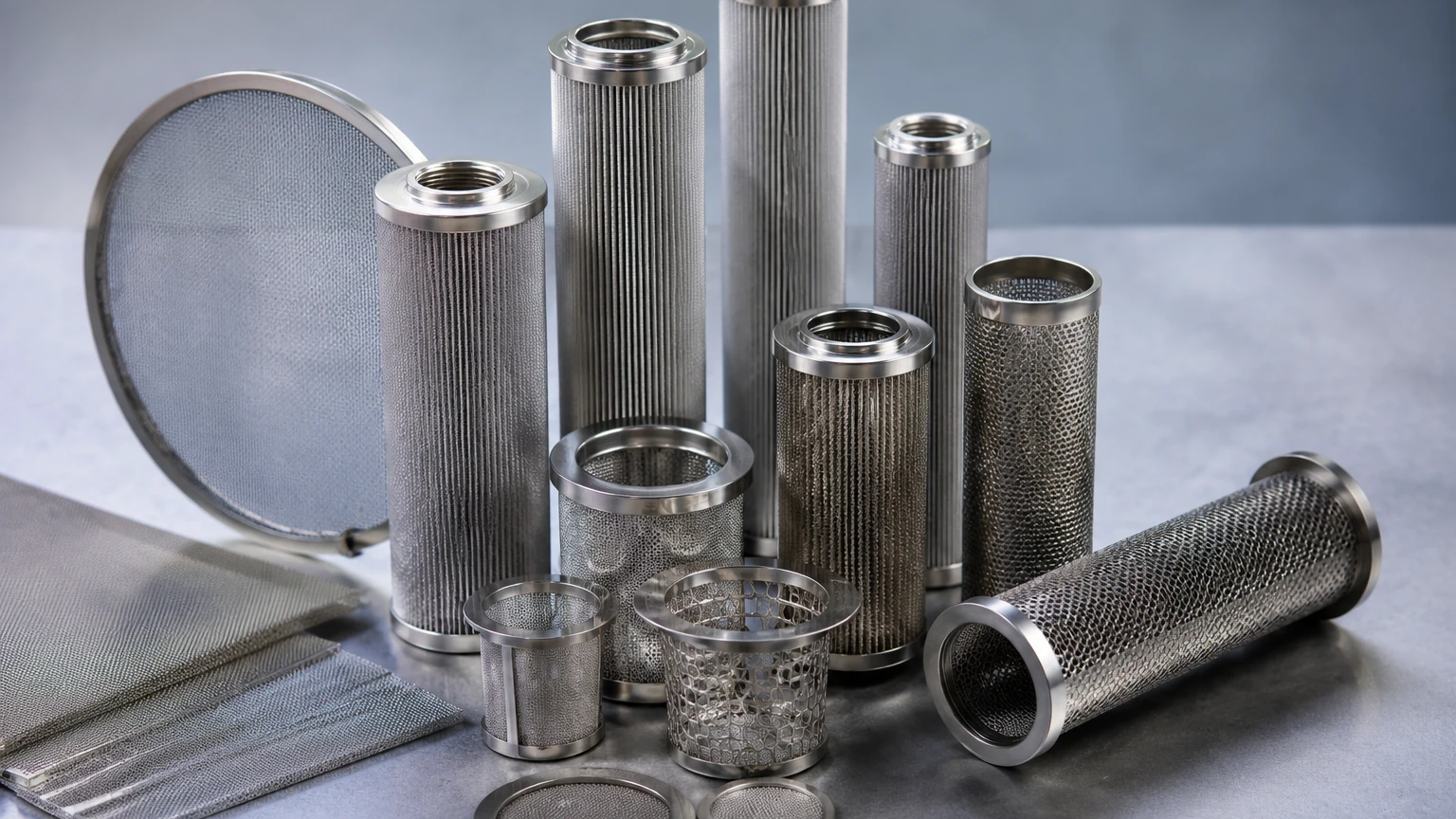
Many industrial applications require more than just raw mesh. A full-service filter mesh supplier like Kaifil offers integrated fabrication services, including:
- Pleating: Increasing the surface area of the filter to extend service life and reduce pressure drop.
- Sintering: Bonding multiple layers of mesh together through heat and pressure to create a rigid, high-strength porous material that does not require a support core.
- Welding and Assembly: Utilizing TIG, plasma, or ultrasonic welding to integrate mesh into stainless steel cartridges or custom housings without introducing contaminants.
Engineering Considerations for Filter Selection
To optimize a filtration system, engineers must collaborate with their supplier to balance competing performance metrics. A filter mesh supplier should assist in calculating the following factors:
Pressure Drop (Delta P)
The resistance to flow across the filter media is a critical design constraint. A high initial pressure drop reduces the available energy for the process and shortens the time between cleaning or replacement cycles. Suppliers help select a mesh with the optimal open area to minimize resistance while maintaining the required filtration efficiency.
Dirt-Holding Capacity
This refers to the amount of contaminant a filter can retain before the pressure drop reaches a terminal level. In depth-loading applications, multi-layered sintered mesh can significantly improve dirt-holding capacity compared to a single layer of woven wire cloth.
Mechanical Integrity and Fatigue
In hydraulic and high-pressure systems, the filter mesh is subject to significant mechanical stress and pressure pulses. The supplier must ensure the mesh is supported correctly—often using a perforated metal core or a coarser backup mesh—to prevent media migration or collapse.
Customization and OEM Support
Off-the-shelf solutions rarely meet the specific needs of complex industrial equipment. A strategic filter mesh supplier acts as an OEM partner, providing customized designs that fit unique spatial constraints and performance targets. Whether it is a specific diameter for a hydraulic line or a custom-shaped screen for a food processing centrifuge, the ability to prototype and scale production is a hallmark of a professional manufacturer.
For those seeking to explore specific configurations, you can Review product options and application support to understand how custom engineering can be applied to your specific filtration challenges. The Main Page provides a comprehensive overview of the materials and structures available for industrial use.
Common Risks in Procurement
Procuring filtration components involves several risks that can lead to system failure or increased operational costs. Identifying these risks early is part of a robust supplier evaluation process:
1. Material Substitution: Lower-grade stainless steel may look identical to SS316 but will fail prematurely in corrosive environments. Always demand material certification.
2. Inconsistent Pore Size: Poorly calibrated weaving looms can produce mesh with "streaks" or uneven apertures, leading to bypass where large particles escape the filter.
3. Poor Weld Quality: In fabricated cartridges, the seam weld is often the weakest point. Brittle or porous welds can crack under thermal expansion or mechanical vibration.
4. Lack of Technical Support: A supplier that only acts as a distributor may not understand the engineering implications of a specific application, leading to incorrect product selection.
Total Cost of Ownership (TCO) in Filtration
While the initial purchase price of a stainless steel filter mesh is higher than disposable synthetic media, the Total Cost of Ownership is often significantly lower in industrial settings. A filter mesh supplier helps realize these savings through:
- Cleanability: Stainless steel mesh can be cleaned via backwashing, ultrasonic baths, or chemical cleaning, allowing the component to be reused multiple times.
- Durability: High mechanical strength reduces the frequency of unplanned downtime caused by filter failure.
- Process Efficiency: Optimized mesh designs reduce energy consumption by maintaining lower pressure drops throughout the filtration cycle.
When evaluating a quote, purchasing teams should consider the expected lifespan and the cost of process downtime rather than just the unit price of the filter.
Conclusion: Choosing the Right Partner
The role of a filter mesh supplier extends far beyond the delivery of a physical product. In the B2B industrial landscape, the supplier must serve as a technical consultant capable of translating process requirements into precise metal components. By focusing on material integrity, manufacturing precision, and engineering support, companies can ensure their filtration systems operate at peak efficiency.
Kaifil remains committed to providing these high-performance solutions, leveraging advanced manufacturing to meet the most demanding industrial standards. For engineers tasked with maintaining system integrity, the choice of supplier is the first step toward long-term operational success. Understanding the variables of weave, material, and fabrication allows for a more informed selection process, ultimately protecting both the equipment and the end product.
