


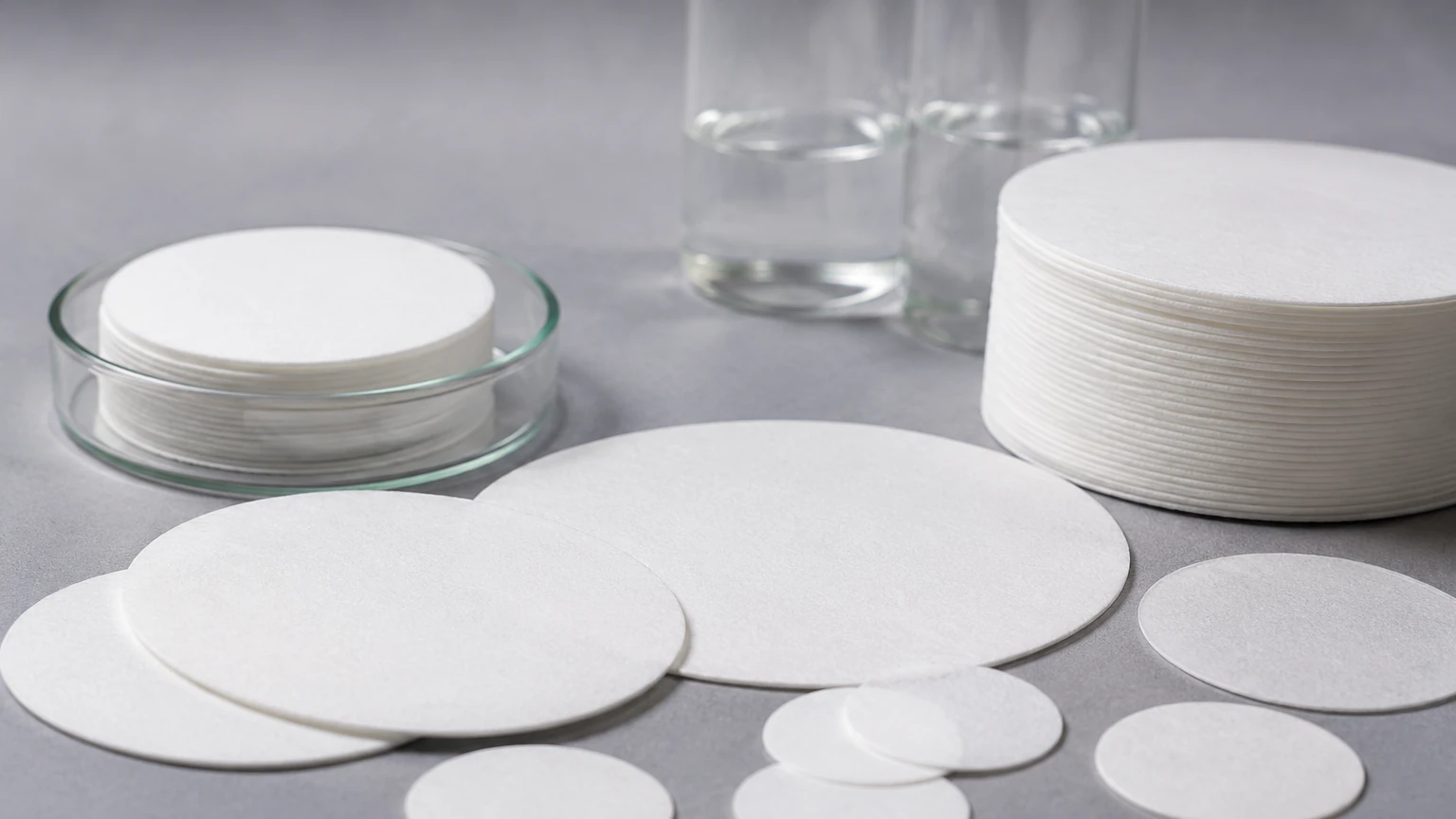
Filter Paper Disk
In the landscape of industrial and laboratory filtration, the filter paper disk remains a fundamental component for liquid-solid separation. While often associated with benchtop chemistry, its application extends into large-scale industrial processes where precision and material purity are paramount. For engineers and procurement specialists, selecting the correct filter paper disk requires a deep understanding of cellulose properties, pore size distribution, and the mechanical stresses of the specific application environment.
As industrial processes evolve toward higher temperatures and more aggressive chemical environments, the choice between traditional cellulose-based disks and advanced stainless steel filtration alternatives becomes a critical engineering decision. This guide examines the technical specifications of filter paper disks, their industrial utility, and the criteria used to determine when a transition to permanent metal filtration solutions is necessary.
Understanding the Fundamentals of Filter Paper Disks
A filter paper disk is a circular, semi-permeable barrier primarily composed of cellulose fibers derived from high-quality wood pulp or cotton linters. The manufacturing process involves a specialized papermaking technique that ensures uniform thickness and controlled porosity. Unlike standard paper, industrial-grade filter paper is treated to maintain structural integrity when saturated with solvents or water.
The primary function of the disk is to intercept particles while allowing the filtrate to pass through. This is achieved through three primary mechanisms: mechanical straining, adsorption, and depth filtration. Because the fibers create a complex, three-dimensional matrix, the filter paper disk can often capture particles smaller than its nominal pore size rating by trapping them within the internal tortuous path of the material.
Technical Classification: Qualitative vs. Quantitative Grades
For technical professionals, the most important distinction in filter paper selection is the classification between qualitative and quantitative grades. Each serves a distinct purpose in the analytical and production workflow.
Qualitative Filter Paper Disks
Qualitative disks are generally used for general-purpose filtration where the primary goal is to clarify a liquid or remove suspended solids. They are characterized by their varying degrees of thickness and flow rates. These are common in food and beverage production for removing precipitates or in environmental testing for initial sample preparation. While effective for separation, they are not intended for gravimetric analysis because they leave a measurable amount of ash upon combustion.
Quantitative (Ashless) Filter Paper Disks
Quantitative filter paper disks are manufactured using an acid-washing process (typically with hydrochloric or hydrofluoric acid) to reduce the ash content to less than 0.01%. This makes them essential for gravimetric analysis, where the filter and the retained precipitate are ignited in a furnace. Because the paper burns away almost entirely, the remaining mass represents only the filtered substance. In industrial quality control labs, these disks are vital for determining the concentration of specific minerals or contaminants in a batch.
Key Performance Metrics for Industrial Selection
When specifying a filter paper disk for an industrial system, engineers must look beyond the diameter. Several mechanical and physical properties dictate the efficiency of the filtration process:
* Pore Size (Micron Rating): Most paper disks are rated by nominal pore size. A "fine" grade might retain particles down to 2–3 microns, while "coarse" grades may only retain particles above 20 microns. It is important to note that as the filter cake builds up on the disk, the effective filtration becomes finer, though the flow rate decreases.
* Flow Rate and Permeability: This measures the speed at which a liquid passes through the clean filter medium. High-viscosity liquids require disks with higher permeability to prevent excessive pressure drops across the system.
* Wet Strength: In vacuum or pressure filtration, the disk is subjected to significant mechanical stress. Standard cellulose can tear when wet; therefore, "wet-strengthened" grades are often specified. These contain small amounts of chemically stable resins that reinforce the fiber bonds without leaching into the filtrate.
* Thickness and Basis Weight: Thicker papers provide higher loading capacity, meaning they can hold more solids before clogging. This is a critical factor in determining the replacement cycle and total downtime of a process.
Chemical Compatibility and Environmental Factors
The chemical environment is perhaps the most significant constraint for cellulose filter paper disks. While cellulose is naturally resistant to many organic solvents and dilute acids, it is highly susceptible to degradation in certain conditions:
1. pH Sensitivity: Strongly acidic or alkaline solutions can hydrolyze cellulose fibers, leading to a loss of structural integrity and potential contamination of the filtrate with paper fibers.
2. Temperature Limits: Standard cellulose disks are typically limited to operating temperatures below 120°C. Beyond this point, the fibers begin to char and lose their mechanical properties. For high-temperature applications, glass fiber disks or stainless steel mesh are required.
3. Solvent Interaction: While generally stable, some specialized industrial solvents can swell cellulose fibers, significantly reducing the flow rate and altering the pore structure.
Engineers must verify the compatibility of the filter medium with the entire range of chemicals present in the process stream, including cleaning agents used during system maintenance.
Transitioning from Disposable Paper to Permanent Stainless Steel Filtration
While the filter paper disk is cost-effective for low-volume or single-use applications, many industrial sectors are moving toward permanent metal filtration components. As a manufacturer specializing in these solutions, Kaifil provides high-performance alternatives that address the limitations of paper. For a comprehensive look at these industrial-grade options, engineers can visit the Main Page to evaluate how stainless steel wire mesh and sintered metal components compare to disposable media.
When to Switch to Stainless Steel
* High Pressure Requirements: In hydraulic systems or high-pressure chemical reactors, paper disks will burst. Stainless steel wire mesh disks offer the mechanical strength to withstand high differential pressures without deformation.
* Reusability and Sustainability: Disposable paper disks generate significant waste. Stainless steel filters can be cleaned via ultrasonic baths or back-flushing and reused indefinitely, reducing the long-term cost of ownership and environmental impact.
* Precision and Absolute Filtration: While paper provides nominal filtration, stainless steel mesh allows for absolute micron ratings. This is critical in pharmaceutical and semiconductor industries where even a single oversized particle can compromise the final product.
* Extreme Temperatures: For processes involving molten polymers or high-temperature steam, metal filtration is the only viable option.
Customization and Integration in Industrial Systems
In many industrial setups, the filter paper disk is not used in isolation but is part of a multi-stage filtration assembly. Customization is often required to ensure the disk fits perfectly within the housing to prevent bypass—a common failure mode where unfiltered liquid escapes around the edges of the disk.
At Kaifil, we specialize in creating custom stainless steel support structures that enhance the performance of various filter media. This includes perforated metal backing plates or fine wire mesh screens that provide the necessary rigidity for a filter paper disk to operate under higher vacuum pressures. By integrating precision-engineered metal components, the reliability of the entire filtration unit is significantly improved.
OEM requirements often necessitate unique diameters, center holes for spindle mounting, or multi-layered composite disks. Whether the application involves food processing or chemical refining, the geometry of the filtration component must be exact to maintain system pressure and flow characteristics.
Optimizing Filtration Efficiency and Lifecycle Management
To maximize the utility of a filter paper disk, maintenance and replacement protocols must be data-driven. Relying on visual inspection is often insufficient; instead, engineers should monitor the differential pressure (ΔP) across the filter housing. A sudden spike in ΔP indicates that the disk has reached its loading capacity and requires replacement.
Best Practices for Lifecycle Management:
* Pre-wetting: In many applications, pre-wetting the disk with a clean solvent or water before starting the flow helps to seat the paper against the support and prevents initial bypass.
* Staged Filtration: Using a coarse pre-filter can significantly extend the life of a fine filter paper disk by removing larger debris that would otherwise cause rapid surface blinding.
* Storage Conditions: Cellulose disks are hygroscopic. They must be stored in a cool, dry environment to prevent moisture absorption, which can weaken the fibers and encourage microbial growth in food-grade applications.
Conclusion
The filter paper disk remains a versatile and essential tool in the industrial filtration toolkit. However, its effective use depends on a rigorous selection process that accounts for pore size, chemical compatibility, and mechanical strength. As industrial demands increase, the integration of paper with robust stainless steel supports—or the complete transition to metal filtration—offers a path toward greater efficiency and reliability.
For technical teams looking to optimize their filtration processes, understanding the boundary between disposable and permanent media is the first step toward reducing downtime and ensuring product purity. By consulting with specialized manufacturers like Kaifil, engineers can develop customized solutions that meet the specific rigors of their industrial environment.
