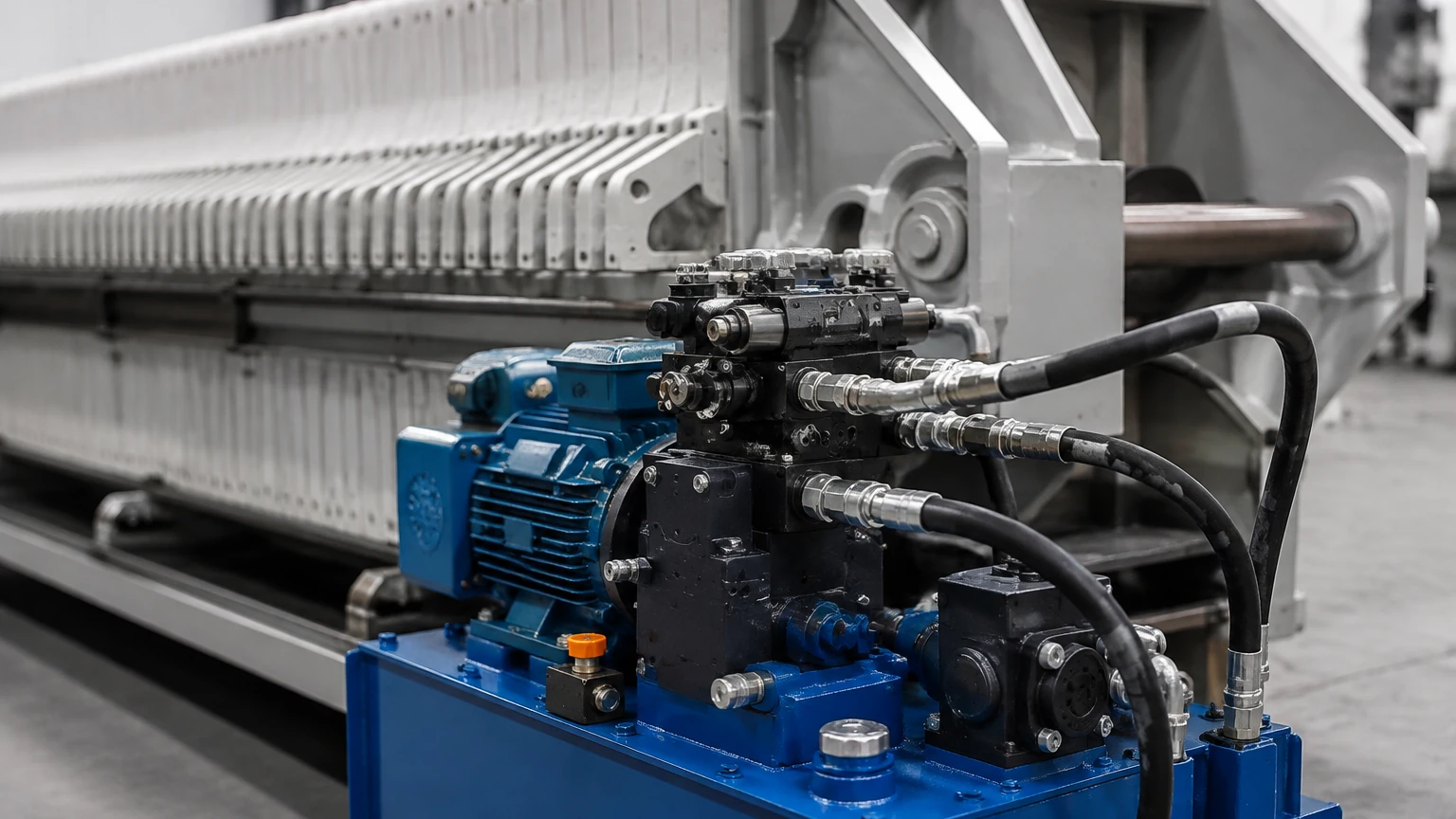
Filter Press Hydraulic System
In industrial liquid-solid separation, the filter press hydraulic system serves as the critical mechanical driver that ensures the structural integrity and sealing efficiency of the filter plate pack. Without a precisely engineered hydraulic circuit, the pressure generated by the feed pump would cause slurry bypass, lead to leaking between plates, and ultimately result in failed cake formation. For engineers and maintenance professionals, understanding the nuances of hydraulic design, component selection, and fluid cleanliness is essential for maintaining operational uptime in demanding sectors such as chemical processing, wastewater treatment, and mining.
Understanding the Role of Hydraulics in Filter Press Operations
The primary function of a filter press hydraulic system is to provide the clamping force necessary to counteract the internal pressure of the slurry being pumped into the filter chambers. This process typically occurs in three distinct phases: closing, clamping, and opening.
During the closing phase, the hydraulic cylinder extends to move the follower (the moving plate) toward the stationary head, compressing the plate pack. Once the plates are in contact, the system enters the clamping phase, where hydraulic pressure is increased to a specific set point—often ranging from 3,000 to 5,000 PSI depending on the press size. This force must exceed the total force exerted by the internal filtration pressure to prevent the plates from separating. Finally, after the filtration cycle and cake washing are complete, the hydraulic system retracts the cylinder to allow for cake discharge.
Engineering this system requires a balance between speed and force. High-flow pumps are often utilized for rapid plate closure to minimize cycle dead time, while high-pressure, low-volume pumps (or pressure-compensated systems) maintain the clamping force during the long filtration hours.
Key Components of the Hydraulic Circuit
A robust filter press hydraulic system is comprised of several integrated components, each designed to withstand high-pressure cycles and often harsh industrial environments.
1. Hydraulic Power Unit (HPU): The heart of the system, containing the reservoir, motor, and pump assembly. In modern industrial applications, these units are often designed with redundant pumps to ensure continuous operation.
2. Hydraulic Cylinder: Usually a heavy-duty, large-bore cylinder. For many filter presses, a single-acting cylinder with spring return or a double-acting cylinder for controlled retraction is employed. The rod is typically chrome-plated to resist corrosion and wear.
3. Directional Control Valves: These valves manage the flow of hydraulic fluid to extend or retract the cylinder. In automated systems, solenoid-operated valves are standard, allowing for integration with a PLC (Programmable Logic Controller).
4. Pressure Transducers and Gauges: These provide real-time feedback to the control system. If the hydraulic pressure drops below a safety threshold, the slurry feed pump must be automatically deactivated to prevent blowouts.
5. Accumulators: In some designs, hydraulic accumulators are used to maintain clamping pressure without the need for the pump to run continuously, reducing energy consumption and heat generation.
The Critical Importance of Hydraulic Fluid Filtration
The longevity of a filter press hydraulic system is directly tied to the cleanliness of the hydraulic fluid. Contamination is the leading cause of hydraulic component failure, leading to valve sticking, pump cavitation, and seal erosion. Because filter presses often operate in dusty or chemically aggressive environments, the filtration of the hydraulic oil itself is a primary engineering consideration.
High-performance filtration components, such as those found on the Kaifil Main Page, are essential for protecting the high-precision tolerances within the hydraulic circuit. Stainless steel wire mesh filters and precision metal cartridges are frequently specified for these systems due to their durability and ability to handle high-viscosity hydraulic oils.
When selecting filtration for a filter press hydraulic system, engineers should evaluate:
* Micron Rating: Most hydraulic valves require a cleanliness level of ISO 4406 18/16/13 or better, typically necessitating 10-micron to 25-micron absolute filtration.
* Beta Ratio: A high Beta ratio (e.g., βx[c] ≥ 1000) ensures that the filter is capturing a significant percentage of particles at the specified micron size.
* Material Compatibility: Stainless steel filter elements are preferred over cellulose or synthetic media in environments where the hydraulic fluid might be exposed to high temperatures or chemical vapors that could degrade standard media.
Engineering Selection Criteria and Design Considerations
When designing or specifying a hydraulic system for a filter press, several technical parameters must be confirmed to ensure the system is fit for purpose.
Clamping Force Calculation
The required clamping force is calculated based on the maximum internal filtration pressure multiplied by the effective area of the filter plate, plus a safety factor (typically 1.1 to 1.25). If a press operates at 100 PSI internal pressure and has a plate area of 1,000 square inches, the hydraulic system must provide significantly more than 100,000 pounds of force to maintain a seal.
Environmental Factors
In chemical processing or pharmaceutical applications, the hydraulic system may be exposed to corrosive cleaning agents or ambient vapors. In these instances, the use of stainless steel for fittings, valve manifolds, and filter housings is not just an upgrade but a necessity to prevent premature system failure. Furthermore, food-grade hydraulic fluids may be required, which have different lubrication and viscosity profiles than standard mineral oils, requiring adjustments to pump and seal specifications.
Heat Dissipation
Continuous operation of hydraulic pumps can generate significant heat. Excessive heat thins the oil, reducing its lubricating properties and potentially damaging seals. Engineers must determine if the reservoir surface area is sufficient for passive cooling or if an active air-cooled or water-cooled heat exchanger is required.
Common Risks and Failure Modes
Understanding potential failure points allows for the implementation of proactive maintenance strategies. In a filter press hydraulic system, common issues include:
* Pressure Drift: This occurs when the system cannot maintain the required clamping force during the filtration cycle. It is often caused by internal leakage in the directional control valve or a bypass in the cylinder seals.
* Silt-Lock: Fine particulate matter can settle in the small clearances of hydraulic spools, causing valves to seize. This highlights the need for high-quality suction and return-line filtration.
* Aeration and Cavitation: If the suction line or the suction filter is clogged, the pump may draw in air or create a vacuum, leading to noisy operation and rapid destruction of the pump internals.
* Seal Degradation: In many industrial settings, the hydraulic cylinder is exposed to the slurry. If the rod wipers fail, abrasive particles from the slurry can enter the hydraulic system, causing catastrophic wear on the cylinder barrel and seals.
Maintenance Protocols and Replacement Cycles
A structured maintenance schedule is the most effective way to ensure the reliability of the filter press hydraulic system.
1. Oil Analysis: Conducted bi-annually or quarterly, oil analysis checks for particle counts, water content, and additive depletion. This is a more accurate indicator of oil health than visual inspection.
2. Filter Element Replacement: Filter elements should be replaced based on differential pressure (DP) readings rather than fixed time intervals. However, a maximum limit (e.g., 6 months) should be established to prevent media fatigue. Using cleanable stainless steel mesh filters can reduce the total cost of ownership in high-contamination environments.
3. Cylinder Inspection: Monthly checks for rod scoring, leaks at the gland nut, and the condition of the rod wiper are essential. Any sign of hydraulic fluid weeping suggests that a seal kit replacement is imminent.
4. Valve Testing: Periodically checking the relief valve settings ensures that the system does not over-pressurize, which could damage the filter plates or the structural frame of the press.
Customization and OEM Solutions
For many specialized applications, standard off-the-shelf hydraulic components may not suffice. Customization often involves selecting specific materials for filtration components to handle unique fluid chemistries or extreme temperatures. Manufacturers like Kaifil provide OEM support by developing custom stainless steel filter cartridges and wire mesh components that integrate directly into the hydraulic power units of large-scale filter presses.
When purchasing or upgrading a system, engineers should confirm the compatibility of all filtration media with the specific hydraulic fluid in use. For example, while 304 stainless steel is suitable for many applications, 316L may be required for systems operating in coastal environments or near acidic chemical lines.
Before finalizing a specification, it is recommended to Review product options and application support to ensure that the chosen filtration components align with the intended pressure ratings and cleanliness requirements of the hydraulic circuit. By focusing on high-quality filtration and robust component selection, industrial operators can significantly extend the service life of their filter press hydraulic systems and minimize the risk of costly unscheduled downtime.