


Filter Press Plates
Filter press plates are the fundamental structural components of a filter press system, serving as the framework that supports filter media and facilitates the separation of solids from liquids under pressure. In industrial environments ranging from chemical processing to wastewater treatment, the selection of filter press plates directly impacts the efficiency of the filtration cycle, the dryness of the resulting filter cake, and the overall longevity of the equipment. For engineers and procurement specialists, understanding the technical nuances of plate design, material composition, and pressure ratings is essential for optimizing throughput and minimizing downtime.
As a critical element in the pressure filtration process, these plates must withstand significant mechanical stress while maintaining a precise seal to prevent leakage. The performance of a filter press is often limited by the weakest plate in the stack; therefore, engineering specifications must align with the specific chemical and thermal demands of the application. This guide examines the technical considerations necessary for selecting and maintaining filter press plates in high-demand industrial sectors.
Understanding the Functional Role of Filter Press Plates
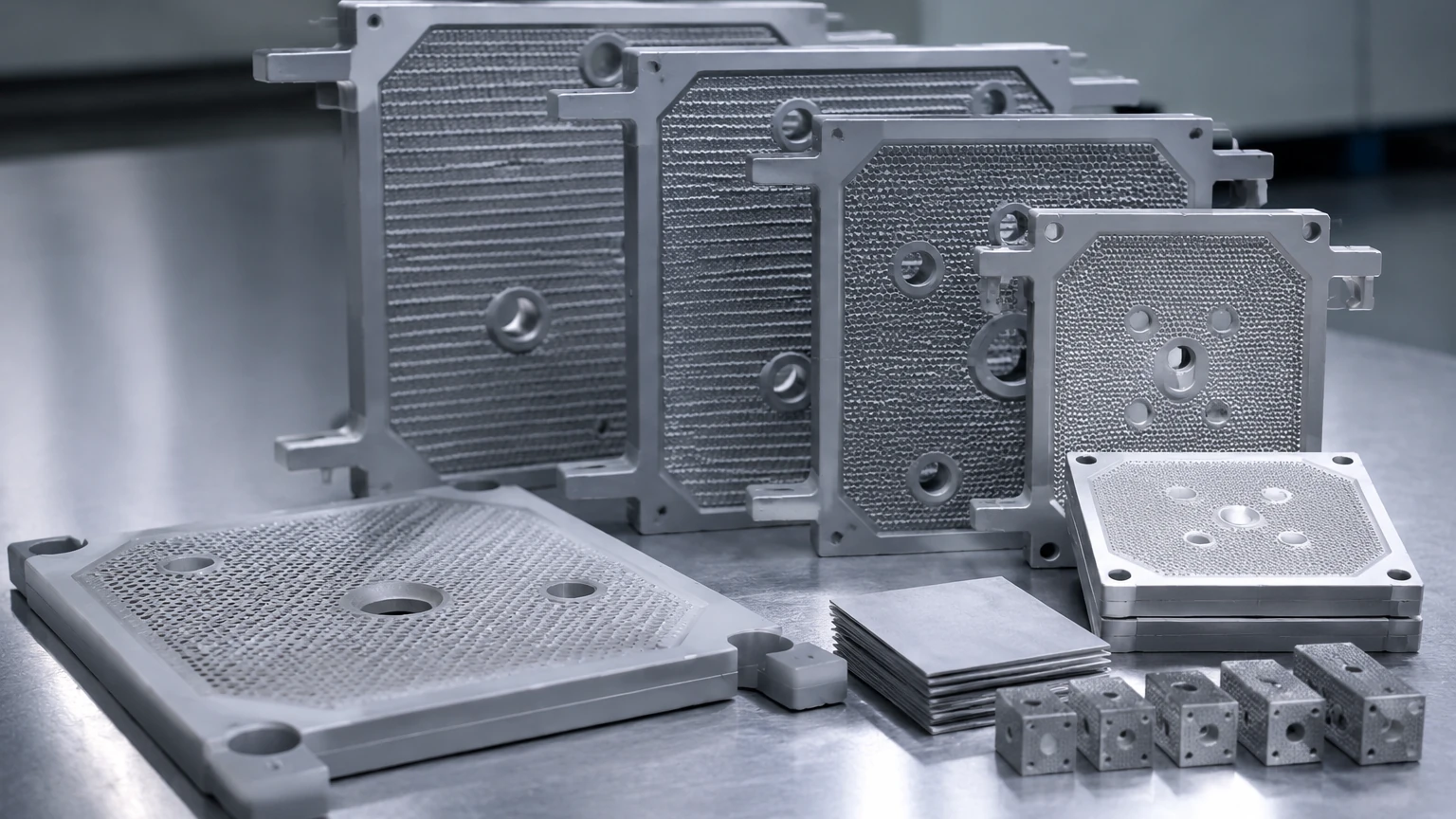
The primary function of filter press plates is to create a series of chambers when clamped together. Each chamber is lined with a filter cloth. As slurry is pumped into the press, the plates provide the rigid surface against which the solids accumulate to form a cake, while the filtrate passes through the cloth and out through the drainage system integrated into the plate surface.
Beyond simple support, the geometry of the plate surface—often featuring a pattern of pips or grooves—is engineered to facilitate the flow of filtrate toward the discharge ports. Effective drainage design reduces the flow resistance, which in turn lowers the energy required for pumping and shortens the filtration cycle. For industries requiring high-purity results, such as pharmaceutical or food and beverage production, the cleanability of these drainage surfaces is a paramount concern.
Primary Types of Filter Press Plate Designs
Industrial filtration requirements vary significantly, leading to the development of several distinct plate architectures. Selecting the correct type depends on the desired cake thickness, the necessity for cake washing, and the required moisture content of the final solids.
Recessed Chamber Plates
Recessed chamber plates are the most widely used in modern industrial applications. These plates feature a concave interior, so that when two plates are joined, they form a hollow chamber. This design eliminates the need for separate frames, reducing the number of sealing surfaces and the potential for leaks. They are known for their durability and are suitable for high-pressure applications, typically ranging from 7 to 20 bar.
Plate and Frame Units
While less common in automated modern systems, plate and frame designs consist of a solid plate and a hollow frame. The filter cloth is draped over the plate, and the frame provides the space for cake accumulation. This design allows for a high degree of flexibility in cake thickness by simply changing the frame depth. However, they require more manual labor for cleaning and have twice as many sealing surfaces compared to recessed chamber plates.
Membrane (Diaphragm) Filter Plates
Membrane plates incorporate a flexible drainage surface that can be inflated using air or water pressure after the initial filtration cycle. This "squeezing" action further compresses the filter cake, significantly reducing residual moisture and shortening the cycle time. Membrane plates are often used in tandem with recessed plates (a mixed pack) to balance cost and performance. They are particularly effective in applications where cake washing is required, as the compression ensures a uniform cake density, preventing the wash liquid from short-circuiting through cracks.
Material Selection and Engineering Considerations
The material of construction for filter press plates is dictated by the chemical composition of the slurry, the operating temperature, and the required mechanical strength. While polypropylene (PP) is the industry standard for many general applications due to its chemical resistance and light weight, demanding industrial environments often require more robust materials.
Stainless Steel Filter Plates
In applications involving extreme temperatures, high pressures, or strict sanitary requirements, stainless steel filter plates are the preferred choice. Utilizing grades such as 304 or 316L, these plates offer superior structural integrity and are resistant to a wide range of corrosive agents. In the chemical and pharmaceutical industries, stainless steel provides the necessary durability to withstand aggressive solvents and high-temperature sterilization processes. For organizations seeking specialized filtration components, reviewing Main Page options can provide insights into custom stainless steel manufacturing capabilities that meet these rigorous standards.
Polypropylene and Engineering Plastics
Polypropylene is valued for its excellent resistance to acids and bases. High-molecular-weight PP is often used to prevent warping under thermal stress. For specialized applications, PVDF or glass-filled polypropylene may be used to enhance temperature resistance or mechanical stiffness.
Critical Technical Specifications for Selection
When specifying filter press plates for a new installation or as replacements, engineers must confirm several technical parameters to ensure compatibility and performance.
1. Feed Port Location: The slurry can be fed through a center hole, corner holes, or top/bottom centers. The choice affects the distribution of solids within the chamber and the ease of cloth installation. Center feed is common for large plates to ensure even pressure distribution.
2. Drainage Port Configuration: Plates can be designed for open discharge (filtrate exits through individual faucets on each plate) or closed discharge (filtrate is collected in internal manifolds). Closed discharge is essential for volatile, toxic, or oxygen-sensitive materials.
3. Cake Thickness: The depth of the recess determines the cake thickness. Thicker cakes increase the volume of solids processed per cycle but may increase the filtration time and the difficulty of cake washing.
4. CGR vs. Non-Gasketed: Caulked, Gasketed, and Recessed (CGR) plates feature an O-ring gasket around the sealing edge and the ports, providing a virtually leak-free operation. Non-gasketed plates are simpler and easier to maintain but may allow some "wicking" or minor leakage through the filter cloth at the sealing edge.
Maintenance and Operational Risks
Filter press plates are subject to intense cyclic loading. Failure to maintain them properly can lead to decreased filtration efficiency or catastrophic plate failure. Common risks include:
* Plate Warping: Often caused by feeding slurry at temperatures exceeding the material's limit or by uneven pressure distribution during the feed cycle. Warped plates cannot form a proper seal, leading to spraying and leakage.
* Erosion of Sealing Surfaces: Abrasive slurries can wear down the sealing edges over time. This is particularly prevalent in non-gasketed designs. Regular inspection of the landing surfaces is required to ensure they remain flat and smooth.
* Port Plugging: If the feed or discharge ports become partially blocked, it can create a pressure differential across the plate. Since filter press plates are designed for equal pressure on both sides, a significant differential can cause the plate to crack or shatter.
* Cake Washing Inefficiency: Inconsistent plate surfaces or improper membrane inflation can lead to preferential flow paths during the wash cycle, resulting in poorly washed cakes and wasted wash solvent.
Customization and OEM Integration
Many industrial processes require non-standard filtration solutions. Customization of filter press plates can include specific alloy selections for the drainage mesh, specialized porting for multi-stage washing, or unique dimensions to fit existing frames. Working with a manufacturer that understands the intersection of metallurgy and filtration physics is vital for developing components that survive in harsh environments.
For engineers managing complex projects, the ability to source OEM-quality components that match exact technical drawings is a prerequisite for successful maintenance and operation. Whether the requirement is for precision-machined stainless steel components or custom-designed drainage patterns, the focus must remain on the total cost of ownership, which includes the lifespan of the plate and the efficiency of the filtration process it supports.
Conclusion: Confirmation Steps Before Procurement
Before finalizing the procurement of filter press plates, technical teams should verify the following data points with their supplier:
* Chemical Compatibility: Confirm that the plate material and any gaskets (EPDM, Viton, etc.) are fully compatible with the process fluid at maximum operating temperatures.
* Pressure Rating: Ensure the plates are rated for the maximum pump pressure, including a safety margin for pressure spikes.
* Cloth Compatibility: The plate design must accommodate the specific type of filter cloth required for the target particle retention.
* Cycle Life Expectations: For membrane plates, confirm the expected number of flex cycles before membrane replacement is required.
By focusing on these factual engineering boundaries, procurement teams can ensure that their filter press remains a reliable asset in their production line. For those looking to explore high-performance filtration solutions and technical support, visiting the Main Page provides a comprehensive overview of available technologies and custom manufacturing services tailored to industrial needs.
