


Filter Reactors
In the landscape of industrial chemical processing and pharmaceutical manufacturing, efficiency is often defined by the ability to consolidate multiple unit operations into a single, controlled environment. Filter reactors, also frequently referred to as agitated Nutsche filter dryers (ANFD), represent a pinnacle of this integration. By combining chemical reaction, solid-liquid separation, cake washing, and drying within a single pressure vessel, these systems eliminate the risks associated with material transfer, reduce exposure to hazardous substances, and ensure high levels of product purity.
For engineers and procurement teams, understanding the technical nuances of filter reactors is essential for optimizing production cycles. The performance of these systems is heavily dependent on the internal filtration media and the mechanical design of the vessel. Selecting the correct configuration requires a deep dive into material compatibility, filtration precision, and the mechanical stresses involved in industrial-scale processing.
Understanding the Integration of Reaction and Filtration
A filter reactor is designed to handle a sequential process without breaking the containment of the vessel. In a typical batch process, the vessel first acts as a reactor where reagents are mixed and heated or cooled to facilitate a chemical change or crystallization. Once the reaction is complete, the vessel transitions into a filter. By applying pressure to the top of the slurry or creating a vacuum beneath the filter plate, the liquid phase (mother liquor) is forced through a filtration medium, leaving the solid product (filter cake) behind.
This integration provides several technical advantages:
* Minimized Product Loss: Eliminating the transfer between a separate reactor and a filter unit reduces the "hold-up" volume where product can be trapped in piping or transfer pumps.
* Enhanced Containment: For potent APIs (Active Pharmaceutical Ingredients) or toxic chemicals, a closed system prevents the escape of vapors and protects operators from direct contact with the substance.
* Atmospheric Control: Processes that are sensitive to oxygen or moisture can be maintained under an inert gas blanket throughout the entire synthesis and separation sequence.
Critical Components of a Filter Reactor System
The engineering of a filter reactor must account for both the chemical environment and the physical forces of filtration. The primary components include the vessel shell, the agitator system, and the filter base.
The Vessel Shell and Jacket
Most industrial filter reactors are constructed from high-grade stainless steel, such as 316L, or specialized alloys like Hastelloy for highly corrosive environments. The vessel is typically equipped with a thermal jacket to control the temperature during the reaction and drying phases. Because these vessels often operate under vacuum or high pressure (often up to 6 bar or more), they must be manufactured according to strict pressure vessel codes (such as ASME or PED).
The Agitator Assembly
The agitator in a filter reactor is more complex than a standard mixing blade. It is designed to move both vertically and rotationally. During the reaction phase, it provides homogenous mixing. During the filtration phase, it can be used to smooth the filter cake to prevent cracks, which would otherwise allow pressure to bypass the solids. During drying, the agitator heated blades can be used to turn the cake, facilitating faster moisture removal.
The Filter Base
The bottom of the vessel contains the filter plate, which supports the filtration medium. This component must be perfectly flat and structurally sound to withstand the weight of the cake and the differential pressure applied during separation. The design of the support structure beneath the mesh is critical to ensure uniform flow and prevent stagnant zones where product could accumulate.
The Role of Stainless Steel Filtration Media
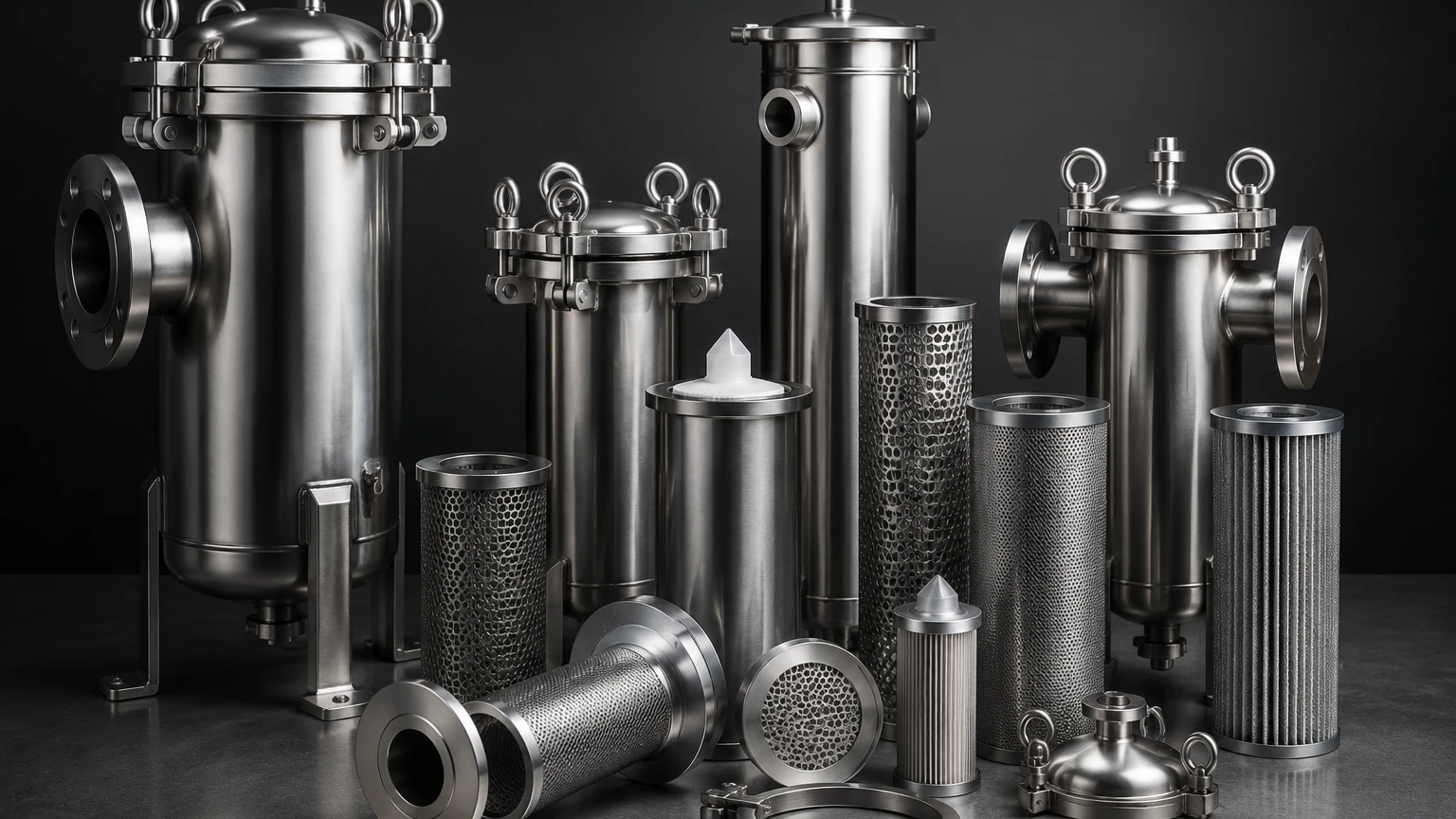
The heart of the separation process within filter reactors is the filtration medium. While textile cloths were used historically, modern industrial applications almost exclusively utilize stainless steel wire mesh or sintered metal components due to their durability and cleanability.
Stainless steel wire mesh offers a level of precision and mechanical strength that synthetic fibers cannot match. In a filter reactor, the mesh is often subjected to the abrasive force of the agitator and the chemical attack of various solvents. Using multi-layer sintered wire mesh provides a robust solution where several layers of mesh are diffusion-bonded together. This creates a media that is structurally rigid, has a fixed pore size that will not shift under pressure, and can be easily cleaned using CIP (Clean-in-Place) systems.
When selecting mesh for filter reactors, engineers must consider the micron rating relative to the particle size distribution of the product. If the mesh is too coarse, product loss occurs; if it is too fine, the filtration rate slows significantly, increasing batch times and potentially leading to "blinding" or clogging of the media.
Operational Stages: From Synthesis to Dry Product
The utility of filter reactors is best demonstrated by examining the typical operational workflow. Each stage places different demands on the internal components.
1. Charging and Reaction: Raw materials are introduced into the vessel. The agitator ensures uniform distribution. The filtration medium at the bottom must be resistant to the chemical environment and the temperatures required for the reaction.
2. Filtration: Pressure is applied to the vessel. The liquid is forced through the stainless steel filter plate. The quality of the wire mesh determines the clarity of the filtrate and the efficiency of the solids recovery.
3. Cake Washing: Once the mother liquor is removed, wash solvents are introduced. The agitator can reslurry the cake to ensure that impurities are thoroughly leached out. This is a critical step in pharmaceutical production to ensure the final product meets purity standards.
4. Drying: After the final wash, the vessel is put under vacuum. The jacket and often the agitator blades are heated. The agitator gently breaks up the cake to expose more surface area, accelerating the evaporation of residual solvents.
5. Discharge: The agitator or a side-discharge valve allows the dry, finished product to be removed from the vessel without manual intervention.
Engineering Considerations for Material Selection
Selecting the right materials for a filter reactor involves more than just choosing a grade of steel. It requires an analysis of the total lifecycle of the equipment. Stainless steel is the industry standard for most applications because of its balance of cost, mechanical properties, and corrosion resistance.
However, within the category of stainless steel, there are various options. 316L is preferred for its low carbon content, which minimizes carbide precipitation during welding, thereby enhancing corrosion resistance. For applications involving high chloride concentrations or acidic environments, specialized alloys or even sintered titanium may be necessary for the filtration components to prevent pitting and stress corrosion cracking.
Furthermore, the physical structure of the filtration media—whether it is a single layer of plain weave mesh or a complex five-layer sintered laminate—affects the pressure drop across the filter. A lower pressure drop allows for faster filtration cycles, which directly impacts the throughput of the manufacturing facility.
Maintenance and Cleaning in High-Purity Applications
In B2B sectors like food, beverage, and pharmaceuticals, the ability to validate the cleanliness of equipment is mandatory. Filter reactors are designed with CIP and SIP (Steam-in-Place) capabilities. The filtration media must be able to withstand high-pressure wash cycles and high-temperature steam without losing its structural integrity or filtration accuracy.
One common challenge in filter reactor maintenance is the accumulation of fine particles within the mesh layers. This is why sintered metal filters are often preferred; their smooth surface and controlled pore structure make them more responsive to back-pulsing or ultrasonic cleaning compared to traditional cloth filters. Regular inspection of the filter plate is necessary to ensure that the agitator has not caused mechanical wear or that the mesh has not been compromised by foreign objects.
Selecting the Right Filtration Solution for Your Reactor
Choosing the components for a filter reactor is a collaborative process between the process engineer and the filtration manufacturer. It is not enough to simply specify a micron rating; one must consider the flow rates, the viscosity of the liquid, the cake compressibility, and the cleaning protocols.
Customization is often required to ensure that the filter plate fits perfectly within the reactor vessel and provides the necessary support for the intended batch sizes. High-quality manufacturing ensures that the precision metal filter components can handle the rigorous demands of industrial processing while maintaining the integrity of the end product. For those seeking specialized guidance on material selection and custom filtration designs, visiting the Main Page provides access to technical resources and engineering support tailored to these demanding applications.
By focusing on durable, high-performance stainless steel filtration solutions, companies can maximize the uptime of their filter reactors and ensure consistent product quality across every batch. Whether you are dealing with aggressive chemical solvents or delicate pharmaceutical compounds, the right filtration media is the foundation of a successful separation process.
