


Filter Separator
In industrial gas and liquid processing, the efficient removal of contaminants is a prerequisite for equipment longevity and process integrity. A filter separator serves as a critical dual-purpose vessel designed to remove both solid particulate matter and liquid entrainments from a gas stream. Unlike standard dry filters or simple knock-out drums, the filter separator utilizes a multi-stage approach to ensure that the downstream environment—whether it be a compressor station, a turbine, or a chemical reactor—remains free from the damaging effects of erosion, corrosion, and liquid slugging.
For engineers and procurement teams, understanding the internal mechanics and material requirements of these units is essential. The performance of a filter separator is largely dictated by its internal filtration elements, which must withstand high differential pressures, varying flow rates, and potentially corrosive environments. As a professional manufacturer of custom stainless steel filtration solutions, Kaifil provides the precision-engineered components necessary to optimize these systems for demanding industrial applications.
The Fundamental Mechanics of a Filter Separator
A filter separator typically operates through a two-stage process. The primary stage is designed for the removal of solid particles and the initial coalescence of liquid droplets. As the gas enters the vessel, it passes through filter cartridges or wire mesh elements. These elements utilize mechanisms such as direct impingement, inertial impaction, and Brownian diffusion to capture solids. Simultaneously, fine liquid aerosols begin to gather on the fibers of the filter media, merging into larger droplets—a process known as coalescence.
The second stage focuses on the final separation of these enlarged liquid droplets from the gas stream. This is often achieved through a mist eliminator or a vane pack. By forcing the gas to change direction rapidly, the heavier liquid droplets are slung out of the stream and collected in a sump. For high-efficiency requirements, the integration of advanced Main Page solutions ensures that the internal elements are tailored to the specific micron ratings and flow dynamics required by the process.
Primary Components: The Importance of Stainless Steel Internal Media
The efficacy of a filter separator is only as reliable as its internal components. Because these vessels often operate in high-pressure environments or handle aggressive chemical vapors, the choice of material for the filter elements is paramount. Stainless steel is the industry standard for several technical reasons:
1. Structural Integrity: Under high differential pressure, synthetic or fiberglass media may collapse or shed fibers into the clean stream. Stainless steel wire mesh and perforated metal cores provide the mechanical strength required to maintain shape and performance.
2. Chemical Compatibility: Industrial gases often contain trace amounts of H2S, CO2, or organic acids. Stainless steel (specifically grades 304 and 316L) offers superior resistance to pitting and stress corrosion cracking.
3. Thermal Stability: In applications such as steam filtration or high-temperature gas processing, metal filters maintain their filtration accuracy where polymer-based media would degrade.
Kaifil specializes in manufacturing these custom stainless steel filter cartridges and wire mesh components, ensuring that the internal geometry of the filter separator is optimized for maximum surface area and minimal initial pressure drop.
Engineering Criteria for Selecting Filter Separator Elements
When specifying a filter separator, engineers must look beyond the vessel dimensions and focus on the performance metrics of the filtration media. Several key factors influence the selection process:
Micron Rating and Efficiency
It is vital to distinguish between nominal and absolute micron ratings. In a filter separator, the goal is often to remove 99.9% of all liquid and solid particles above a certain size (e.g., 1 micron or 0.3 microns). Engineers should evaluate the Beta Ratio of the filter elements to understand their efficiency at specific particle sizes.
Flux Rates and Velocity
The gas velocity through the filter media (flux) must be carefully controlled. If the velocity is too high, liquid droplets that have coalesced on the filter elements may be "re-entrained" or blown through the media back into the gas stream. Conversely, if the velocity is too low, the inertial impaction mechanism may become less effective. Customizing the pleat density and wire mesh weave allows for precise control over these dynamics.
Liquid Loading Capacity
The amount of liquid the gas stream carries (measured in gallons per million standard cubic feet, or GPMMSCF) dictates the size of the coalescing stage. High liquid loading requires elements with greater drainage capacity to prevent the vessel from flooding, which would lead to a total failure of the separation process.
Material Science: Why Stainless Steel is the Industrial Standard
In the context of a filter separator, material selection is not merely a matter of durability; it is a matter of process safety. Stainless steel wire mesh, often used in the coalescing and mist elimination stages, can be woven into various patterns (Plain, Twill, or Dutch weave) to achieve specific filtration characteristics.
* 304 Stainless Steel: Suitable for general industrial applications where moisture is present but highly corrosive agents are absent.
* 316L Stainless Steel: The preferred choice for the pharmaceutical, food and beverage, and offshore oil and gas industries due to its molybdenum content, which provides enhanced resistance to chlorides.
* Specialty Alloys: For extreme environments involving high concentrations of acids or high temperatures, alloys such as Monel or Inconel may be utilized within the filter separator structure.
By utilizing custom-manufactured metal components, operators can ensure that their filtration system does not become a source of contamination itself through corrosion or media migration.
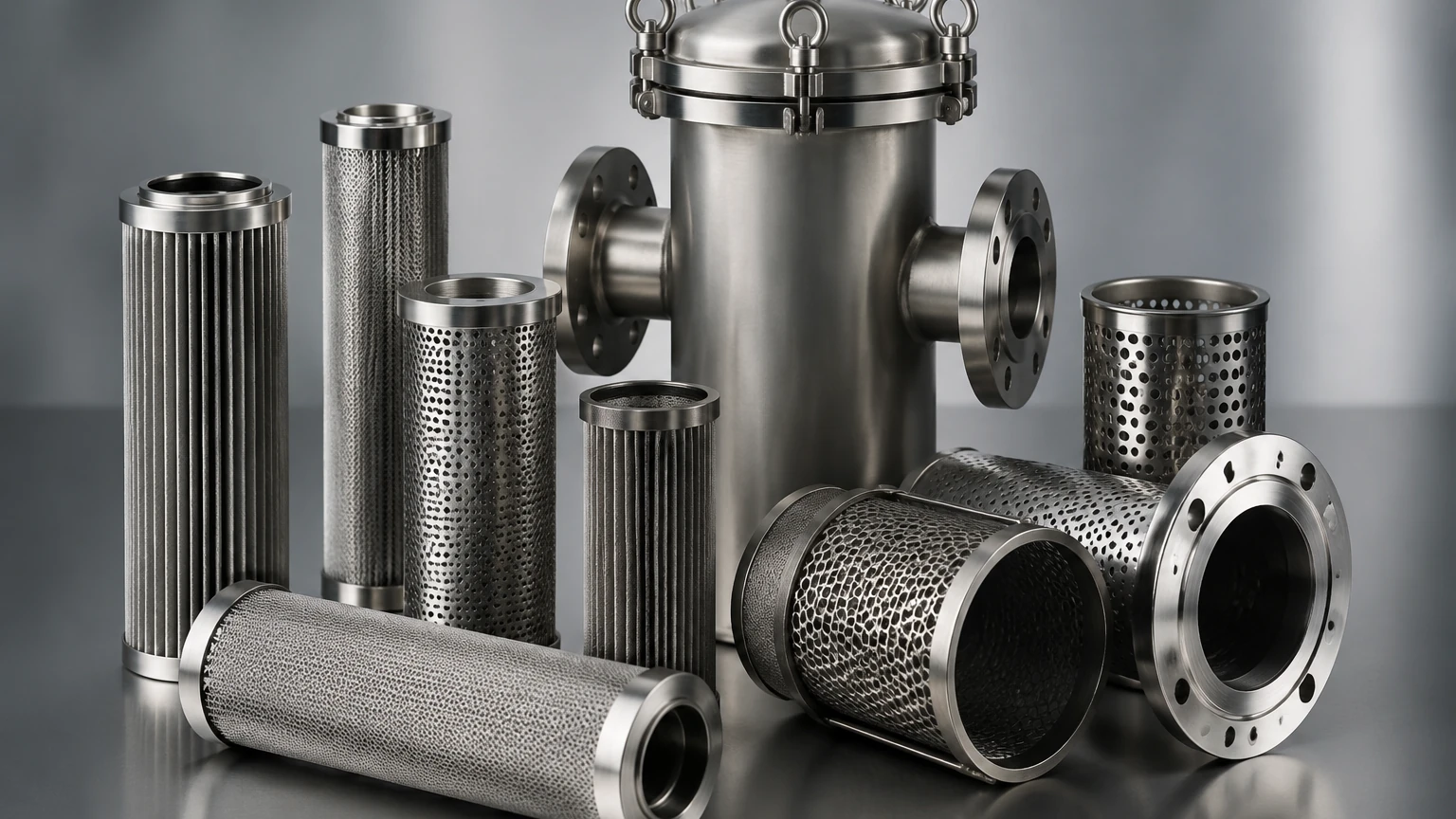
Identifying and Mitigating Common Operational Risks
Operating a filter separator involves managing several technical risks that can impact the total cost of ownership and system uptime.
Fouling and Clogging
If the upstream process experiences a surge in solid contaminants, the filter elements can clog rapidly. This leads to a spike in differential pressure (ΔP). If the ΔP exceeds the design limit of the elements, they may rupture. Monitoring the pressure drop across the filter separator is the most effective way to determine when the internal elements require cleaning or replacement.
Bypass and Seal Failure
Even the highest quality filter media will fail if the gas can bypass the element. This often occurs due to improper installation or the failure of gaskets and O-rings. When designing custom filtration solutions, Kaifil emphasizes precision in the end-cap design and sealing surfaces to ensure a leak-proof fit within the vessel housing.
Liquid Re-entrainment
As mentioned previously, re-entrainment occurs when liquid is stripped off the separator internals and carried downstream. This is often a symptom of operating the vessel beyond its design flow capacity. Engineers must ensure that the filter separator is sized for the maximum potential flow rate, not just the average operating conditions.
Maintenance, Replacement Cycles, and Total Cost of Ownership
While the initial purchase price of a filter separator is a significant consideration, the long-term costs are driven by maintenance and energy consumption. A high initial pressure drop across a filter element forces compressors to work harder, leading to increased energy costs.
One of the primary advantages of stainless steel filtration components is their cleanability. Unlike disposable fiberglass filters, many stainless steel mesh elements can be cleaned via ultrasonic baths, back-flushing, or chemical cleaning. This extends the replacement cycle significantly, reducing waste and lowering the total cost of ownership. However, it is essential to establish a rigorous inspection schedule to check for signs of wire fatigue or permanent fouling that could compromise filtration accuracy over time.
Pre-Purchase Technical Checklist for Engineers
Before finalizing a specification for a filter separator or its replacement elements, technical professionals should confirm the following data points with their manufacturer:
* Gas Composition: Are there trace chemicals that require specific alloy grades (e.g., 316L vs. 304)?
* Operating Pressure and Temperature: What are the maximum and minimum ranges the elements must withstand?
* Contaminant Profile: What is the ratio of solids to liquids, and what is the expected particle size distribution?
* Flow Rate Dynamics: Will the system experience surges or constant flow?
* Housing Dimensions: For replacement elements, are the exact tolerances for length, diameter, and connection type (e.g., DOE, SOE, or threaded) confirmed?
By addressing these factors, engineers can ensure that the filter separator performs according to its design specifications, protecting downstream assets and maintaining process efficiency. For those seeking specialized guidance or custom-manufactured components, visiting the Main Page provides access to technical expertise and a wide range of industrial filtration solutions tailored to these exact requirements.
In conclusion, the filter separator remains a cornerstone of industrial fluid processing. Its ability to handle complex, multi-phase streams depends entirely on the quality of its internal engineering. By prioritizing high-grade materials like stainless steel and focusing on precise application-specific designs, industrial operators can achieve reliable, long-term filtration performance in even the most challenging environments.
