


Filter Skid
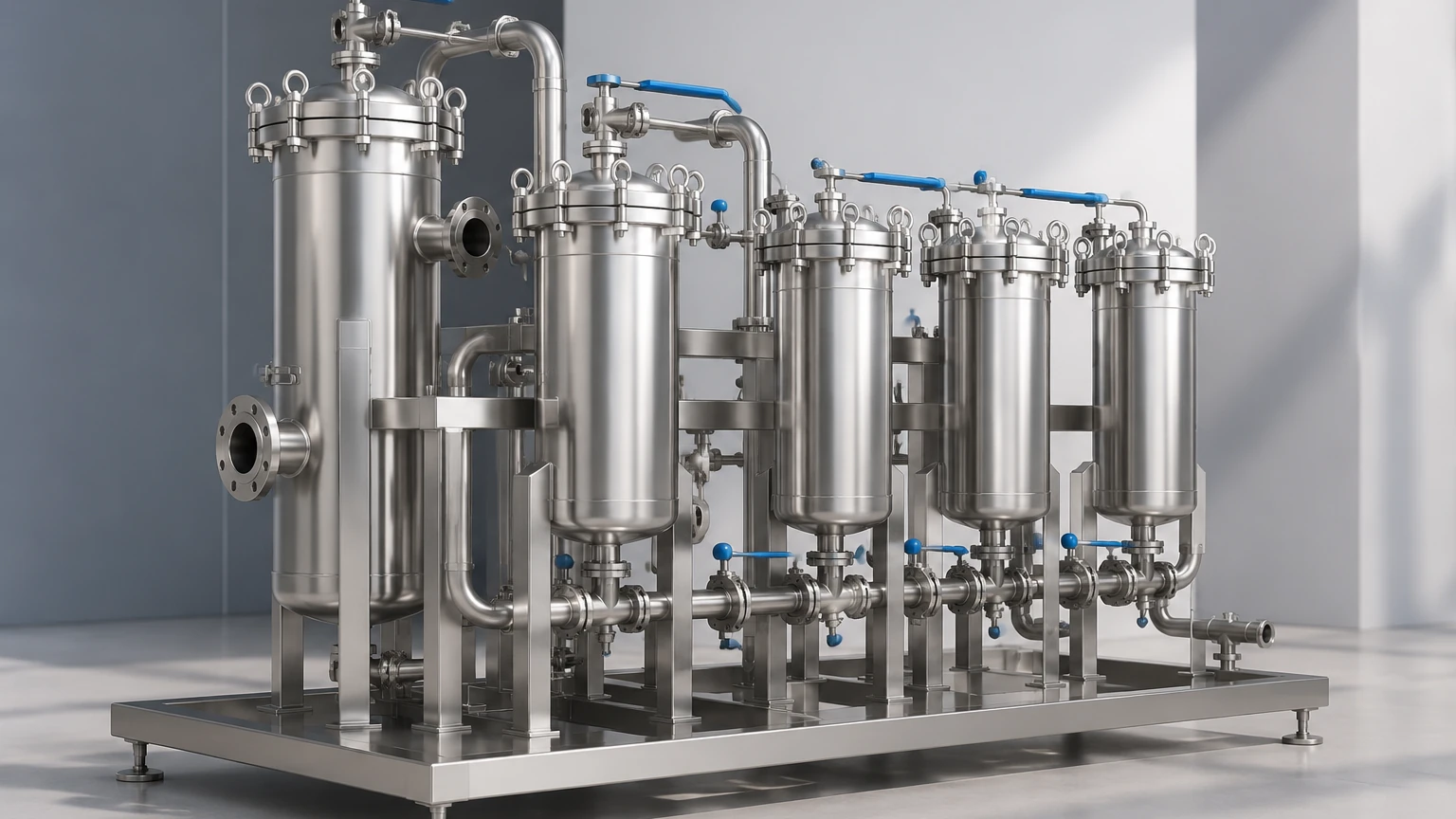
In modern industrial processing, the efficiency of a filtration system is often determined by its integration into the broader production line. A filter skid represents a modular, pre-engineered filtration solution where all necessary components—including filter housings, piping, valves, pumps, and instrumentation—are mounted on a single structural frame or "skid." This plug-and-play approach allows for rapid deployment, reduced on-site labor, and highly controlled filtration performance. For engineers and procurement teams, selecting the right filter skid requires a deep understanding of fluid dynamics, material compatibility, and the specific filtration media required to meet process standards.
As a specialized manufacturer of stainless steel filtration solutions, Kaifil provides the precision components and engineering expertise necessary to develop high-performance filter skids. Whether the application involves chemical processing, food and beverage production, or high-pressure hydraulic systems, the design of the skid must prioritize reliability and ease of maintenance.
Engineering Fundamentals of a Filter Skid
The primary advantage of a filter skid is its modularity. Rather than assembling individual components in the field, a skid is designed and tested in a controlled manufacturing environment. This ensures that every weld, seal, and connection meets rigorous industrial standards before the unit ever reaches the facility.
Core Components
At the heart of any filter skid is the filter housing. Depending on the flow rate and the required filtration accuracy, these housings may contain stainless steel wire mesh filters, pleated cartridges, or sintered metal elements. Surrounding the housing are several critical subsystems:
* Piping and Manifolds: These direct the fluid through the filtration stages. In high-purity applications, such as pharmaceutical or food processing, these pipes are typically made from 316L stainless steel with sanitary finishes.
* Valves and Actuators: These control the flow direction, allowing for bypass operations, isolation of filter housings during maintenance, and automated backwashing cycles.
* Instrumentation: Pressure gauges and differential pressure transmitters are essential for monitoring the health of the filter media. When the pressure drop across the filter exceeds a certain threshold, it indicates that the media is loaded and requires cleaning or replacement.
* Structural Frame: The skid itself must be robust enough to support the weight of the equipment and the fluid, often incorporating vibration-dampening mounts to protect sensitive instrumentation.
Key Performance Criteria for Industrial Filtration Skids
When evaluating a filter skid for a specific application, engineers must look beyond simple micron ratings. The performance of the system is a balance of several technical factors that influence both output quality and operational costs.
Flow Rate and Flux
The skid must be sized to handle the maximum expected flow rate without creating excessive backpressure. Flux, or the flow rate per unit of filter surface area, is a critical metric. High flux rates can lead to premature clogging and potential deformation of the filter media. By utilizing high-surface-area pleated stainless steel cartridges, a filter skid can maintain a compact footprint while handling significant volumes of fluid.
Filtration Accuracy and Efficiency
Filtration accuracy is defined by the micron rating, but it is equally important to consider the "Beta Ratio," which measures the filter's efficiency at capturing particles of a specific size. For critical industrial processes, a filter skid often employs multi-stage filtration—starting with a coarse wire mesh pre-filter to remove large debris, followed by a high-precision sintered or pleated element for fine polishing.
Pressure Drop (Delta P)
Every component in a filter skid contributes to the total pressure drop. An efficiently designed skid minimizes unnecessary bends in piping and uses low-resistance valves. Monitoring the differential pressure is the primary method for determining the replacement cycle of the internal filter elements. A well-engineered system will provide a clear baseline pressure drop, allowing operators to detect deviations that might indicate a leak or a blockage.
Material Selection and Chemical Compatibility
The durability of a filter skid is heavily dependent on the materials used in its construction. Because these systems are often exposed to corrosive chemicals, high temperatures, or high-pressure steam for sterilization, material science plays a pivotal role in the design process.
Stainless Steel Grades
Kaifil specializes in the use of 304 and 316L stainless steel. While 304 is suitable for many general industrial applications, 316L is the standard for environments involving chlorides or acidic solutions due to its superior corrosion resistance. For specialized chemical processing, even higher alloys may be used for the internal wire mesh filters to ensure long-term structural integrity.
Gaskets and Seals
Often overlooked, the elastomers used for seals and O-rings must be compatible with the process fluid. Common materials include Viton, EPDM, and PTFE. Incompatibility can lead to seal swelling or degradation, resulting in bypass—where unfiltered fluid leaks past the filter media—rendering the entire filter skid ineffective.
Customization Options for OEM Filter Skids
No two industrial processes are identical, which is why customization is a core requirement for most filter skid projects. Engineering teams must confirm several factors before finalizing a design.
1. Automation Level: Some skids are entirely manual, requiring operators to switch valves for cleaning. Others are fully automated with PLC (Programmable Logic Controller) integration, allowing for self-cleaning backwash cycles triggered by differential pressure sensors.
2. Footprint Constraints: In existing facilities, space is often at a premium. Skids can be designed with vertical housing arrangements or compact piping manifolds to fit into tight spaces without sacrificing performance.
3. Redundancy (Duplex Systems): For continuous processes that cannot be shut down, a duplex filter skid is used. This configuration features two parallel filtration lines; while one is in operation, the other can be cleaned or serviced, ensuring zero downtime.
To explore specific component specifications and customization capabilities, engineers can visit the Main Page for detailed technical data on filter media and housing configurations.
Operational Considerations and Maintenance
The total cost of ownership (TCO) of a filter skid is determined more by its maintenance requirements than its initial purchase price. A system that is difficult to service will eventually lead to higher labor costs and extended downtime.
Cleaning and Regeneration
One of the primary benefits of using stainless steel wire mesh filters within a skid is their cleanability. Unlike disposable polymer filters, stainless steel elements can be cleaned via ultrasonic baths, chemical circulation, or backpulsing. This significantly reduces the waste stream and the ongoing cost of replacement parts.
Replacement Cycles
Even cleanable filters have a finite lifespan. Over time, repeated cleaning cycles or exposure to high-pressure differentials can cause fatigue in the metal mesh. Engineers should establish a clear maintenance schedule based on the specific contaminant load of their process. Tracking the time it takes for a filter to reach its terminal pressure drop can help predict when an element is nearing the end of its functional life.
Industry-Specific Applications for Filter Skids
Filter skids are utilized across a wide spectrum of industries, each with unique regulatory and technical demands.
* Chemical Processing: Skids are used to remove catalysts from product streams or to protect downstream equipment from particulate contamination. The focus here is on chemical resistance and pressure ratings.
* Food and Beverage: In this sector, sanitary design is paramount. Filter skids must be designed with "dead-leg" free piping and polished surfaces to prevent bacterial growth. They are commonly used for beer and wine clarification or the filtration of syrups and oils.
* Pharmaceuticals: These systems require high-precision filtration, often down to sub-micron levels, and must comply with strict validation standards. The skids are typically designed for easy sterilization-in-place (SIP) or clean-in-place (CIP).
* Water Treatment: Industrial water skids manage large volumes of water, removing suspended solids to protect membranes in reverse osmosis (RO) systems or to meet environmental discharge regulations.
Conclusion: Selecting the Right Filtration Partner
Investing in a filter skid is a strategic decision that impacts the reliability and quality of an entire production line. By choosing a system built with high-quality stainless steel components and engineered for specific process conditions, companies can achieve higher throughput and lower operational costs.
When planning a filtration project, it is essential to work with a manufacturer that understands the nuances of metal filter media and the complexities of skid integration. For more information on custom filtration solutions and to review product options and application support, technical teams should consult with experts who can provide the necessary documentation and performance guarantees required for industrial-scale operations. Ensuring that the filter skid is designed with the right materials, flow dynamics, and maintenance accessibility will provide a robust solution for even the most demanding industrial environments.
