


Filter Stainless Steel Supplier
In industrial processing, the selection of a filter stainless steel supplier is a critical decision that impacts the efficiency, safety, and longevity of filtration systems. Stainless steel filters are preferred in demanding environments due to their mechanical strength, thermal stability, and resistance to corrosion. Unlike disposable polymer or paper filters, stainless steel components offer the advantage of being cleanable and reusable, which significantly reduces long-term operational costs and environmental waste.
For engineers and procurement specialists, finding a supplier that understands the technical nuances of metal filtration—ranging from alloy selection to precision manufacturing—is essential. This guide explores the technical criteria, material considerations, and engineering standards necessary to evaluate a supplier in this specialized field.
Technical Material Considerations in Metal Filtration
The performance of a stainless steel filter begins with the raw material. A professional filter stainless steel supplier must provide detailed material specifications to ensure compatibility with the process fluid. The most common alloys used in industrial filtration include:
* AISI 304: Suitable for general-purpose applications where moderate corrosion resistance is required. It is commonly used in food processing and industrial water treatment.
* AISI 316L: The "L" stands for low carbon, which improves weldability and resistance to intergranular corrosion. 316L contains molybdenum, making it superior for chemical processing, pharmaceutical manufacturing, and marine environments where chloride exposure is a concern.
* High-Nickel Alloys: For extreme environments, suppliers may offer Monel, Inconel, or Hastelloy. These are used in high-temperature applications or highly acidic environments where standard stainless steels would fail.
When evaluating a supplier, it is vital to confirm material traceability. Reliable manufacturers provide Mill Test Reports (MTRs) that verify the chemical composition and mechanical properties of the steel used in the filter’s construction. This level of transparency is non-negotiable for industries like pharmaceuticals and aerospace, where material integrity is a safety requirement.
Engineering Custom Filtration Solutions
Every industrial process has unique requirements regarding flow rates, pressure drops, and housing constraints. A capable filter stainless steel supplier does not just offer off-the-shelf products; they provide engineering support to develop customized solutions.
Customization Options
Customization often involves several design variables:
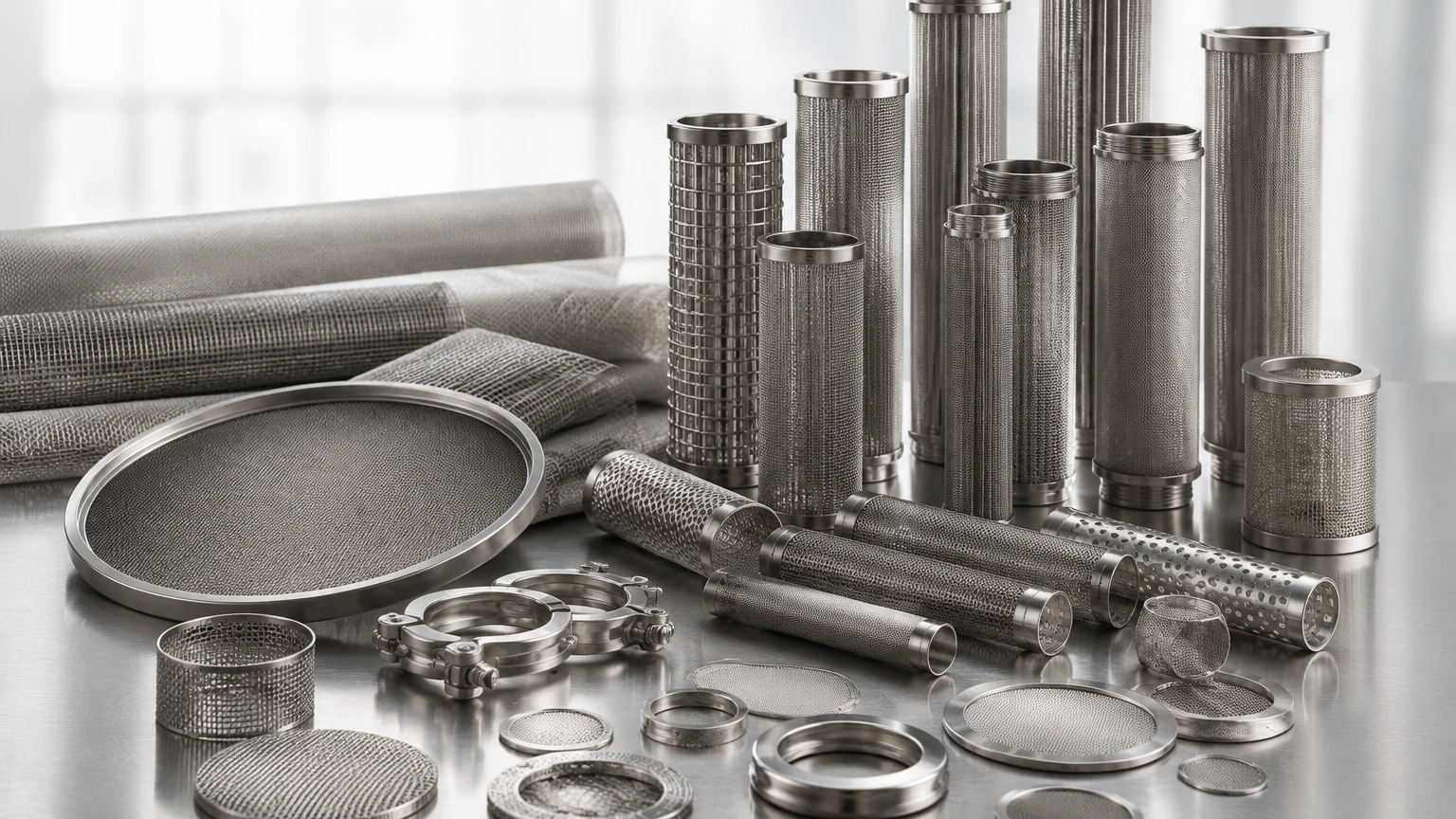
1. Filtration Media Type: Suppliers should offer various media, including woven wire mesh, sintered metal fiber felt, and sintered powder metal. Each has distinct advantages in terms of permeability and dirt-holding capacity.
2. Structural Configurations: Filters can be designed as cylindrical cartridges, pleated elements, or flat discs. Pleated designs are particularly effective for increasing the effective filtration area within a compact footprint, thereby extending the time between cleaning cycles.
3. End Cap Styles: Compatibility with existing filter housings requires precise end cap configurations, such as Double Open End (DOE), 222/226 O-ring fittings, or threaded connections like NPT and BSP.
By visiting the Main Page of a specialized manufacturer, engineers can often find technical data sheets that outline these customization possibilities, helping them match the filter design to their specific hydraulic or pneumatic system requirements.
Performance Parameters and Selection Criteria
To ensure optimal system performance, technical professionals must look beyond the physical dimensions of a filter. A supplier’s ability to meet specific performance metrics is the true test of their manufacturing quality.
Micron Ratings and Efficiency
Filters are rated by their ability to remove particles of a certain size, measured in microns (μm). It is important to distinguish between "nominal" and "absolute" ratings. A nominal rating indicates the filter can trap a large percentage of particles of a given size, whereas an absolute rating (often defined by a Beta Ratio) indicates the filter will stop virtually all particles of that size. A high-quality supplier will provide validated test data to support these ratings.
Pressure Drop and Flow Rate
The "clean pressure drop" is the resistance the filter offers to the fluid flow when it is first installed. A supplier must be able to calculate the expected pressure drop based on the fluid's viscosity, temperature, and flow rate. If the pressure drop is too high, it can lead to pump cavitation or system failure; if it is too low, the filter might not be providing sufficient capture efficiency.
Mechanical Strength and Collapse Pressure
In high-pressure hydraulic systems or applications involving high-viscosity fluids, the filter must withstand significant differential pressure. Suppliers should specify the collapse pressure of their elements to ensure they do not deform or fail during pressure surges or as the filter becomes loaded with contaminants.
Manufacturing Processes and Quality Control
The reliability of a stainless steel filter is heavily dependent on the manufacturing techniques employed. Advanced welding and bonding methods are required to ensure the filter remains intact under thermal and mechanical stress.
* Sintering: This process involves heating the metal media (mesh or powder) in a vacuum furnace to bond the contact points without melting the material. Sintering creates a rigid structure that prevents media migration—the shedding of filter fibers into the downstream fluid.
* TIG and Plasma Welding: High-precision welding is necessary for attaching end caps and longitudinal seams. Poor welding can lead to bypass, where unfiltered fluid leaks through gaps in the assembly.
* Cleaning and Degreasing: For oxygen service or high-purity chemical applications, filters must be ultrasonically cleaned and degreased to remove any manufacturing oils or residues.
Quality control protocols should include bubble point testing to verify pore size integrity and pressure testing to ensure structural soundness. A supplier that adheres to ISO 9001 standards demonstrates a commitment to consistent manufacturing quality.
Industry-Specific Requirements
Different sectors impose different regulatory and functional demands on a filter stainless steel supplier. Understanding these nuances is part of a supplier's value proposition.
Food and Beverage Industry
Filters used in food and beverage production must comply with FDA regulations. This includes using food-grade gaskets (such as EPDM or Silicone) and ensuring that all welds are smooth and free of pits where bacteria could grow. The cleanability of stainless steel makes it ideal for Clean-in-Place (CIP) systems.
Pharmaceutical and Biotechnology
In these industries, sterility and material purity are paramount. Suppliers must provide high-precision filters capable of removing bacteria and pyrogens. Surface finishes are often specified to a high degree of smoothness (Ra value) to prevent protein binding and facilitate sterilization.
Chemical and Petrochemical
Corrosion resistance is the primary concern here. Suppliers must often advise on the best alloy for handling aggressive solvents, acids, or high-temperature gases. The durability of stainless steel allows these filters to operate in environments where polymer filters would melt or chemically degrade.
Evaluating the Total Cost of Ownership (TCO)
While the initial purchase price of a stainless steel filter is higher than that of a disposable alternative, the Total Cost of Ownership is often significantly lower. When evaluating a supplier, procurement teams should consider the following factors:
1. Service Life: How many cleaning cycles can the filter undergo before its performance degrades? A high-quality filter from a reputable supplier can often last for years.
2. Cleaning Costs: Does the supplier provide guidance on cleaning methods (e.g., backwashing, ultrasonic cleaning, or chemical baths)? Proper cleaning extends the life of the element.
3. Downtime Reduction: Durable metal filters reduce the frequency of filter changes, leading to higher system uptime and lower labor costs.
4. Waste Disposal: By eliminating the need to dispose of contaminated polymer cartridges, companies can reduce their environmental footprint and disposal fees.
A transparent supplier will help calculate these long-term savings, providing a clear ROI for the investment in premium stainless steel filtration components.
Conclusion: Choosing the Right Partner
Selecting a filter stainless steel supplier is about more than just buying a component; it is about establishing a technical partnership. The right supplier provides the engineering expertise to solve complex filtration challenges, the manufacturing precision to ensure safety, and the quality assurance to guarantee performance.
Whether you are designing a new hydraulic system, upgrading a chemical processing line, or seeking more durable components for water treatment, focusing on material integrity, customization capabilities, and validated performance metrics will lead to a successful procurement outcome. By prioritizing technical excellence over the lowest initial bid, organizations can ensure their filtration systems operate at peak efficiency for the long term.
